
By Happy Grass Lawn Care LLC · November 23, 2026
The lawn is ready for a haircut. The weather has other ideas. If rain changes the plan for your next lawn visit, a short, clear conversation is usually more useful than watching the forecast and wondering what happens next.
No mow worries starts with knowing who to contact and which details matter.
This guide is about that conversation: how to describe the yard, ask about timing and keep access instructions current. Happy Grass serves Harvey and the Westbank, where your front lawn and backyard may dry differently even at the same address.
The right question is how to handle your actual property and visit, rather than whether a particular icon on a weather app looks encouraging.
Start with what you can see from a normal walk
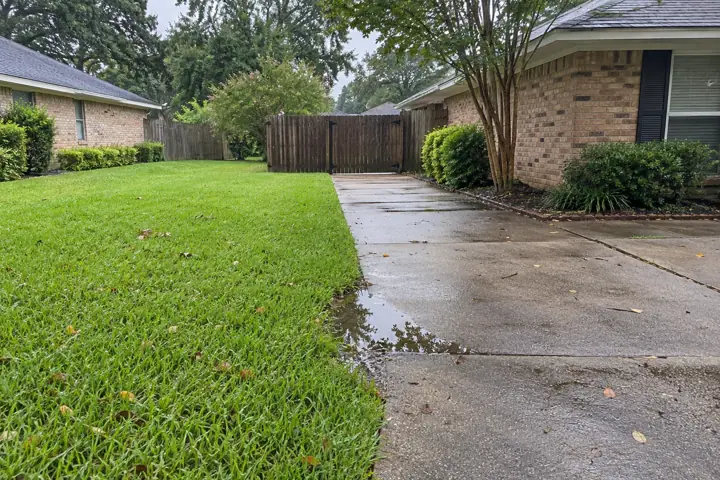
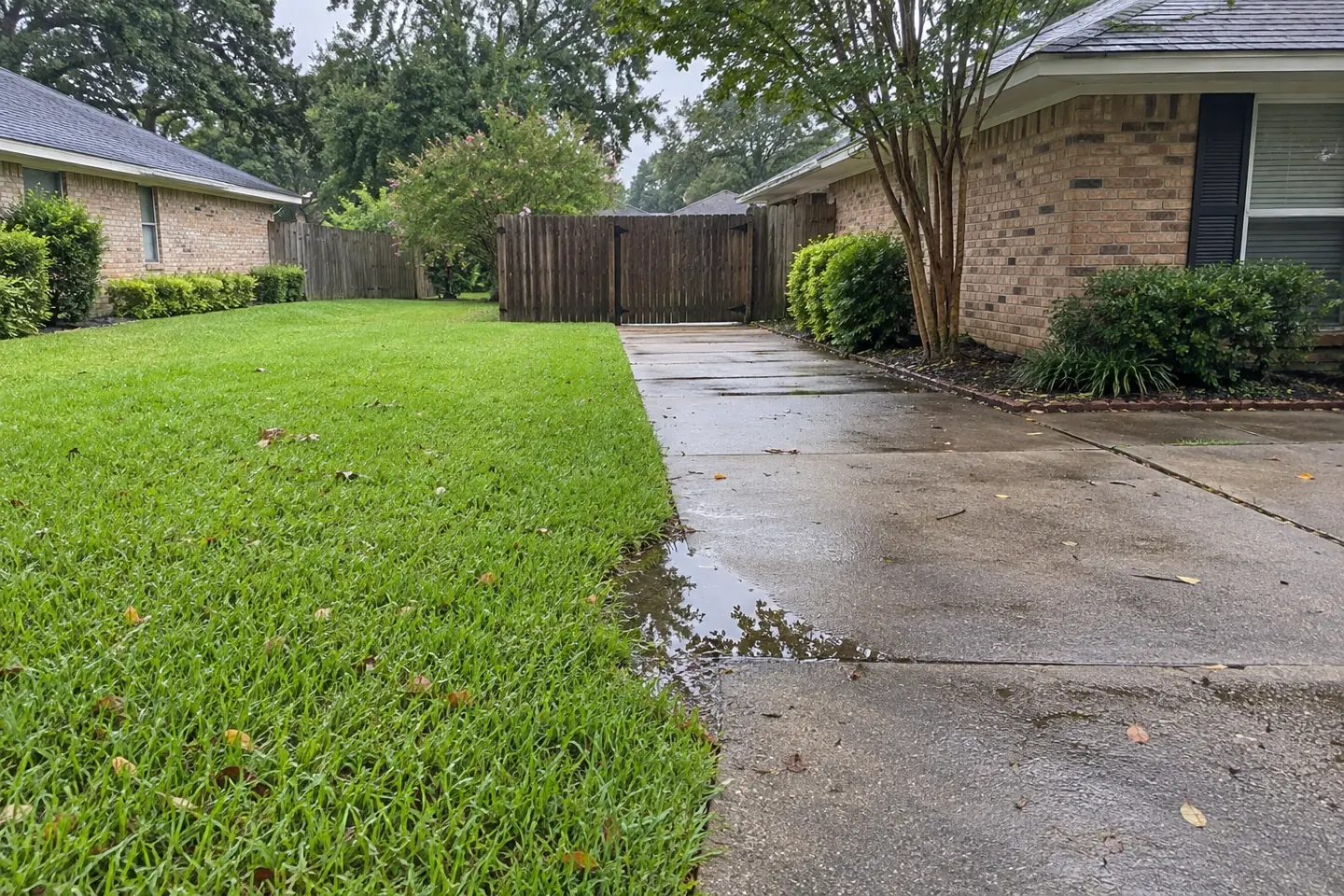
You don’t need to investigate the lawn with tools or try to prove that it’s ready. From an ordinary, safe place, look for standing water, obvious soft areas and changes to the access path.
If the side passage still has puddles while the front driveway is dry, that is worth mentioning. One part of the property doesn’t necessarily describe the rest.
Use plain words. “Water is still sitting inside the backyard gate” or “The low corner looks soft” gives Happy a clearer picture than “The yard is probably fine.”
If you aren’t home and haven’t seen it, say that too. An honest update is more useful than a confident guess.
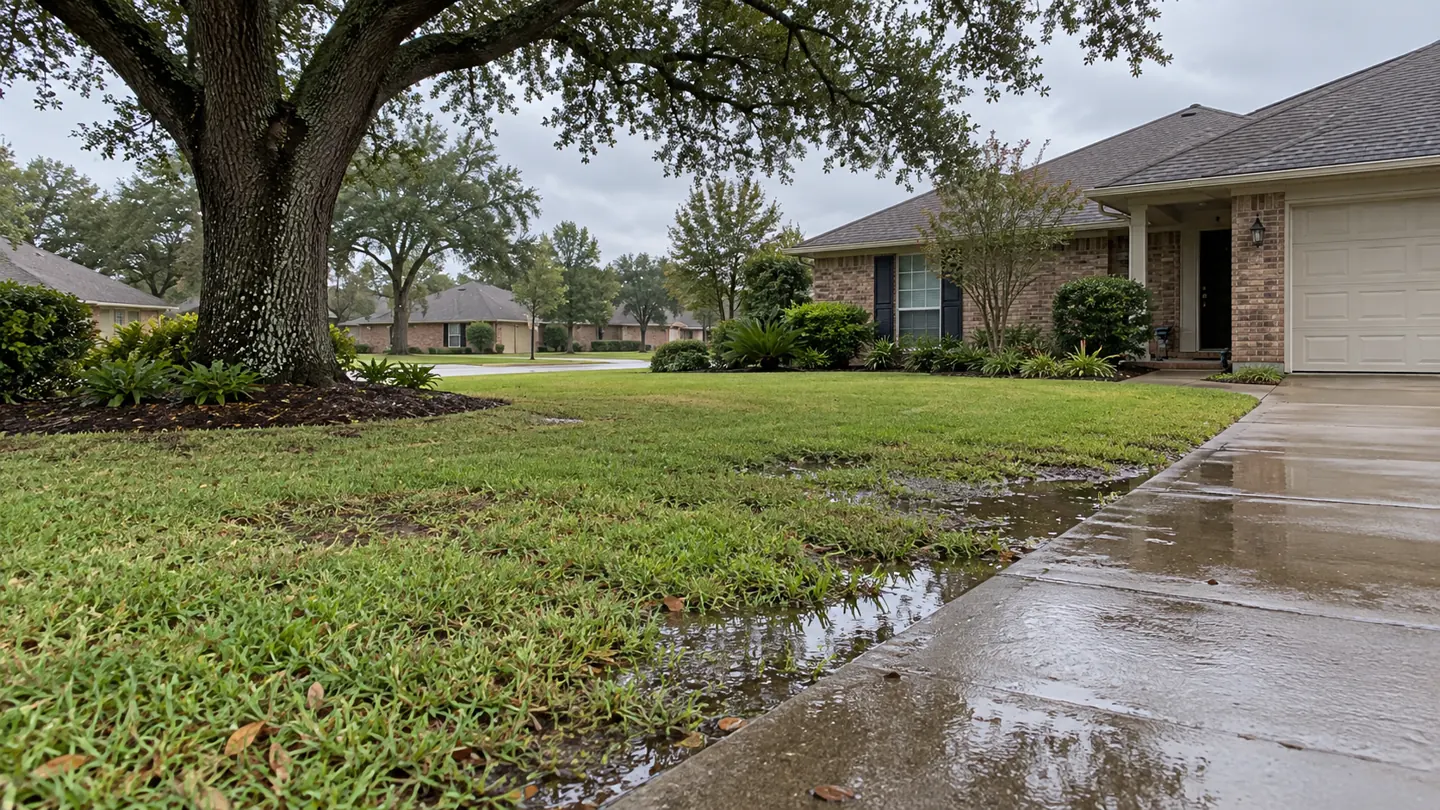
Keep wet grass and soft soil as separate observations
A lawn can have damp leaves without the same conditions everywhere underneath. It can also look better at the surface while a low spot remains saturated. LSU AgCenter advises keeping mowing equipment off saturated soil where it could rut or compact the ground. Its warm-season turf guidance also discusses the care needed around tree roots.
Wet clippings are another consideration: LSU AgCenter’s clipping guidance favors cutting when leaf blades are dry. These are general maintenance principles, not a remote verdict on your property. Tell Happy what you’re seeing and let the actual service conditions be reviewed.
Contact Happy about the visit you already have
If you’re asking about an existing arrangement, use the same phone number and identify the property. Include your name and the date you’re asking about. That helps connect the question to the right conversation.
You usually don’t need to start again with a brand-new quote form just to ask whether a visit is being moved.
Keep the first message short enough to answer. You can add photos if they explain a particular problem, but the essentials are the address, the planned visit and what has changed.
Let Happy know whether you prefer a text or call back. The goal is a useful update, not a perfect weather report.
Ask three practical timing questions
- Is the planned visit still being reviewed, or has a change already been agreed?
- If it needs to move, what timing is available to discuss?
- How will we confirm the revised plan?
Those questions leave less room for crossed wires than assuming the visit simply shifts by one day. A route can involve more than one property, and a new date needs to be confirmed.
Don’t treat a suggested preference as a booking until the work and timing have been agreed.
If you have a gathering, travel or another deadline coming up, explain it early. Happy can consider that context when discussing availability.
It still helps to keep expectations tied to the work that can actually be arranged, rather than counting on an unconfirmed visit immediately before the deadline.
Send a picture only when it adds useful information
A wide view can show the relationship between a wet patch and the access gate. A closer image can show the specific area you’re describing. You don’t need ten nearly identical photographs of the same puddle.
Choose the view that answers the question Happy is likely to have.
Keep household documents, vehicle plates where avoidable and unrelated private details out of the frame. Don’t take risks to get an image, and don’t walk into flooded or unsafe areas for a lawn-service update.
A description from a safe position is enough to start the conversation.
Check whether access changed with the weather
Rain may be the reason you got in touch, but there may be a second practical issue. A delivery could be sitting beside the gate. A vehicle may have been moved into the usual equipment path.
Outdoor furniture or stored items may now block an entrance that was clear when you first discussed the job.
Mention those changes together so Happy isn’t planning around outdated instructions. Before a revised visit, arrange access again and secure pets away from the work area.
If someone else is handling the property while you’re away, make sure the updated plan reaches that person through your own household arrangements.
Talk about extra growth if the gap becomes longer
A delay can mean more grass to deal with at the next visit. If the lawn is noticeably taller than when the original work was discussed, send a current update.
Ask whether the first cut back needs a different plan for the height, number of passes or clipping handling. Don’t assume every condition fits the same routine visit.
LSU AgCenter describes the one-third mowing guideline as a reason to maintain a sensible mowing rhythm. It doesn’t mean a lawn that has become tall should automatically be cut to the usual finish in one aggressive pass. Discuss the current growth rather than asking for a shortcut that ignores it.
Agree on clipping and finishing details again if needed
If the job has changed, the finishing conversation may need an update too. Tell Happy if you want clipping collection, and clarify which paved areas belong in the cleanup.
Heavy growth and extra debris are easier to discuss before work begins than after you expected a standard maintenance finish.
A weather question also isn’t the same as requesting drainage work. Mowing, edging, weed-eating and blowing each have a specific role. Standing water or recurring drainage trouble may need a separate kind of assessment.
Keep the request clear about the lawn maintenance you’re asking Happy to review.
Keep one simple record of the revised arrangement
Once the next step is agreed, keep the message or note where you can find it. Record the timing being confirmed, the access arrangement and any change to the work.
You don’t need a complicated system; you just need to be able to check what was actually agreed if another question comes up.
If conditions change again, send another concise update. A gate blocked by a new delivery or a wet patch that remains after the rest of the yard dries is relevant information.
Repeating the whole history isn’t necessary when the change itself is easy to describe.
A message you can adapt for your own yard
Hi Happy, this is [your name] at [property address]. I’m checking on the lawn visit we discussed for [date]. There’s still water near [area], and [access update, if any].
Can we confirm the next step and how I’ll hear about any timing change? A text works best for me. Thanks!
Change the details to match what you know. If you aren’t sure about the date or haven’t seen the lawn, say so. A useful message is accurate and easy to answer. It doesn’t need to sound technical.
Give Happy a shout
For an existing lawn visit, call or text (504) 339-3571 and identify the property. For a new request in Harvey, Marrero, Gretna, Algiers, Belle Chasse or Westwego, send Happy your lawn details. We’ll talk through coverage, work and available timing together. Let’s keep the grass happy and the plan clear.
Avoid two competing revised dates
When several household members help arrange lawn care, a rain delay can leave one person remembering the original date and another expecting a different one. Keep a single current note that distinguishes a proposed date from a confirmed arrangement. Include who received the update and whether a reply is still needed. You do not need to copy an entire message history; the goal is to stop an old plan from looking current.
For example, write that the backyard remains uncertain and that you are waiting for Happy to review the next step. That is more accurate than recording a new appointment before it has been agreed. If the front and back need different decisions, keep both areas named. Once the arrangement is confirmed, replace the outdated note and tell the person handling gates or pets. Clear household communication can prevent a weather interruption from becoming an avoidable access interruption too.