
Let’s kick some grass.
Right down to the edges.
The mower gets things rolling. The little finishing details help make the whole yard happy.
- Is the backyard included?
- Which edges get defined?
- What about the strip behind the fence, the grass around a tree, or the clippings across the driveway?
Happy Grass keeps the conversation focused on the work your property actually needs.
Our Westbank lawn services are grass cutting, edging, weed-eating, blowing and weed control. Weekly and every-other-week mowing are available to discuss.
Explore the service pages below, then request a quote with your address and a few recent photos. Availability, price and scope are confirmed directly.
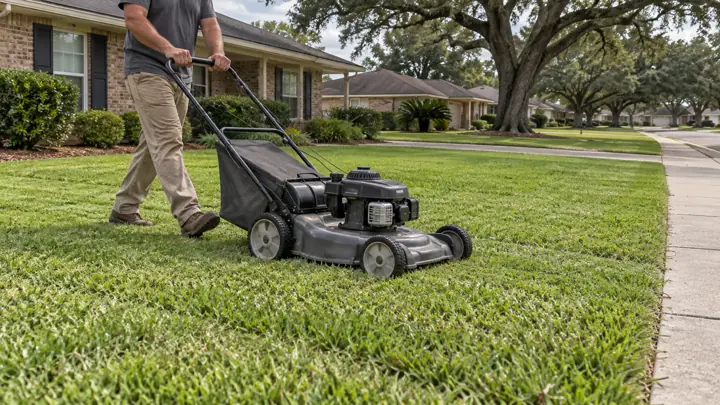
Lawn mowing & grass cutting on the Westbank
Weekly or every-other-week lawn mowing for Harvey, Marrero, Gretna, Algiers, Belle Chasse and Westwego. Text your address and yard photos for a quote.
Take a closer look ↗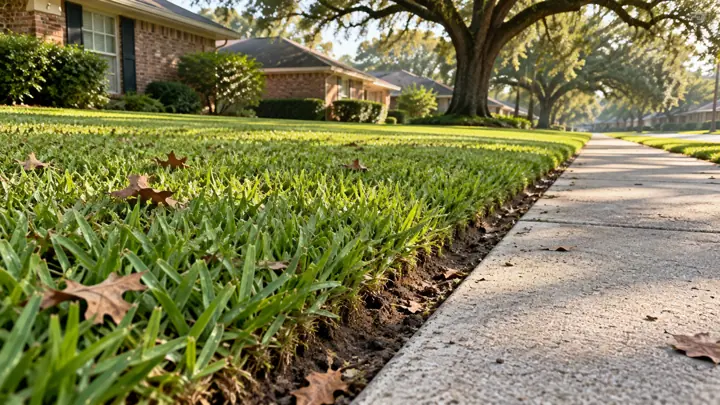
Lawn edging & clean sidewalk lines
Those little lines make a big difference. Give your lawn a tidy edge along sidewalks and driveways.
Take a closer look ↗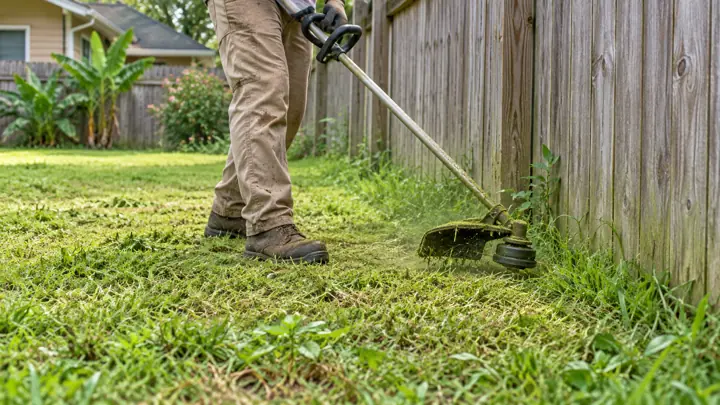
Weed-eating & lawn trimming
A little attention for the spots the mower misses, from fence lines to awkward corners.
Take a closer look ↗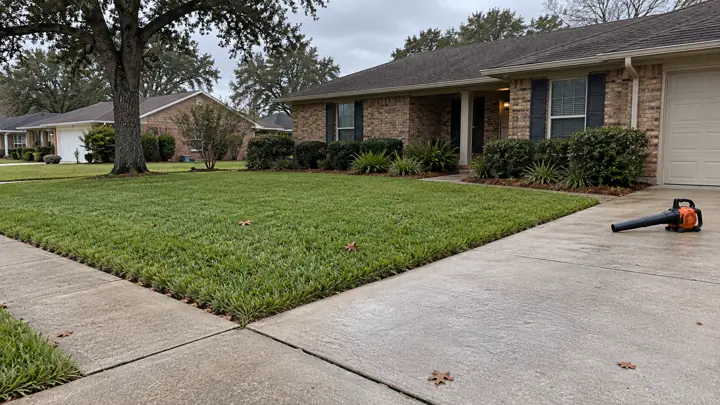
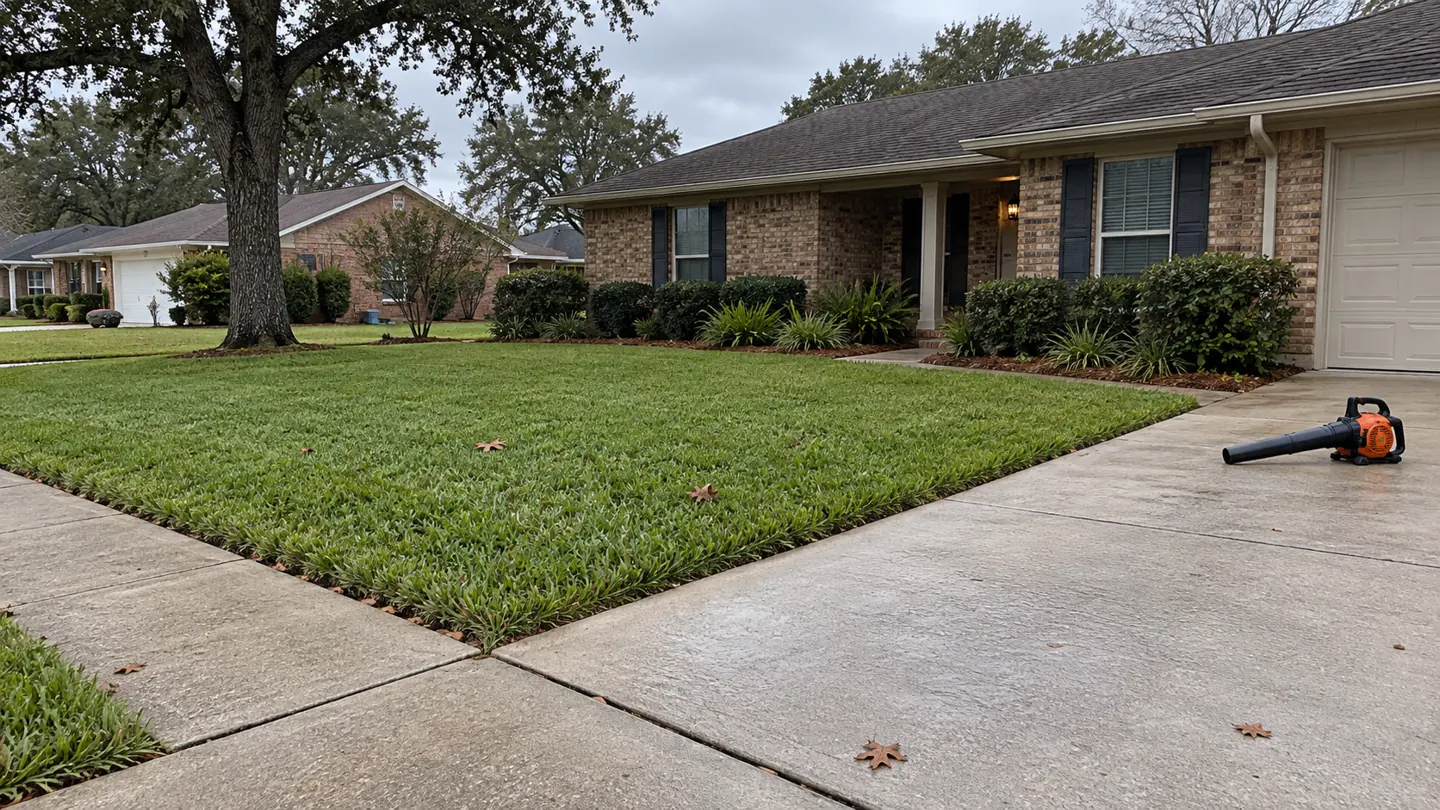
Lawn blowing & the clean finish
A fresh cut deserves a tidy finish. Let’s talk about the clippings on your walkways and driveway.
Take a closer look ↗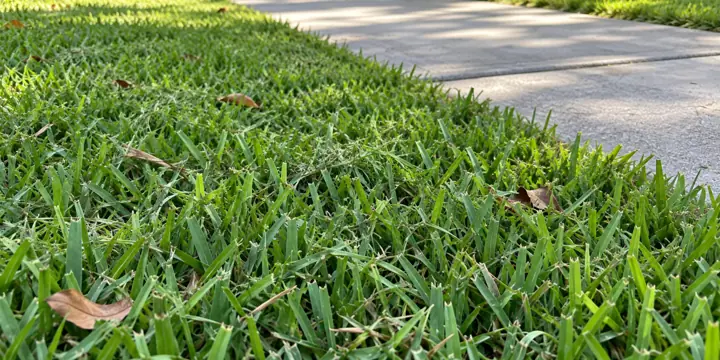
Ask about lawn weed control
Weeds making themselves at home? Show Happy what’s growing and let’s talk through the options.
Take a closer look ↗Mowing gives the lawn its baseline
Grass cutting brings accessible turf to an agreed height and gives the rest of the visit a starting point. The right approach depends on current growth, grass condition, moisture and equipment access.
A lawn that has been maintained regularly presents a different job from tall growth hiding toys, roots or debris.
Before requesting a first cut, describe the last mowing date as accurately as you can. Tell us if the mower needs to go through a side gate or if different sections of the yard can only be reached separately. A photo of the narrowest point is often more useful than a long description. Explore lawn mowing and recurring grass cutting on the Westbank.
Edging defines the visible boundaries
Edging follows appropriate hard-surface boundaries such as sidewalks and driveways. It helps separate the lawn from the concrete so the property looks finished after mowing.
Edging is not the same operation as trimming every patch around a fence, and it does not repair cracked pavement or change the grade of a drainage area.
Overgrown edges may need more initial attention than edges maintained on a routine schedule. If grass has covered part of a walkway, show it in your quote photos. Mark sprinkler heads, shallow lines and features that are difficult to see. Explore lawn edging.
Weed-eating reaches the awkward spots
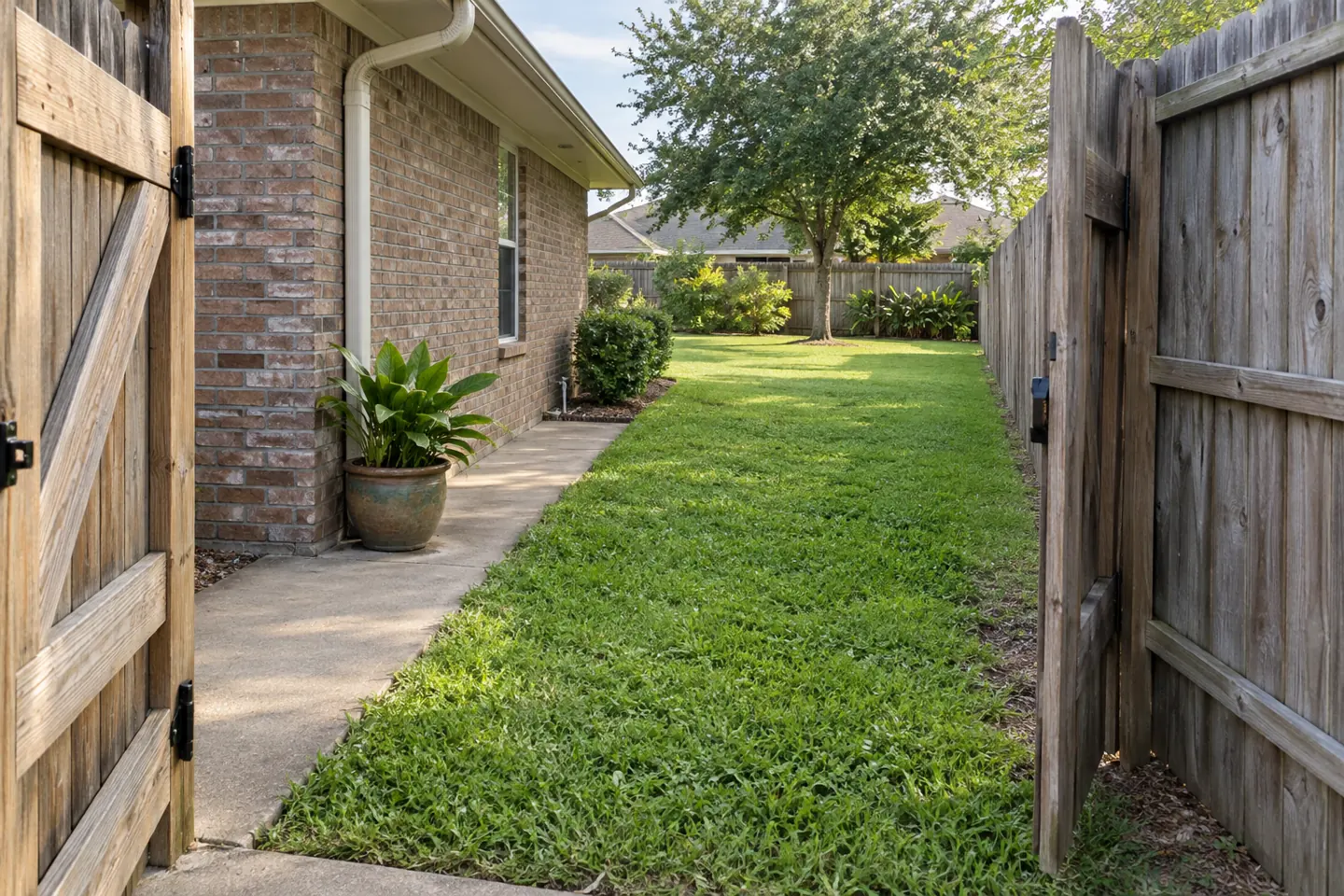
A mower cannot safely or neatly reach every corner. String trimming, commonly called weed-eating, addresses suitable grass growth around obstacles and along accessible areas outside the mower’s path. That may include fence lines, posts and other edges, depending on the agreed work.
Tell Happy about delicate plants, exposed roots, irrigation parts and anything that needs a protective distance. Trimming should not be mistaken for shrub pruning, excavation or permanent weed removal. If the real problem is vines, woody growth or hidden junk, show that separately before assuming it belongs in a standard lawn visit. See what trimming involves.
Blowing provides the final cleanup
Once cutting and trimming are finished, clippings on the agreed paved areas need attention. Blowing helps clear the immediate mowing debris from those surfaces.
It is a finishing service rather than a promise to deep-clean concrete, remove staining or haul away every pile already sitting on the property.
Discuss where debris should go and point out drains, open garages, parked vehicles and sensitive areas. Grass should not be deliberately pushed into a storm drain or onto a neighbor’s property. If bagging or hauling is important to you, make it part of the scope instead of leaving it as an assumption. Learn about the finishing cleanup.
Weed control needs a specific conversation
Weed control and weed-eating are different services. That distinction matters. A trimmer cuts top growth; other methods may involve different products, target areas or restrictions.
Ask what is proposed, which plants it is intended for and what instructions apply before any treatment is agreed.
We do not describe every product as harmless or claim that an unidentified weed can be permanently eliminated in one visit. If you have concerns about pets, children, vegetable beds or nearby water, explain those at the quote stage. Product use must follow its label and applicable requirements. Ask about weed control.
What a useful quote request includes
- The complete property address and a reliable contact number.
- Front-yard and backyard photos showing the overall condition.
- Pictures of narrow gates, blocked access or significant obstacles.
- Your preferred frequency: weekly, every other week, a one-time request or help deciding.
- Current grass height and roughly when the lawn was last cut.
- Bagging preferences, areas to skip, pets and known wet or soft spots.
These details help distinguish a routine maintenance quote from a more involved first visit. Happy will review the request and confirm the quote and available timing with you.
A good maintenance plan can change with the season
Instead of choosing a mowing interval by habit, look at the lawn between visits. If it repeatedly becomes very tall, the interval may be too long for current growth.
If little growth is happening, a different arrangement may be sensible. Moisture, shade and weather can make two nearby yards behave differently.
Ask how route timing, rain delays and frequency changes will be handled. An agreed plan should also explain what happens when you are away, a gate is locked or an area is temporarily blocked. Read our weekly versus biweekly guide for the decision factors to discuss.
Know the boundaries of the service
We focus on lawn maintenance; fertilization, aeration, overseeding and pest control aren’t services we offer. Lawn information can help you understand a problem without turning it into a service we claim to sell.
Drainage repairs, tree work, landscape construction and major debris removal also should not be assumed from a basic mowing request.
That makes it easier to compare quotes fairly. Match the same property areas, frequency and finishing work, rather than comparing a full maintenance visit with a price that covers mowing alone. When you are ready, send Happy your lawn details or call (504) 339-3571.
Give your lawn a little happy planning
Not sure which service to choose? Start with the part of the yard that catches your eye for the wrong reason. If the grass is tall across the open lawn, mowing is the obvious starting point.
If the center looks fine but the fence line is shaggy, trimming may be the detail you’re missing. If the lawn is cut but the sidewalk looks untidy, ask about edging and the final cleanup together.
There’s no prize for picking the right technical word on the first try. Tell Happy, “I want it to look finished from the street,” or “The backyard is the part I need help with.”
We can use that description to talk through the actual areas and tasks. It’s a friendlier starting point than choosing a package and hoping it means what you want.
Here are a few details worth mentioning when you call or text:
- A divided yard: tell us which sections belong in the visit and how each one is reached.
- A narrow entrance: show the gate opening, including anything that limits the space beside it.
- A recent change: mention new planting, fence work or a parked trailer that changes access.
- A clipping preference: ask about collection and handling before deciding on the work.
- A particular priority: point out the front walk, patio edge or other detail you most want tidied up.
Once the quote is clear, keep a copy of the agreed work so it’s easy to refer back to. If your needs change, give Happy a heads-up before the next visit.
A few words early can save a lot of guessing later. That’s the kind of “No Mow Worries” we’re aiming for: useful lawn help, a clear plan and more room in your week for something you enjoy.
Read the estimate as a walk through the property
Picture the actual route through your yard while reviewing a proposed visit. Begin at the open front grass, follow the sidewalk toward the driveway, then consider the gate and backyard. At each section, ask which task is being discussed. Cutting the open lawn, maintaining an existing hard edge, trimming an accessible corner and addressing mowing debris on pavement are separate parts of the finish.
A simple hypothetical makes the distinction clearer: you might request front and backyard mowing, the front-walk edge and blowing on the driveway, while leaving a planted side strip and a cluttered patio out. That area list describes something more useful than a general request for everything. It also makes a later change, such as adding the patio to the finishing conversation, easy to identify before assuming it was included.
Check any point that does not match your understanding before relying on the arrangement. Keep current photographs with the agreed task list, and use the same landmarks when discussing the completed visit. If access or the included areas change afterward, explain the change directly. A quote is easier to use when you can follow its meaning around the actual property without guessing what each service word covers.