
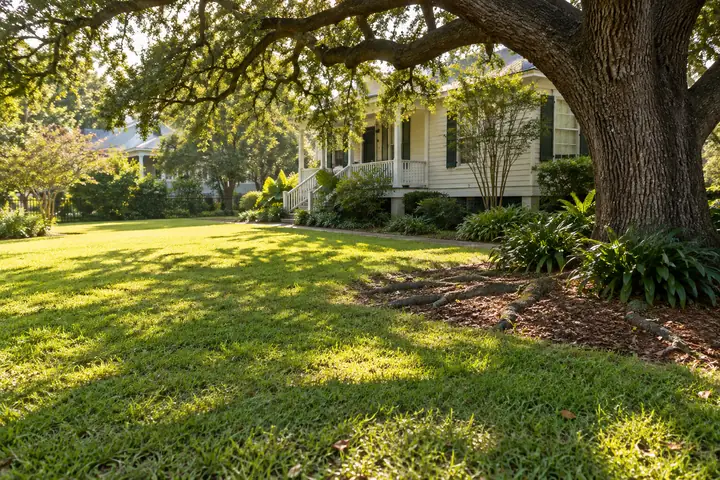
A shaded yard deserves a closer look
The grass near a tree can look very different from the open strip beside the driveway. It may be thinner, grow at another pace or surround roots that change how the area can be maintained. When you ask for lawn care in Algiers, show those differences instead of trying to describe the whole property as one standard lawn.
Happy Grass Lawn Care offers mowing, edging, weed-eating and blowing across the listed Westbank service areas, including Algiers. Lawn weed-control requests can also be discussed. This page focuses on planning maintenance around shade, trees and the boundaries between planted areas and open turf. It is not a tree-care service or a promise to make grass grow in every shaded corner.
Your priorities might be as simple as keeping the sunny front section manageable while being careful around the tree in the back. That is useful information. A sensible lawn plan can recognize differences within one property rather than expecting every square foot to have the same look, growth or treatment.
Photograph the change from sunshine to shade
Take a wide picture showing the open lawn and the shaded part together. Then add a closer view of the tree area, exposed roots, a planted ring or any thin section you are worried about. A close-up alone can hide the relationship between the tree, the light and the surrounding mowing space.
If the appearance changes through the day, describe what you normally notice. You do not need to calculate sunlight hours or diagnose the grass before asking for mowing. Tell Happy which areas stay shaded when you are usually home and which sections seem to get ahead of the rest between visits.
Pictures should show the actual yard, not just the best-looking angle. Include nearby furniture, fences or access paths so obstacles can be understood. If you want part of the shaded area excluded from mowing, explain that specifically. A maintained margin can be an intentional choice, not an unfinished spot that everyone interprets differently.
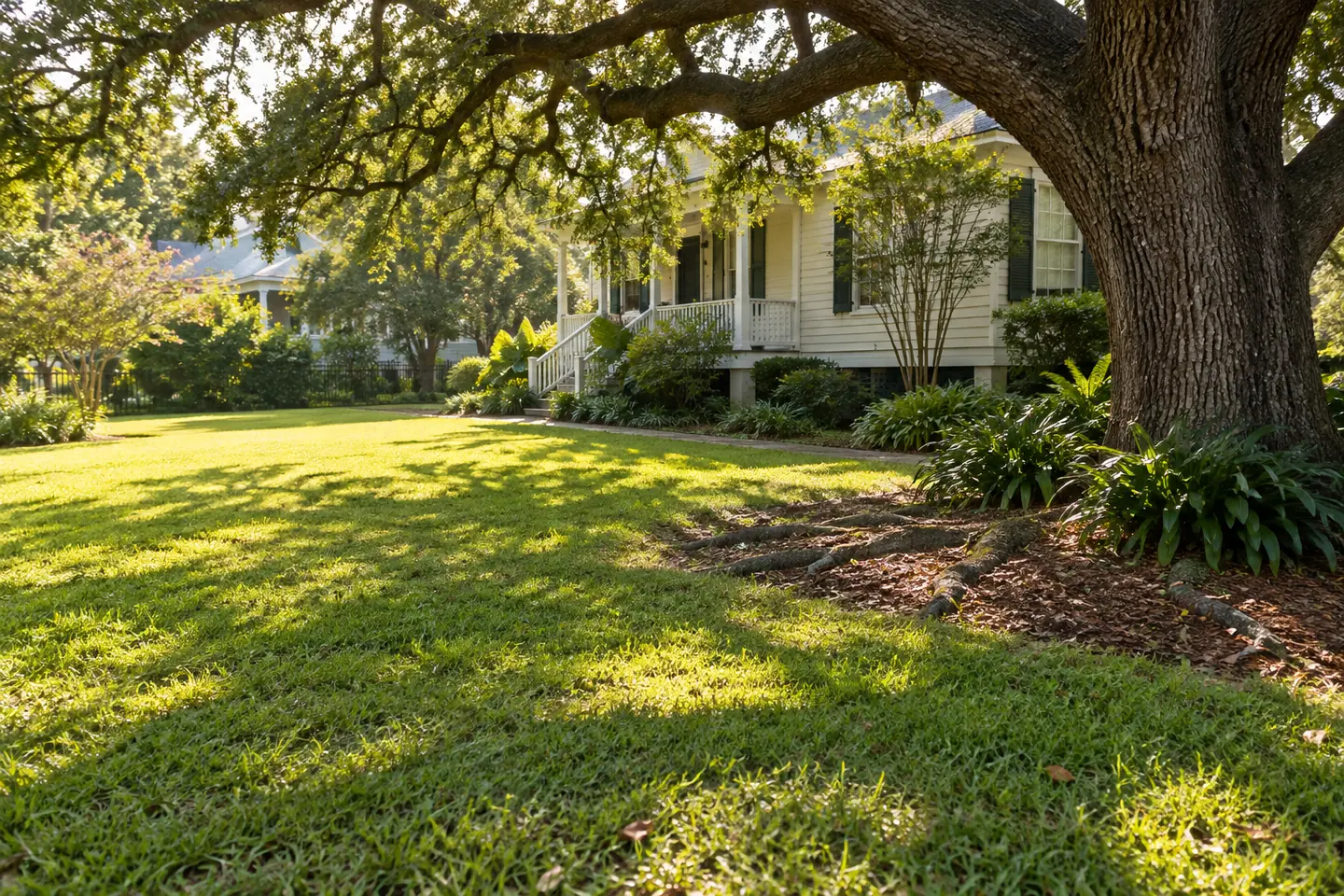
Trees and exposed roots are not mowing instructions
Point out roots that can be seen at the surface and anything that is difficult to see through the grass. Do not assume those roots can be cut, shaved or covered as part of a routine lawn visit. Tree-root changes are a different matter from trimming nearby suitable growth.
Happy Grass needs to understand where the equipment can work and where a careful boundary should remain. Show any existing mulch, protective ring or planted area around the tree. Explain whether that area is to be left alone and where you understand the mowing boundary to begin.
If the tree itself seems to have a problem, seek appropriate tree-care advice separately. A fresh grass cut does not diagnose root, branch or structural concerns. The useful conversation here is about the lawn areas and finishing tasks that can be agreed without pretending the tree is simply another obstacle to remove.
Thin grass and tall grass are different observations
One part of a yard can need a cut while another looks sparse. Describe both conditions rather than asking for everything to be cut as low as possible. The appearance of thin turf does not establish its cause, and a mowing request should not turn into an unsupported diagnosis from a photograph.
For general background, LSU AgCenter explains that shade affects warm-season turf and its maintenance choices. If you need grass-selection or plant-health advice, its lawn resources can help you ask more focused questions. Happy can discuss the requested maintenance without promising that cutting will solve a separate growth problem.
Tell us whether a sparse area is new or has looked that way for a while. Mention any recent change you know about, such as a new planted bed or an area that is no longer used for grass. Those observations help define the visit, even when the answer is to keep lawn equipment out of one section while another issue is assessed.
Make the trimming boundaries easy to recognize
Fence posts, path edges, planting borders and tree surroundings can be close together in a shaded yard. Show where the grass meets each material. A narrow strip beside a fence may be suitable for trimming, while the young plant immediately beside it needs a deliberate buffer.
- Identify plants and low decorative features hidden by growth.
- Show existing mulch and planted rings that should stay undisturbed.
- Point out visible irrigation pieces or fixtures near the grass.
- Mark the distinction between lawn, garden and a neighboring area.
The goal is not to remove every bit of greenery around the property. It is to agree on what belongs in the lawn-maintenance request and what should be protected or excluded. Specific boundaries make it easier to describe a tidy finish without asking someone to guess which growth you wanted to keep.
Think about leaves before deciding what cleanup means
If leaves are part of your request, show the amount and where they sit. A few scattered leaves, a thick accumulation and a separate pile of branches describe different work. Do not assume that a grass-cutting quote includes every kind of material beneath a tree.
Blowing addresses agreed mowing debris on suitable paved areas. Clipping collection, leaf handling and extra cleanup need their own clear discussion. Photograph the walk or driveway you want included, alongside a wider view of the grass. That gives the finishing request a location and a scale.
It also helps to explain what bothers you most. You may care about being able to use the front path, keeping the patio approach tidy or simply seeing a maintained lawn from the window. Those priorities help guide the conversation without making a larger cleanup promise than the actual quote covers.
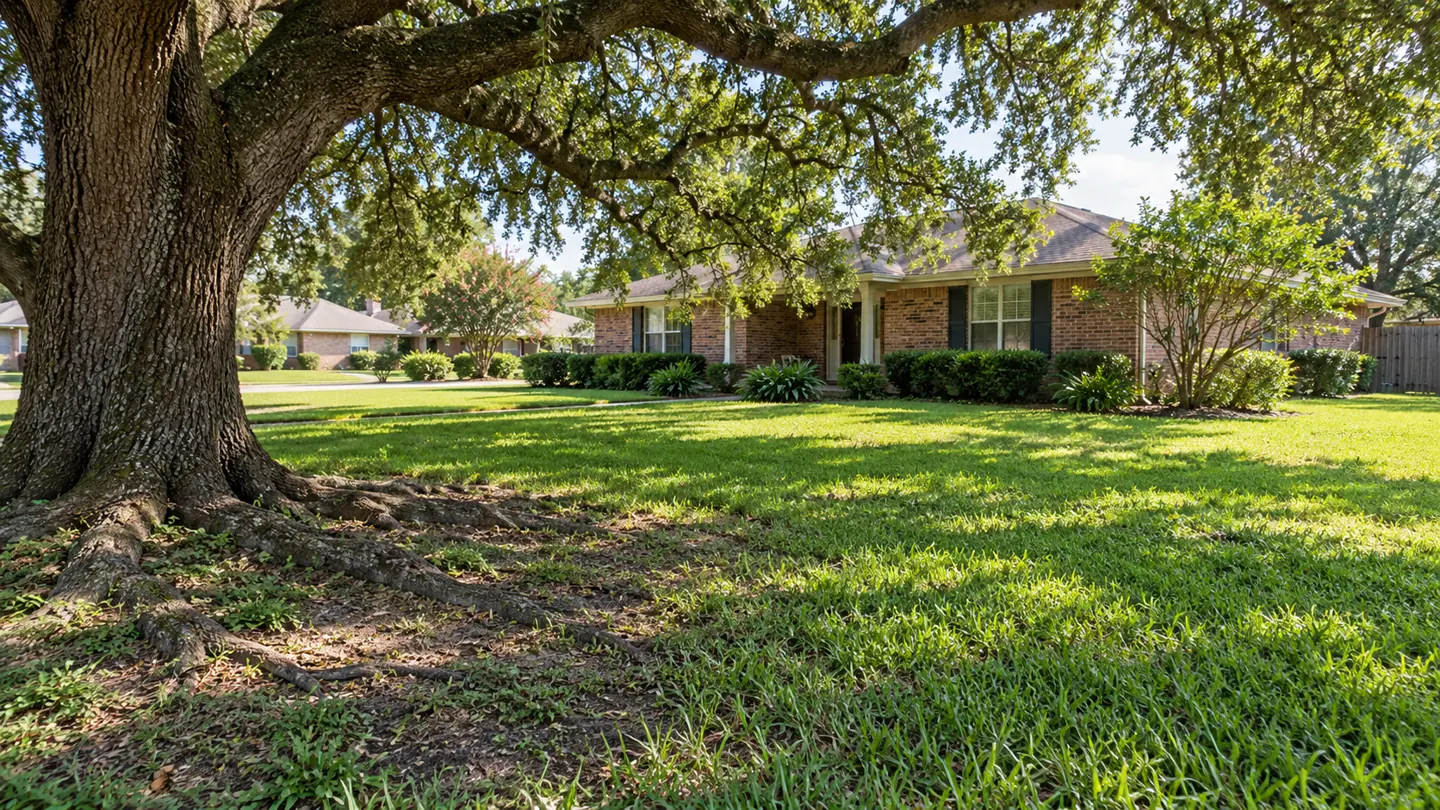
Review the mowing routine across the whole property
Happy Grass offers weekly and every-other-week options to discuss. Look at the lawn before the next expected cut and notice which sections are driving the request. The sunny area may be getting tall while a shaded section barely seems to have changed.
Do not judge the routine from just one patch or expect every area to need identical attention at the same time. Tell Happy what you observe and the finish you prefer. The work included, the condition of the lawn and route availability all need to fit the plan.
If maintenance has been missed, describe the current growth and approximately when it was last mowed. The first visit may need a separate assessment before an ongoing routine makes sense. Honest pictures give everyone a more useful starting point than assuming the whole property can be treated as an ordinary recurring cut.
Access and soft ground still matter under the shade
Show the route into the backyard, including any gate and turn. A broad space around a tree may still have a narrow entrance. Include the clear gate opening if you know it, and identify steps, low branches or areas where equipment access needs to be reviewed.
After rain, report the actual ground condition. If one part stays soft longer than another, explain where and send an updated picture. A bright day or dry paved path does not settle the condition of the grass. Timing and any change in the agreed work should be confirmed directly rather than assumed.
Secure pets away from the work area and move loose belongings before a visit. If furniture or another large item will remain, describe it during the quote discussion. There is no need for a lengthy instruction sheet; a few clear access and preparation details can prevent the most avoidable misunderstandings.
Ask Happy about your Algiers lawn
Send the property address, wide lawn views and the close pictures that explain shade, roots, access and boundaries. Tell us which areas you want included and whether you are interested in recurring mowing or help with the first visit. Choose the contact method that suits you.
Happy Grass focuses on lawn maintenance, not fertilization, aeration, overseeding, pest control or tree treatment. Keeping those limits clear helps the conversation stay useful. Call or text 504-339-3571 and ask for Happy, or use the quote form. The work, price and timing need direct confirmation. Let’s make a lawn plan with a little care for the whole picture.
General lawn background: LSU AgCenter on shade and warm-season turfgrasses.