
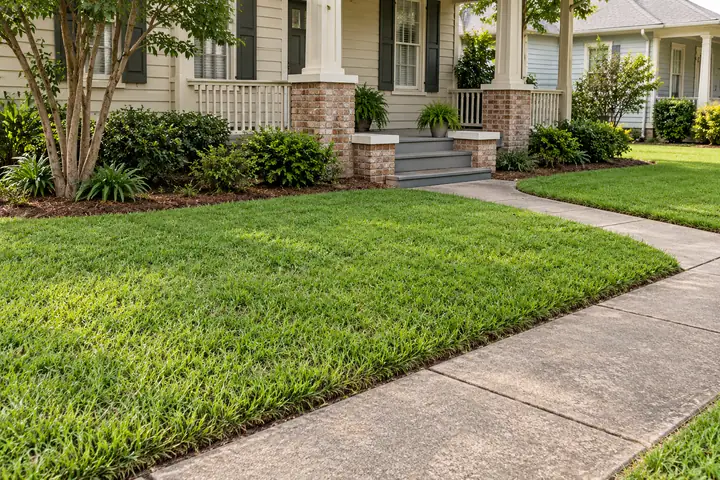
A small frontage can have plenty of little details
Some lawn requests are about a broad open yard. Others are about the pieces around the front walk: grass along the sidewalk, a narrow strip beside the driveway, growth around the steps and the section next to a planted bed. A modest amount of grass can still include several different maintenance tasks.
Happy Grass Lawn Care serves Gretna with mowing, edging, weed-eating and blowing, with lawn weed-control questions available to discuss. This page focuses on the frontage and boundaries that shape a residential quote. It does not assume that every Gretna home has the same size or layout. Your property, the way you reach it and the finish you want are the starting point.
If the front is what you see every day, tell Happy which line catches your eye. Maybe the walkway seems to disappear into the grass. Maybe you want the open lawn maintained but the small area beside the steps left alone. The more clearly we describe the work, the less room there is for two different ideas of a tidy visit.
Show the frontage from the sidewalk to the door
Take a wide photograph of the front yard so the full arrangement is visible. Then take a closer view along the grass-to-pavement boundary. A close-up shows growth and edge condition; the wide view explains where that edge starts, stops and connects to the rest of the request.
Include short sections that might be overlooked: a strip between paved areas, a patch at the side of the drive or grass around a corner. If the property has a backyard as well, say whether it belongs in the same quote. A frontage request should not silently turn into a whole-property request, or leave out a backyard you expected to be included.
There is no need to photograph neighbors’ private spaces to explain your own boundary. Describe the line you understand to be yours, and raise any uncertainty before service. Happy can discuss the work requested; a lawn visit should not become an improvised decision about an unclear property line.
Mowing and edging solve different parts of the picture
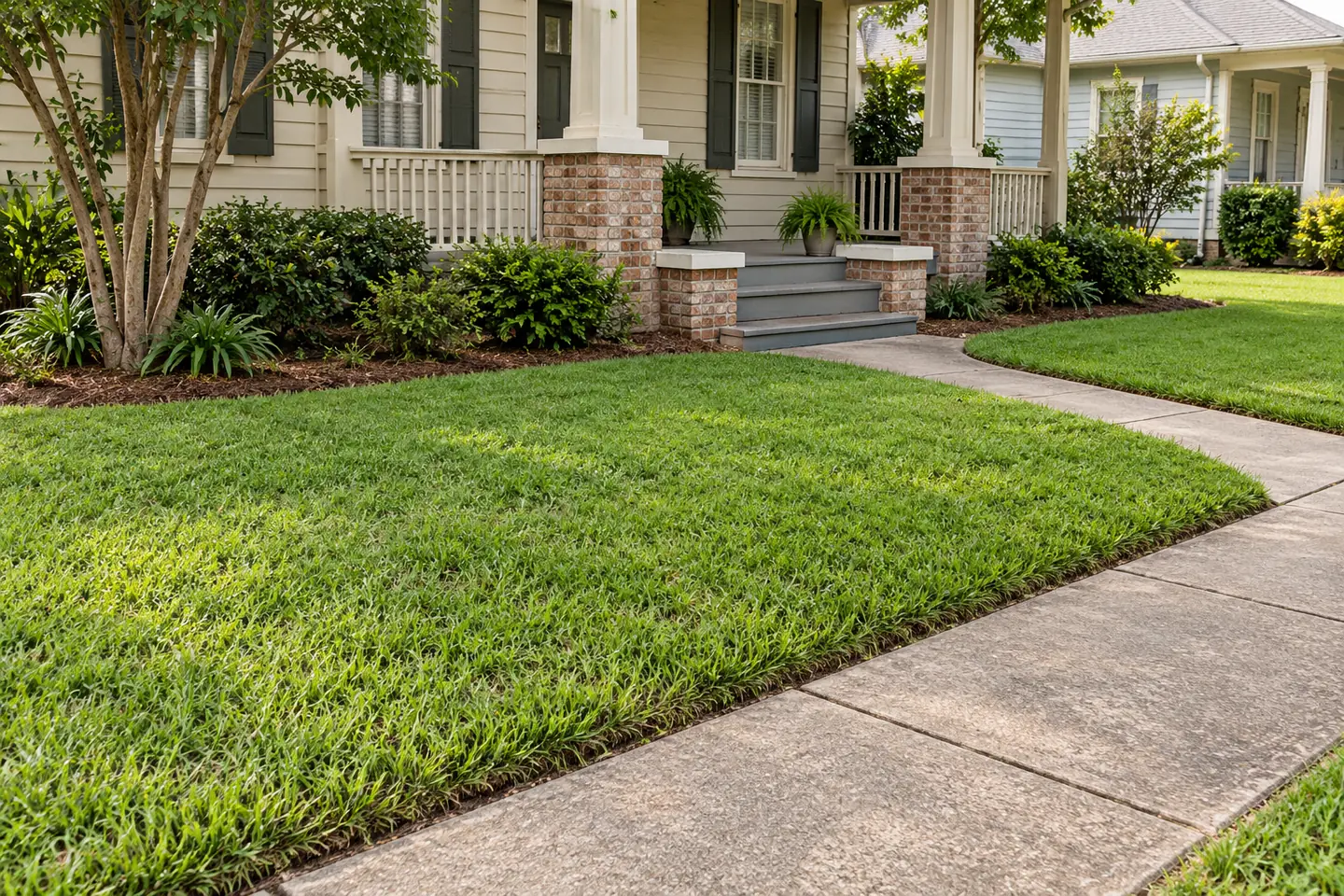
Mowing reduces the open grass to a maintained height. Edging addresses the line beside suitable hard surfaces. That distinction matters when a yard looks cut in the middle but still feels untidy along its paths. If you want both tasks, include both in the request rather than assuming one word covers everything.
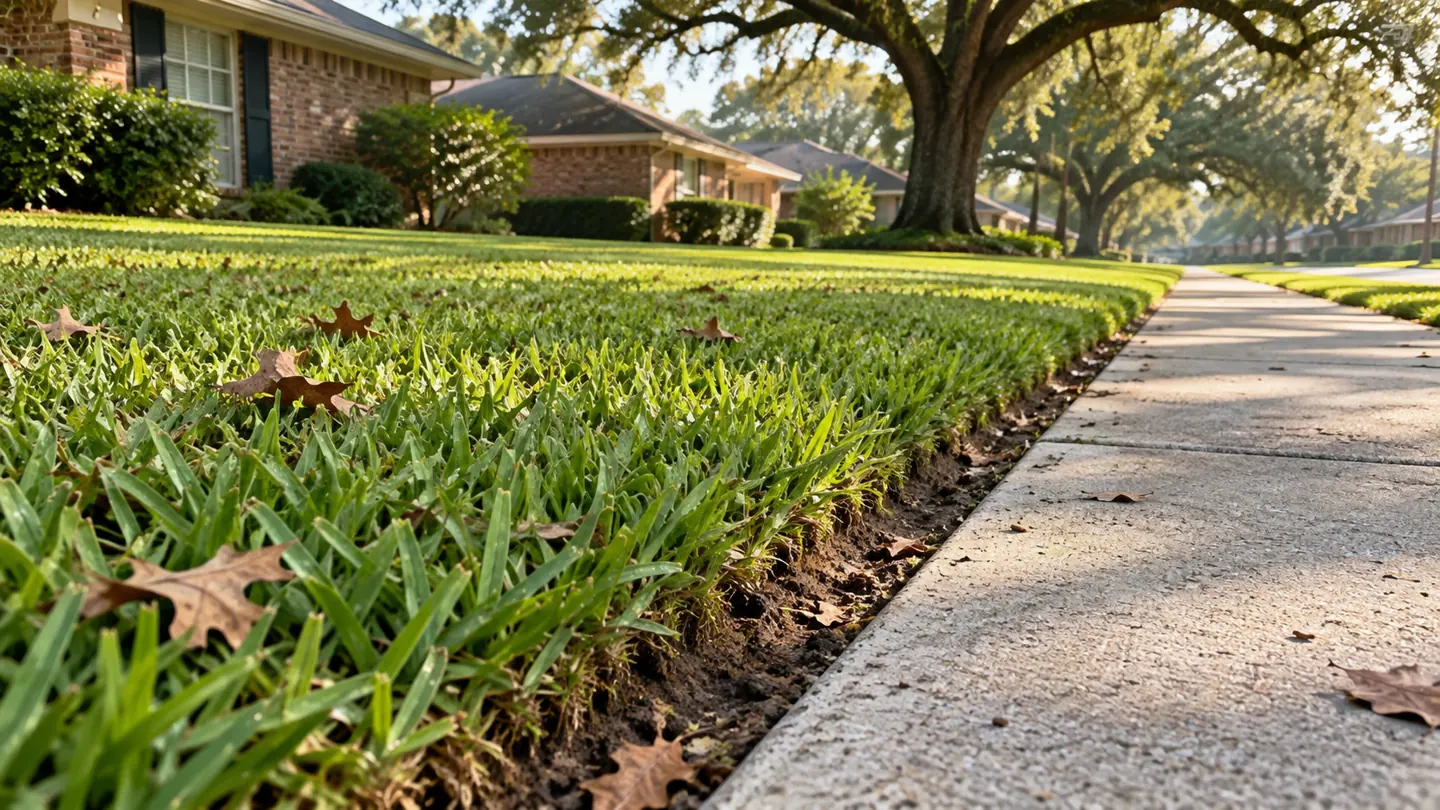
Photograph the actual pavement edge. A straight sound section is a different condition from a broken corner, uneven slab or area where grass has spread over an old surface. Point out loose or damaged materials so the discussion can account for them. The goal is a practical plan, not a promise that edging will restore damaged concrete.
Some frontages also have decorative borders, planted edges or fragile features. Explain where a hard edge is suitable and where you would rather leave a defined margin. A crisp-looking line should fit the material and the location. It does not need to mean cutting every border in exactly the same way.
Identify the corners a mower does not explain
Steps, posts, fences, garden features and planted areas can leave small spaces that need a trimming conversation. Take a picture of the surrounding area as well as the grass. An isolated close-up may make a tight space look much simpler than it is.
Point out young plants, low decorative lights, visible irrigation pieces or other items needing care. Small features can be difficult to see through tall growth. Please move loose belongings before the visit and identify anything that must remain in place. Clear information is more useful than expecting the equipment operator to discover every object at the last moment.
- Show suitable growth beside posts and around accessible corners.
- Identify the areas where you want a deliberate buffer around plants.
- Mention hoses, cords or small objects that will be moved before service.
- Separate grass maintenance from requests to remove established plants or repair landscaping.
If a spot cannot be reached appropriately, discuss that limitation. It is better to have an agreed exception than a blanket promise about every blade around a delicate feature.
Agree on the finish along paved areas
Blowing helps address mowing debris on agreed paved areas. Decide which surfaces matter for this visit: the front walk, driveway, patio approach or another suitable section. If you want clipping collection, ask about that separately so it is not confused with moving ordinary loose material off the pavement.
Leaves, old branches and debris from another project are also worth identifying before the quote. Show the amount and location rather than treating everything outdoors as part of mowing cleanup. A picture that includes the pavement and the nearby lawn makes the requested finish easier to understand.
Avoid judging two lawn quotes only by the total price when their finishing work is different. One request may cover the front grass alone; another may include edging, trimming and blowing as well. Write down the included tasks and compare the same areas. A clear scope is useful even when the yard itself is not large.
Plan access without assuming the street tells the whole story
Explain how the property can be reached on the service day. If a gate separates the side or backyard, show it open. If the access path includes a tight turn, steps or a narrow gap, include that in your message. Space visible from the street does not guarantee access to every area behind the house.
Vehicles and movable belongings may affect the work beside a driveway. If something needs to be moved for the agreed service, make the arrangement in advance. Do not assume lawn equipment can be carried through a building or squeezed through an entrance simply because the patch beyond it is small.
Tell Happy about pets and the way gates should be handled. Please have pets secured away from the work area and loose toys or other items put away before service. Whether you are home or away, the access plan should be clear enough that nobody needs to guess which entrance is available.
Choose timing around growth and the yard you want to see
Weekly and every-other-week service are options to discuss with Happy Grass. Think about the frontage between cuts, not just immediately afterward. Does the grass along the walk become noticeable well before the next visit? Does the open lawn remain comfortable while small boundary areas get ahead of you?
Describe those differences instead of treating the entire property as one uniform patch. Current pictures can help explain what you mean. If you have missed several cuts, give the approximate last mowing date so the first visit can be considered separately from the ongoing routine.
Mention a gathering, trip or other preferred timing early. Availability and conditions still need to be reviewed, and a message does not reserve a date. If rain leaves grass or access areas soft, send an update. A dry stretch of sidewalk does not establish that the nearby lawn is ready for equipment.
Send a simple Gretna lawn request
Include the property address, wide front-yard photograph and close views of the edges or corners you want discussed. State whether the backyard and side areas belong in the same request. Add your preferred contact method and the tasks you want included: mowing, edging, trimming, blowing or help deciding among them.
There is no need to make the lawn sound worse or better than it is. “The grass is manageable, but I want the front walk and driveway edges looking tidy” is a useful description. So is “I need help with the whole yard, and the gate is the part we should check first.” Plain language gives the conversation something real to work with.
Happy Grass focuses on lawn maintenance. Fertilization, aeration, overseeding and pest control are not offered. If you are concerned about a lawn problem beyond the requested cut, describe it separately so expectations stay sensible. A fresh finish and a diagnosis are different things.
Call or text 504-339-3571 and ask for Happy, or use the lawn quote form. Happy will review the details and confirm the work, price and available timing directly with you. Let’s give the grass and those little frontage details a happy plan, Gretna.
Make overlapping frontage views easy to read
Two frontage photographs can show the same grass so differently that they appear to describe separate areas. For a Gretna request, give the shared corner or walkway a consistent label in both views. Explain which photograph looks toward the entrance and which looks back toward the street. This helps connect the pictures without requiring anyone to guess the layout from nearby buildings.
If the requested area approaches a shared boundary, describe the portion you can authorize and identify the point that still needs clarification. A neat-looking line in a photograph is a visual reference, not proof of ownership or permission. Settle that uncertainty before it becomes a cutting instruction. The result is a more precise frontage request, with fewer assumptions hidden inside phrases such as “all the grass out front.”