

Give us the yard details.
We’ll start the conversation.
There is no need to know every lawn-care term before asking for help. Tell Happy what bothers you, which parts of the property need attention and how often you would like the work done.
If the whole mow, edge, trim and blow combination is what you have in mind, choose it on the form.
This request starts a conversation about your lawn. Happy still needs to confirm coverage, condition, price and route availability before anything is scheduled. You are not authorizing unspecified work or paying for a package by pressing the submit button.
- Share the address and a working contact number.
- Choose the services and frequency you want to discuss.
- Add up to four useful yard photos if you have them.
- Tell us about gates, pets, wet spots and areas to skip.
Prefer to talk it through? Call (504) 339-3571 and ask for Happy, or send a text.

Let’s talk about your yard
Get your lawn quote
By submitting, you’re asking Happy Grass to contact you about this request. Privacy details.
A few details make a much better quote
The property address is a starting point, but it does not show everything that affects a lawn visit. A fenced backyard may need a narrow access route. A corner lot can have more visible edge than you expect.
Tall growth can change the first visit even if the area is small. Explain those practical differences in the notes.
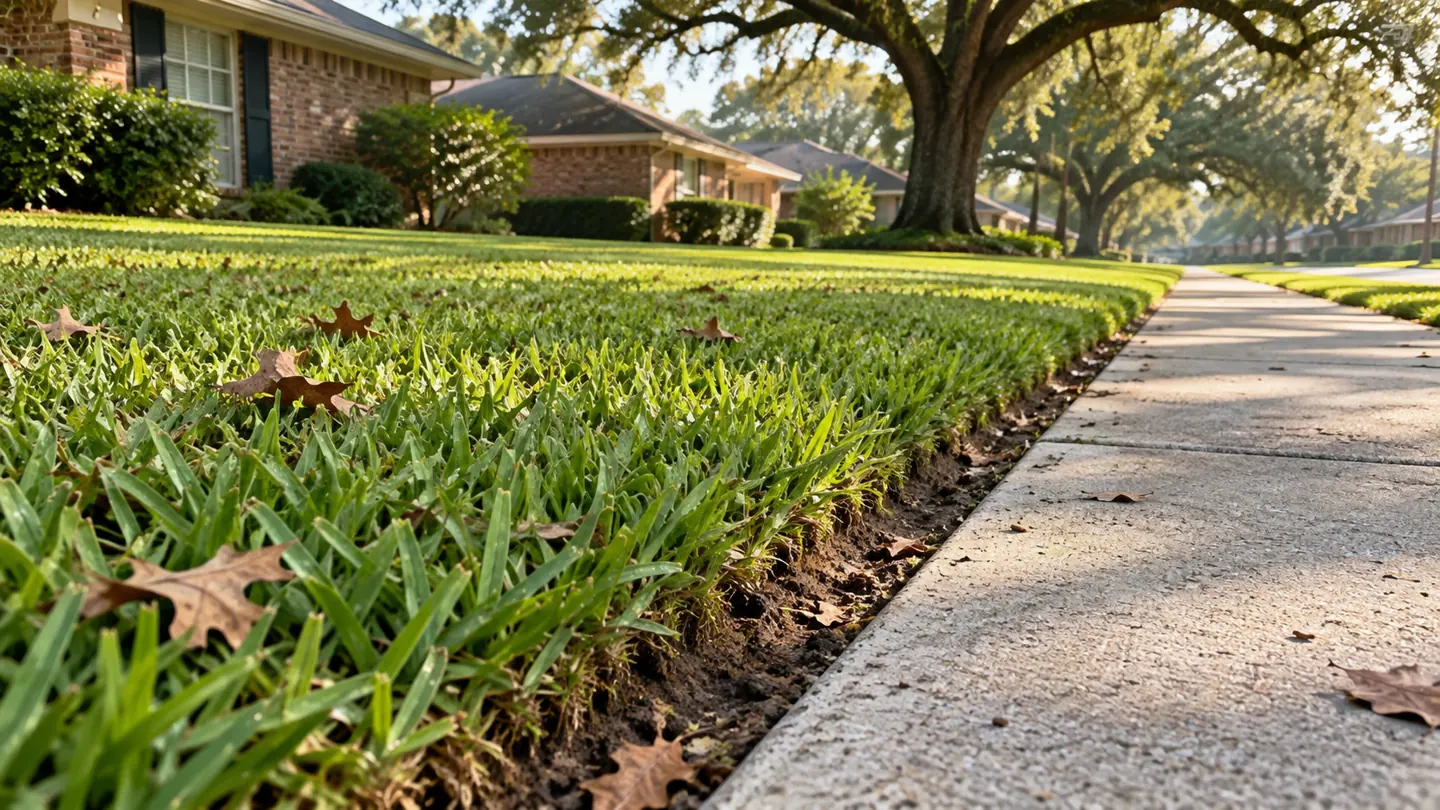
Recent photos help Happy see what you mean. Stand far enough back to show the overall lawn, then add a closer view of the issue that matters most. If the biggest concern is grass over the sidewalk, show the boundary.
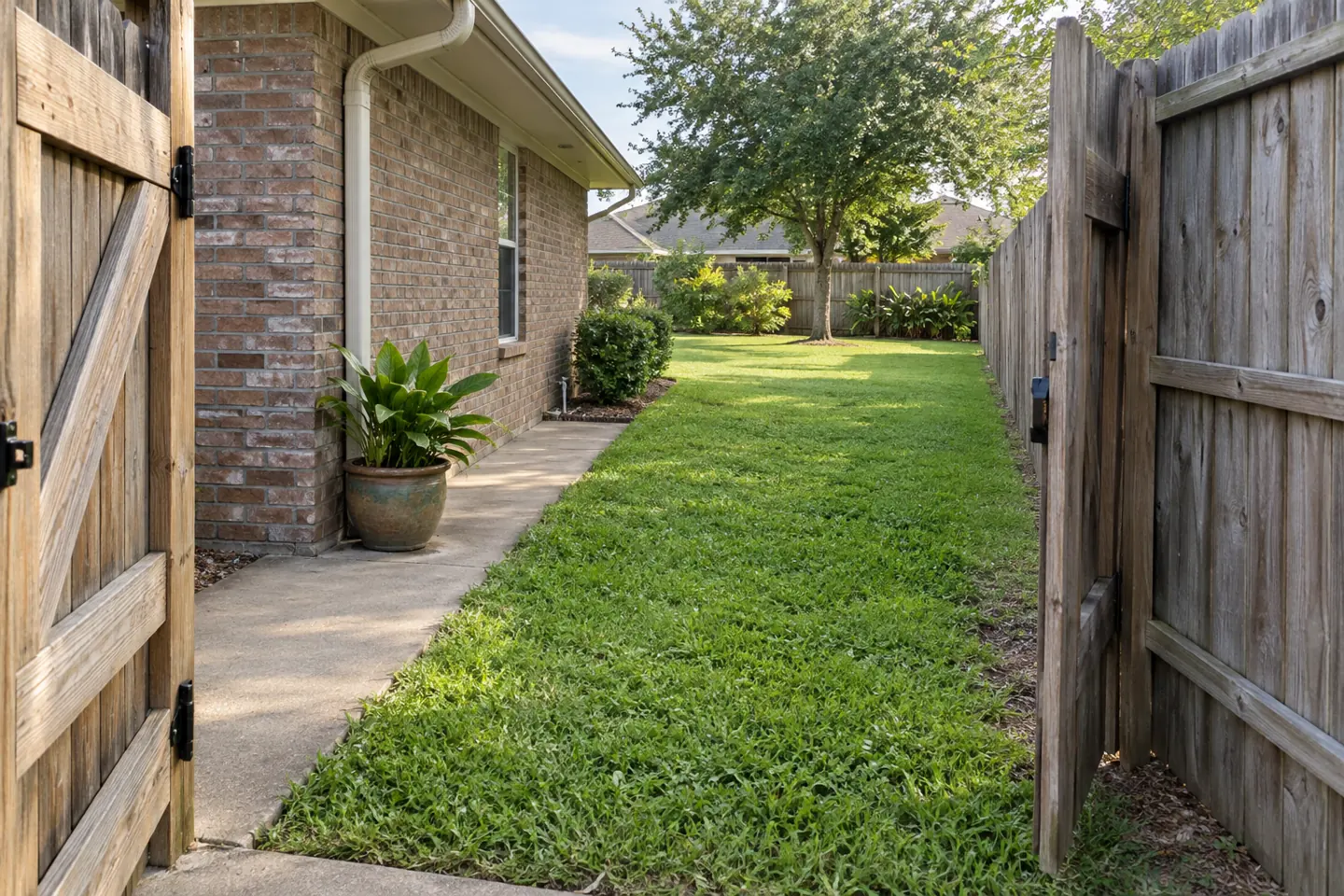
If the backyard gate is tight, show the clear opening and the route through it.
Choose the frequency you want to discuss
Weekly and every-other-week maintenance are both options to ask about. If you are unsure which fits, say so. The lawn’s actual growth, condition and your expectations matter more than choosing an interval by habit.
A regularly maintained yard and a one-time recovery request should not be treated as the same job.
If you have a deadline, put it in the notes and call if timing is important. Do not assume that an online request reserves a particular day. Weather, route arrangements and the condition of the ground can all affect scheduling.
The agreement should be confirmed directly before you rely on a date.
Keep access instructions useful and private
Explain whether there is a locked gate, a pet area or a section reached from a separate entrance. Mention that a code needs to be arranged without putting the code itself in this general form.
Moveable obstacles, hoses, toys and pet items can be discussed before the first visit.
If there are things that should not be touched, identify the boundaries clearly. Photos can help show a garden bed or exposed roots, but avoid including faces, license plates or private documents that are not necessary to explain the lawn.
The form is for a yard request, not a full personal history.
Know what happens next
After submission, the request is saved for review and notification. Happy can ask follow-up questions, explain which work fits the request and confirm the quote and availability. You can then decide whether to move forward.
Keep the discussion focused on the included areas, frequency, clipping handling and the result you expect.
Our listed service areas are Harvey, Marrero, Gretna, Algiers, Belle Chasse and Westwego. If your address is outside that list, choose the coverage question and ask. We do not promise every address or type of yard can be accepted.
A clear answer is more useful than an automatic booking that has not been checked.
A useful quote starts with a useful picture of the yard
Describe the work before comparing the price
A lawn quote becomes much easier to understand when the work has a clear name. Start with the areas: front, back, side strips and any separate patch you want included. Then identify the tasks you want discussed. Mowing open grass, edging suitable pavement boundaries, trimming awkward spots and blowing mowing debris are related jobs, but they are not the same job.
If you want a complete maintenance visit, explain what that means to you. Perhaps the driveway edge is the part you notice first. Perhaps the backyard is manageable except for the fence line. Those preferences belong in the conversation before a price is confirmed. Otherwise, two people can agree on the words lawn service while imagining different things.
Photographs that answer the next question
Start with wide views of the front and backyard. A wide picture explains the arrangement of grass, pavement, buildings and obstacles. Follow it with the close views that show the details: a narrow gate, tall growth around a post or grass spreading over a path. One photograph rarely answers every part of a property request.
For access, show the gate open and the approach on both sides. If you know the clear opening width, include it. Point out steps, sharp turns and areas that stay soft after rain. These details help Happy understand how the work could be reached rather than simply seeing that there is grass somewhere beyond the entrance.
Be honest about the current growth
You do not have to tidy up the lawn before asking for a quote. Send current views and say approximately when the grass was last cut. A first visit after missed maintenance may involve a different amount of work from an ordinary recurring cut. Discussing that difference early helps keep expectations sensible.
If an older photograph is the only one available, say when it was taken and explain what has changed. A property listing picture is useful for layout, but it may not show current growth, new fencing or objects now in the yard. Happy needs the present condition before confirming the work and price.
Separate the essentials from extra requests
Mention clipping collection, leaves, branches or other debris separately. A request to mow the lawn does not automatically describe a larger cleanup. Show the amount and location of extra material and ask about it plainly. The answer should fit the actual request rather than an assumption about everything visible outdoors.
Also identify work that is outside the request. If a newly planted area should be left alone, say so. If grass behind a shed is not to be included, explain that boundary. A clear exclusion can be just as useful as a clear inclusion when the aim is a visit you understand.
Choose a contact method you will actually see
Use the form’s contact preference to say whether a text, call or email suits you. Check the phone number before sending. If you choose email, provide an address you can receive replies at and look for the conversation there. An accurate way to reach you matters more than writing a long description in polished language.
The quote request is the beginning of that conversation. It does not collect a payment, settle the price or reserve a service date. Happy still needs to review the details and confirm the included work, quote and available timing directly. If you have a question about whether the message went through, contact Happy rather than sending several contradictory versions of the same request.
Update the request when the property changes
If someone cuts the lawn, a gate becomes unavailable or rain changes access after you submit the form, send an update before the expected visit. A quote discussion should describe the yard as it will actually be serviced. The earlier photographs remain useful background, but they should not be allowed to tell a story that is no longer current.
Ready to get started? An ordinary sentence is enough: the front and back need mowing, the gate is on the left and the fence line needs attention. Add the address and pictures, choose your preferred contact method and let’s talk it through. No grass-shaming, no fancy lawn vocabulary required.
Send a correction as a correction
If you notice that a submitted request is missing something, identify the property and say exactly what should change. Perhaps the backyard should be included, the current photos are newer than the first set, or your preferred reply method is different. Label the update clearly so it does not look like a separate request for another property.
Keep the correction focused on facts that affect the conversation. You do not need to resend private information or create several conflicting versions of the same instructions. If a quote or visit has already been discussed, ask Happy to confirm whether the change affects that arrangement. Updating a form is useful information, but the changed scope and any timing still need direct agreement. A clear correction saves everyone a little lawn-related guesswork.