
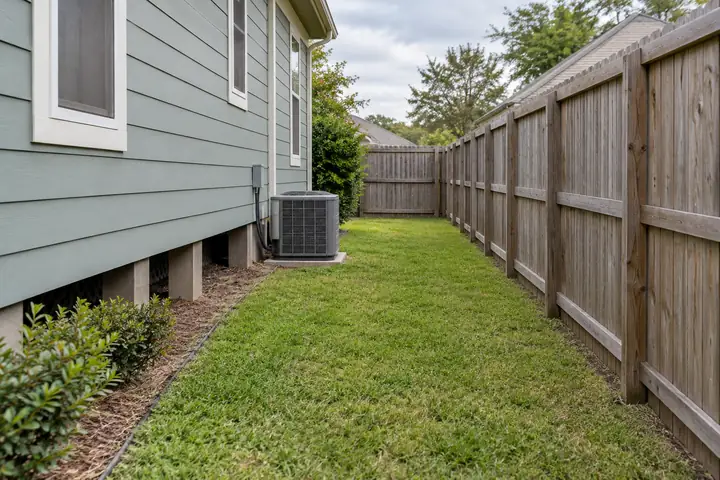
Give the side yard a place in the request
A narrow strip is easy to forget while looking at the big front lawn. Then the grass gets shaggy beside the fence, the hose disappears into it and the route to the backyard becomes awkward. This small space can be both a maintenance area and the only way to reach a much larger one.
Include it when you first ask about service. Explain whether you want the grass maintained there, need the passage used for access or both. A front-yard picture cannot reveal a tight corner behind the house. Showing the whole route helps Happy review the actual property instead of discovering an unexpected bottleneck after arriving.
Measure clearance rather than guessing
If it is safe, measure the clear gate opening between the fixed points equipment must pass through. The space just beyond it matters too. A generous opening followed by an immediate tight turn may be less usable than the gate alone suggests. Posts, latches and stored objects can reduce the practical clearance.
Send the measurement as useful information, not proof that a specific mower will fit. The actual equipment and route still need review. Take one picture looking into the entrance and another along the side passage. Include raised thresholds, steps and corners. Those fixed features explain the access more clearly than a simple statement that the gate is “pretty wide.”
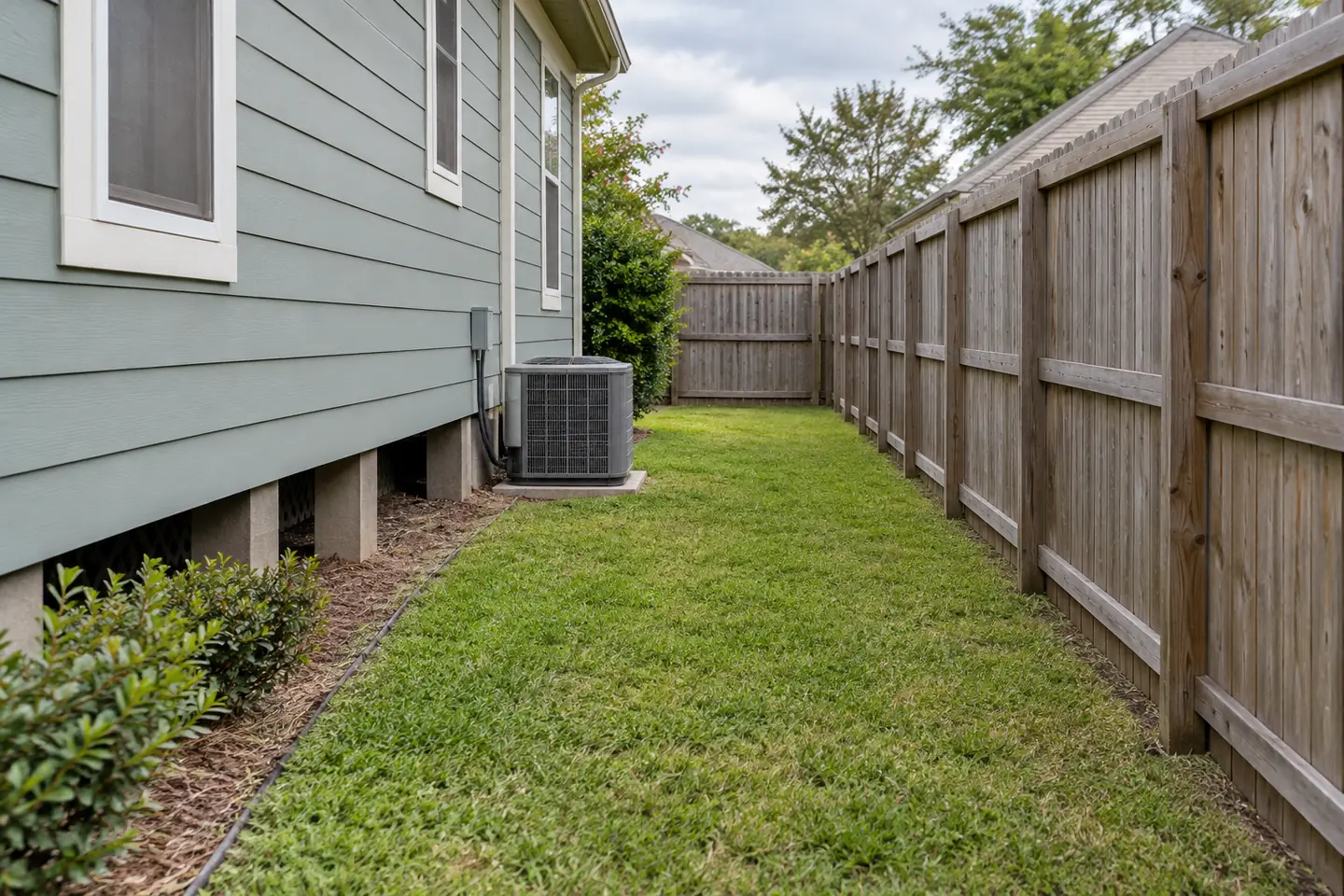
Point out the fixtures beside the house
Side yards often contain air-conditioning units, hose taps, utility covers, drains and exposed pipes. Some features are obvious; others sit low enough to disappear into growing grass. Mention known items before the visit, particularly anything newly installed or partly hidden. Do not open utility equipment or disturb a cover to take a photograph.
A short location note can help: “There is a low irrigation cover beside the concrete equipment pad.” Pair it with a wide view so the reference makes sense. Routine mowing and trimming should be discussed around those features. The work plan should not depend on guessing what an unmarked object is or moving equipment connected to the home.
Clear small objects within your ability
A loose hose, a child's toy and a stack of masonry are different preparation tasks. Explain what you can safely move before service and what must stay. Heavy materials, attached equipment and stored possessions are not automatically moved as part of a mowing quote. Agree on responsibilities instead of hoping the route will somehow be cleared.
- Put small personal items on a suitable hard surface.
- Coil loose hoses without disconnecting unfamiliar equipment.
- Keep the gate swing and turning area clear.
- Identify heavy or fragile items that will remain.
- Mention anything that must not be touched.
These small preparations make access clearer and help avoid an uneven-looking strip around objects nobody expected to move.
A narrow strip may need another method
Equipment that suits the open front lawn may not suit the side passage. Some portions may be considered for trimming, but the work method depends on space, footing, nearby materials and fixtures. A tool being able to reach the grass does not settle whether it should be used there. Suitability needs review.
Describe the result you want instead of prescribing the biggest machine. “Keep the passage tidy without disturbing the pipes” is a practical goal. A very tight gap may need an agreed margin or exclusion. Understanding that before the visit is better than discovering the only requested method cannot pass through the gate or turn safely beside the house.
Shade and moisture can change the grass
A side yard may receive less sunlight and air movement than the front. A roof outlet, irrigation line or low patch can also affect its moisture. Describe thin growth, damp soil and areas that stay soft after the rest of the yard dries. These observations are useful even when the cause is unknown.
Do not assume cutting lower will make a shaded strip fuller. Nor should an ordinary maintenance quote be treated as a diagnosis of drainage or turf decline. The immediate question is which grass can be cut appropriately and which areas need to wait or receive separate attention. Small spaces deserve the same care in planning as broad, easy lawns.
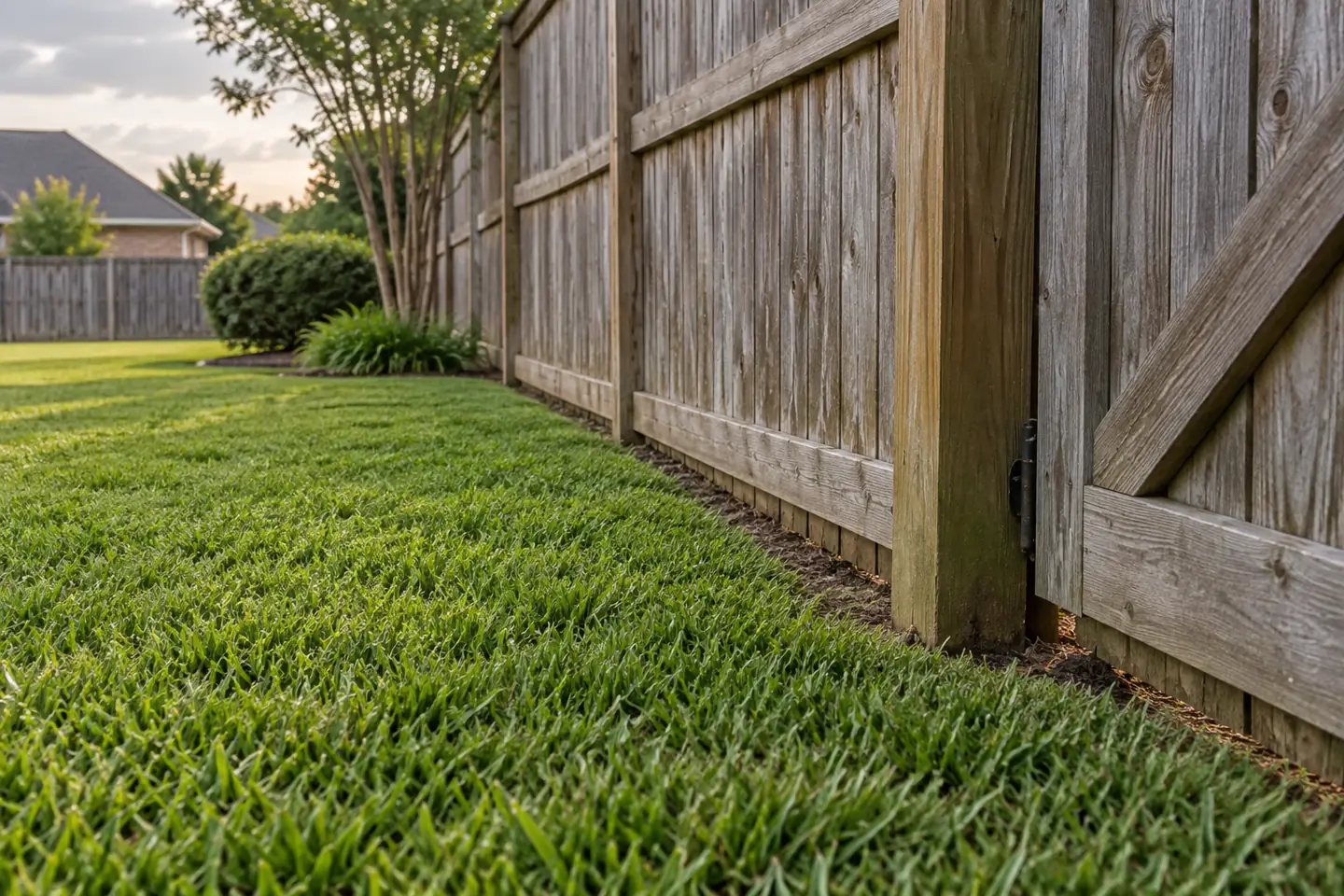
Protect the boundaries on both sides
One side may be painted siding and the other old wood fencing. Somewhere along the route, grass can meet a concrete pad or loose edging. Mention fragile finishes and existing damage you know about. A current picture helps establish the starting condition without turning the quote conversation into a list of guesses.
Trimming does not repair broken boards, loose masonry or exposed services. Ask about suitable clearance around vulnerable features. If the gap is too tight for appropriate work, a small defined uncut margin may be the practical outcome. Agree on that boundary rather than expecting equipment to reach every blade regardless of the material immediately beside it.
Quote access and maintenance together
Sometimes the side strip is tiny but controls access to an entire backyard. Explain if it is the only entrance. Mention a latch that needs special handling, a gate that swings shut or a lock requiring an arrangement. Share sensitive access information privately through the agreed channel rather than putting it in a public photograph.
The quote should reflect the actual route and finishing work, not just visible lawn size. Ask whether the side strip is included and what needs to be prepared by you. Structural gate changes, moving heavy storage and disconnecting fixtures should not be assumed. Clear responsibilities at the start make the eventual price and result easier to understand.
Review specific locations after service
If a section looks missed, identify it with a current photo and a fixed reference point. A patch beside a pipe may have been excluded for a reason, while another corner may need clearer instructions next time. Ask how the location fits the agreed scope before assuming the same method should apply everywhere.
Keep the discussion focused on that section. Clarify the boundary and update the property information for future visits. If an obstacle is removed later, send a new picture rather than assuming the work plan changes automatically. More usable space can make another approach possible, but that possibility still needs to be reviewed and agreed.
Small space, less lawn worry
A useful side-yard request shows the gate, the full passage and the features along it. Include front and backyard context so the route makes sense. Mention the last cut or grass type if known, and explain the result you want. You do not need technical vocabulary or a perfect sketch to start a helpful conversation.
Happy Grass serves Harvey, Marrero, Gretna, Algiers, Belle Chasse and Westwego. Ask about mowing, edging, weed-eating and blowing for the property you actually have. Call 504-339-3571 or use the quote form with the address, city and a few useful views. A clear plan for that overlooked strip can help the whole yard feel a little happier.
Record changes to a familiar passage
A delivery, replacement air-conditioning unit or new storage arrangement can change usable space without changing the gate. Send a current picture when that happens. A route that worked last month may need another look if a fixed object now occupies the turning area or the grass strip has narrowed.
For a shared household, identify who will keep the route available and confirm the arrangement with them. That person should know the actual scope rather than assume every item can be moved during the visit. Keep an older photo only as a labeled reference. The current passage is what matters for access.
If a small concern arises afterward, use that same location reference when asking about it. A specific corner or fixture gives the conversation something useful to resolve. It also keeps a practical side-yard adjustment connected to the rest of the maintenance plan instead of making the whole property feel uncertain.
Record the tightest point rather than the average width
A side passage can look generous at the gate and become much narrower beside a projecting fixture or stored bin. Identify the tightest visible point and show it in relation to the rest of the route. Label a measurement approximate if you could not check it safely; do not present a camera estimate as a verified clearance.
When portable items are moved, update the photo so the request reflects the arrangement that will actually be available. Keep fixed features distinct from belongings the owner can prepare. If the passage remains uncertain, explain which grass areas depend on using it and whether another authorized entrance exists. That turns a vague narrow-yard description into an access question with a location, a consequence and a sensible point for Happy to review.