
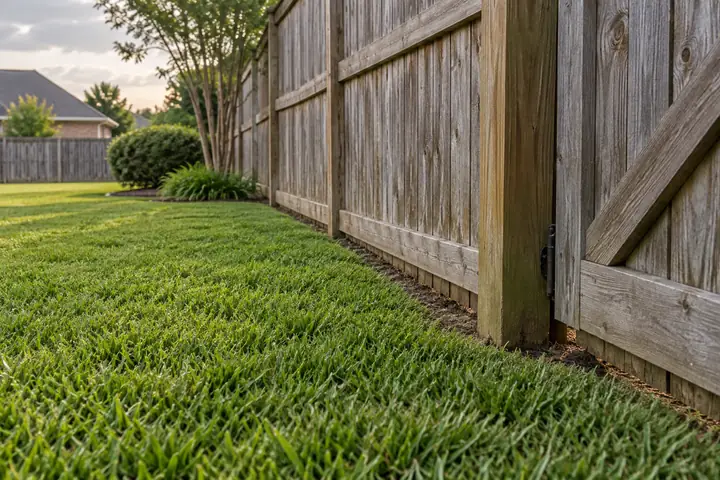
The fence edge is its own finishing task
The open lawn can look freshly cut while a shaggy strip remains along the fence. That is often the detail your eye goes to first. It is also a place where the maintenance method needs to fit the materials and clearance, rather than simply cutting as close as possible to everything in sight.
When asking Happy about the property, show the fence line as well as the main grass. Explain whether the concern is tall grass at the base, an awkward corner or growth around a gate. Those requests may look similar from a distance, but they can involve different obstacles. A clear starting description helps define the finish you are actually expecting.
Identify the material before discussing the edge
A weathered wooden board, vinyl panel, chain-link fabric and metal post are not interchangeable boundaries. Each can have different vulnerable spots. Mention loose sections, rusted wire, peeling finishes and any recent repair you know about. A picture showing the full section gives more useful context than a close-up of a few grass blades.
Do not assume routine trimming includes repairing the boundary or clearing material tangled through it. The maintenance conversation should establish what can be worked around appropriately and what needs separate attention first. If the fence has already been damaged, document its condition plainly. The point is a shared understanding of the site, not assigning blame before a visit.
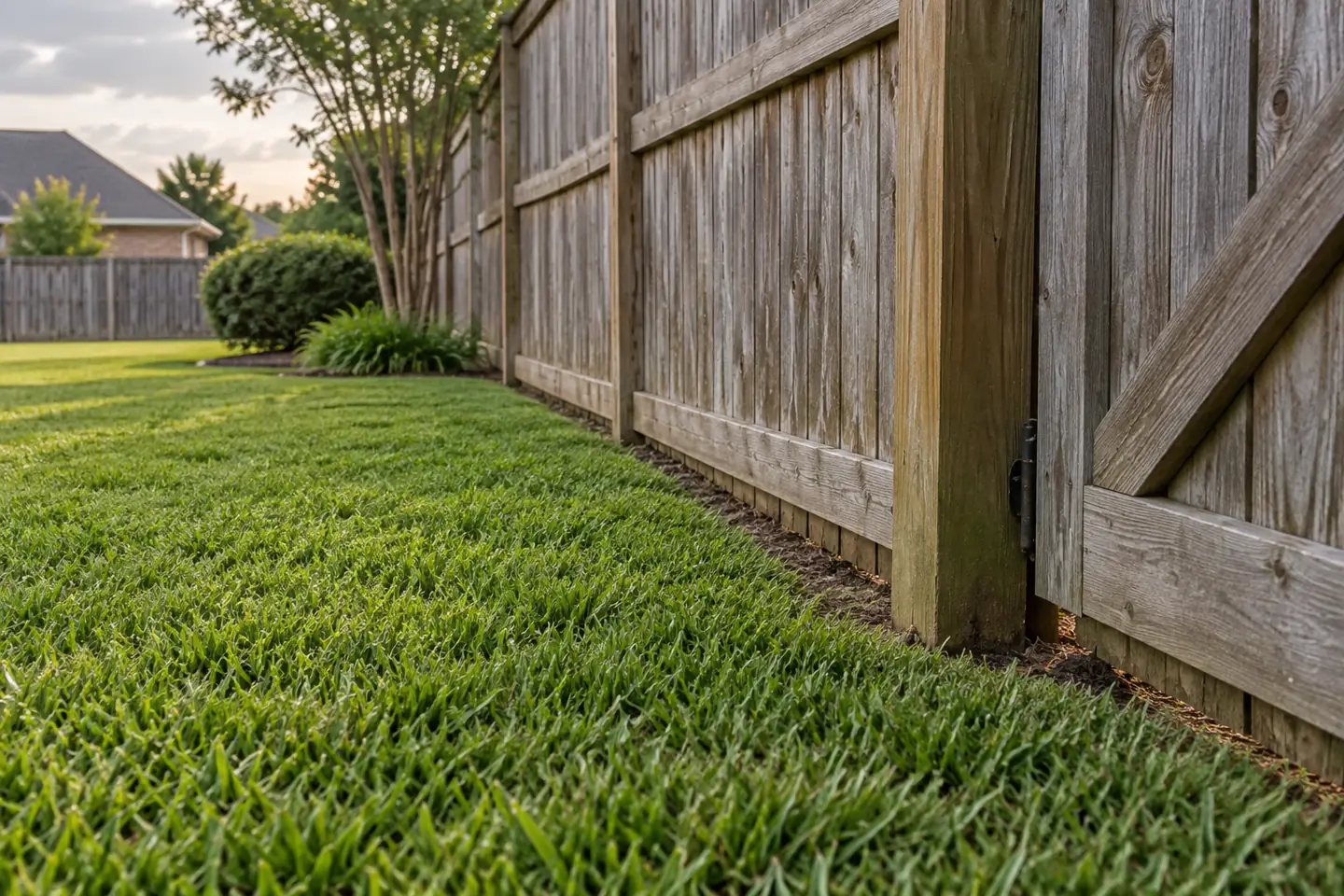
Show the bottom clearance and nearby objects
Some fences sit above the ground with an open gap. Others touch the soil, meet a concrete curb or run beside an uneven strip. Show these changes, especially where the grass hides the bottom rail. A low pipe, irrigation component or landscape light can be difficult to see along the same edge.
Take photos from your own authorized side of the property. There is no need to reach through a fence or enter a neighbor’s yard for a better angle. Explain what cannot be seen. Useful notes include “a low cable runs along the inside” or “the board is loose beside the gate.” Unknown features should not be treated as ordinary grass.
Keep vine removal separate from grass trimming
Grass at the bottom of a fence differs from vines threaded through the wire or woody growth pushing against it. Pulling or cutting that material can affect the fence and nearby plants. It should not be assumed to be included in an ordinary weed-eating description. Explain what kind of growth you can identify and what you want reviewed.
If you are unsure whether something is grass, a planted vine or another plant, say so. Mark the plants you want preserved through a clear agreed reference, such as a photo. Routine maintenance should not become a guessing game about which growth belongs there. Removal or treatment requests need their own defined scope and suitability review.
Give the gate room to work
The gate is both a boundary and an access point. Grass around the posts can look untidy, but the latch, hinge and swing path matter too. Show whether the gate opens inward or outward and whether anything rests against it. A gate that drags may have a structural problem that mowing does not solve.
- Keep small personal items away from the swing path.
- Identify low catches, stops and unusual latches.
- Mention fixed fixtures beside either post.
- Explain any section that must remain closed.
- Arrange pets and access before the visit.
Share sensitive entry details privately. A public photo should show the space without displaying a security code or another unnecessary access secret.
Close trimming is not always the right finish
An extremely tight cut can expose soil or put vulnerable materials in the work path. The goal should be a neat, consistent result that suits the grass and boundary, rather than contact with every board or post. Some locations may need a small agreed margin. Discuss that before judging every remaining blade as a missed task.
A current photo can help explain an appearance concern without prescribing the tool position. “This corner stays taller than the rest” is useful. “Cut directly against the soft wood” may not be. The appropriate approach depends on actual clearance and material condition. A neat edge and respect for the property should be considered together in the scope.
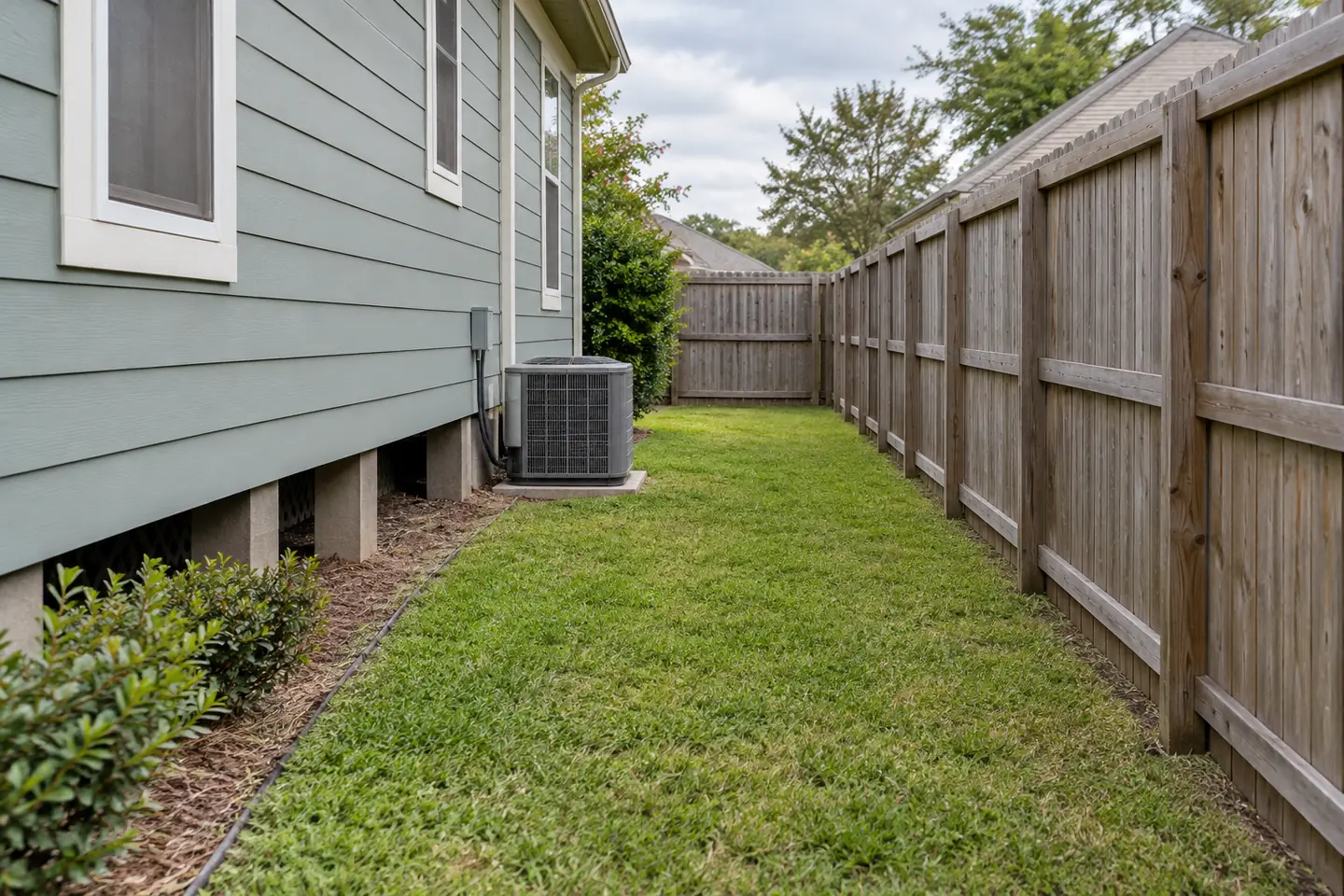
Check the ground along the line
Fence edges can collect leaves, stones and small objects. The strip may also be softer or more uneven than the main lawn. Describe known holes, exposed roots and water that sits there after rain. A long boundary can pass through several different conditions, so one picture may not tell the whole story.
Do not reach into dense growth to search for hazards yourself. Disclose what you know and show what is visible from safe ground. If the line is inaccessible or contains unsuitable conditions, the work may need to stop short of that area. A clear exclusion is preferable to pretending that an unseen edge is the same as open grass.
Clarify whose side is included
A shared fence does not mean every adjoining strip is included in your maintenance request. Identify the side you control and the area you are authorized to arrange. If property limits or access rights are uncertain, resolve that before requesting work beyond your yard. Convenient access through a gate is not permission to maintain another property.
For a corner lot or an outside fence face, show the relationship to the sidewalk and street. Ask whether that portion is part of the quote. The discussion should distinguish the grass you want maintained from any public or neighboring area. Routine lawn service is not a survey or a decision about disputed ownership.
Discuss clippings around delicate spaces
A fence may border a garden bed, pet enclosure or patio. Explain where cut material should be kept away from and what cleanup is included. Blowing does not automatically mean bagging, hauling or cleaning every enclosed area. A specific request is easier to review than a broad instruction to leave everything spotless.
If the strip has unusually heavy growth, mention it in the quote request. The first visit may involve a different amount of trimming and material handling from later maintenance. Confirm the starting scope and the ongoing routine separately if needed. That helps the expected finish, time and price reflect what is actually there.
Update the plan when the fence changes
A replacement panel, new gate or added garden bed can change a line that was previously straightforward. Send Happy a brief update before the next visit. New paint, delicate finishes and temporary construction materials are worth mentioning even if the grass itself looks unchanged. A small change beside the edge can alter available clearance.
Use the same fixed reference points when reporting an issue after service. Identify the gate post or corner and provide a current picture. Ask whether the area was included, excluded or affected by an obstacle. That makes the next conversation practical and gives the property notes something specific to improve.
What a useful fence-line request looks like
You can keep the message short: “The inside wood fence along the backyard needs trimming. There is a low sprinkler near the rear corner, and the gate post has loose boards.” Add a wide photo and a close view of the known fixtures. Include the main yard so the edge can be understood in context.
If a section is already inaccessible, say that plainly. Explain what you can clear before the visit and what must stay. Do not promise a route will be open unless the people using the property know about the arrangement. A little preparation can make a long fence line easier to discuss and less likely to produce surprises.
Finish the lawn with a clear next step
Happy Grass offers mowing, edging, weed-eating and blowing within an agreed property scope. Fence repairs, vine removal and other additional requests need separate discussion rather than assumption. Start with the grass, the boundary material and the result you want. Happy can review the actual site and whether the requested work is a fit.
Call 504-339-3571 or use the quote form for a Harvey or Westbank property. Include the city, address and useful views of the fence and access route. Let’s kick some grass with a tidy edge and a plan that respects the rest of the yard. Small finishing details can make the whole place feel more cared for.