
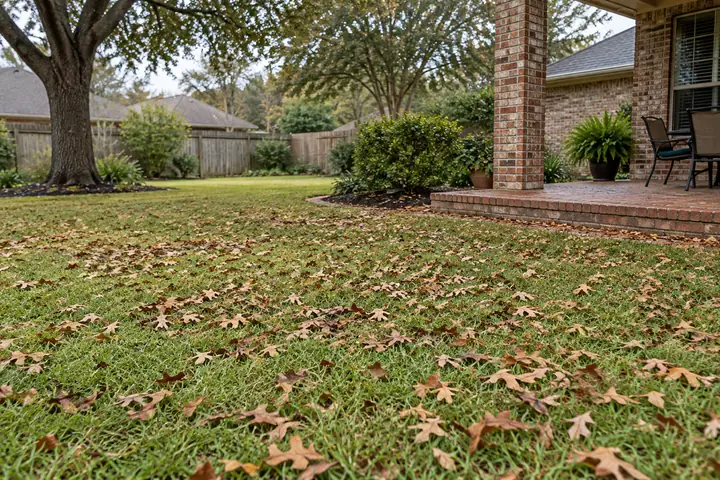
Look at coverage rather than the season alone
Leaves can scatter across a Westbank lawn at different times, and the calendar does not tell the whole story. A light sprinkling over visible grass differs from a thick layer hiding the surface. Before requesting a cut, show how much of the lawn is covered and whether the grass underneath can be seen.
The practical question is what work you are asking for. Ordinary mowing of accessible grass, leaf collection and a full seasonal cleanup are different scopes. Start with the condition and your desired result. A clear description prevents a simple grass-cutting request from turning into an assumed removal job nobody has assessed or priced.
Take a wide view and a representative closer one
One close picture of a leaf cannot explain the property. Take a wide photo showing the covered area in relation to the path, trees and main lawn. Add a closer view from safe ground where both leaves and grass are visible. If coverage differs between front and back, show each section.
Tell Happy when the images were taken and whether more material has fallen since then. An old clear-lawn photo is useful as a reference, but not as evidence of today’s work. You do not need to dig through a dense layer or enter an unsafe patch to document it. Explain any area where the ground cannot be seen.
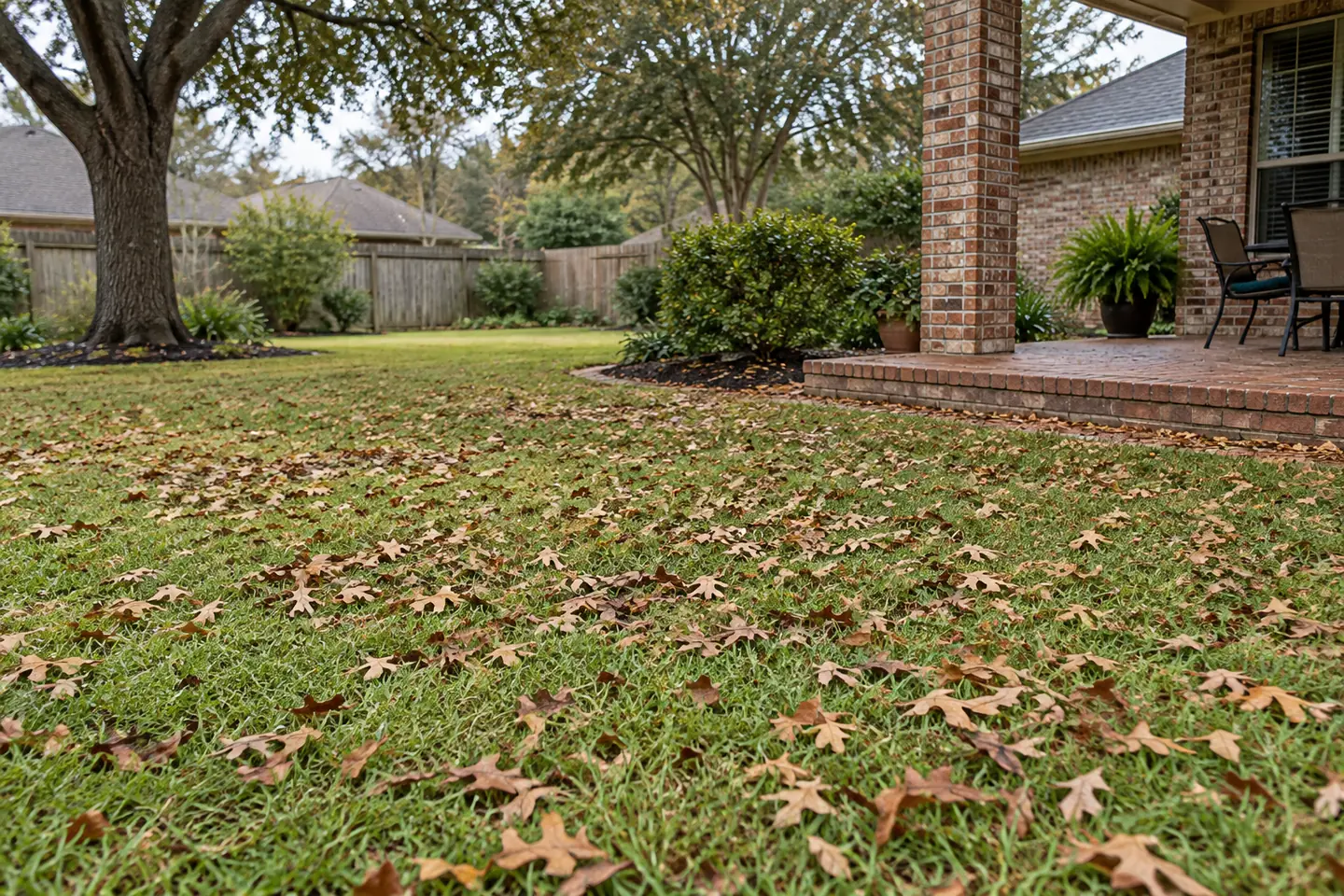
Distinguish leaves from mixed debris
A lawn can contain leaves alongside branches, stones, litter or construction scraps. Those materials should not be described as one harmless layer. Disclose what you know, particularly hard or sharp objects that may be hidden. The Consumer Product Safety Commission advises clearing objects from the mowing area; a lawn quote should therefore account for known debris rather than ignore it.
Do not search dangerous growth for a better estimate. Point out visible hazards and explain uncertainty. Large limbs, hazardous material and major debris removal can require a different provider or a separately defined service. Mowing should not be used as an improvised way to discover what is buried under the surface.
Explain the finish you are hoping for
Some customers want the grass height maintained. Others want the lawn visibly clear of leaves or need a path kept tidy. Those are different results. Describe the priority instead of assuming the word “cleanup” explains it. A photo of the same property after a previous maintained visit can help if it is clearly labeled.
Ask whether the requested work is available and suitable. Leaf collection, bagging and hauling are not established automatic inclusions with Happy Grass’s mowing, edging, weed-eating and blowing. A specific request can be reviewed, but this guide should not be read as a promise of a separate leaf-removal service for every property.
Agree on what happens to the material
The destination matters as much as the initial clearing. Do not assume leaves can simply be blown into an adjoining property, street or drainage opening. The agreed plan should identify appropriate handling for the actual site. A tidy lawn is not a good result if another important area is left obstructed by the same material.
- Identify drains and openings near the work area.
- Show adjoining beds and property boundaries.
- State if collection or hauling is being requested.
- Clarify any areas where material must not accumulate.
- Ask what remains outside the proposed scope.
This discussion makes the quote more concrete and avoids treating “blow it away” as a complete disposal plan.
Wet leaves change the starting condition
A damp layer can be heavier, stick to paving and conceal soft ground. Tell Happy about recent rain, irrigation or sections that remain wet in shade. A dry patio does not prove the grass beneath a leaf layer is firm. Current observations should guide the work review rather than a fixed expectation based on the appointment date.
Do not test a concealed area with equipment yourself to prove it is ready. Take any photos from safe ground. A delay, limited visit or different assessment may be needed. Confirm changes directly. Routine maintenance should respond to actual conditions rather than proceed through wet or unknown ground because the lawn looked simpler in an earlier picture.
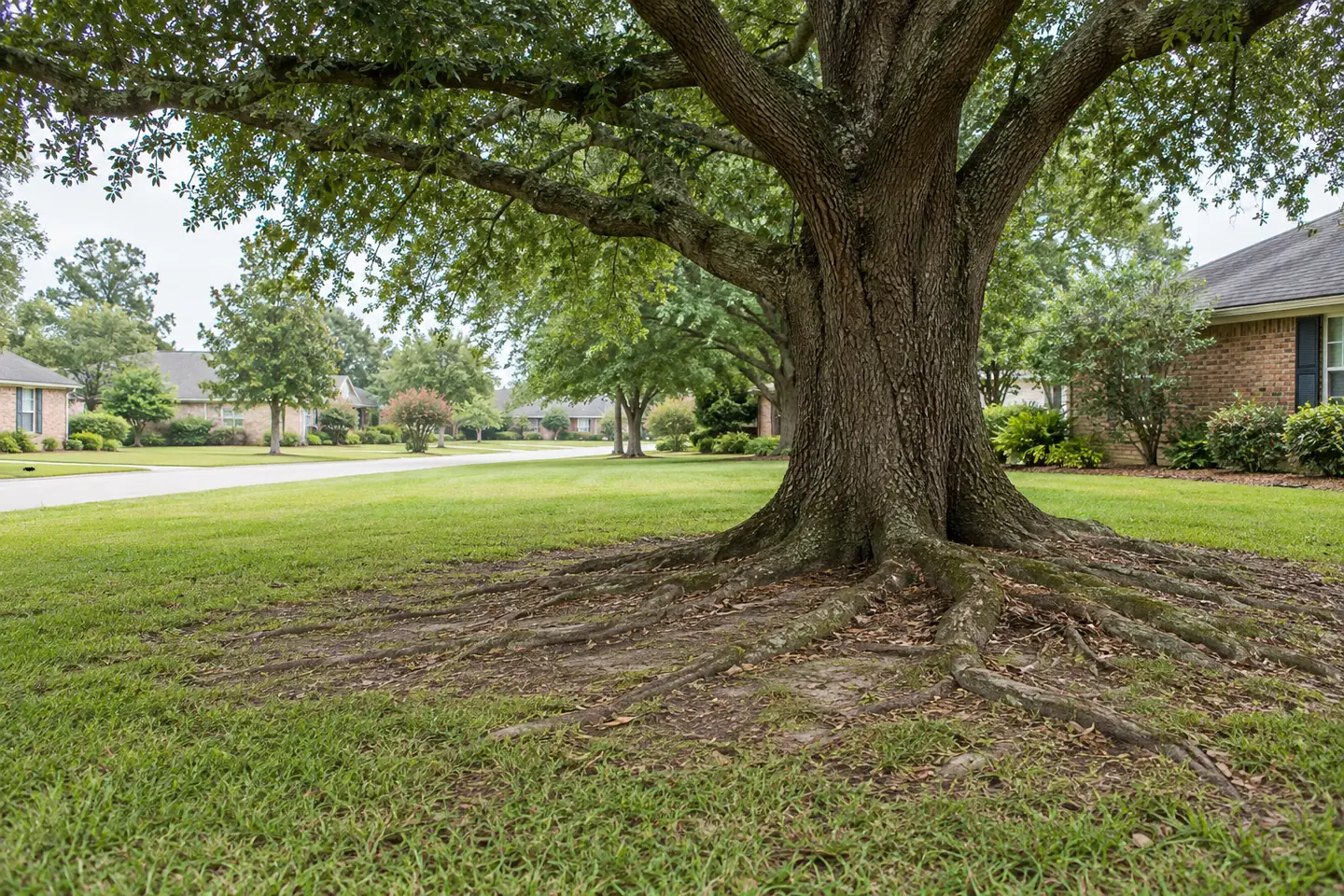
Keep the grass-height discussion separate
Leaves can make a lawn look taller or rougher than it is. Once the grass is visible, the cut should still suit the actual grass type and growth. An unusually low setting is not a universal solution for a covered lawn. Nor should the first cleared view be expected to look identical to a yard that has stayed on a regular routine.
If you know the last cut, include it. If only part of the yard has been maintained, explain that difference. An initial assessment may need to account for both leaf coverage and growth beneath it. Ongoing weekly or every-other-week service can be discussed after the starting scope is clear.
Protect plants and fixed features nearby
Leaf-covered ground can hide low sprinkler heads, landscape lights and border pieces. Identify known locations before work. Show a wider reference rather than only a close-up of the fixture. Delicate planting near the lawn should also be explained so it is not mistaken for unwanted growth in the material.
If a bed contains leaves intentionally retained as part of another care plan, say that plainly. Lawn maintenance should not silently redesign every planting area. Hand-weeding, mulch changes and plant removal are separate tasks. The requested boundary should show which grass is being maintained and which beds or other sections remain untouched.
Trees and branches need their own scope
A fallen branch beside the lawn may be easy to describe but not appropriate to handle as an assumed mowing preparation task. Size, location and condition matter. Large limbs, overhead concerns and damaged trees need the appropriate professional attention. Routine grass service should not imply tree inspection or pruning.
Explain whether another provider will clear the area first. Update Happy when the work is actually complete, including any disturbed ground or remaining materials. A planned completion date does not prove the lawn route is usable. Current information helps decide whether ordinary maintenance can resume or whether a section still needs exclusion.
Allow for material returning between visits
A yard beneath mature trees can receive more leaves after a tidy visit. That does not automatically mean the earlier work was incomplete. If you want a particular appearance between visits, discuss the practical frequency and the actual scope available. A recurring leaf-control promise should not be assumed from a grass-cutting routine.
When reporting a concern, note when you observed it and provide a current photo. Ask how the appearance relates to the agreed work. A clear time reference helps distinguish new material from a section that may need review. The aim is a useful discussion about the property, not a guarantee that outdoor conditions will remain unchanged.
Prepare the request without overcomplicating it
A helpful message might say, “The front grass is visible under scattered leaves, but the back corner has a heavier layer. I want to ask about mowing and what cleanup can be included.” Add the address, city and current pictures. Mention known debris, damp areas and any specific collection request.
If an event or showing is approaching, share the preferred timing early. Availability still needs direct confirmation. Do not assume an urgent date automatically changes the service scope or reserves a slot. A clear result, honest condition and practical timing request give Happy the information needed to assess whether the work is a fit.
Ask Happy what fits this lawn
The next step is a straightforward conversation about coverage, growth and the requested finish. Ordinary lawn maintenance can then be distinguished from leaf collection or another cleanup project. That makes any quote more useful and gives both sides a clear way to understand the result.
Call 504-339-3571 or use the quote form for Harvey, Marrero, Gretna, Algiers, Belle Chasse or Westwego. Send a wide view, a representative closer photo and a short description of what you want maintained. A little lawn love starts with seeing what is actually on the lawn and agreeing on the work that makes sense.
Keep the covered view and cleared view distinct
If leaves are moved between photographs, retain the date and description for each condition. A broad view taken before preparation documents coverage; a later view may reveal the grass and objects that were previously hidden. Those images can both be useful, but they should not be presented as simultaneous views of the same starting point.
Explain who handled the preparation and whether any covered sections remain. Avoid using one newly visible patch to describe the whole lawn. If the first photograph supported an earlier scope discussion, identify the newer image as an update so the current request can be reviewed against what is actually visible. That makes the next decision about the present lawn, while preserving an honest account of what the earlier picture could and could not show.