
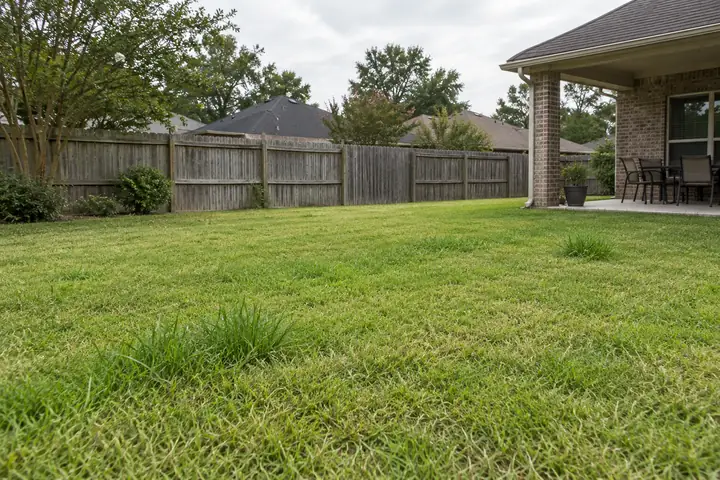
Name the unevenness you actually see
An uneven cut can mean several things. There may be a narrow missed strip, individual taller tufts or a pale area where the ground rises. Describe which appearance you mean before asking for a correction. The result you see from the porch is a starting observation, not a complete explanation of what caused it.
Take one wide photograph including the affected area and a fixed feature such as the patio or driveway. Add a closer view where helpful. Tell Happy whether the concern appeared immediately after mowing or became noticeable as the grass grew. Those details help separate a cutting pattern from a change that developed between visits.
A missed strip is different from a different grass
A narrow line following a pass may call for a different review from a clump with another leaf texture. Grass identification can matter when one section grows differently. Avoid assuming every tall tuft is simply uncut lawn grass if its identity is uncertain.
Show the tuft within the larger lawn and explain whether it returns in the same place. If it may be a different plant, seek suitable identification help before requesting removal or treatment. Ordinary mowing should not silently become permission to eliminate any growth that looks different. The useful goal is to understand the patch and agree on the maintenance work it actually needs.
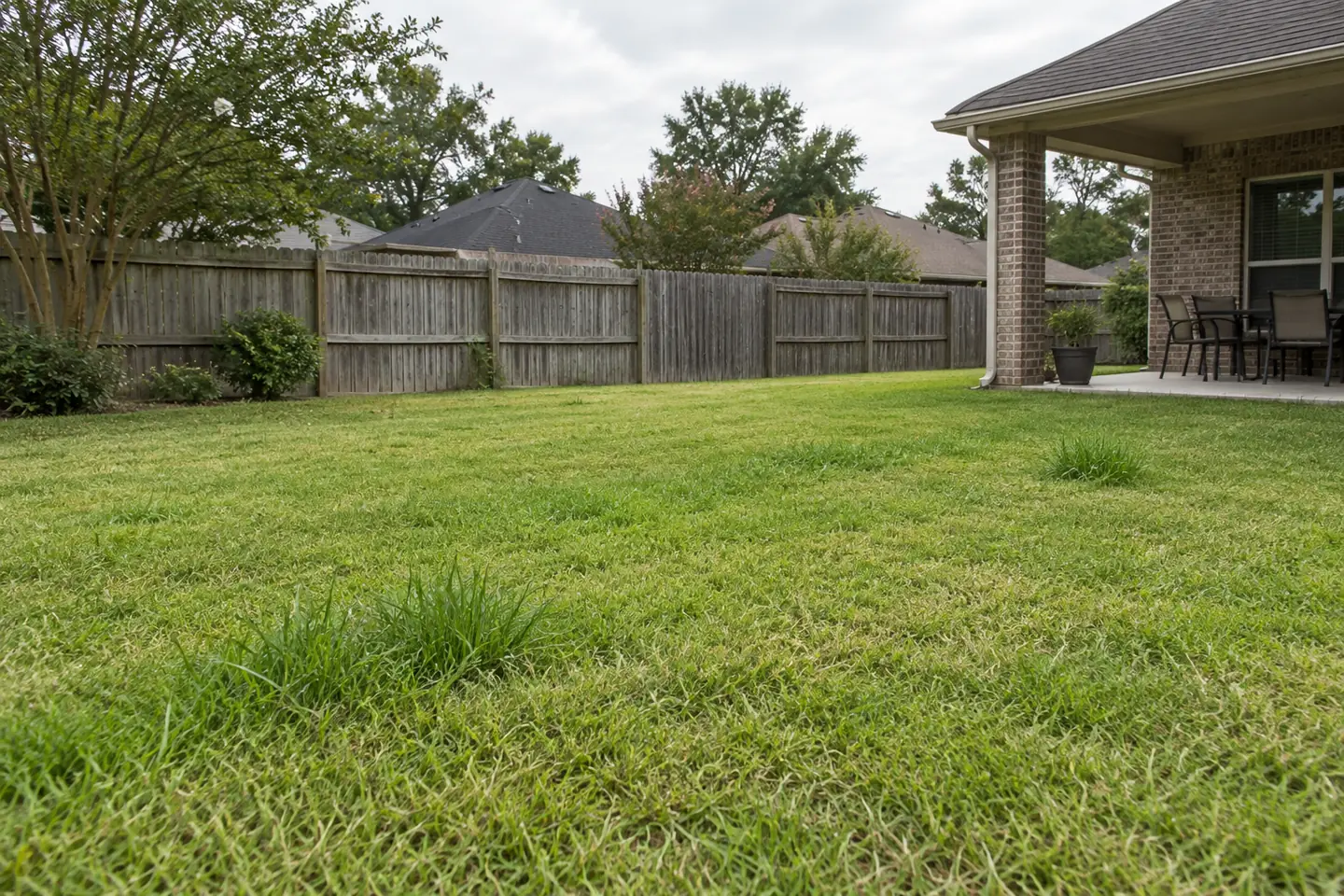
Look at the ground beneath the pattern
A raised spot, repaired trench or shallow depression can affect the finished appearance. LSU AgCenter’s southern-turf guidance notes that a bouncing rotary mower can leave an uneven surface. That supports reviewing terrain and operation together rather than deciding from a distance that the whole lawn needs a lower setting.
Show known changes in grade and any recent construction. Keep holes, exposed roots and soft ground visible in the reference images. A maintenance plan can account for an obstacle or define an exclusion, but mowing does not level the site or repair buried work. Those requests need a separately defined suitable service.
Compare the same area before and after
If you have a current before photo, keep it with the after view and label both. Use the same location reference so the images explain the actual patch. An unrelated perfect-lawn picture may show an appearance goal but cannot establish what happened on your property.
You do not need a complete photographic record of every visit. One clear example is often enough to begin a useful discussion. If the lawn has already changed since the concern was noticed, describe that timing. The record should support a fair review while acknowledging anything that cannot be established from the available information.
Include the growth before mowing
A yard that has gone through a long gap can contain taller or denser sections than its usual routine. Explain the last known cut and whether someone maintained only part of the property. Different starting conditions can affect both the first visit and the expected finish.
Ask what can reasonably be achieved in that starting condition. Do not assume one extremely short cut should make every section match immediately. A useful plan may distinguish an initial assessment from ongoing maintenance. The mowing-gap guide can help organize the request without hiding the current growth behind an old description of the lawn.
Keep equipment conclusions out of a photo guess
An image may suggest a pattern worth reviewing, but it does not establish every machine adjustment or mechanical condition. For your own equipment, follow the manual and use a suitable service professional. Do not reach under unfamiliar cutting equipment to investigate a lawn concern.
For a service visit, describe the observed result and ask the responsible person to review it. That approach keeps the discussion practical. A grass finish can be examined alongside terrain, starting growth and the work method without asking the homeowner to diagnose the mower. It is also fairer than assigning one technical cause before the site has been considered.
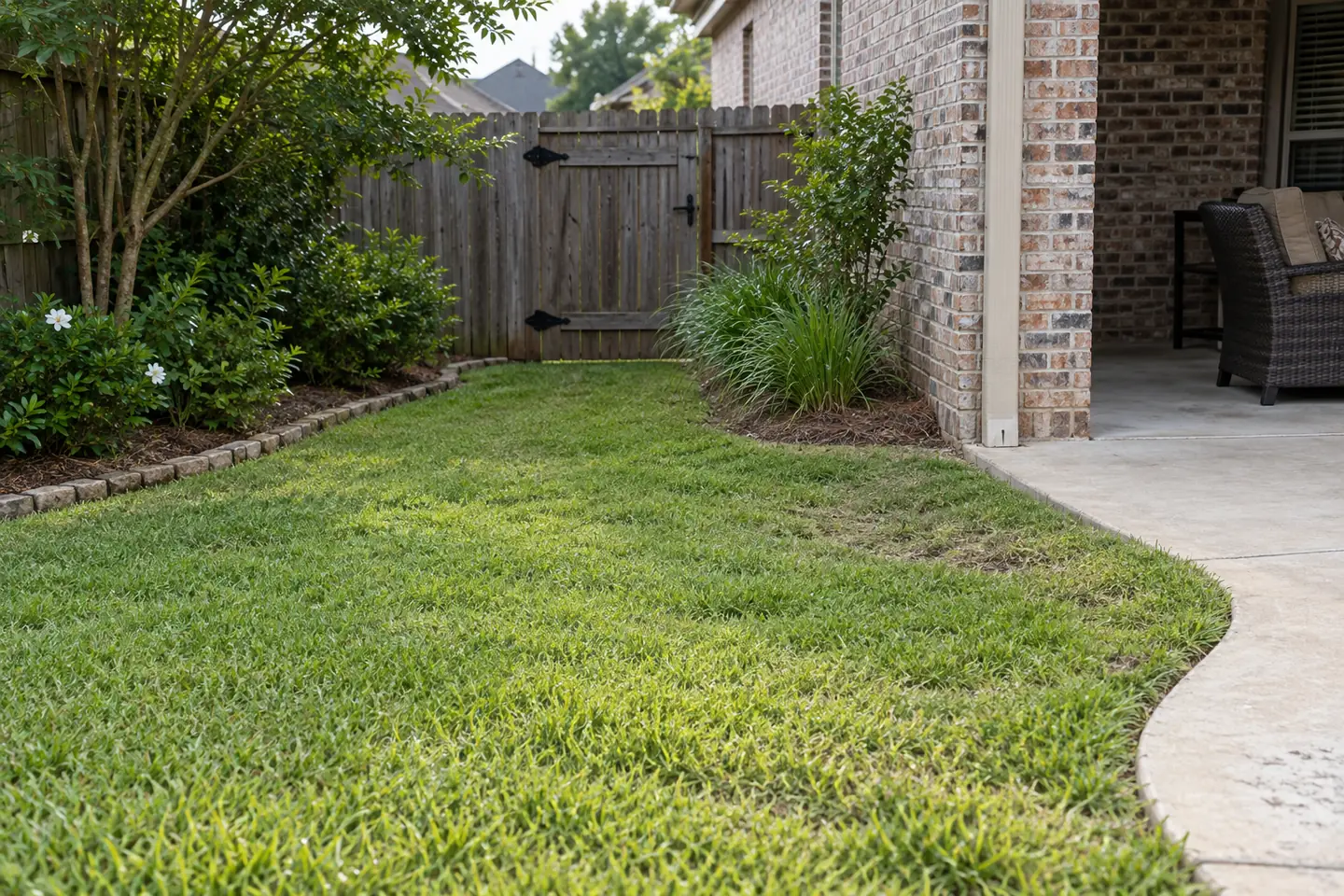
Show obstacles that interrupt the pass
A toy, hose, low fixture or fragile border can change which grass is accessible. Identify items that remained during the visit and sections that were excluded. If an object has since been moved, send a current photo so the new usable space can be reviewed.
- Point out low irrigation parts and utility covers.
- Identify tight fence corners.
- Show the gate route and turning area.
- Mention wet sections that were left alone.
- Explain anything that could not be cleared.
A visibly longer margin may have an agreed reason. Clarifying that boundary is more useful than assuming every blade should have received the same method.
Do not confuse striping with height differences
Light and dark mowing lines can be an appearance effect rather than different amounts of grass. The direction guide explains that distinction. Look at the actual leaf height from a safe position and compare views from opposite sides before describing a shaded line as a missed strip.
A photograph can still help show the pattern, but explain whether the grass itself appears taller. Avoid measuring around operating equipment or stepping into unsafe ground for a closer look. The aim is a clear description: alternating light bands, raised tufts or a genuinely longer strip. Each gives the maintenance conversation a different useful starting point.
Avoid correcting every section with a lower cut
Lowering the whole lawn is not a general repair for uneven ground, mixed growth or an excluded edge. The appropriate cut needs to fit the grass and site. A pale high spot can become more obvious when a setting is lowered rather than the underlying concern being addressed.
Ask Happy to review the location and intended finish first. A suitable adjustment may be possible, or another type of work may need discussion. Keep any change in scope, timing or charge explicit. A clear plan should describe what is being changed and why it fits the actual property, rather than relying on the word “shorter” as the entire solution.
Report a location, not just a frustration
Try a message such as, “There is a narrow taller strip between the patio and side gate after yesterday’s visit. These photos show it from both ends.” Add whether an obstacle was present or the ground was wet. That gives a specific result to review.
Keep the reply and any agreed boundary with your property notes. If the concern is a broader turf change, arrange the appropriate advice separately. Mowing, edging, weed-eating and blowing do not automatically include a diagnosis, leveling or full lawn restoration. Specific information helps keep the response useful and proportionate to the actual issue.
Review the routine after the immediate concern
If one section repeatedly grows taller between visits, record that observation and discuss the interval. The issue may need a different conversation from an isolated missed-looking strip. Keep the grass area, timing and reference view consistent so the pattern is understandable.
Weekly or every-other-week service should be considered against actual growth and the finish you want. Availability and the final arrangement need direct confirmation. The goal is a routine that makes the property easier to manage, with any difficult patch clearly identified instead of repeatedly surprising everyone after the main lawn is cut.
Let’s get the lawn picture clear
Send the address, city, current wide and close photos and the last cut if known. Explain the exact pattern, known obstacles and any recent ground work. You can use everyday words; a clear location is more valuable than a guessed technical explanation.
Call Happy at 504-339-3571 or use the quote form for Harvey, Marrero, Gretna, Algiers, Belle Chasse or Westwego. A little lawn love includes looking at the details that make a finished yard feel tidy. Start with the pattern, then work toward the next practical step together.
Compare three different kinds of unevenness
Before requesting another pass, separate tall standing leaves from a change in ground level and from grass leaning in a different direction. A low side-angle photograph is useful for the surface shape. A view across the canopy can show a longer patch. Walking a few steps along the path may change the appearance of directional shading without changing the lawn itself. These observations help describe the finish; they do not replace the operator's assessment of the equipment or the site.
Choose a recognizable boundary for the concern, such as the strip between a path bend and the rear bed. Photograph it before moving clippings or walking through it repeatedly. Explain whether it looks different from both viewing directions. If the ground has a dip or ridge you already know about, point that out rather than treating the entire patch as a uniform surface. Happy can then review the actual result against the conditions and agreed scope, including any intentional exclusion.
- Long leaves: show individual standing blades and surrounding grass.
- Ground contour: show the dip or ridge from a stable side viewpoint.
- Directional appearance: compare views along and across the same section.
- Uncertain cause: ask for a review before requesting a lower or repeated cut.