
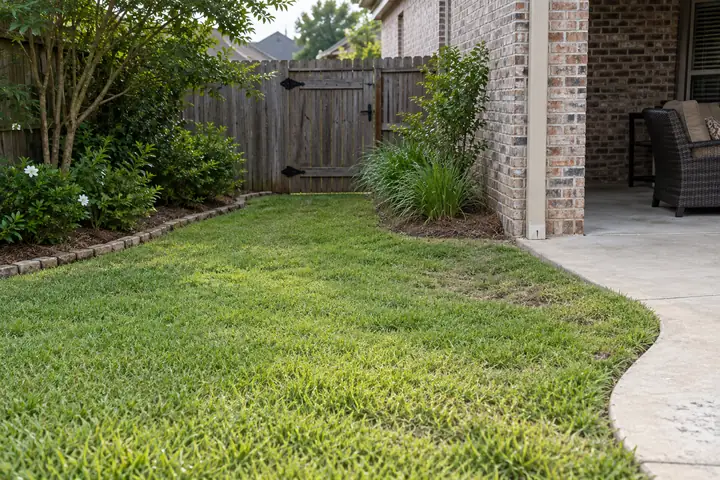
Locate the mark before naming its cause
A curved scuff, flattened grass and a wheel impression are different observations. Describe what you see and where it sits. A wide picture showing the corner can be more useful than a close image of bare soil with no reference. Include the patio edge, gate or bed that explains the location.
Tell Happy when you noticed the mark and whether you have a current earlier view. Avoid assuming that one photograph proves a particular event or machine caused it. A factual starting record supports a fair review. The practical goal is to understand the affected area and decide what should happen before the next visit.
Turning space is part of the property
The open middle of a lawn may offer plenty of room while a corner beside the house is tight. Fixed objects, fence posts and landscaping can limit the route. Show that space as it exists now, including anything stored there. A picture of the broad lawn alone does not explain a restricted turn.
Mention changes since the original quote. A new planter, moved chair or delivered material can alter a familiar passage. The maintenance plan should not rely on a route that no longer exists. Clear access information helps Happy assess the area without assuming the operator can turn anywhere the grass happens to grow.
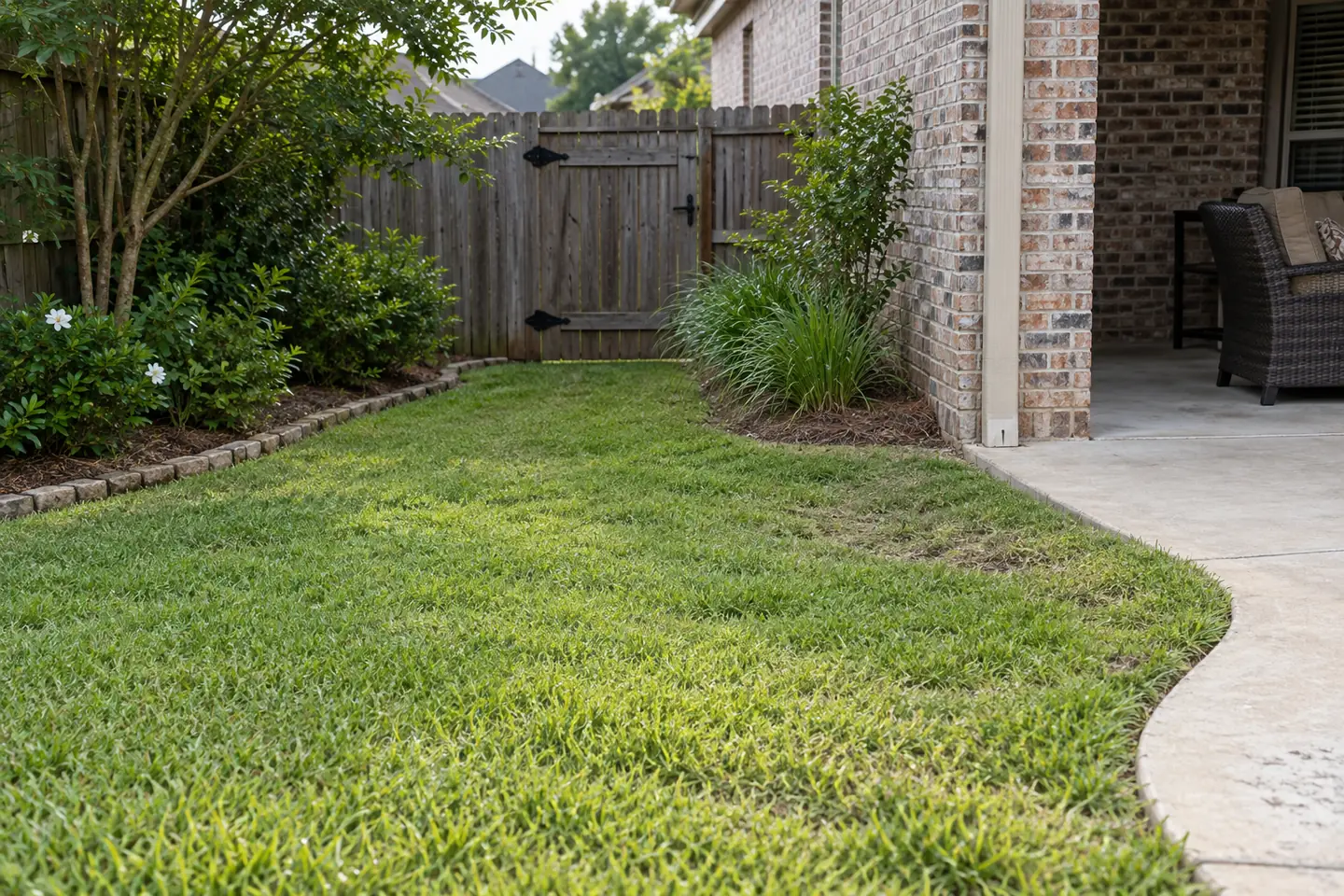
Sharp turns deserve attention
LSU AgCenter’s southern-turf mowing guidance advises avoiding sharp donut turns. That is useful background for discussing how a tight corner is handled. It does not mean a homeowner should prescribe a maneuver for unfamiliar equipment or approve a route without considering the ground.
Explain the result you want: maintained grass with a suitable method around the corner. Some areas may need a different approach or a defined boundary. The actual machine instructions and site conditions govern the work. A request to remove every blade from a difficult gap should not override the need for suitable clearance, footing and an appropriate route.
Wet ground can change the same corner
A turning area may stay soft after the center lawn looks dry. Shade, irrigation and runoff can all be relevant observations. Tell Happy what you have seen and when. Do not test the spot with equipment to prove that the ground is ready for another visit.
Take any current photos from a safe, firm position. A delay or limited scope may need discussion if conditions have changed. Confirm the revised arrangement directly. An established routine should still respond to the actual property, especially where repeated access concentrates in one small section beside a gate or patio.
Distinguish flattened grass from disturbed soil
A temporary-looking direction change in the leaves differs from a rut or exposed soil. Explain which feature is visible and whether the surface itself appears altered. The direction-and-stripes guide can help separate a light-reflection pattern from a genuine ground concern.
You do not need to dig into the mark to document it. A wider view and a closer surface photo can support the initial discussion. If the cause or extent remains unclear, arrange the appropriate review rather than repeatedly walking or driving across the patch. Further disturbance can make the original observation harder to understand.
Check whether other traffic uses the corner
The same narrow route may carry people, pets, bins and contractor equipment between visits. Mention that context honestly. A worn area can be a shared-use location rather than a feature used only during mowing. That does not decide the cause, but it is relevant background.
- Identify the route through the gate.
- Describe regular bin or furniture movement.
- Mention recent deliveries or building work.
- Show persistent dampness or uneven ground.
- State any known earlier damage.
The goal is an accurate picture, not a search for someone to blame. Useful context helps the maintenance review consider the whole location.
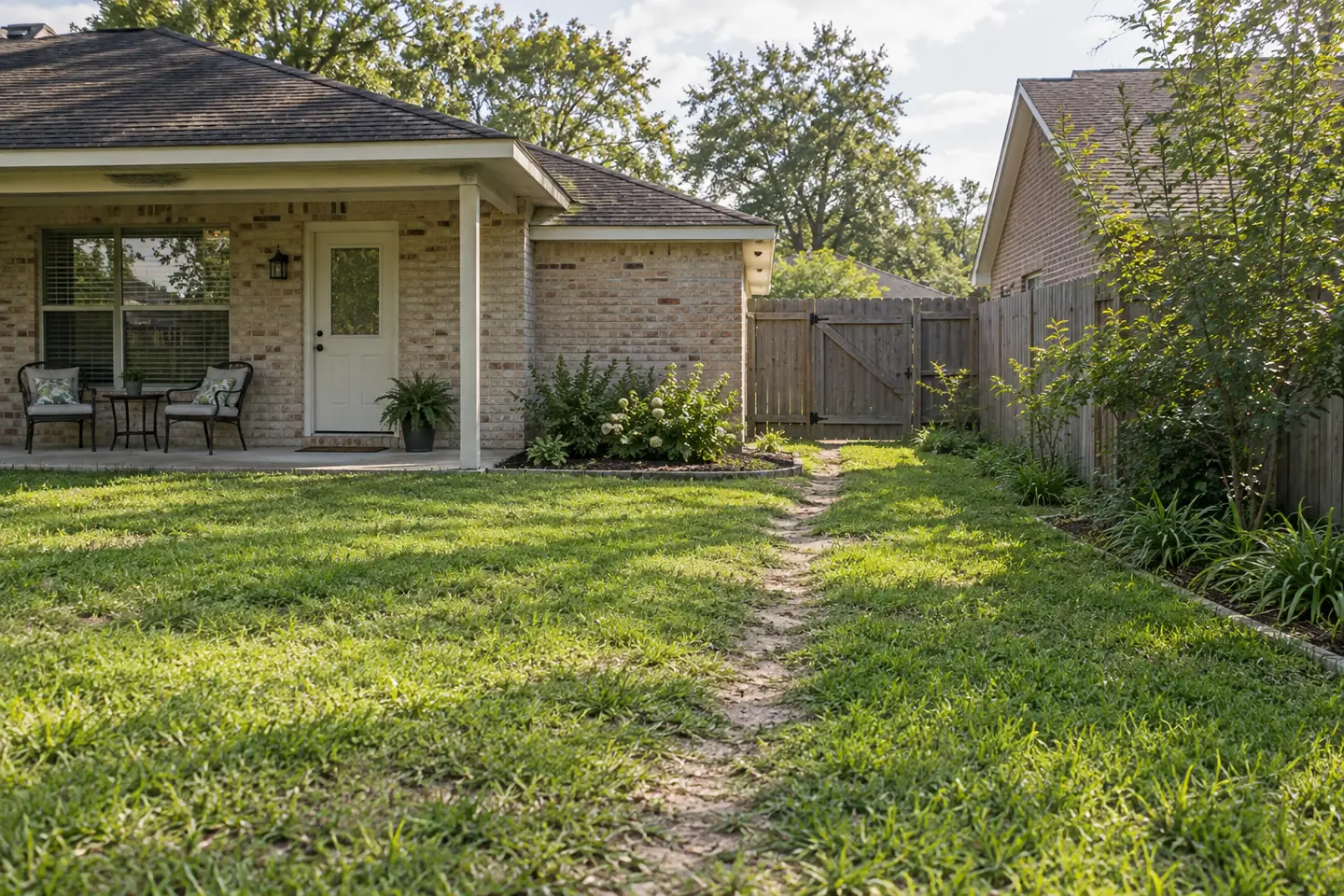
Keep ground repair separate from grass cutting
Leveling a rut, replacing turf or altering drainage is not an automatic inclusion with mowing. If repair is needed, define that request separately and use a suitable provider. A routine cut should not be expected to make disturbed soil disappear or restore a worn corner immediately.
You can still ask whether surrounding grass can be maintained while the affected spot is reviewed. Show the intended boundary and any access restrictions. If another contractor repairs the area, provide a current update afterward. The route may need another assessment before the section returns to ordinary maintenance.
Do not hide a concern with loose fill
Adding soil or material to a marked corner may change the surface without resolving its cause. It can also affect roots, drainage and later access. Avoid an improvised landscape alteration merely to make the next mowing visit easier. Seek suitable advice for the actual repair question.
For the maintenance conversation, identify what has already been done and where. A filled patch should not be presented as untouched established lawn. If there are instructions about traffic or new turf, share them privately. Clear information lets the work plan reflect the current area instead of relying on an outdated picture taken before the attempted correction.
Ask about a practical boundary
Sometimes the useful answer is a small agreed margin or exclusion around a vulnerable corner. That can make the maintenance scope clearer while another issue is addressed. Do not assume such a boundary exists unless it has been confirmed, and do not assume an excluded area will be added automatically later.
If you want the section reconsidered, send a current image showing what changed. Explain the result you hope for and let the method be reviewed. A specific boundary is easier to follow than a general instruction to “be more careful” without identifying where the route or ground needs different attention.
Report concerns with timing and a reference
A helpful message might say, “I noticed this curved scuff beside the patio after yesterday’s visit. This wide photo shows the corner, and this closer one shows the surface. The gate route was wet that morning.” Keep the statement tied to what you know.
Ask for a review and save the response with the property notes. If the condition changes, document that too without altering the original reference. A fair discussion can distinguish observations, uncertain causes and any agreed action. That is more useful than treating a single picture as a complete mechanical or property assessment.
Keep recurring preparation consistent
If access depends on moving a bin or opening a particular gate leaf, make that arrangement reliable. Tell the household what is expected and identify who will handle it. A clear route on one visit and a blocked route on the next can change the work area substantially.
Moving heavy materials or attached fixtures should not be assumed within the mowing price. Confirm responsibilities beforehand. When preparation cannot be completed, update Happy rather than expecting an improvised turn around the obstruction. Consistent information makes the recurring plan easier to follow and reduces avoidable surprises in the smallest part of the yard.
Give Happy the corner picture
Send the address, city, current wide and close views, timing and any known changes in traffic or moisture. Explain whether the concern is flattened grass, a surface mark or an actual depression. Happy can review the property and the requested maintenance from that clearer starting point.
Call 504-339-3571 or use the quote form for Harvey, Marrero, Gretna, Algiers, Belle Chasse or Westwego. A little lawn love includes the corners as well as the big green middle. Let’s make the next conversation specific enough to produce a practical, understandable plan.
Make the agreed route easy to recognize
A simple annotated photograph can preserve the location of an excluded corner or preferred access passage. Use a fixed feature and a short description. Share the confirmed plan with the person handling the gate so an informal suggestion at arrival does not contradict the agreed boundary.
If the obstacle or ground condition changes later, update that reference. A current photo is more useful than asking everyone to remember which planter used to sit beside the patio. The route should be reconsidered when the actual space changes, with the work method still reviewed for the equipment and site.
Compare the corner before assigning a cause
When a mark appears near a turning point, record the corner and the time you noticed it before deciding what made it. Show the route used by household traffic as well as the grass. A photograph can locate a concern without proving which vehicle, tool or activity caused it. Keep any direct observation separate from a possibility suggested by the shape of the mark.
For a follow-up, use the same reference points so the original location remains clear. If the household changes the route or moves an obstacle, note that change instead of treating the next picture as an identical comparison. The useful outcome is a factual conversation about the condition, the available turning space and any agreed adjustment, with unresolved questions left open.