
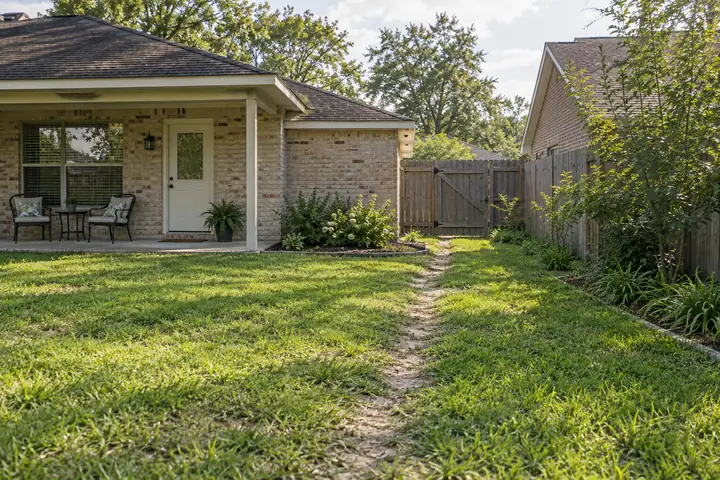
A well-used yard tells a story
The grass between the back door and side gate may receive more footsteps than the rest of the lawn combined. Another strip may carry bins to the curb or connect the patio to a shed. When that route looks thin, start by describing how the space is used.
A maintenance request should include that context. “This is our everyday path” explains more than “the mower missed this patch.” A wide photograph showing the two ends of the route can make the pattern clear. The aim is not to stop enjoying your yard. It is to understand which concern belongs with grass cutting and which involves how people move through the property.
Traffic and mowing are different pressures
University of Minnesota turf researchers describe how concentrated foot traffic can overwhelm a small grass area even when other growing conditions are favorable. That general principle helps explain why a path can look different from the lawn around it. It does not diagnose every thin strip in Louisiana.
Tell Happy whether the area receives regular walking, play, pet movement or equipment traffic. Keep those uses separate from observations about the cut. A practical lawn plan can consider the existing grass and route while any wider turf problem receives suitable review. Mowing alone should not be expected to replace missing growth or make a heavily used passage behave like an untouched corner.
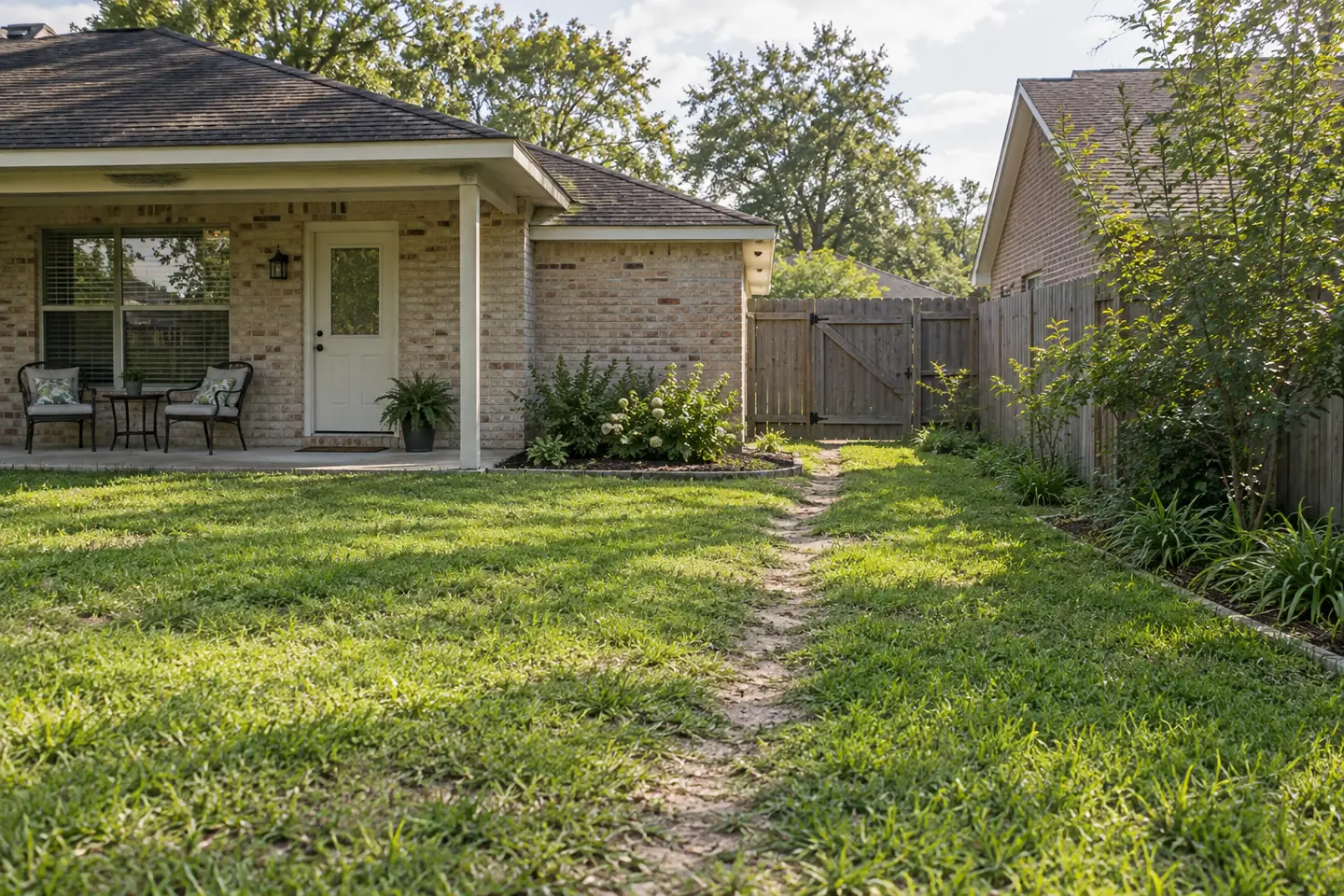
Photograph the route as a route
A close picture of bare ground leaves out the reason people cross it. Take a wide view that includes the door, gate, patio or other endpoints. Add a closer surface image where safe. Label when the pictures were taken and explain whether the wear has changed recently.
You do not need a formal map. A simple note such as “the bins travel along the fence each week” can connect the appearance with the actual use. If another household member knows the pattern better, collect that information before requesting service. Accurate context is more useful than assuming the lawn has only one kind of traffic.
Look at the ground without assuming a cause
A worn route may also contain uneven soil, exposed roots or persistent moisture. Describe those features separately. They can affect access and maintenance even when the footpath is the main visual concern. A photograph cannot establish every soil, drainage or plant-health condition.
- Identify soft or wet sections.
- Show roots and known surface changes.
- Mention recent construction or repair.
- Explain the regular walking or bin route.
- Mark any area that must remain untouched.
These details help define suitable work around the patch. They do not turn a quote into a diagnosis or an assumed repair plan for the ground beneath it.
Consider whether an alternative route is practical
Sometimes a small change in ordinary movement can be discussed within the household. Perhaps a bin can stay on a hard surface or visitors can use the established path. Any change should remain convenient, safe and appropriate for the people using the property.
This is not an instruction to send people over another vulnerable area or through an unsuitable gate. It is a prompt to understand the actual route before expecting a grass cut to change the result. If the yard needs a permanent walkway or landscape redesign, consult a suitable provider. Such a project is separate from Happy Grass’s routine mowing, edging, weed-eating and blowing.
Keep pets in the picture
A pet may repeatedly use the fence line or a corner near the gate. Mention that as part of the traffic pattern without assuming every mark has the same cause. A pet route, a digging area and a discoloration concern can be different observations requiring different conversations.
Arrange animals away from the equipment work area according to the agreed visit plan. Routine lawn maintenance does not include pet care or changing the household enclosure. If the route must stay available for the animal, say so. A useful maintenance boundary should fit the property’s real use rather than a temporary photo that leaves out how the space functions every day.
Do not lower the whole lawn to match a thin path
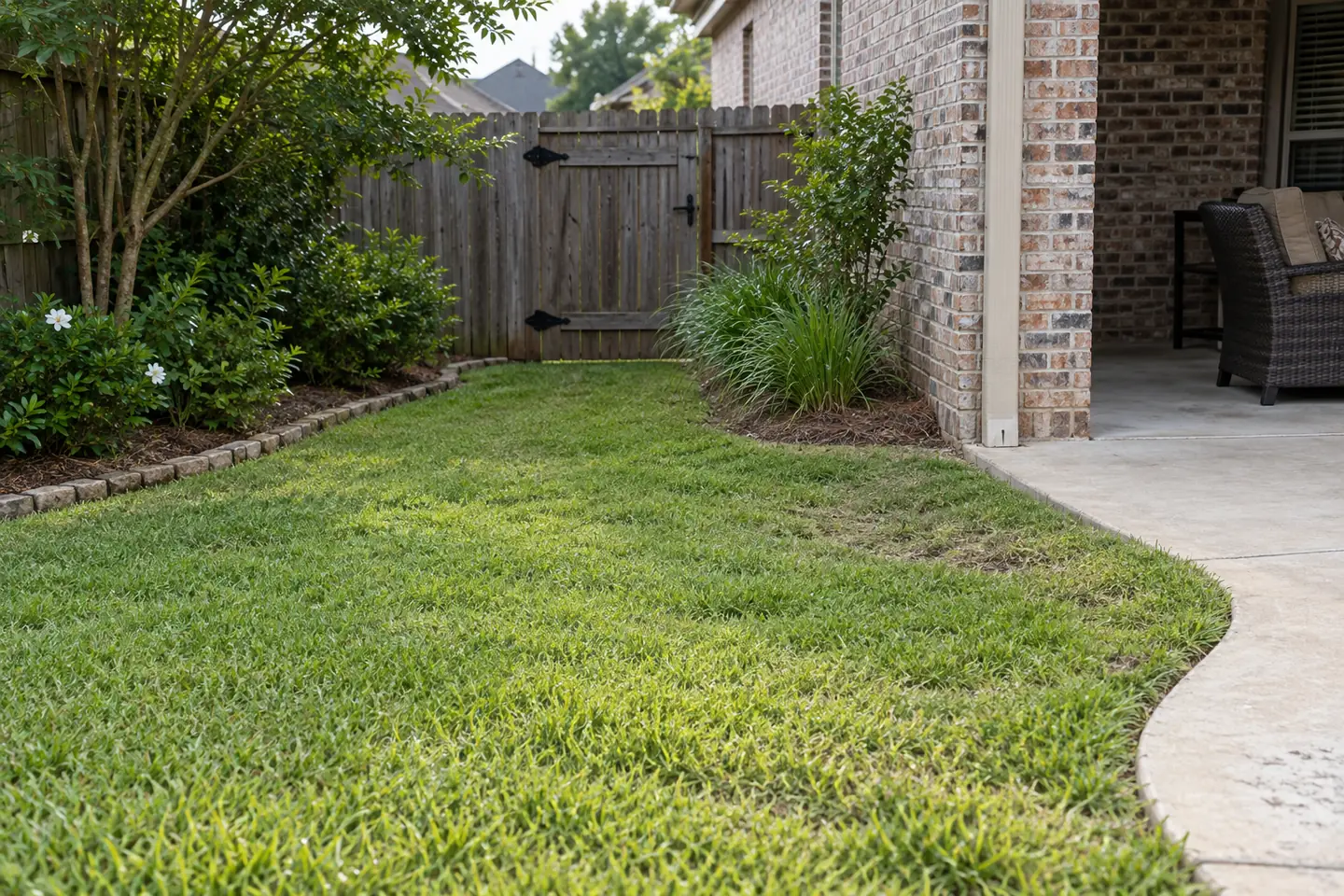
A sparse strip can look shorter than surrounding healthy growth simply because there is less leaf surface. Cutting the rest lower is not a general repair for wear. The intended height still needs to fit the actual grass and conditions, not the appearance of the most heavily used patch.
Ask what can be maintained appropriately and where a margin or exclusion makes sense. If grass identification or a recovery question needs specialist attention, arrange it separately. The mowing plan can work alongside that review without promising that ordinary visits will restore every thin section to a uniform appearance.
Separate maintenance from restoration
Replacing turf, altering soil, installing a path and changing drainage are different tasks from cutting existing grass. If restoration is what you want, explain that directly and seek the appropriate provider. A quote for mowing should not hide a larger landscape project inside the phrase “get this patch looking good.”
Happy Grass does not offer aeration, overseeding, fertilization or pest control. Those services should not be assumed as part of an ongoing visit. You can still discuss maintaining the surrounding lawn while another concern is addressed. Clear boundaries let the routine remain useful without turning it into an unagreed recovery guarantee.
Use an agreed boundary for vulnerable sections
A thin, soft or newly repaired route may need a defined limitation while it receives separate attention. Ask Happy how the surrounding grass can be considered and what access is practical. The route itself can control entry to a much larger backyard, so show the whole passage.
Confirm the actual scope, timing and charge if a limited visit is discussed. Do not assume an immediate return trip or a different entrance is available. If a repair later changes the route, send a current view. A clear handoff helps the maintenance plan respond to the property as it exists rather than relying on an earlier arrangement.
Keep observations useful over time
Choose one safe viewpoint and take occasional dated photographs if the route is changing. Note major differences in use, such as a gathering, contractor visit or new household routine. The record does not need to be elaborate. It should explain what changed and where.
Avoid judging progress from unrelated close-ups under very different light. A consistent wider view is easier to interpret. If deterioration continues or the cause remains uncertain, seek appropriate advice rather than repeatedly changing the mowing height. A simple record is useful when it leads to a clearer next decision, not when it becomes another lawn chore with no purpose.
Talk about the result you actually want
Maybe the priority is a neat front lawn while the family continues using the backyard route. Maybe you are planning a walkway and need the surrounding grass maintained meanwhile. Say that. A realistic goal can fit both a lived-in yard and a practical maintenance routine.
A helpful message might read, “This thin strip is our daily path to the side gate. Please review mowing around it; we are discussing the worn surface separately.” Include current pictures and any access limits. That gives Happy a concrete work request instead of expecting the cut to solve a different property-use problem.
Let’s work with the yard you enjoy
Send the city, address, useful route photos and the last known cut. Explain how the strip is used and which grass areas you want maintained. The next conversation can then distinguish ordinary maintenance from restoration or a possible layout change.
Call 504-339-3571 or use the quote form for Harvey, Marrero, Gretna, Algiers, Belle Chasse or Westwego. A happy yard is a place people actually use. A clear look at those everyday routes helps the lawn-care plan fit your home instead of asking the home to fit a picture-perfect lawn.
Give the route a beginning and an end
A worn path is easier to discuss when the record names what it connects: the gate to the shed, the back door to a play area, or another ordinary destination. Show both ends from accessible viewpoints and note who or what uses the route. This describes the household pattern without assuming why the grass is thin.
If you are considering changing that pattern, distinguish a real available alternative from a line drawn across grass that people cannot reasonably use. Any proposed boundary should leave practical access to the destinations the household still needs. Keep a separate question for restoration or another physical change to the property. For the mowing discussion, explain the current route, any area to exclude and the appearance concern you want reviewed. That keeps maintenance grounded in how the yard functions.