
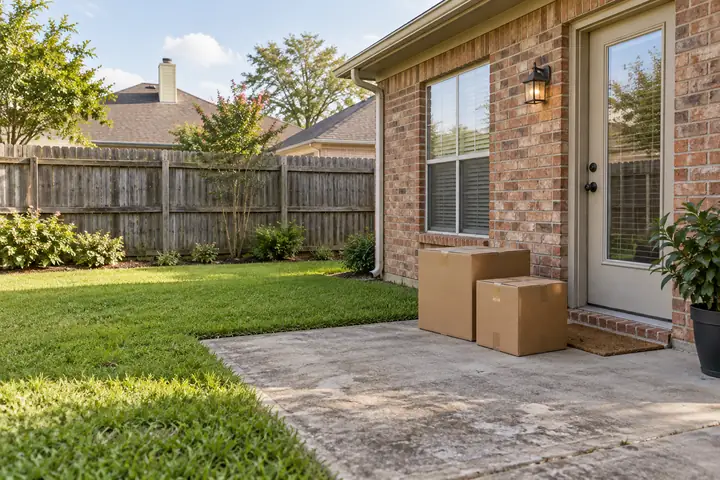
Take a breath before taking on the whole yard
Moving brings enough lists without making the lawn another puzzle you have to solve immediately. Start with a plain look at the space you now manage. Notice the front, side and backyard as separate areas. Find the access route, the concrete boundaries and the places where personal items or moving materials are still waiting to be put away.
You are not expected to know every grass name on your first day. You are gathering enough information for a sensible service conversation. Tell Happy that you have recently moved in and describe the current condition. If the last cut is unknown, say so. Current pictures and an honest starting point are more helpful than adopting an old routine simply because somebody mentioned it during a busy handover.
Save the useful details from the property handover
If the previous occupant or property manager has practical lawn information, keep it together. Useful notes might identify the gate arrangement, an irrigation feature close to concrete or an area normally excluded from maintenance. Record what was actually explained and what remains uncertain. A remembered comment is context, not a guarantee that the yard still has the same condition or access.
Ask the appropriate person about responsibility for shared or adjoining areas. Do not decide the service boundary from the way two lawns appear to join. If you are renting, clarify who is authorized to arrange maintenance and which areas are included in your responsibility. This guide does not interpret a lease or establish ownership. It helps you identify the questions that need an answer before requesting work on a particular piece of ground.
- Save known access instructions privately.
- Note fixed features and any explained exclusions.
- Identify uncertain boundaries for clarification.
- Keep the last known maintenance date if available.
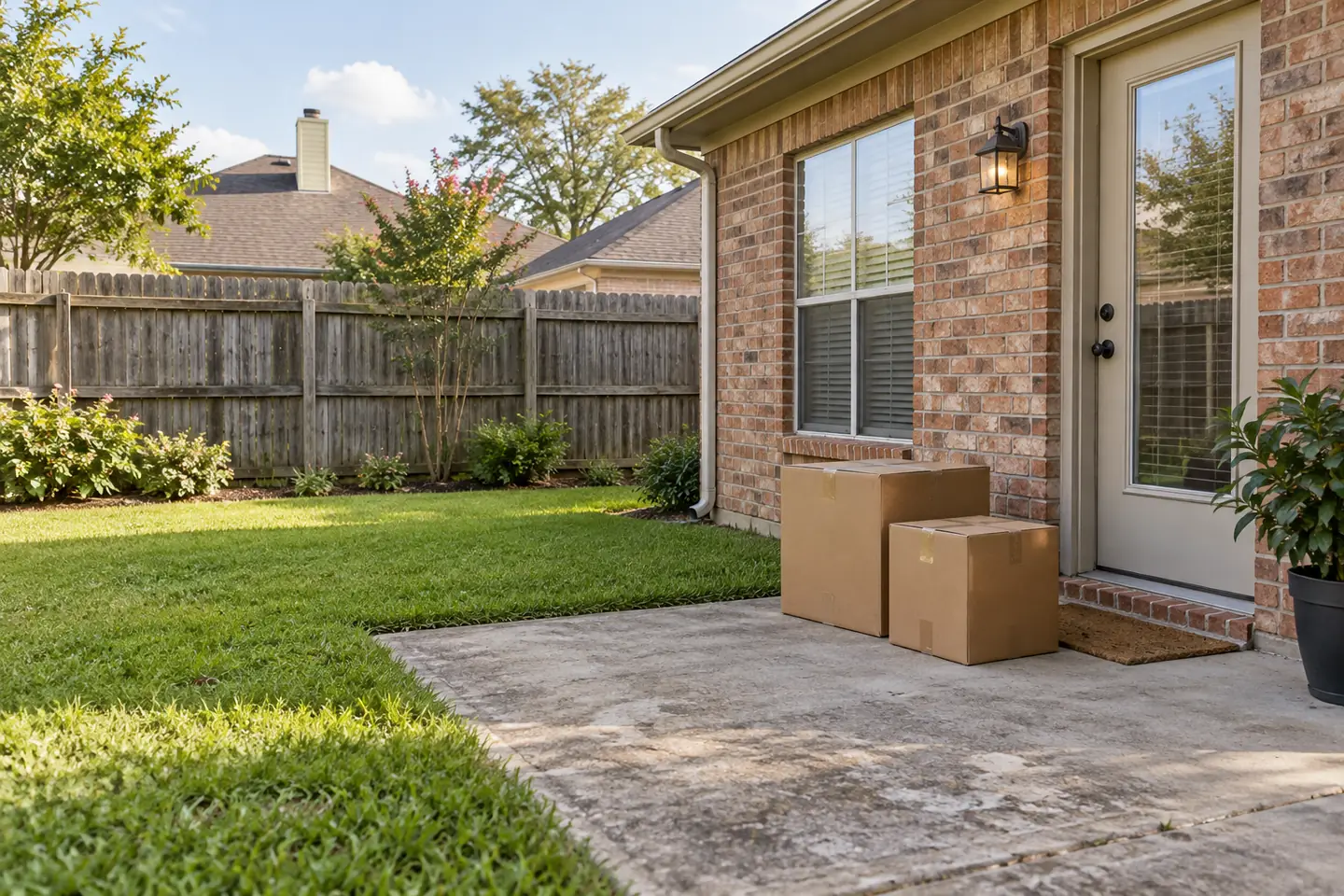
Photograph the yard before the moving piles spread
Take broad current views while each area is visible. Include the gate approach, the side strip and the parts of the backyard you want considered. Add closer pictures of a specific concern after the wider view. These images provide a useful starting record while the property is changing around you.
If boxes, furniture or packing materials already occupy the lawn, photograph the current layout honestly. Say what will be cleared before the proposed visit and who will handle it. Do not use an empty-yard photograph from before moving day without explaining the change. The quote should be discussed using the work area that will actually be available, not a memory of the yard before the truck arrived.
Look for the small things a moving day leaves behind
Packing straps, ties, screws and broken pieces can end up near the driveway or in the grass. Collect visible loose items you can safely handle from the agreed work area. Keep uncertain or sharp material out of the service route and arrange suitable handling. A mower should not become the tool that discovers what fell out of a box.
Pay attention to the places where furniture was set down or equipment was unloaded. If a section has a rut, obstruction or unexplained surface change, show it clearly and tell Happy when you noticed it. Do not hide the area under a remaining pile and assume it will be treated like ordinary open lawn. The first maintenance conversation is a chance to make those differences visible before work is arranged.
Ask about the first visit as a first visit
Your new yard may be ready for ordinary maintenance, or it may have gone longer between cuts than you realize. Show the actual growth and explain what is known. Ask about the first work needed before treating an ongoing routine as settled. An initial scope and a recurring arrangement are related decisions, but they should not be collapsed into a promise without review.
Happy Grass offers mowing, edging, weed-eating and blowing, with weed-control questions discussed separately. Say which areas you want included and what result you would like. Fertilization, aeration, overseeding and pest control are outside the offered service scope. A new address does not require a complicated bundle of assumed treatments. Start with the practical lawn tasks and let the property-specific questions become clear as you go.
Learn the access route before depending on it
Open the gate if you are authorized and can do so safely. Look at its swing and the path immediately beyond it. A gate that appears available from the front may lead to a narrow passage filled with items from the move. Photograph the route and mention fixed obstacles, steps or changes in ground level.
Do not assume equipment can use an opening because you can walk through it. Ask Happy to review the route with the work request. Confirm who will provide access on the actual visit and how pets will be secured. If several people are unpacking or bringing things through the gate, make sure they know about the arrangement. A clear route can disappear quickly when the house is still being settled.
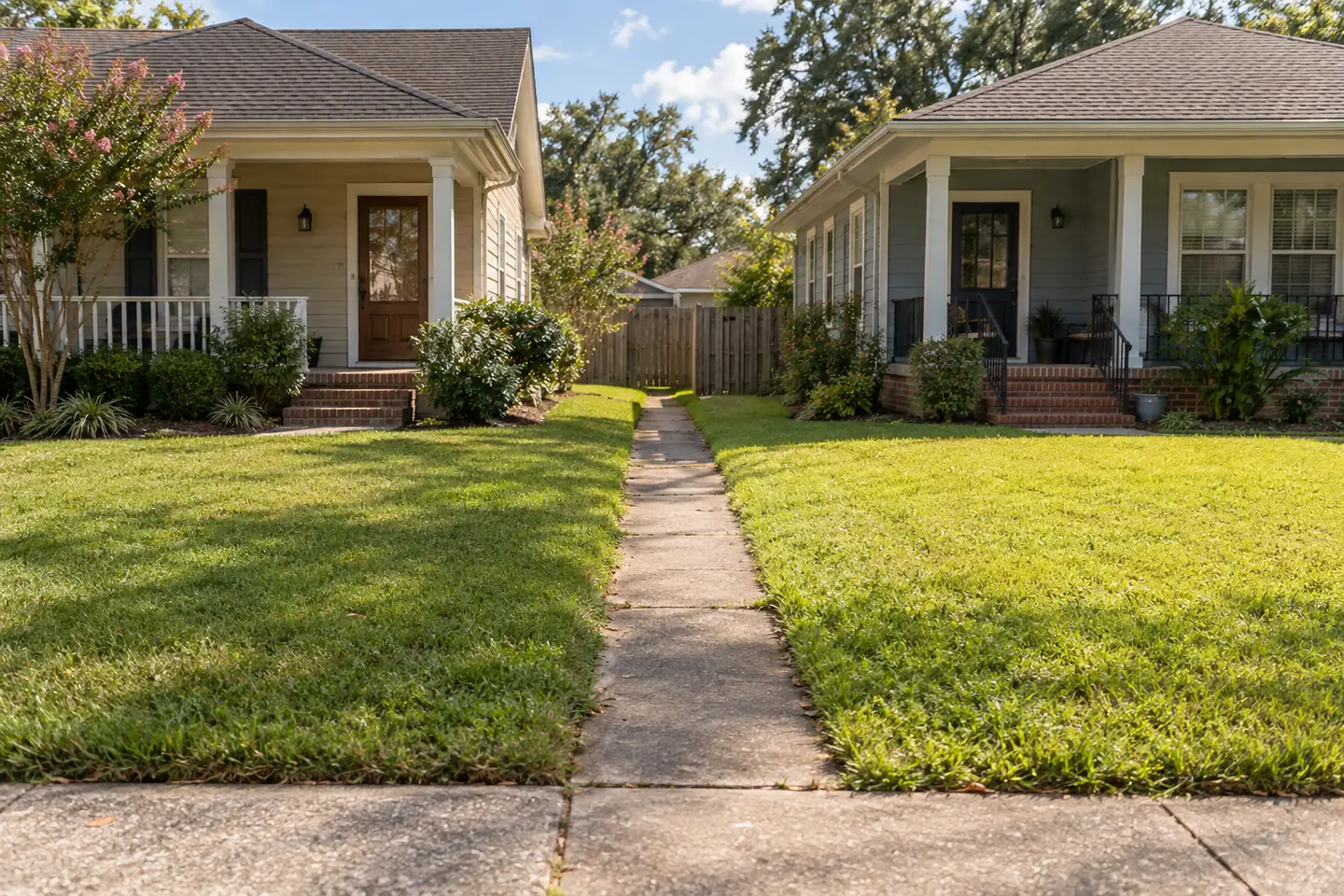
Observe the lawn before naming a problem
The yard may have different grass textures, shaded sections or patches that look unlike the lawn at your previous home. Take a current record without rushing to label every difference. Say whether the concern is height, color, a bare area or an unfamiliar plant. That helps separate a maintenance preference from a question about plant condition.
Avoid ordering an extra-low cut as a general new-house reset. Grass type and current conditions still matter, even if you do not yet know the property history. A particular appearance is not proof that one mowing instruction fits the whole yard. If a question needs local turf diagnosis, keep it visible as a separate issue. The goal of the first conversation is a suitable next step, not a confident answer to every unknown on moving week.
- Describe what you see before naming a cause.
- Show shaded and open sections separately.
- Keep height concerns distinct from color changes.
- Ask what information is needed for a useful review.
Pick a household contact for lawn arrangements
Moving can produce a lot of well-meant duplicate instructions. One person may ask about weekly visits while another is still planning to borrow a mower. Choose who will coordinate the service discussion and make sure the household knows the current plan. That person should know which work is requested and which arrangement has actually been confirmed.
If a landlord or property manager must approve the work, explain that early. A relative collecting pictures is not automatically the person who can confirm a service scope. Clear roles can keep an estimate from being mistaken for an appointment. They also give Happy one practical route for questions about access, changed conditions or a particular area that needs further discussion.
Build a yard note you can use after moving week
Keep a short record with the address, agreed areas, fixed features, access contact and relevant photographs. Add the first confirmed maintenance date when it is known. That note becomes a useful reference after the boxes are gone and the original handover conversation is harder to remember. It does not need to become another elaborate household project.
Update it when the property changes. A removed planter, a different pet arrangement or a newly cleared side passage can affect future visits. Clear information is useful even when the lawn itself has not changed much. A new home starts feeling more manageable when routine details have a home too, instead of living in scattered messages from the busiest week of the move.
Settle in with a happier lawn plan
You can begin with the information you have. Show the current yard, explain what is uncertain and ask for the work you want considered. There is no need to know the lawn perfectly before requesting help. A clear first conversation can turn a new responsibility into an ordinary, manageable part of looking after the house.
Call or text Happy Grass at 504-339-3571 and Ask for Happy, or use the quote form with current photos. Say that you have moved in, provide the service address and describe access and the requested work. Let’s kick some grass when the plan is right for the property. The boxes can wait their turn; getting the lawn conversation started can be one small thing crossed off the list.
Build a record of what you have confirmed yourself
An inherited lawn note can be useful without being fully reliable. Perhaps the previous owner labeled a fixture or described a back gate as the normal entrance. Keep that information as a lead, then distinguish what you have personally confirmed at the property. A gate that once worked for one household's arrangement may now open into moving boxes or a different storage layout.
Start a short current record with three kinds of information: features you can see, history you were given and questions still unanswered. You do not need to resolve every question before asking about ordinary lawn maintenance. You do need to avoid presenting inherited assumptions as present-day instructions.
After the moving activity settles, update the areas most affected by temporary storage and deliveries. Keep the original view if it explains the first request, but identify the newer condition clearly. That gives your lawn conversation a dependable starting point without requiring you to become an expert on every buried or unfamiliar feature during the first week in the home.