
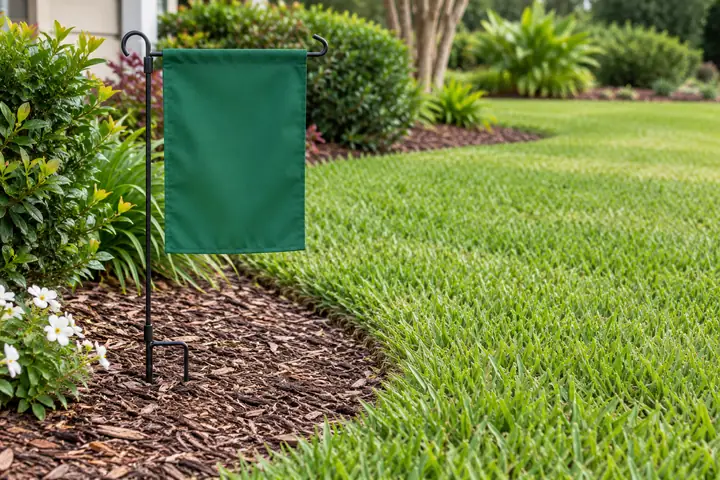
Identify the kind of flag first
A decorative garden flag and a utility or survey marker can look equally small from the gate, but they call for different decisions. Tell Happy Grass which flags are household decorations and which belong to another person or project. Do not remove an unfamiliar marker merely because it interrupts the lawn's appearance. A mowing visit should not erase information that someone placed for a separate purpose.
Start with a wide photograph showing each flag's location relative to the lawn, path and bed. Add a closer view of decorative stands from a position that does not disturb them. If a marker's purpose is unknown, say that plainly and keep the affected area outside the preparation plan until the responsible source can clarify it. The immediate goal is a known work boundary, not a guess about the meaning of a color, a symbol or the direction in which a small stake points.
Account for the stand beneath the fabric
Removing the fabric flag does not remove the obstacle. A decorative stand can leave a slim vertical stem, crosspiece or low foot that grass partly conceals. Show the complete assembly so Happy can understand what will stay or be cleared. Do not describe the yard as prepared if the visible cloth has been brought inside while the metal base remains in the cutting area.
If the owner will remove a genuinely portable decoration, collect the whole assembly and any separate pieces. Check the immediate grass around it for ties, clips or a detached component. Toro's operator guidance emphasizes inspecting the work area and removing objects that machinery could throw. The operator's own manual governs the machine, while the household preparation should make loose belongings visible and accounted for. Equipment should not be the method used to discover whether a thin garden stand was fully removed from a patch of taller growth.
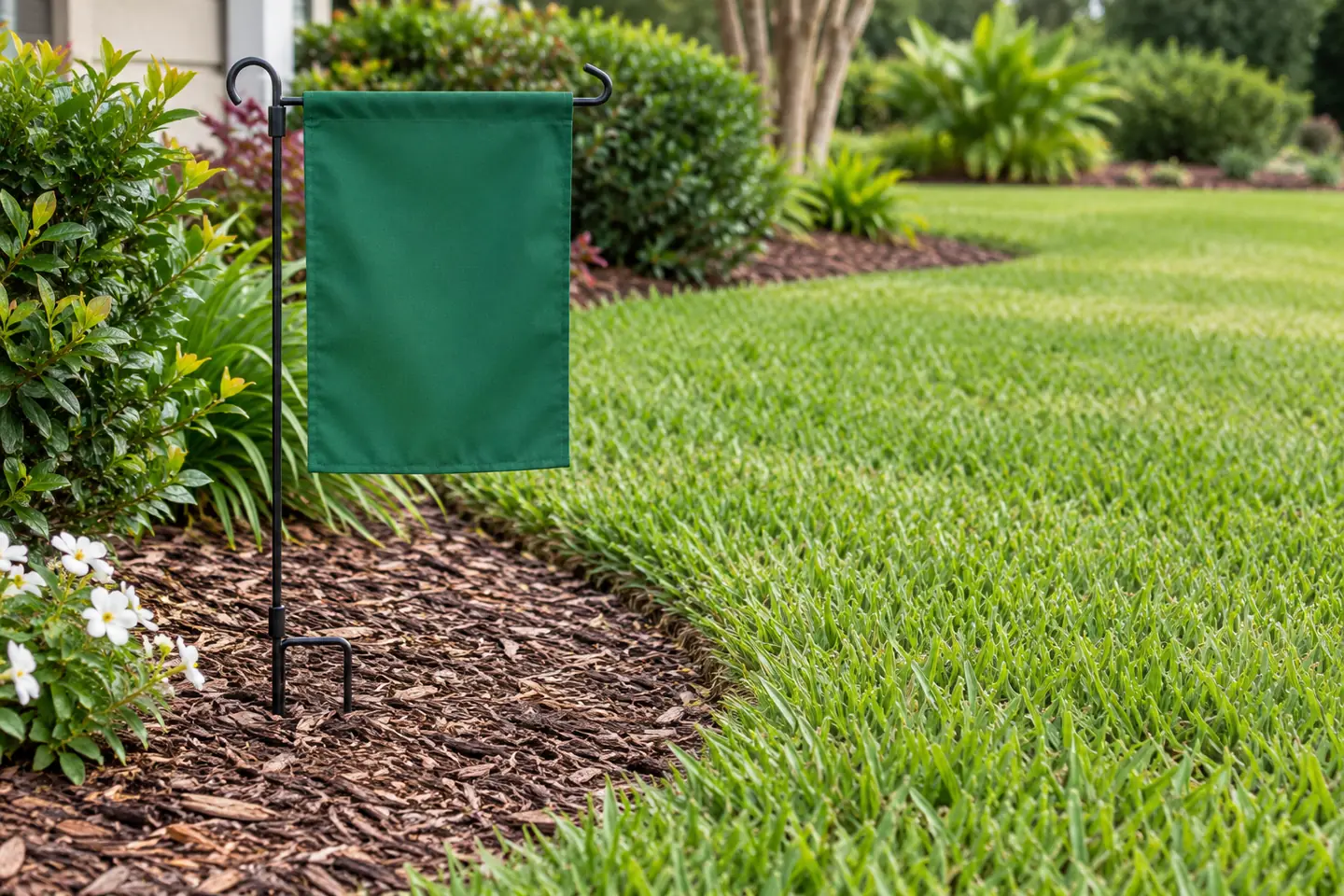
Distinguish a bed display from a lawn obstacle
A stand installed inside a mulched bed may sit outside the maintained grass while its flag or crosspiece overhangs the edge. A similar stand in the lawn creates a different route and finish question. Show the intended bed boundary and the direction of the overhang. Do not assume the support's location alone describes all the space the decoration occupies.
If plants or trailing growth surround the stand, identify them before requesting close trimming. The crew should not need to infer which stems belong to the display and which growth the owner wants maintained. An ordinary lawn quote can address suitable grass cutting around an understood border without including relocation of the display or changes to the planting bed. If the decoration prevents access to the desired grass strip, discuss appropriate owner preparation or a deliberate omission. The boundary should match the arrangement that will actually exist during the visit rather than the idealized space in an old photograph.
Leave project markers to the responsible source
When flags belong to a utility, survey or contractor activity, preserve them and explain their presence before service. Do not interpret a marker as permission to cross an uncertain area, dig beside it or alter its position. Its purpose and the work it relates to need clarification from the responsible source when they affect access. A lawn crew should not be expected to certify what lies beneath the ground from a small flag alone.
Describe the general location and whether a recent project has opened soil, changed a route or left temporary material. Keep the note factual; do not invent a meaning for a color because another property used a similar marker. If restrictions remain, define the lawn section that stays out of the maintenance scope. Suitable independently reachable grass may still be worth reviewing, but a partial visit should have a clear boundary. Mowing can maintain the agreed accessible area while preserving markers and leaving the separate project question intact.
Make owner removal a complete preparation step
If decorative flags will be moved, confirm who handles them and where they will be stored. Do not transfer the stands from the lawn into the narrow side passage that equipment needs to use. A collection of thin metal frames leaning against the gate can create an access problem even after the grass itself has been cleared. Choose stable storage outside the agreed work and finish areas.
For an unattended visit, check what preparation actually occurred. A household message saying someone intends to bring the flags in is not confirmation that every stand and accessory is gone. If a piece cannot be found, report that uncertainty rather than assuming it was stored earlier. Happy can review the affected patch with that information. The fallback for incomplete preparation should be understood in advance, such as a defined exclusion or a revised visit scope. That is clearer than leaving the crew to decide whether a delicate decoration may be moved without the owner's direction.
Describe existing damage before the cut
A bent stand, torn flag or loose support should be recorded before the visit if it will remain near the work area. A daylight photograph of the base and overhang can help distinguish the original condition from a later concern. Do not straighten an uncertain buried foot by pulling against surrounding grass merely to make the picture look tidy. Appropriate handling of the item remains the owner's responsibility unless another arrangement is expressly agreed.
Look at the turf around the display too. A small flattened patch after removal is a different observation from a newly exposed hole or sharp loose part. Identify what is visible without probing the ground to prove its depth. If an area is unfamiliar or contains material that needs cleanup, leave it outside routine equipment travel pending review. The decoration's small size does not guarantee that the surface underneath it is ordinary mowable grass, especially after a stand has been in one position through a long period of growth.
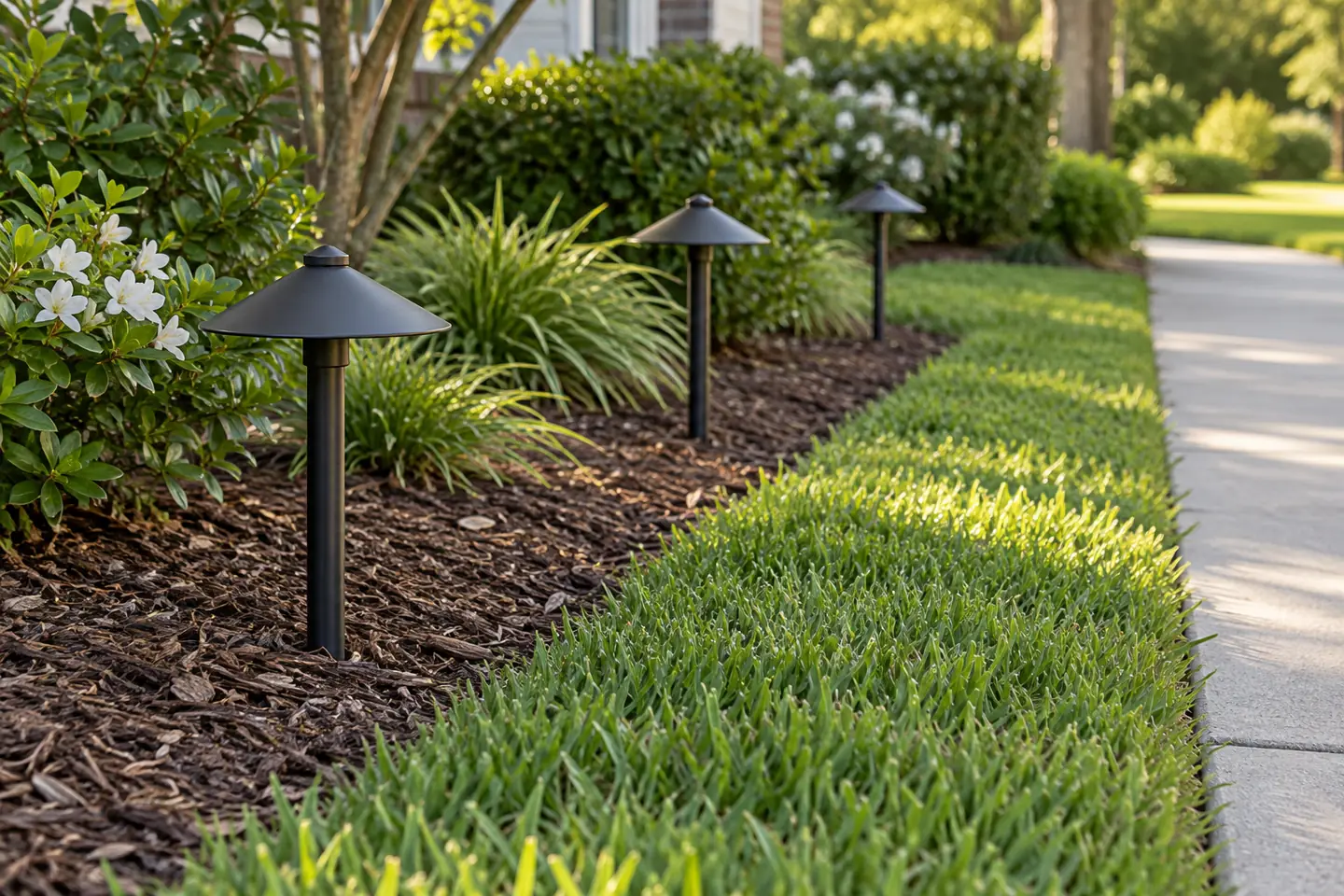
Agree a visible boundary for items that stay
Some decorative displays are intended to remain in place during lawn maintenance. Ask Happy to review the appropriate margin around that actual setup. Do not assume every blade against a thin stand can be cut without approaching its finish, fabric or nearby plants. A realistic boundary can be part of a tidy result when both owner and crew know what is intentionally excluded.
Use a short preparation check to keep the distinction clear:
- Identify decorative items the owner can appropriately remove.
- Preserve unfamiliar project or utility markers.
- Account for complete stands and separate clips or ties.
- Show the grass boundary around every feature that remains.
Update the pictures when seasonal decorations change. A flag arrangement for one holiday may have a different foot, brace or overhang from the display used before it. The maintenance note should describe the present layout rather than treating all small decorations as the same obstacle with the same clearance and handling method.
Give Happy the current yard picture
A useful request says that several decorative stands will be cleared by the owner while project markers near another section must remain. Include photographs of both areas and identify which lawn is reachable without crossing the restriction. That lets the quote address real access instead of a general promise to cut everything around every flag on the property.
After service, review the maintained area before reinstalling decorations if you want to document the finish. Explain any movement or new installation when comparing later photographs. A flag returned to a different location can make the apparent cutting margin look different from the one available during the visit. Call 504-339-3571 and ask for Happy to discuss the yard. Complete preparation of portable decorations and careful preservation of unfamiliar markers make the lawn request clearer without turning a mowing visit into an assumed survey, utility assessment or household display service.
Retire the display note when the stand is gone
When a seasonal flag display is removed, account for the support as well as the fabric before updating the lawn instructions. Record any part that remains in the ground or beside the border. A note saying the decorations are down can otherwise be read as confirmation that the whole feature has disappeared.
Use a fresh wide view to close the old exclusion when the owner has actually checked the area. If a new display goes in later, describe it as a new arrangement rather than reusing an old photograph automatically. Keep decorative stands distinct from project or utility markings whose purpose you have not confirmed. This makes the preparation record accurate across seasonal changes and prevents a familiar-looking small flag from being treated as permission to move every marker in the yard.