
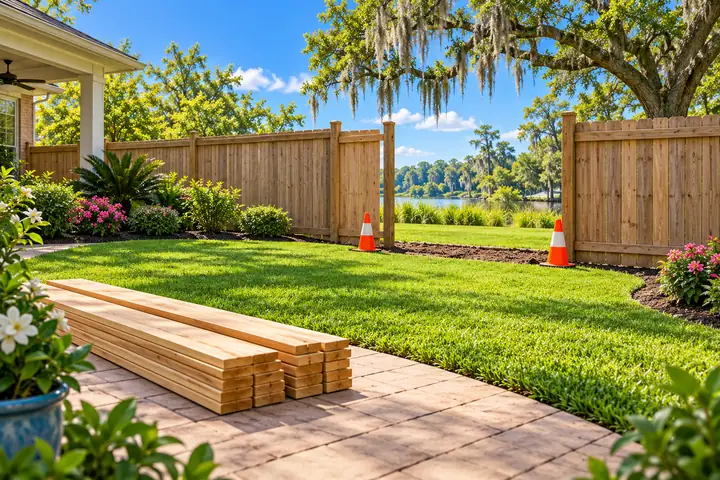
Pause the old fence-line assumption
A fence normally acts as a strong visual reference, so a missing panel can make the lawn appear to continue into a neighbor’s area. As soon as repair begins, retire instructions that say only “mow to the fence.” Replace them with a temporary boundary tied to posts, corners or another authorized reference.
Do not infer ownership from grass color, old cut patterns or where repair materials sit. The property owner must clarify the legal and practical boundary. Happy Grass can follow an identified service line; it cannot settle a property dispute.
Map the repair zone
Show the removed panel, remaining posts, board stack, work path and any hole or disturbed soil. Name the zone in plain language such as “back fence repair strip.” A wide drawing or photo should make the exclusion visible without revealing neighboring private space.
Update the map whenever the opening moves. Fence work often progresses one panel at a time, and yesterday’s safe route may become today’s materials area.
Secure people and pets first
An open fence changes containment. The resident is responsible for keeping pets and children safely away from the lawn work area. A temporary lawn boundary is not a pet barrier, and a cone or ribbon cannot replace secure supervision.
Confirm the access plan before the visit. If pet containment depends on a gate or panel under repair, postpone the affected zone rather than asking a crew to monitor the opening.
Treat holes as unavailable ground
Post holes, removed footings and disturbed soil may be hard to see in grass. Mark them using the repair contractor’s safe method and keep lawn equipment away. Do not fill, probe or cover a hole as part of mowing.
If a marker falls or the edge crumbles after rain, send a new photo. A verbal memory of where a hole used to be is not enough for a recurring route.
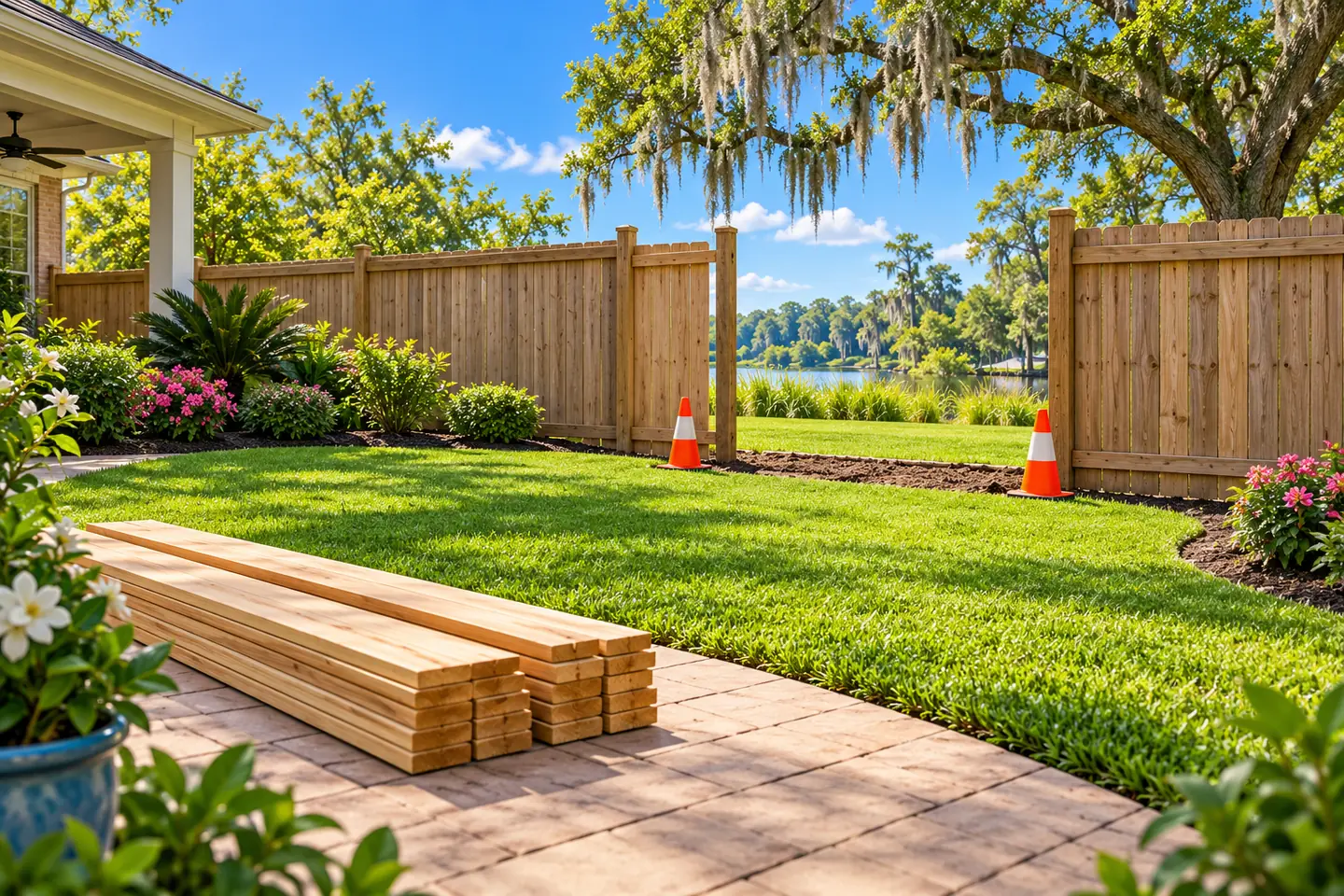
Store boards off the turf when practical
The owner and contractor should choose a stable authorized storage area, preferably one that does not hide grass or narrow the gate. Boards can contain fasteners, splinters and uneven ends. Lawn crews should not lift or rearrange them.
If materials must remain on turf, define the whole stack and handling space as excluded. Do not mow under leaning boards or blow clippings into them.
Separate contractor cleanup from blowing
Sawdust, nails, screws, wire, concrete fragments and packaging are project debris. They require a deliberate contractor or owner cleanup before mowing resumes. Normal blowing is for routine lawn residue on included hard surfaces, not for scattering construction remnants.
Inspect the grass from several angles after each workday. Leave any uncertain patch untouched until it has been cleared and seen in good light.
Keep the gate route explicit
Fence repairs can remove a familiar gate, brace it shut or create a temporary opening. State which entrance is authorized and whether it will be unlocked. Do not treat an open repair gap as permission to enter.
Check turns, steps and surface firmness along an alternate route. If equipment cannot reach the backyard without crossing project materials, the backyard remains unavailable.
Respect the neighboring side
Keep people, equipment and clippings on the authorized property. Do not use a neighbor’s yard as a turn-around space because the panel is absent. Avoid photographing neighboring windows, people or identifiable possessions.
When the temporary line is uncertain, stop short. An intentionally uncut narrow strip is preferable to an unauthorized crossing.
Plan around temporary panels
Portable mesh, plywood, metal barriers or braced panels can flex and have feet that extend into grass. Include braces and bases in the exclusion, not only the visible wall. Never move a temporary safety barrier for trimming access.
Ask the project contact how long the barrier is expected to remain and schedule a review. Weather can shift a panel, so visit-day condition matters more than the original setup photo.
Note utilities before digging begins
Fence contractors and owners are responsible for proper utility-location steps before excavation. Existing utility flags or markings should remain visible and undisturbed. Lawn service should not pull them, drive new stakes nearby or guess what each color means.
Where markers cross a mowing zone, identify the area to skip. Contact the appropriate utility-location or project authority with questions; a lawn quote is not excavation clearance.
Watch the soil after rain
Fresh post work can leave soft rings, loose spoil and mud along the fence. Describe firmness and standing water without claiming the repair caused every condition. A dry front lawn does not prove the back repair strip is ready.
Choose a visible no-mow line until the surface can be approached without rutting or slipping. Grading and soil repair are separate from the recurring cut.
Decide how grass height will recover
An excluded strip may grow taller than the rest. LSU AgCenter’s general one-third guidance cautions against removing more than about one-third of the blade in one mowing. Discuss a conservative return based on actual height and hidden-debris risk.
Do not demand that the repaired edge match the entire lawn immediately. The first goal is a safe, visible boundary; finish can normalize over later suitable visits.
Reconfirm edging and trimming
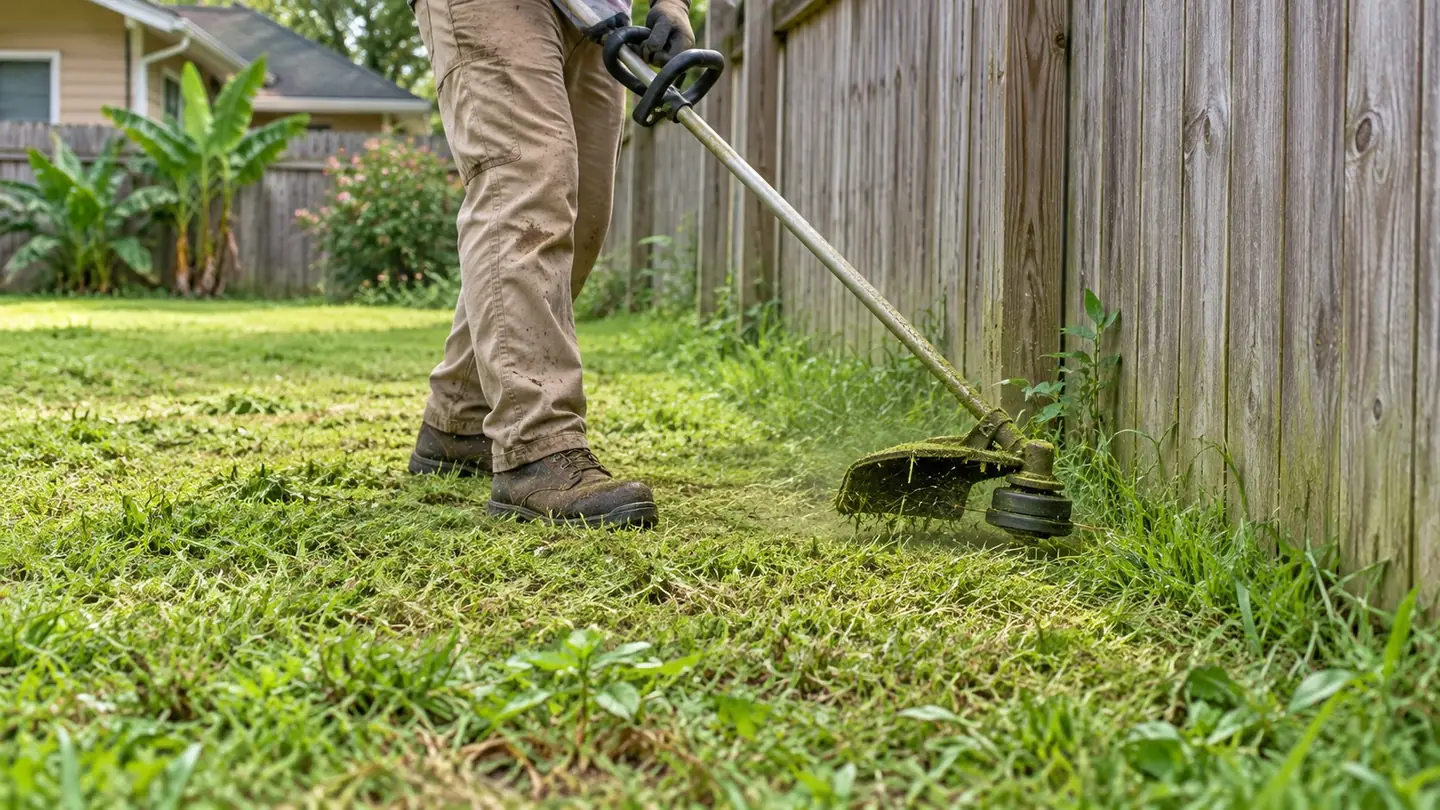
Fence-line trimming is different from edging a hard surface. When the panel returns, state which reachable vegetation beside the fence is included. Do not ask for soil trenching, fence repair or vegetation removal beyond the accepted lawn scope.
If a new fence footprint changes the grass edge, request a fresh quote conversation. Old wording should not silently expand to new beds, gravel or inaccessible gaps.
Photograph useful reference points
Take one wide image from inside the yard showing both end posts and the repair strip. Add a closer view of marked holes only if it can be done safely. Date the images and label them with the zone, not a precise public location.
Delete obsolete views when the panel sequence moves. A clean current record prevents someone from following a safe boundary that no longer exists.
Close the temporary plan carefully
After the contractor finishes, remove debris through the responsible project cleanup, confirm gates and latches, inspect the lawn surface and update pet containment. Do not restore normal mowing merely because the fence looks complete from a distance.
Walk the authorized line with the current property contact. Record the finished reference posts and retire the temporary exclusion map.
Keep the service description honest
The available scope may include the front, side yard and most of the back while the repair strip remains paused. List those zones. Avoid “whole yard except construction” when the construction footprint itself changes.
Happy Grass provides lawn-maintenance conversations around mowing, edging, weed-eating, blowing and carefully defined weed control. It does not provide fence construction, debris hauling, fertilization, aeration, overseeding or pest control.
Call with the current layout
For a fence project in Harvey, Marrero, Gretna, Algiers, Belle Chasse or Westwego, call 504-339-3571 and ask for Happy. Send a current inside-yard photo, the authorized gate and the temporary line.
The useful question is not whether a crew can “work around it somehow.” It is which lawn zones are clearly reachable today and what must remain untouched until the repair is complete.
Record the handoff between contractor and lawn contact
Name one person who can say when the repair crew has finished for the day and another, if different, who approves the lawn scope. This avoids messages passing through an uninvolved neighbor or a worker who cannot authorize access. Keep phone details in the approved private channel rather than on a public marker.
Ask the handoff contact to confirm four facts: materials are stable, sharp debris is collected, the authorized entrance is usable and the temporary line is still correct. That confirmation does not warrant the construction; it simply gives the lawn visit a current starting point.
Check the finished fastener area
After the boards return, scan the grass on both sides of the repair path for dropped screws, nails, wire ends and packaging. The responsible contractor should complete that cleanup with appropriate tools. A quick visual pass by a lawn contact does not guarantee every sharp item is gone, but it can reveal obvious reasons to keep the strip paused.
Do not use mowing equipment as a cleanup method. When the area is cleared, photograph the new fence base and record any change in post position, gravel or bed width that affects recurring trimming.