
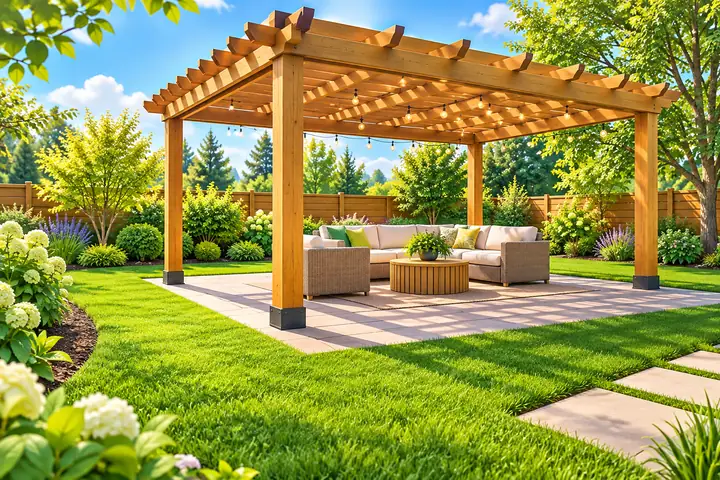
Name the structure and its footprint
Begin with a wide view showing every post, the roof or open beams, interior surface and surrounding turf. A pergola on pavement needs a different lawn boundary from a gazebo whose floor is partly grass.
Happy Grass does not inspect footings, beams, roofing, fasteners or structural stability. The owner remains responsible for the building and for any professional evaluation it needs.
Separate the interior from the perimeter
State whether the interior is concrete, pavers, gravel, decking, mulch or living grass. Do not promise work “inside the gazebo” without identifying the actual surface and access.
A reachable outer grass strip may be included even when the center is excluded. Clear zone names make that difference visible in the quote.
Treat every post as fixed
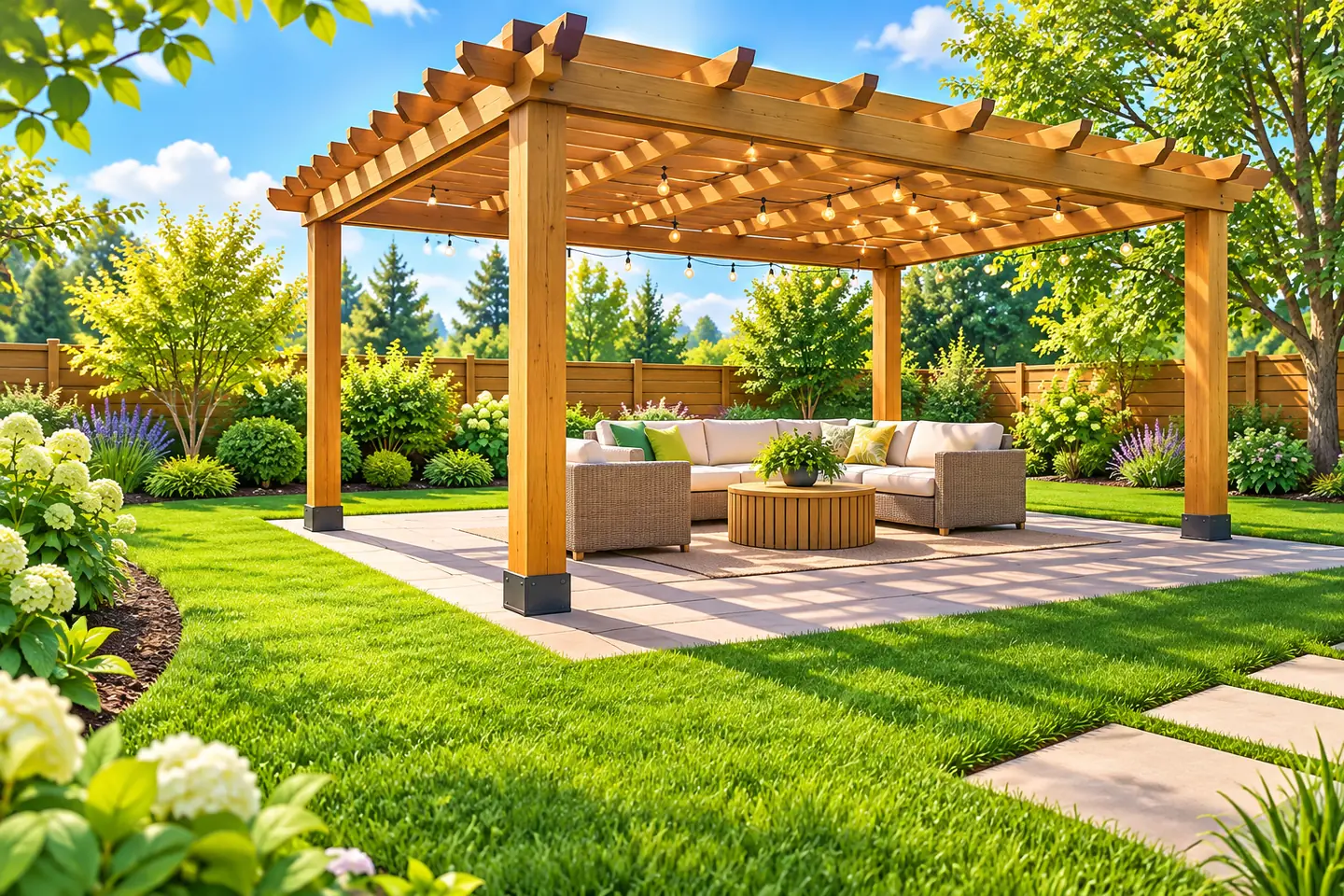
Photograph post bases, metal brackets and decorative sleeves above grade. Keep trimmer line and mower turns away from wood, hardware and unknown buried footings.
Where grass grows in a pocket too small to see, define a leave-alone border. Do not cut by feel against a post to create an artificial uniform line.
Clear movable furnishings
Move chairs, tables, rugs, planters and décor to the agreed hard surface before service. Do not stack them in the gate, on grass or against a post where they create a new obstacle.
Heavy or valuable property remains owner-managed. A recurring lawn plan should not depend on a crew redesigning the seating area at every visit.
Manage curtains and hanging items
Secure outdoor curtains, screens, string lights, fans, cords and hanging plants above the work area. Wind can move fabric or wiring into the lawn route after a planning photo is taken.
Do not unplug, tie, cut or relocate these items for access. If they hang into the route, expand the exclusion or pause that section until the owner corrects it.
Check overhead clearance
Walk the approach while looking at low beams, roof edges, hooks and branches. A wide ground path can still be unsuitable when equipment handles or the operator would contact something above.
Use another route when clearance is uncertain. Happy Grass does not trim structural beams or adjust mounted fixtures.
Define the hard borders
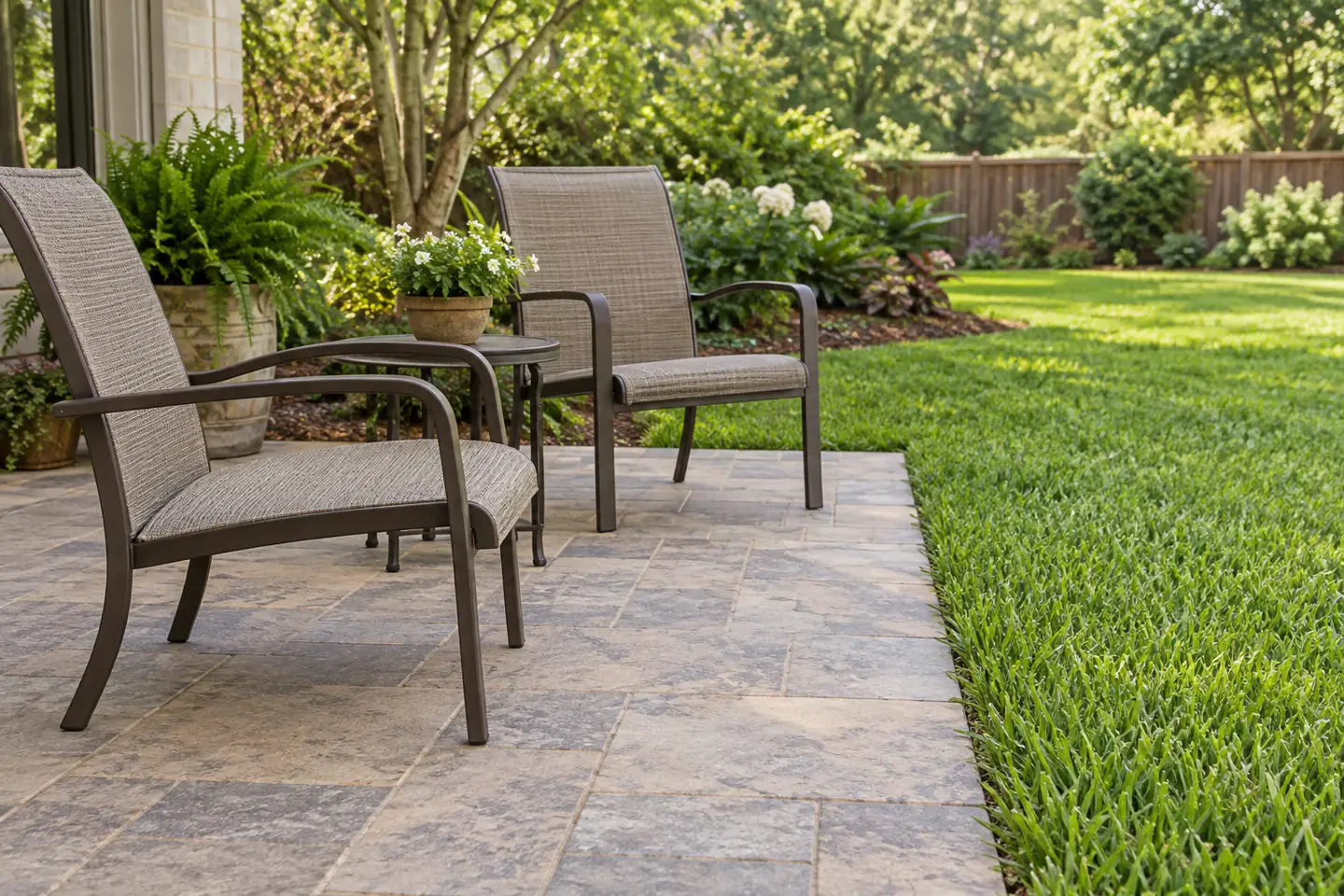
Identify stable concrete, pavers or metal edging that can guide the lawn finish. Grass against wood posts, lattice or deck boards is a trimming boundary, not automatic hard-surface edging.
Loose gravel and buried borders require a conservative stop line. The goal is to keep stones out of moving equipment and preserve the existing design.
Keep the walking route open
Show how people travel between the home, structure, gate and open yard. Do not stage lawn equipment on steps, ramps or the only paved approach.
If a household member needs to pass, pause and secure equipment. The service sequence should maintain an ordinary usable route rather than temporarily trapping the seating area.
Coordinate children and pets
Clear people, pets and play items from both the structure and surrounding lawn. A table or post can hide a child or animal from someone approaching around the corner.
Pet tethers should never attach to a post during service. The property contact should use a separate secure area away from active equipment.
Read shade and moisture separately
Grass beneath an open structure may receive less sun and different rainfall than the surrounding yard. Evaluate firmness and growth zone by zone instead of expecting one uniform response.
Skip soft interior soil or a wet post pocket. Drainage diagnosis, leveling and turf repair are outside the mowing scope.
Recover tall interior grass carefully
When furniture or an old rug is removed, inspect the revealed area for fasteners, glass, fabric ties and uneven soil. Do not enter it with equipment until the surface is visible.
LSU AgCenter’s general one-third mowing guidance supports gradual reduction. A shaded patch may take multiple suitable visits to approach the surrounding height.
Keep clippings off fabrics and fixtures
Direct fresh residue away from cushions, curtains, screens, fans, lights and tabletop items. Routine blowing may clear an included hard surface but should not be used to clean the structure.
Heavy leaves, bird residue, stains and stored property require separate owner cleanup. The lawn finish should not push material into corners or beneath furniture.
Photograph all approach sides
Use at least two wide empty-yard angles showing posts, floor surface, gate and nearby grass. Avoid people, house numbers and neighboring private areas.
Replace the images when curtains, screens, furniture or landscaping alter the route. Do not let an old open layout override the current built condition.
Pause during repairs or staining
Painting, roofing, screen work and post repair may add ladders, tarps, nails and wet coatings. Skip the affected lawn until the project contact confirms materials are cleared and finishes are ready.
Construction cleanup and structural inspection are not lawn services. Request a new route review if a post moves or the floor expands.
Plan seasonal changes
Furniture covers, heaters, holiday lights and storm preparations can change the footprint for weeks. Record a temporary exclusion instead of assuming the summer arrangement still applies.
When normal placement returns, use current photos before restoring the old lawn route. Temporary cords and tie-downs must be removed or clearly managed.
Use a structure-side checklist
Confirm furniture is placed as agreed, hanging items are secure, pets are contained, post bases are visible, hard surfaces are clear and the ground is firm.
The checklist addresses access only. It does not certify the pergola or gazebo or promise entry into every interior corner.
Write the quote by surface
List open-lawn mowing, reachable post-side trimming, named hard edges and any included floor section for routine blowing. Exclude structural work, furniture movement, fabric handling, washing and inaccessible pockets.
Happy Grass does not provide fertilization, aeration, overseeding or pest control. Questions about insects in beams or beneath a platform need an appropriate provider.
Ask Happy about the post-side lawn
For a pergola or gazebo yard in Harvey, Marrero, Gretna, Algiers, Belle Chasse or Westwego, call 504-339-3571 and ask for Happy. Share current wide photos and the open gate route.
An honest zone map can protect posts and furnishings while giving accessible grass a neat recurring finish. The structure stays owner-managed, and the lawn scope stays understandable.
Identify drains and downspouts
Roofed gazebos may direct water to a gutter, chain or surface drain near the lawn. Mark each visible outlet and keep clippings away without claiming it works properly.
Blocked drains, eroded soil and broken connections require separate attention. Skip the wet outlet pocket until the owner restores suitable ground.
Keep climbing plants intentional
Vines may be part of the design, but stems and ties can spread from posts into the grass. The owner should maintain the plant boundary and identify anything that must remain untouched.
Do not cut a vine from a beam or pull runners through lattice. Accessible turf begins outside the protected planting zone.
Review lighting power routes
String lights and fans may use permanent wiring or temporary cords. Photograph only the physical route needed for access and remove ordinary extension cords from turf.
Electrical changes belong with a qualified provider. A lawn visit should never unplug fixtures or move a powered connection to improve a turn.
Preserve step and threshold visibility
Gazebos may have one low step that blends into shade or grass. Photograph the riser from the approach and keep toys, planters and rugs away from its edge.
Routine lawn work should not use the step for equipment staging. If it is the only entry, decide whether the interior remains outside the service scope.
Account for roof drip lines
Even an open-sided shelter can shed a concentrated line of water. Observe the perimeter after rain and mark soft soil that needs to dry before a close turn.
Do not diagnose flashing or gutters. The recurring plan can simply skip the wet arc and preserve the visible lawn beyond it.
Keep event setups separate
Parties and gatherings may add tables, coolers, cords and temporary decorations across the lawn. Schedule service after the owner clears the setup or exclude the occupied areas.
Do not ask the crew to relocate event property. A current empty-yard photo should control the return to normal access.
Give the inside and outside different labels
A freestanding structure may have grass around its posts and another surface inside. Describe those spaces separately, including the entrance used to reach any interior grass that belongs in the request. A photograph through the opening should not imply that furniture, fabric or overhead accessories have already been prepared.
Keep the owner’s setup note connected to those labels. If one side remains occupied by installed features, identify the accessible lawn and the part excluded from ordinary maintenance. Revise the note when curtains, planters or seasonal furnishings change the working footprint. The useful result is a clear picture of which lawn areas can be discussed around the structure as presented, rather than an instruction to make the whole outdoor room ready before mowing can start.