
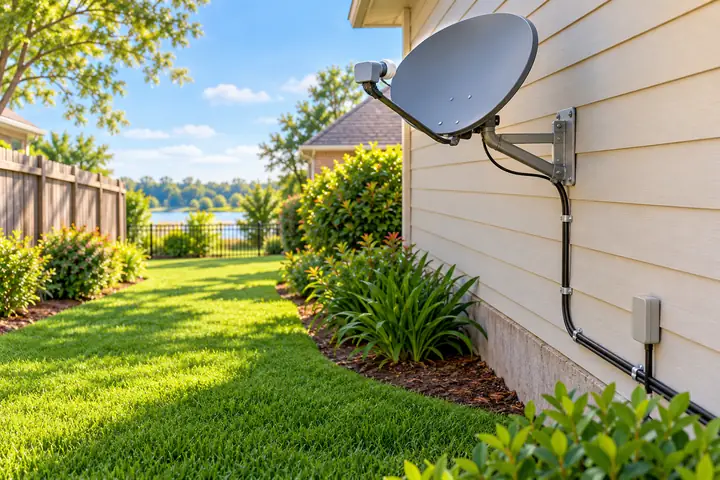
Read the whole installation from the ground
Begin at the dish, then visually follow the support arm, coaxial cable, clips, grounding block and entry point without touching any part. The important lawn-care fact is not which company installed it. It is where solid hardware ends and where a cable could sag, loop or cross the reachable grass. A wide photograph from the gate helps Happy understand that relationship before quoting.
Some dishes are mounted high on a wall and never affect mower clearance. Others sit on a short pole, low bracket or corner near the only side-yard passage. Record the lowest rigid point and the narrowest ground-level width. Happy Grass does not realign a dish, diagnose reception, open a service box or decide whether an installation meets electrical or communications codes.
Separate fixed hardware from loose cable
A properly secured exterior cable follows its intended route and does not lie across the lawn. If a section has fallen from a clip, treat it as a changed condition. Do not tuck it under grass, pin it with an improvised object or expect lawn equipment to pass over it. Contact the provider or an appropriate qualified technician for the cable work.
The distinction matters because a black cable can disappear in shade or tall turf. Walk the route in daylight from both directions. Note splices, drip loops and any point where landscaping has grown around the line. Lawn service can work near a visible, stable boundary; it cannot turn a loose communications line into a safe temporary installation.
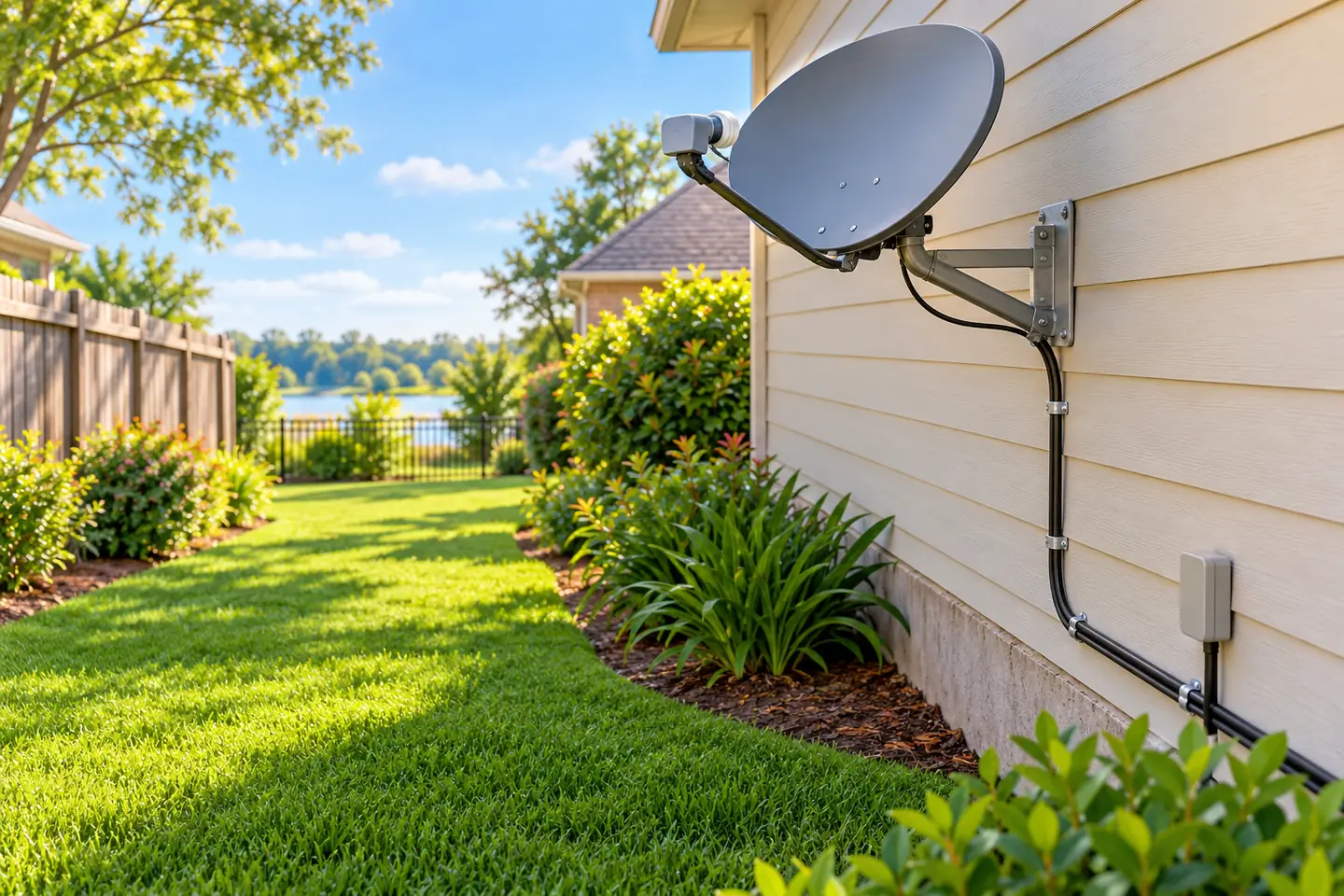
Map the side-yard travel lane
Measure the open passage at the dish bracket, air-conditioning corner, gate latch and any downspout that shares the wall. The narrowest point controls the route. A large opening at the gate does not help if the equipment has to pivot around a bracket farther inside. Remove cans, hose reels and portable décor before taking the measurement.
If the route is too tight, the yard may need a different access point or a smaller agreed work zone. Do not remove dish hardware to gain inches. Keep the quote focused on reachable turf and note any grass strip that will remain outside the normal path. A precise exclusion is better than a promise that depends on squeezing past a fragile cable.
Keep the wall edge visible
Leaves, vines and tall grass can hide clips, conduit and the bottom of a pole. Clear loose debris by hand before service and keep plant growth from covering the installation. Do not pull a vine that is wrapped around a cable; that can transfer force to the bracket. The owner should arrange appropriate maintenance when vegetation has become entangled with communications hardware.
A visible wall edge also protects siding, foundation vents and nearby utilities. Show Happy where the communications cable ends and where other systems begin. Exterior power, gas and irrigation components may share the same small area even though they require different professionals. Lawn work remains a no-contact activity around all of them.
Treat pole-mounted dishes as their own island
A ground pole creates a circular obstacle with a base that may be concrete, soil or gravel. Identify guy wires, buried cable markers and any decorative border. The dish face can extend beyond the pole, so the working boundary is not only the base. No mower or trimming plan should rely on brushing beneath a low receiver arm.
If turf grows directly against the footing, agree on the reachable edge. A durable non-turf border may simplify future access, but Happy Grass is not installing one as part of mowing. Before any digging or border project, use the applicable utility-location process and confirm private lines with the responsible owner or provider; a dish cable may not be covered by the public-locate response.
Check after storms and contractor visits
Wind, falling limbs and roof or siding work can change the installation. A cable that was tight last week may hang lower after a clip fails. Walk the area after severe weather and whenever another contractor has used ladders near the dish. Fresh screws, packaging or cut wire pieces should be removed before lawn service.
Do not ask a lawn crew to judge whether the dish is still structurally sound. A tilted mast, loose bracket, cracked mount or cable pulled away from the wall needs provider or technician attention. Mark the lawn area as temporarily excluded until the hardware is secure. That pause protects people, equipment and the homeowner’s communications service.
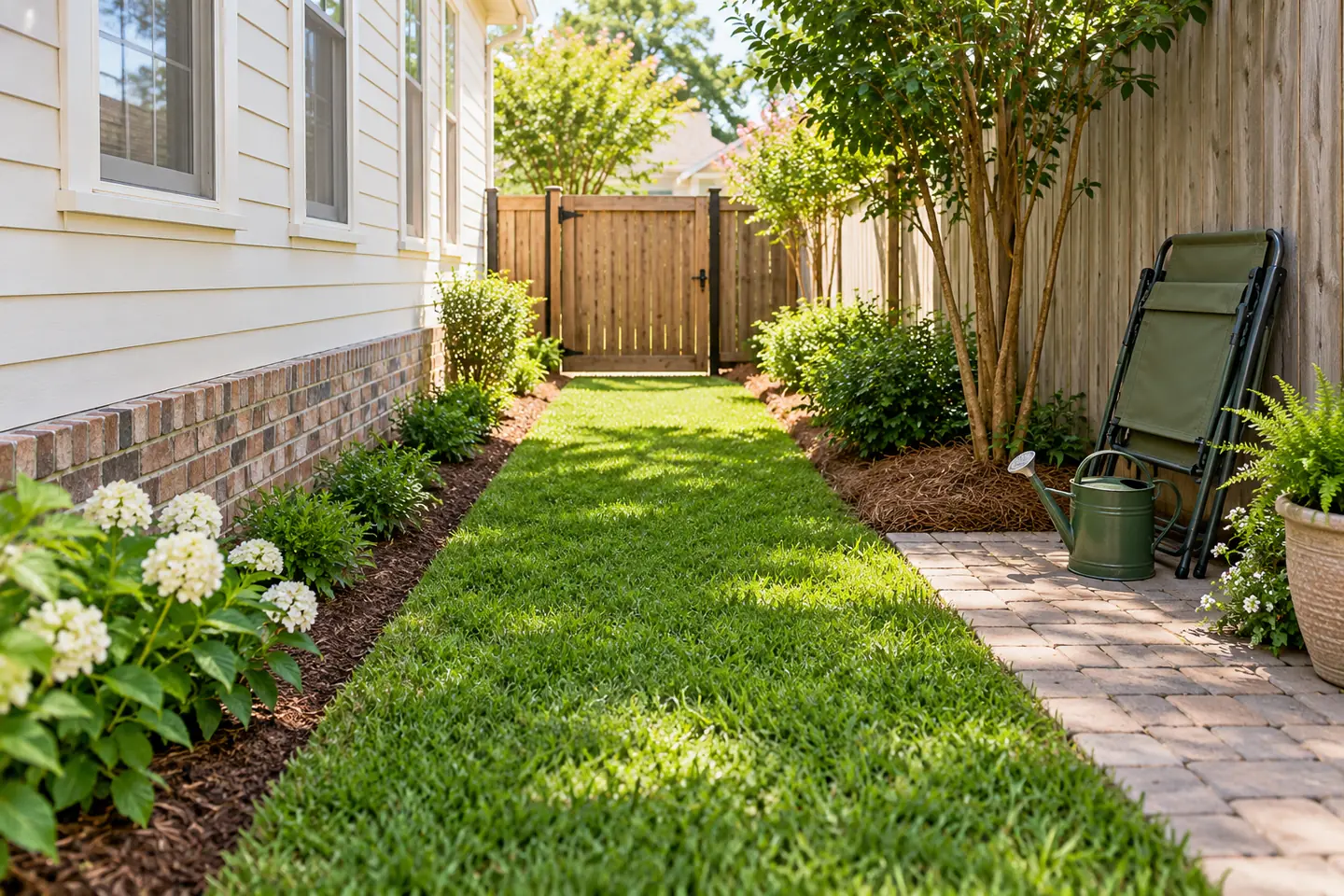
Plan around wet ground and drainage
Wall-side lanes often collect water from a roof valley, downspout or air-conditioning drain. Soft ground changes the usable width because wheels need room to stay away from the foundation and hardware. Check for pooling at the dish-side corner after rain, not only at the gate. A dry front yard does not prove the shaded passage is ready.
If a cable enters near a low spot, never lift or reposition it to create clearance. Report the condition and let the surface dry or use an agreed alternate boundary. Happy Grass can discuss mowing timing and reachable grass, but it does not repair drainage, reroute downspouts or provide electrical or communications service.
Remove unrelated obstacles before service
Side yards easily become storage lanes. Move ladders, bikes, garden tools, empty pots and extension cords to a secure place that does not block another exit. Coil garden hoses on their normal holder and keep the dish cable visually distinct. Do not hang anything from the dish bracket or cable clips.
Finish the preparation with a ground-level scan. – Confirm the gate reaches its normal open position. – Follow every visible cable to the wall or pole. – Remove loose items from the full travel lane. – Point out low brackets, drip loops and grounding components. – Check the surface for standing water or soft ruts. – Report any newly loose or damaged hardware before arrival.
Protect the equipment without inventing service
Happy Grass can keep a respectful no-contact margin and describe where lawn equipment will not go. That is different from warranting a manufacturer clearance or certifying the installation. Provider instructions and the property’s qualified technician control hardware questions. The lawn plan should remain modest: identify the fixture, expose the route and name the turf that is reasonably reachable.
This boundary also applies to cleanup. Grass clippings can be directed away from the wall where practical, but the crew is not opening a box, wiping electronics or testing the signal. If the installation needs cleaning or adjustment, schedule it separately. One clear responsibility per task prevents accidental scope creep.
What to send with a quote request
Provide one image from the gate, one showing the dish and wall from several feet away, and one showing the ground beneath it. Include the narrowest width, whether the dish is wall- or pole-mounted, and whether the lane stays wet after rain. Mention another gate if it can provide a genuinely open route.
For Harvey, Marrero, Gretna, Algiers, Belle Chasse and Westwego properties, the layout can vary more than the neighborhood name suggests. Happy needs the actual passage, not a general description of the town. A current route map lets the quote cover lawn care honestly while leaving every cable, bracket and reception question with the right provider.
Record changes without touching the installation
Keep a simple dated note when a provider replaces the dish, adds a cable clip or chooses a different wall entry. The note should describe what a homeowner can see from the ground: mounting type, cable route and open travel width. It should not guess at signal strength or technical compliance. This small record prevents an old lawn plan from surviving after the hardware has changed.
When selling, renting or handing the property to another caretaker, pass along the lawn boundary and the provider contact separately. The next person should understand that a tidy side yard does not authorize them to adjust the dish. A current image and an honest exclusion make the handoff useful without turning Happy Grass into a communications contractor.