
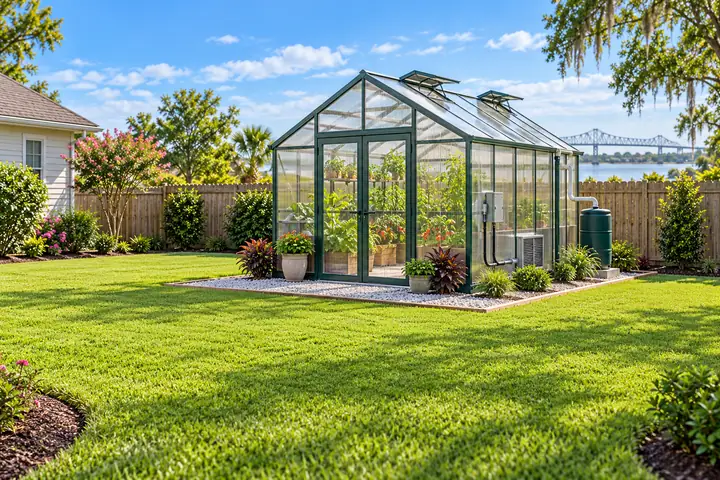
Read the full greenhouse footprint
The visible walls are only part of the space a greenhouse uses. Doors swing outward, roof vents open, gutters discharge, shade cloth hangs and benches may sit just beyond the frame. Walk the complete perimeter and identify which parts are permanent, seasonal or moved for daily plant care.
Photograph the structure from opposite corners so the lawn route is easy to understand. Include the nearest gate and any narrow side passage. Happy Grass can quote reachable grass, but the greenhouse, plants, shelving and climate systems remain outside lawn-service scope. Do not rely on someone moving delicate items after equipment arrives.
Define a stable base and grass boundary
A gravel, paver or concrete base creates an obvious stopping line. When the greenhouse sits directly on soil, grass may creep beneath the frame and through anchors. Point out every edge before trimming. A buried skirt or low metal flange can be invisible under thick growth and should never be discovered by contact with equipment.
Happy can maintain the present accessible turf. Installing a border, correcting the foundation or rebuilding the base is separate work. If the structure has settled and leaves sharp framing near ground level, have the owner or appropriate installer repair it before service occurs close by.
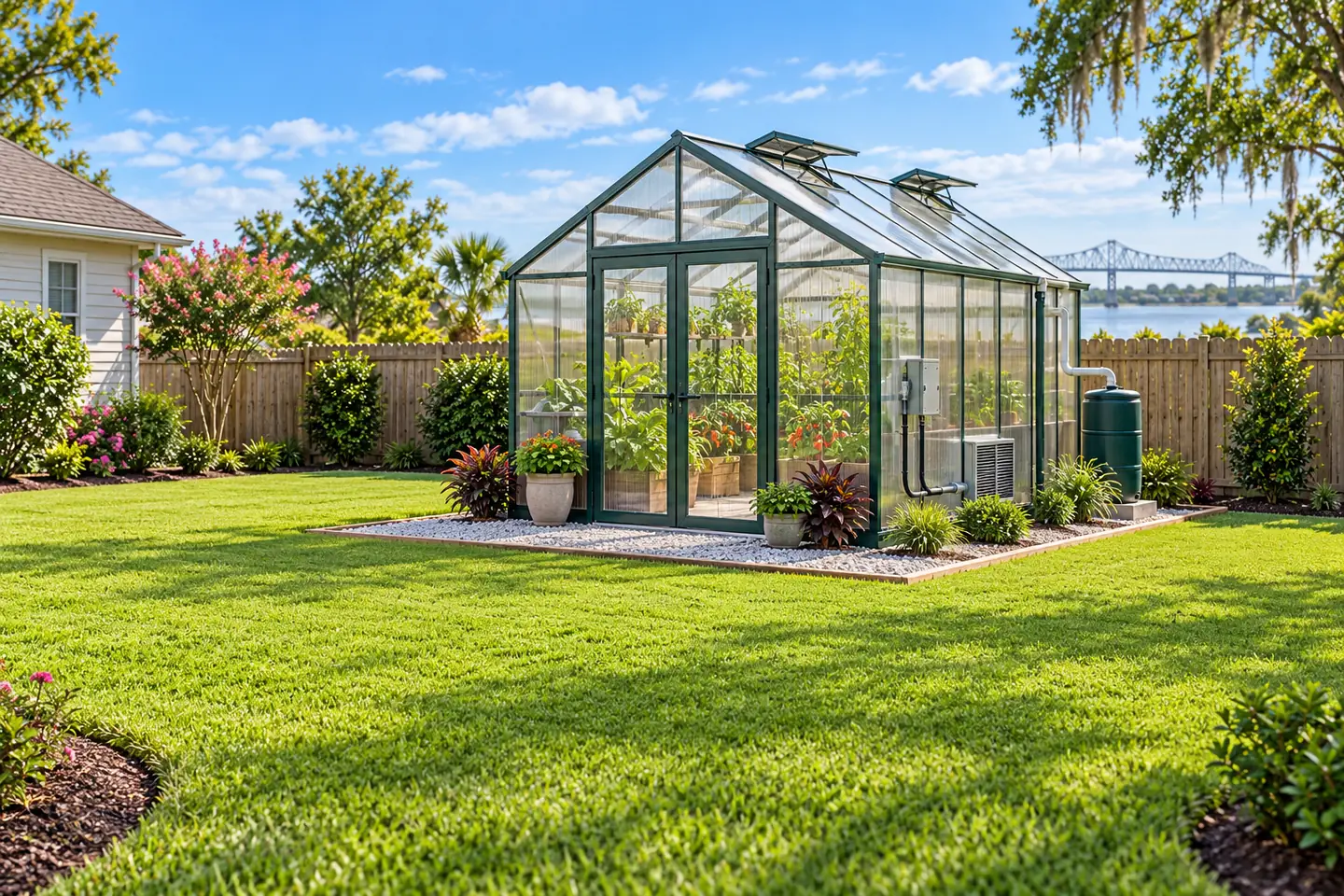
Close doors and secure vents
An open greenhouse door can extend into the mower’s turning area. Close and latch doors before the visit unless a different access plan has been agreed. Do not expect a crew member to enter the greenhouse, move plants or decide whether a vent can be shut safely.
Roof and side vents may open automatically. Their supports can project beyond the wall, and a sudden movement can change clearance. Explain automatic equipment during quoting and keep the lawn route outside its operating range. Happy Grass does not inspect actuators, glazing or ventilation controls.
Contain hoses and irrigation tubing
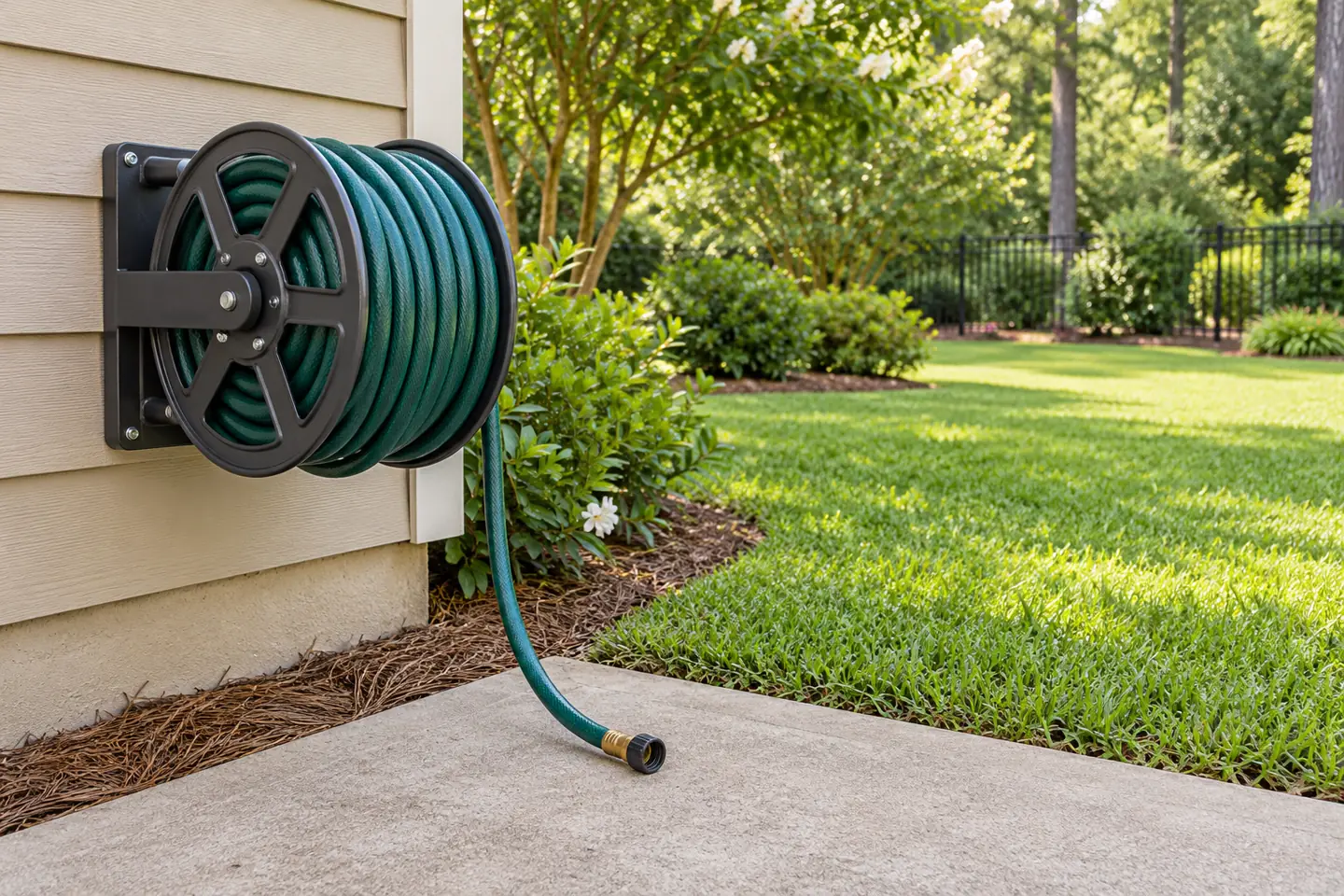
Greenhouses often have more tubing than is visible from the yard. Supply hoses may run behind pots, cross the threshold or disappear under gravel. Coil removable hoses completely off the grass and expose fixed lines at the boundary. A short loop can be difficult to see after leaves or clippings collect around it.
Drip tubing, valves and timers stay under owner control. Leaks should be corrected before mowing because a small greenhouse connection can soften a surprisingly large patch. Happy does not diagnose irrigation, repair plumbing or adjust watering schedules. The lawn plan simply needs a dry, unobstructed route.
Keep power and controls away from equipment
Fans, heaters, lights and pumps may use outdoor electrical equipment. Every cord, conduit, outlet and control box should be properly installed, visible and outside the mowing path. Do not run temporary extension cords across the lawn on service day.
If an enclosure, cord or connection appears damaged or wet, exclude the area and contact a qualified professional. Happy Grass does not test greenhouse electricity or move powered equipment. The quote should describe where lawn work stops, not assume electrical safety from appearance.
Move portable plants before arrival
Pots often migrate outdoors as weather changes. A few containers can turn a broad route into several disconnected grass pockets. Place movable plants on their intended hard surface before the visit and leave enough clearance to turn without brushing foliage or containers.
Heavy planters, grow bags and plant benches should not be shifted for mowing. If they remain on grass, treat the covered area as inaccessible. Freshly watered pots can also drain onto the route; time plant care so the surrounding ground is not saturated when lawn work is expected.
Protect glazing from thrown debris
Glass, polycarbonate and film panels can be damaged by stones, wire, plant tags or other loose material. Inspect the grass around the greenhouse and remove debris before service. Do not hide gravel behind a fringe of tall grass where trimming could send it toward the wall.
A defined buffer allows a careful finish without forcing powered equipment against fragile panels. The exact distance depends on the property and edge. Happy can discuss a practical stopping point but cannot promise protection for damaged glazing, unsecured film or objects left in the mowing zone.
Watch roof runoff and shaded soil
Greenhouse roofs concentrate rain along narrow edges. Gutters, barrels and downspouts may redirect that water, yet overflow can still make one side soft. Check the soil after rain instead of assuming the route is dry because the sunny yard looks firm.
The north or heavily shaded side may support thinner grass and stay damp longer. Treat it as a separate condition. Skipping a soft strip can prevent ruts near the foundation. Happy Grass does not rebuild drainage or add soil; the owner should address persistent water problems with the appropriate professional.
Account for anchors and buried utilities
Ground anchors, tie-downs and foundation fasteners should be visible or protected by the established base. If the greenhouse was recently installed or expanded, do not guess where utilities or stakes were placed. Contact 811 before any digging project and retain the installer’s documentation.
Utility marks are temporary communication, not permission for lawn equipment to cross a construction zone. Tell Happy about recent digging and keep the affected area excluded until holes are closed, materials are removed and the lawn route is stable again.
Use a seasonal reset
Spring staging and storm preparation can change the greenhouse perimeter quickly. Shade fabric, portable shelving, sandbags and extra containers may appear for weeks. Send a new wide photograph when the setup changes and state whether the normal route will return before the next visit.
After severe weather, inspect the structure before requesting close lawn work. Loose panels, broken glazing and displaced anchors require owner or installer attention. Mowing should not be used to clear or reveal storm damage around a greenhouse.
Prepare a quote that stays accurate
Share the greenhouse dimensions, base material, door swing, narrowest passage and locations of water, power and automatic vents. Point out soft ground and portable items that will be stored. Name any side that should always remain out of scope.
Good information lets Happy price the reachable lawn rather than promise greenhouse care. The service does not include plant handling, irrigation, electrical work, glazing repair, fertilization, aeration, overseeding or pest control. A clear route keeps the garden project and the grass plan compatible.
Keep garden work from changing mid-visit
Choose a preparation cutoff before equipment arrives. Watering, repotting and carrying trays across the lawn should finish first, with tools returned to storage. Starting greenhouse chores while the yard is being maintained can reopen doors, place hoses in the route and create wet patches after the original check.
If someone must work inside during the visit, keep that person and every carried item inside the established garden path. Do not pass pots through a mower route. A postponed side strip is preferable to mixing greenhouse traffic with lawn equipment, especially when several family members share the greenhouse but only one person communicates with Happy.
Review the edge after greenhouse maintenance
Replacing panels, cleaning gutters or servicing a fan can leave screws, clips, wire ties and broken plastic near the base. Perform a careful ground check before the next lawn visit, even when the contractor says cleanup is complete. Small clear pieces can be hard to see in grass.
Tell Happy about any newly routed conduit, drainage tube or anchor. The old service line may no longer fit. Updating the boundary promptly prevents a repaired greenhouse from creating a new hidden hazard for the surrounding lawn.
Leave a clean handoff after harvesting or repotting
Busy garden days can scatter labels, clips, twine and empty pots outside the door. Finish the cleanup in daylight and look beneath nearby foliage before the next lawn visit. Lightweight plastic pieces may travel farther than the soil and tools that first drew attention.
Return carts and trays to a hard surface without blocking the gate. If soil spilled onto the grass, remove the bulk carefully and let the area dry. Happy Grass does not sweep greenhouse soil, collect plant waste or move harvest containers to reach turf.
Include the door's working space in the overview
A greenhouse door photographed shut may conceal how it changes the adjoining grass route when opened. Describe the door arrangement and the exterior area the household needs to use. Keep that observation separate from any technical requirements for the greenhouse itself. The lawn conversation needs to understand the actual route, not infer it from a closed-door picture.
When plants or supplies are moved outside, update the affected strip rather than relying on the earlier greenhouse footprint alone. A temporary staging area can occupy grass that was previously reachable. Identify what will be prepared by the household and what remains in place. This keeps the scope about the current exterior lawn without implying crop handling, structure maintenance or access to greenhouse controls.