
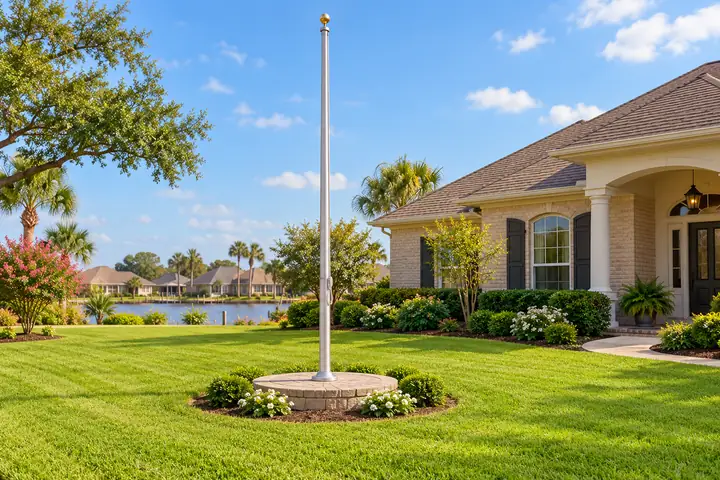
Identify the pole system from ground level
Some flagpoles are fixed to a concrete footing. Others use a sleeve, tilting base or external supports. Look from the ground and describe what is visible without loosening hardware. Happy Grass does not inspect structural stability, climb the pole or determine whether an installation meets a code or manufacturer requirement.
Take a wide photograph that shows the base, surrounding turf and nearest driveway or walkway. A close picture of the concrete cannot show turning room. The quote should name the mowable grass and the stopping line around the pole system.
Make the base a clear boundary
A round or square hardscape pad provides an obvious edge when it remains exposed. Grass growing over the pad can hide bolts, sharp corners and changes in elevation. Clear the boundary by hand before service if that is part of the owner’s normal care; do not expect powered equipment to reveal it.
Decorative stone, loose gravel and small solar lights around the base can become projectiles. Return displaced material to the bed and remove portable pieces from the grass. Happy can trim to a practical visible edge, not press equipment against bolts, sleeves or unstable masonry.
Secure the halyard before equipment arrives
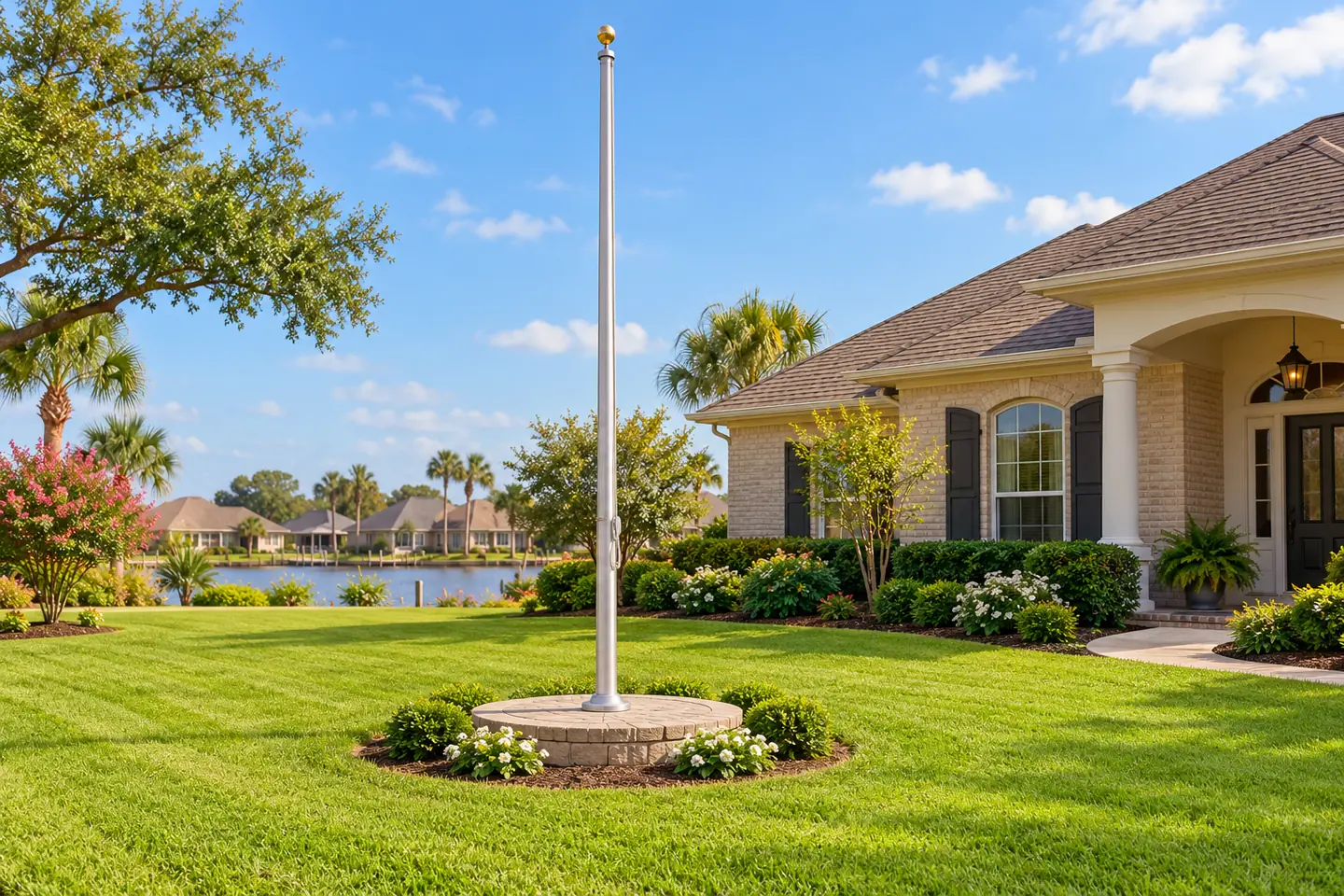
A loose rope can whip, loop around equipment or lie unnoticed in the turf. Fasten the halyard to the cleat according to the pole’s normal setup and keep every loose end off the ground. If the rope or cleat is damaged, exclude the area until the owner or flagpole professional repairs it.
Happy Grass does not raise, lower or handle flags. Remove a flag only if the owner’s normal procedure and weather plan call for it. The lawn visit should begin with the pole already secure rather than making the crew responsible for fabric, hardware or ceremonial handling.
Account for guy lines and temporary supports
Permanent residential poles often stand without guy lines, but temporary poles, repair work and storm preparations may use them. A taut line can be difficult to see against grass. Mark the entire supported zone with a stable visible boundary and keep lawn equipment outside it.
Do not lay spare cable, stakes or tools beside the base. If supports were added after the quote, send an updated picture. Happy Grass will not move stakes, loosen tension or decide whether a support can be removed for mowing.
Protect lighting and electrical components
Up-lights, receptacles and low-voltage wiring may surround a flagpole. Keep fixtures within the defined base area and expose any component that grass has covered. Temporary cords should not cross the lawn route.
Electrical inspection and repair require the owner or an appropriate professional. If a fixture is broken, a cover is missing or the ground is wet around electrical equipment, keep the area out of service. Happy does not test lights or reposition wiring.
Call before any new digging
Installing a footing, ground sleeve, light or anchor may require digging. The national 811 service tells people planning excavation to request utility marking and wait for responses. Lawn service is not a substitute for that process and cannot verify buried lines.
If utility paint or flags are present after recent work, preserve them and tell Happy what changed. Do not remove markers to improve appearance before the project is complete. Disturbed soil, open holes and construction debris should stay outside the lawn route until the owner has restored a stable surface.
Watch the mowing pattern around the pole
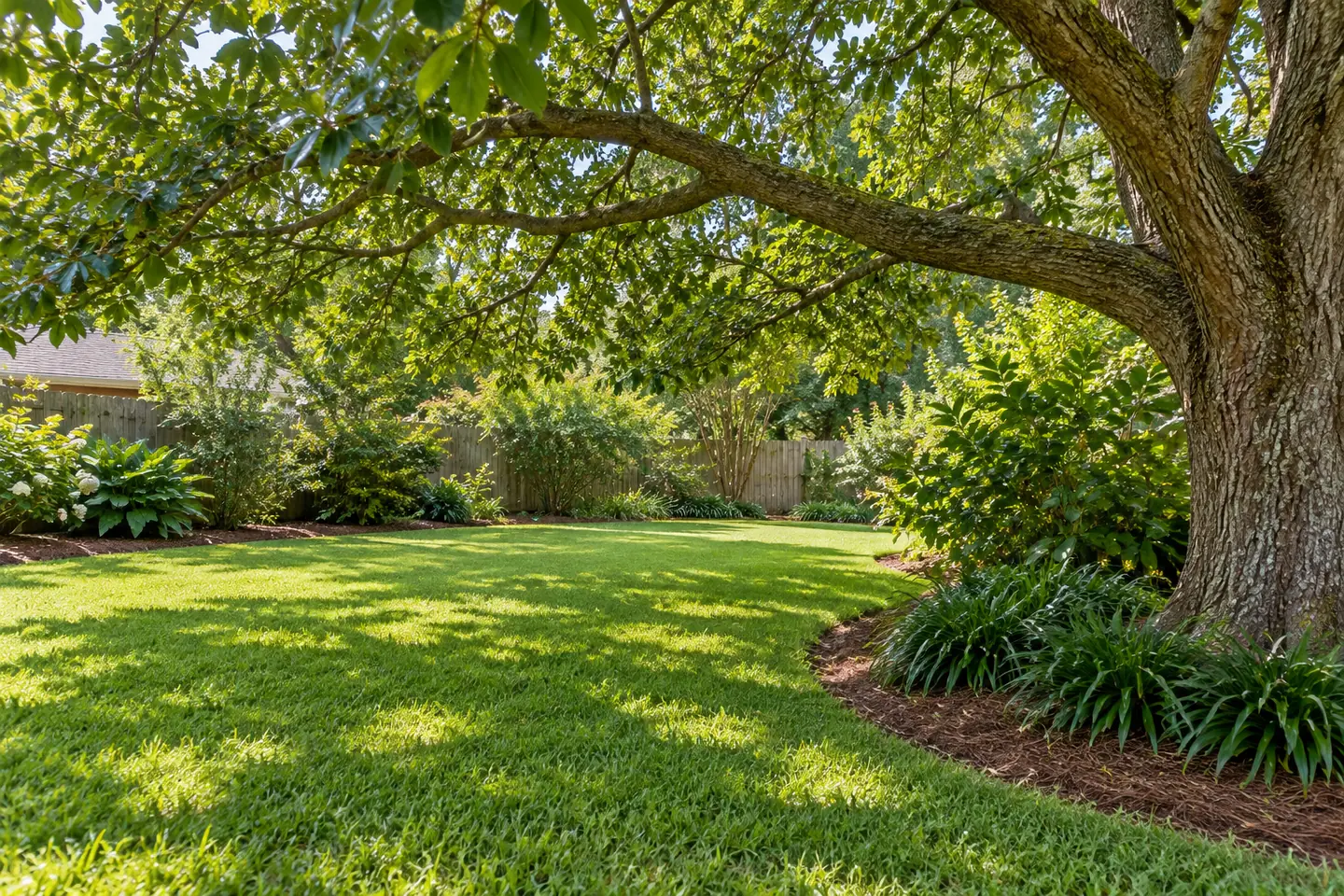
A lone obstacle in open turf can invite tight repeated turns. Over time, the same wheel path may wear the grass or create a visible ring. The service plan can use broader approaches and varied turns where space allows, but that does not change an unstable base or hidden hardware.
Tell Happy if the pole sits on a slope or near a ditch. The surrounding terrain, not the pole alone, determines what equipment can reach. A small hand-detail area may be appropriate where the base meets uneven ground.
Separate small yard flags from the main pole
Decorative garden flags, holiday stakes and marker flags are different obstacles. Collect or clearly place them before service. Do not assume the presence of a large pole makes every small stake around it obvious.
Utility-locate flags should remain exactly where the locator placed them. Tell Happy that they are official project markings so the affected lawn can be excluded or handled according to the current site plan. Decorative items can be moved by the owner; utility marks cannot be treated as décor.
Prepare for storms without blocking the lawn
Storm readiness may involve lowering a telescoping pole, removing a flag or adding temporary supports. Follow the manufacturer or installer’s guidance. When the setup changes, keep the surrounding grass out of service until all loose parts are stored and the ground is stable.
After severe weather, inspect from a safe distance. A leaning pole, cracked footing or fallen component requires qualified attention before anyone mows nearby. Happy Grass does not diagnose storm damage or stabilize flagpoles.
Use a simple service-day checklist
Before arrival: – Secure the halyard and keep rope off the ground. – Remove decorative items from the grass. – Expose the hardscape base and visible fixtures. – Identify every anchor, line, bolt and utility marker. – Report recent digging, storm damage or a changed support. – Keep the approach free of vehicles and stored materials.
After service, the owner can inspect the base and return decorative pieces. The flagpole system should never depend on a crew member changing its configuration. A consistent owner-led setup makes the grass boundary easier to repeat.
Give Happy enough context to quote accurately
Share the pole type, base shape, nearby lights, slope and narrowest clearance. Mention whether the halyard is internal or external and whether temporary supports ever cross the lawn. Wide photos should include the route from the street or gate.
Happy can define ordinary mowing, edging and trimming around reachable grass. The service does not include flag handling, installation, structural inspection, electrical work, utility locating, fertilization, aeration, overseeding or pest control. A visible base and secured system keep those responsibilities clear.
Avoid tying temporary items to the pole
Holiday lights, banners, pet leads and event ropes should not use the flagpole or its base as an improvised anchor. Those additions can put lines across the grass and change loads on hardware that was not part of the original lawn plan. Remove temporary items according to the owner’s safe procedure before requesting service nearby.
If a line must remain for a separate project, document the complete area and exclude it. Happy will not disconnect decorations or judge whether a knot, clip or attachment is safe. Returning the pole to its normal configuration is the owner’s responsibility.
Record a permanent reference view
Take one wide photo from a fixed spot such as the driveway corner. Repeating that view after storms or landscape changes makes a new lean, washed-out base or added fixture easier to notice without approaching the pole. The image is a communication aid, not a structural inspection.
Keep the account note tied to physical features: concrete circle, two lights and open grass on the driveway side. That description remains useful even when flags and seasonal decorations change.
Keep soil and mulch from burying the hardware
Adding soil or mulch around the pole can hide the sleeve, bolts, drain opening or wiring that once sat above grade. Do not change that level as part of lawn preparation. If landscaping material has migrated onto the footing, ask the installer or property professional how the base should remain exposed.
Happy Grass will not dig around the pole or scrape material from hardware. The service boundary follows the safely visible condition. A buried edge may require a larger untreated ring until the owner restores a clear, stable base.
Use the base as a reference without touching it
Show the flagpole base and the surrounding lawn in one wider view, then describe the part of the grass you want included. Keep any owner-confirmed equipment boundary in the note. The purpose of the photograph is to orient the lawn discussion, not to invite the crew to inspect, adjust or uncover components at the base.
If the display changes for an event, tell Happy which temporary items are present and which have been removed by the owner. Do not assume that the familiar pole means the current setup is unchanged. After the event, retire temporary instructions only when the owner has checked the area. This creates a stable lawn reference around a fixed feature while allowing decorations and other short-term arrangements to be treated as separate, dated changes.