
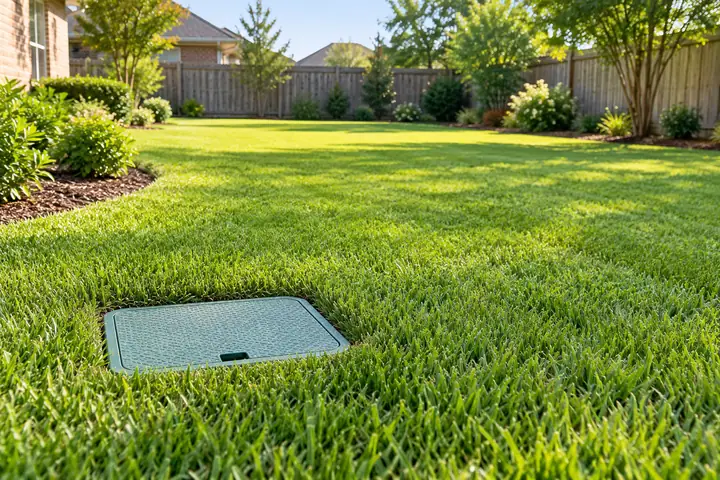
The lid is part of a working system
An irrigation valve box is usually a plastic enclosure set at or below grade so a technician can reach valves and related fittings. In a lawn it may appear as a green or black rectangle, a round lid or a larger cover near the water connection. The box is not simply a decorative paver. It protects equipment and preserves service access, which means the lawn route should not depend on striking, lifting or testing it. Before recurring service begins, show Happy every visible box and note whether the lid is flush, slightly low, raised, cracked or loose. Send a broad photo that includes surrounding turf and a close view of all edges. We will treat it as a fixed feature. Irrigation diagnosis, valve operation, lid replacement and box leveling are separate property tasks, not part of mowing.
Walk the zones when the system is off
Choose a dry period when irrigation is not actively running and walk the normal service footprint. Look for valve boxes, sprinkler heads, drip tubing and any wet strip that crosses the route. Do not open lids or reach into boxes. The goal is visual inventory, not system inspection. A lid hidden by runners or soil can be exposed gently by the property owner if that does not disturb wiring or fittings; otherwise ask an irrigation professional. Count the boxes and photograph their positions relative to permanent landmarks. Temporary flags can help during a first visit, but do not insert them inside a box or beside buried lines without knowing what is below. A simple map prevents a crew from learning the system layout by accident.
Check whether the box sits firmly
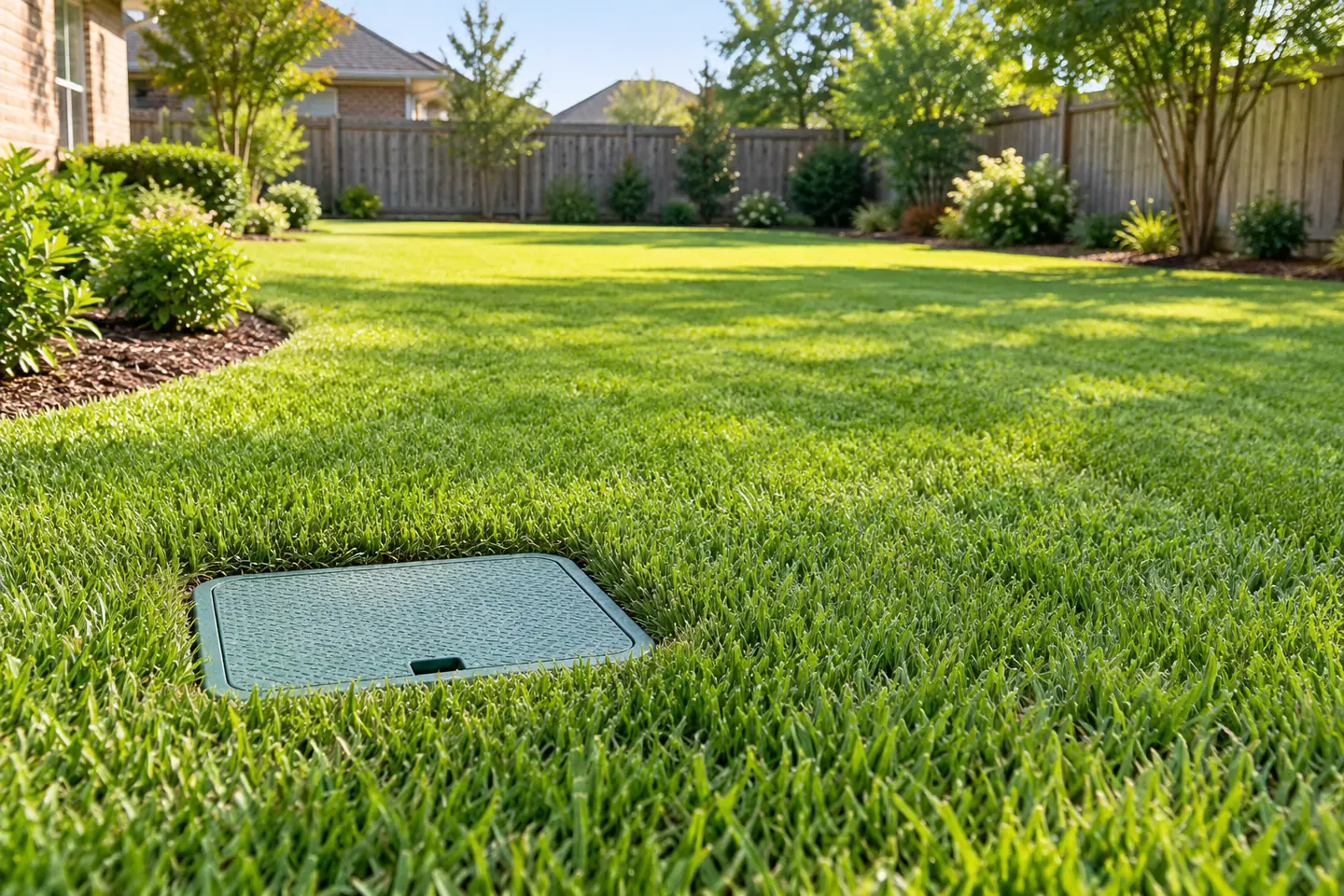
The Irrigation Association guidance cited below describes valve boxes as enclosures that should be strong enough for loads reasonably expected at their installation location. That does not mean every residential lid is safe for mowing equipment. Sun damage, age, settling and prior impacts can weaken a cover. Step near the area with ordinary care and look for rocking, bowed plastic, missing corners or soil that falls away from the rim. Do not stand on the lid to test it. If the cover moves or the surrounding earth sinks, close that patch to equipment and arrange appropriate repair. Happy does not certify load capacity. A conservative bypass around a questionable box protects the irrigation hardware and avoids turning an ordinary lawn visit into an expensive repair call.
Make the grass edge readable
Grass can creep across a lid until only a small corner remains visible. Keep the full outline readable before the visit. That may mean a narrow exposed rim, a small maintained collar or a clearly defined bed boundary, depending on how the system was installed. Avoid cutting into the box wall with a shovel or using trimmer line to scour the plastic. Do not bury the cover under mulch. If the box is intentionally below grade, ask the irrigation contractor how access should be preserved instead of filling over it. Happy can follow a visible boundary but will not excavate to locate hidden equipment. A clean outline also helps you notice when the box has shifted after heavy rain or utility work.
Separate wetness from the mowing schedule
Water around a valve box may come from normal irrigation, rain, a leaking fitting or low ground. Lawn service cannot determine the cause from appearance alone. Before mowing day, turn off scheduled irrigation early enough for the route to become firm and follow any system instructions provided by your installer. If the grass squishes, water collects inside the surrounding depression or the lid area stays saturated, send a current photo. Keep equipment off the soft zone until the property issue is understood. Happy does not repair leaks or reprogram irrigation. The practical decision is whether a dry, stable route exists around the feature, not whether the rest of the yard happens to be ready.
Keep wires, tubes and accessories inside their plan
Valve boxes sometimes contain low-voltage wiring, solenoids, filters or labels. None of those items should be pulled into the grass or draped over the edge. If you see exposed wire, tubing or a lid that will not close, do not tuck it back with lawn tools. Protect the area from traffic and contact the appropriate irrigation professional. Nearby drip lines should be secured within beds or clearly marked where they cross a service route. Remove temporary hoses and test leads before Happy arrives. The crew will not open the box or reconnect accessories. A closed, visible enclosure with a clear perimeter is the dependable condition for routine lawn work.
Treat repairs and new irrigation as project zones
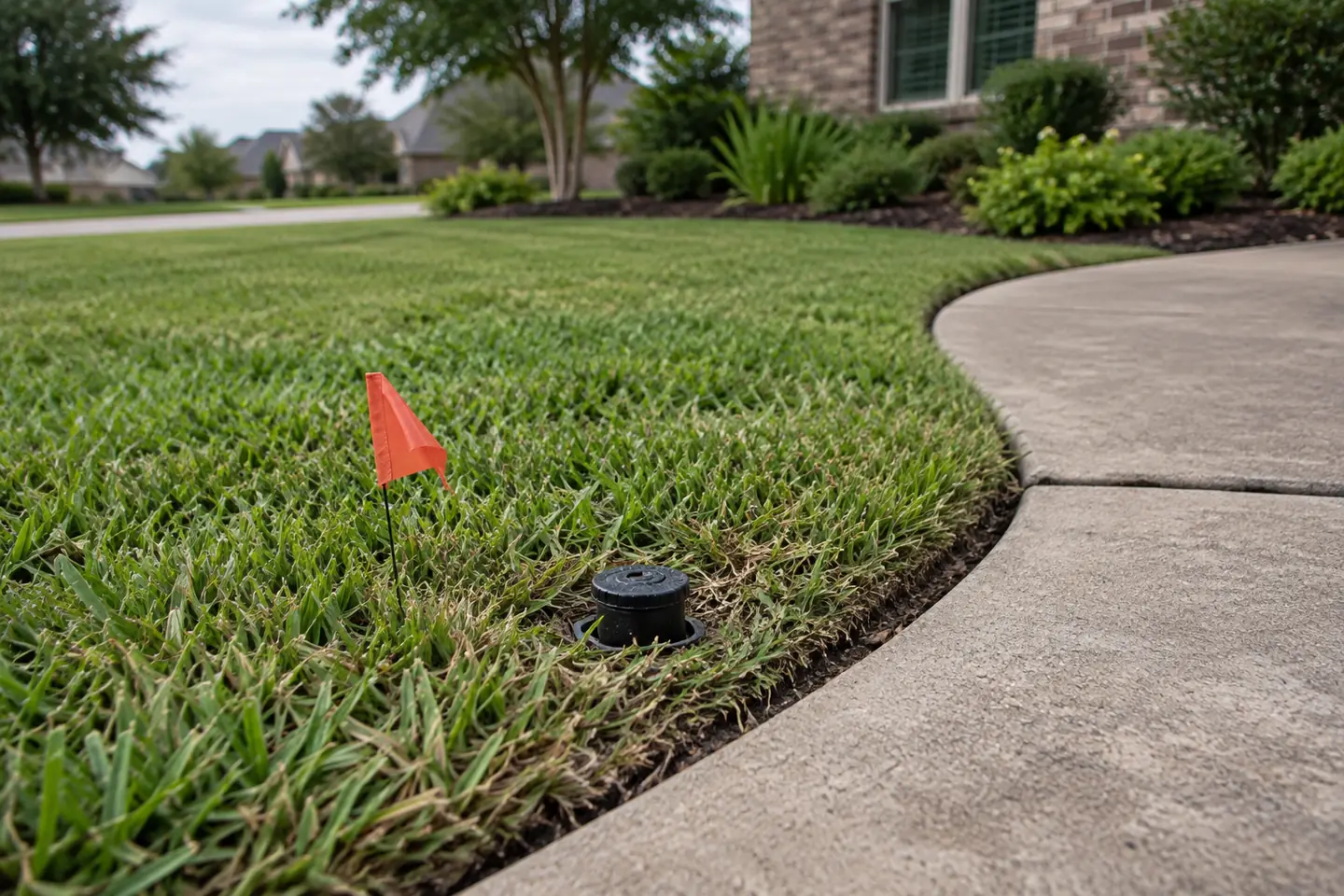
New valve boxes and repaired lines often leave disturbed soil, marker flags and narrow trenches. Preserve active markings and tell Happy what work is still underway. Remove scrap pipe, wire ties and packaging only after the contractor releases the area. Fresh backfill may look dry on top while remaining soft underneath, especially after rain. Keep the trench and box approach outside the equipment route until the ground stabilizes. If a new box changes the mowing pattern, send updated photos rather than expecting the crew to remember a verbal description from before construction. Lawn service can adapt to a documented boundary; it should not be used to test completed irrigation work.
Describe access in plain language
For a quote, identify how many boxes sit in turf and how many are inside planted beds. Mention narrow passages, nearby fences, slope, standing water and any lid higher than the surrounding grass. A useful photo set includes a broad yard view, a straight-down lid view and a low side view. If you know the system is inactive or recently repaired, say so without speculating about the cause. Happy needs to understand the visible service route, not the technical valve arrangement. This distinction keeps the conversation efficient and avoids promising irrigation services the company does not provide.
Review the first finished boundary
After the first visit, confirm that the lid remains fully seated, visible and free from impact marks. Look at the grass margin from several feet away. It should read as an intentional clearance rather than a ragged patch or scalped ring. If the box is low enough to trap clippings, clear them according to the property routine without opening the enclosure. Send a focused photo if you want the boundary adjusted. A change in lid condition, water level or soil height should be handled as a property update before the next visit. The first review turns a hidden surprise into a documented recurring feature.
Keep the route repeatable
Before future visits, pause irrigation, remove hoses and toys, verify the lid is present and check the surrounding ground. Keep the box visible as grass spreads. Tell Happy about repairs, new zones, moved borders or fresh flags. If a box disappears beneath tall growth after a service gap, mark it and send a new photo. A repeatable lawn route depends on the same clear information each time. Happy can maintain the serviceable grass around a stable feature while the irrigation system remains the responsibility of its owner and qualified service professionals.
Reopen the route after irrigation work
An irrigation repair can leave more than a visible lid. Soil may be freshly backfilled, sod may be loose, flags may mark buried lines and a technician may leave a temporary excavation boundary. Wait until the contractor confirms the work area is ready for ordinary use, then inspect the whole approach rather than only the box. Remove only flags the responsible contractor says may be removed. Keep Happy out of soft fill, open trenches and uncured repairs. Send one broad photo that shows how equipment would reach the box area and one close photo of the finished grade. That prevents a flush-looking lid from hiding a route that is still too soft for lawn service.
Keep controller decisions separate from mowing
Do not change irrigation programming merely to accommodate a mowing appointment without considering the lawn and system plan. The practical access need is straightforward: the grass and route should be dry enough for the scheduled service. If a cycle ran unexpectedly, report the wet zone rather than asking the crew to find or operate a controller. Happy does not diagnose valves, adjust controllers or promise that a box is watertight. A qualified irrigation provider can address system performance. Clear roles keep the lawn visit centered on visible, serviceable turf while the irrigation system remains under the property owner's control.