
A cord in grass is more than clutter
Outdoor extension cords can disappear quickly in warm-season turf, leaves and afternoon shade. A bright jacket may seem obvious when the cord is newly placed, yet several inches of growth can hide a loop, plug or splitter. Mowing equipment should never be expected to find or cross it. Before Happy Grass arrives, unplug temporary electrical items according to their instructions, remove the entire cord from the service footprint and store it in a dry appropriate place. Do not simply push one loop against a fence or cover the plug with a bucket. The lawn must be clear from outlet to appliance. Happy provides lawn maintenance, not electrical inspection, cord handling or powered-decoration setup. Keeping that boundary firm protects people, equipment and the property.
Follow the cord from end to end
Walk every route that contains seasonal lights, pond pumps, fans, inflatables, tools, chargers or temporary cameras. Start at the receptacle and follow the cord all the way to the connected device while power is safely off. Look behind planters, beneath deck stairs and along fence lines where excess length tends to collect. Remove adapters, power strips and low branches used as makeshift cord supports. If a permanent device requires power across grass, ask a qualified electrician about an appropriate installation rather than making a temporary extension cord part of recurring lawn access. A full end-to-end check matters because the most dangerous section is often the one hidden in the middle, not the visible plug.
Use only equipment intended for the setting
The Consumer Product Safety Commission advises using an extension cord outdoors only when it is marked for outdoor use, and its guidance identifies characteristics intended to reduce shock and fire risks. Happy does not evaluate markings, wire size, grounding or condition. The homeowner is responsible for selecting and using electrical products according to manufacturer instructions and applicable requirements. From a mowing standpoint, even a proper outdoor cord must be completely removed from turf before service. “Outdoor rated” does not mean “safe to drive over,” “safe to trim beside” or “safe to leave in a wet route.” If you are uncertain about a cord, stop using it and seek qualified help rather than asking a lawn crew to work around it.
Do not schedule water and electricity together
Rain, irrigation, dew and spilled water can leave grass wet even on a bright day. Keep plugs, connections and powered accessories away from the lawn route and follow the product instructions for weather exposure. Do not ask Happy to unplug equipment from a wet receptacle or move an energized cord. If the area is actively wet and a cord remains connected, close that zone and resolve the electrical condition before service. Lawn crews should not decide whether a ground-fault device works or whether a connection is protected. The simple preparation rule is stronger: power down safely, remove temporary wiring and present a clear dry route.
Store the whole cord off the ground
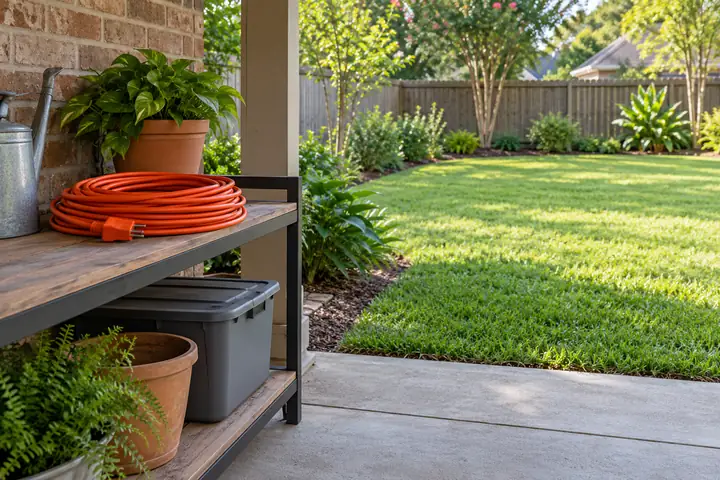
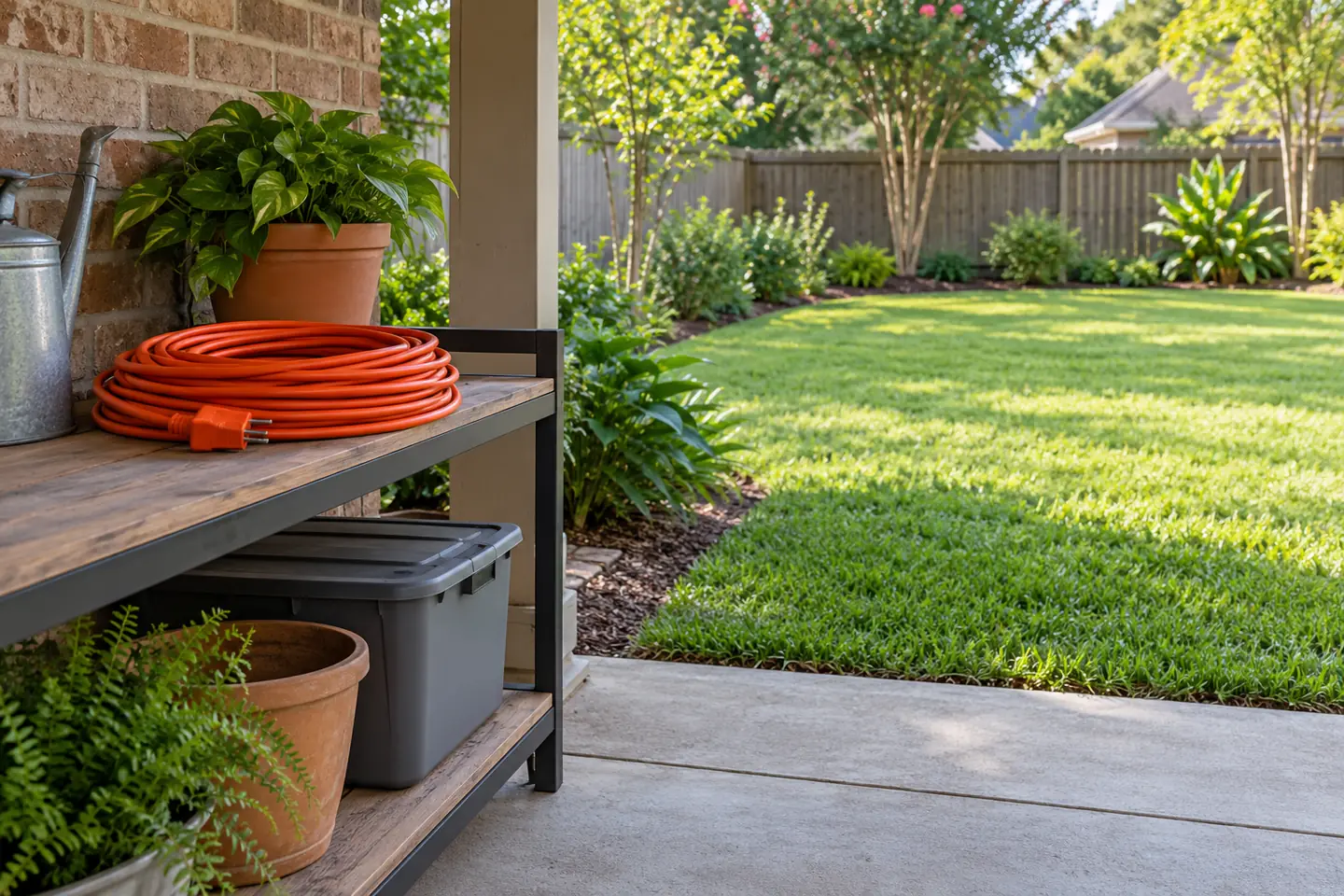
After unplugging, coil the cord without sharp kinks and place it in an appropriate dry storage location outside the service footprint. A covered shelf, wall hanger or labeled container is easier to see than a coil resting in mulch. Keep both ends together so a loose plug does not fall back into grass. Do not wrap cords around tree trunks, cleanouts, gate posts or irrigation equipment. If the cord belongs to a seasonal display, store the display lead with it rather than leaving a short section behind. Happy will not move cord bins, untangle knots or determine whether a damaged cord can be reused. Complete storage creates a lawn route that stays clear for the entire visit.
Inspect from a safe distance
Before handling a disconnected cord, look for crushed sections, exposed conductors, damaged plugs, melted areas or homemade splices. Do not cover damage with ordinary tape and return the cord to service. Follow CPSC and manufacturer guidance, and obtain qualified advice when needed. Happy does not perform electrical safety checks, so do not leave a questionable cord on the patio for the crew to evaluate. If damage occurred because a cord was previously crossed by a vehicle or mower, document the route and change the setup. The lawn plan should eliminate repeat exposure rather than rely on someone spotting the same damaged section next time.
Treat holiday and storm setups as changed access
Temporary displays and storm preparation often add cords, lights, battery stations or powered equipment to familiar lawn paths. Send Happy an update before the next scheduled visit. Mark which grass remains accessible and which area is closed until the setup is removed. Do not route cords through gates that may pinch them or under mats that hide them. Generator connections require their own manufacturer and electrical safety rules; Happy does not handle them. If preparation occupies most of the mowing footprint, rescheduling or reducing the service boundary may be more sensible than weaving equipment among temporary power lines.
Keep permanent landscape wiring separate
Low-voltage lighting, invisible-fence wire and irrigation control cable may be permanent, but exposed or loose sections still require attention from the responsible installer. Show Happy any visible wire at bed edges, around tree bases or near gate openings. Do not ask the crew to bury, reconnect or fasten it. A properly defined planting bed can help keep permanent wiring outside the active turf, but the installation decision belongs to the property owner and qualified professional. If ground disturbance is planned, use the appropriate utility-location process before digging. The mowing goal is a visible boundary, not an electrical repair hidden by fresh mulch.
Describe powered yard items in the quote
Tell Happy what temporary or permanent powered items are near the grass and whether cords will be removed before every visit. Include photos of the route from the outlet to the device, but do not show private security details that are unnecessary for lawn access. Mention gates, narrow passages and water features that share the same space. A clear promise that temporary cords will be stored lets the quote focus on maintainable turf. If a cord must remain, identify that entire zone as unavailable until the electrical setup changes. This honest scope is better than assuming the crew can move or step over a live line.
Make clearing cords part of the routine
Add cord removal to the same pre-visit checklist as hoses, toys and pet items. Walk the yard after dawn or in good light, because shadows can hide dark jackets. Check the front, side and back lawn even if only one decoration was used. After service, reconnect equipment only when conditions and product instructions allow. If someone else in the household installs a temporary item, make sure they know the mowing schedule. A happy route is boring in the best way: grass, visible fixed boundaries and no surprise electricity underfoot.
Include temporary lighting and decorations
Seasonal displays often add thin cords that are easy to miss in grass. Path lights, inflatable decorations, porch displays and temporary cameras may use extension leads, low-voltage wires, guy lines or ground stakes. Remove the complete temporary setup from the service footprint or establish a wide, obvious closed zone around it. Switching a display off is not the same as clearing its hardware. Photograph the route in daylight because dark cable jackets disappear in shade and leaf cover. Happy does not disconnect displays or determine which cable belongs to which device. A lawn route is ready only when the crew can see continuous grass without following a wiring puzzle.
Plan for tools used just before arrival
A blower, pressure washer, hedge trimmer or other household tool may be used shortly before the mowing visit. Finish that work with enough time to unplug, coil and store every cord, attachment and tool. Do not leave a hot tool on turf or drape a cable over a gate as a reminder. Check that an outdoor outlet cover closes as intended after disconnection and keep damaged equipment out of use according to appropriate safety guidance. The pre-service sweep should happen after the last corded task, not before it. That timing prevents a well-cleared lawn from being crossed again minutes before the crew arrives.