
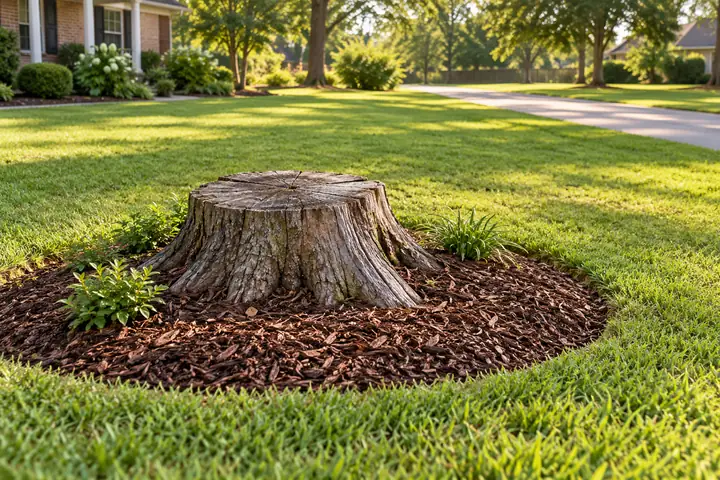
A stump remains a fixed structure
After a tree is removed, the remaining stump may stand above the lawn, sit nearly flush or hide beneath shoots and grass. Weathered wood can look soft while the root flare remains extremely hard. Happy Grass treats every stump as a fixed no-contact feature. Before recurring service, send a broad photo that shows its position and a low side photo that shows height. Note exposed roots, hollows, metal hardware, sprouts and nearby utilities. Tell us whether the stump was recently cut or has been in place for years. Lawn service does not include stump grinding, tree removal, root cutting or structural evaluation. A clear lawn plan begins by admitting that the stump is still there.
Reveal the whole base before mowing
Tall grass and leaf litter can hide the outer root flare, especially when the visible center is small. Clear loose household debris by hand only when it is safe, and do not dig around the roots. Mark the widest visible base in photos. Look for stones, wire, nails, old fence material or landscape edging that may have become embedded near the tree. If metal is present, close the area and seek appropriate help. Do not ask the mower to shave over a low center or use a trimmer to discover the edge. A small mulched ring or defined bed can keep the full base readable without pretending the stump has disappeared.
Watch for settling and voids
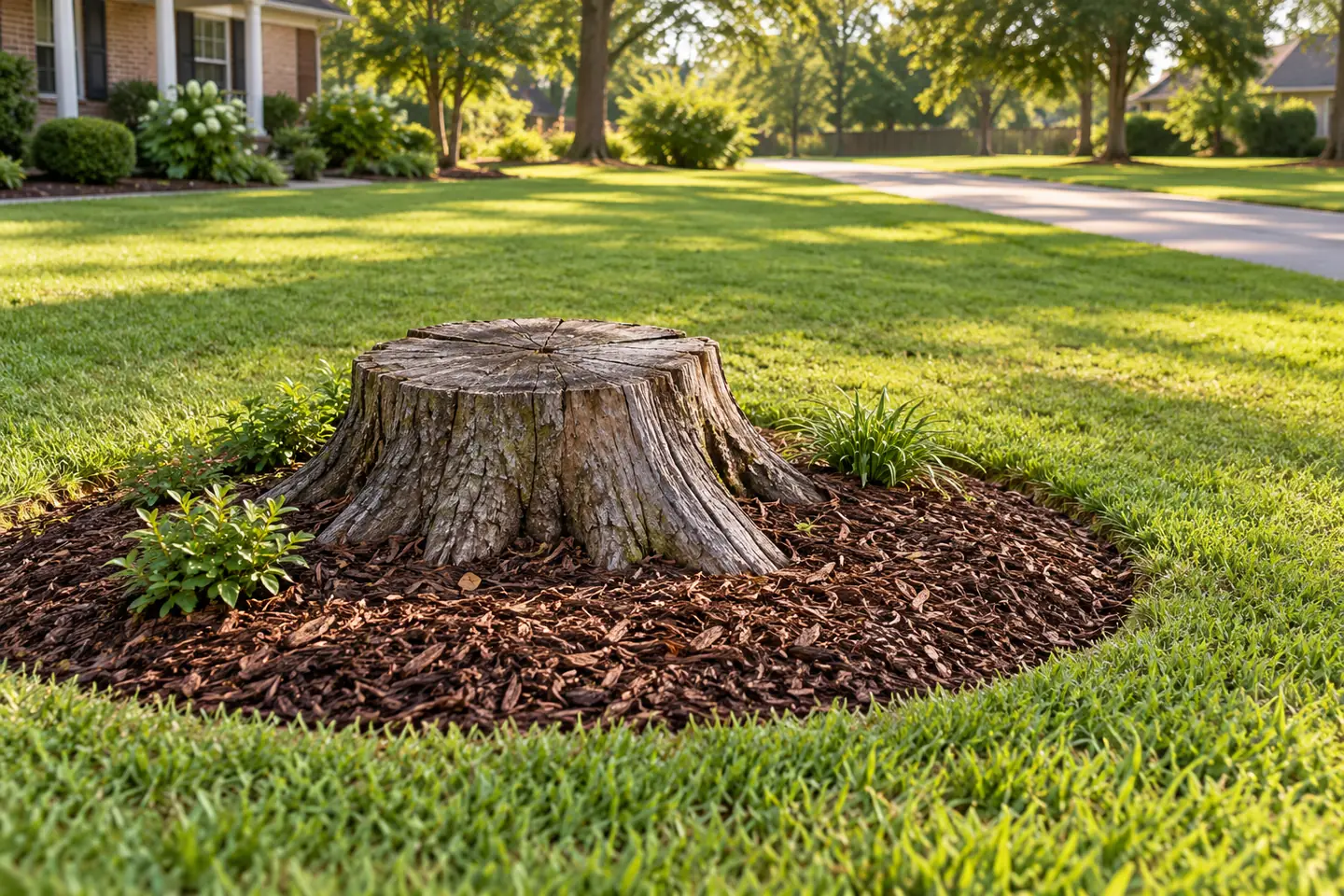
As roots decay, soil can sink or open around the stump. A shallow depression may collect water; a deeper void can collapse underfoot. Walk the surrounding lawn in daylight and stay out of any hole you cannot judge safely. If the ground gives way, mark a broad exclusion area and send photos. Happy does not fill voids, compact soil or determine whether underground roots have decayed. Covering a hole with leaves, plywood or loose mulch can hide the condition without correcting it. Keep the route conservative until the property issue is evaluated and repaired.
Separate sprouts from mowing decisions
Some stumps send up shoots from the base or roots. Identify whether those stems are intentional regrowth, unwanted sprouts or part of a replacement planting plan. Happy does not decide which woody growth should remain and does not provide tree care. Keep the sprouts inside the stump boundary until the property owner has them addressed appropriately. Trimmer line should not be used as a pruning tool, and mower blades should not pass over woody stems. A clear no-mow circle avoids repeated damage and makes the open turf around it easier to finish.
Keep stump grinding as a separate project
If a qualified professional grinds the stump, treat the entire area as changed ground afterward. LSU AgCenter guidance notes that ground wood may be used in several ways, but the final treatment and soil restoration belong to the property project. Remove machinery debris, confirm underground utilities, follow the contractor's instructions and allow fill to settle before reintroducing the area to a mower route. Fresh chips can hide holes, metal and remaining roots. Happy will not level a grinding pile or promise that new turf is ready. Send before-and-after photos and wait for a firm continuous surface.
Define a finish that looks intentional
A broad mulch ring, planted island or visible conservative trim margin usually looks better than a scalped circle. Keep loose rocks and thin plastic edging out of the grass. If the stump serves as a planter or decoration, secure all pots and accessories outside the route. Do not place glass, lights or cords on it before service. Tell Happy whether the surrounding ring should align with another bed or remain a standalone feature. The exact clearance depends on stump shape, roots, slope and footing. A consistent margin is the goal, not touching every wooden ridge.
Inspect after storms and heavy rain
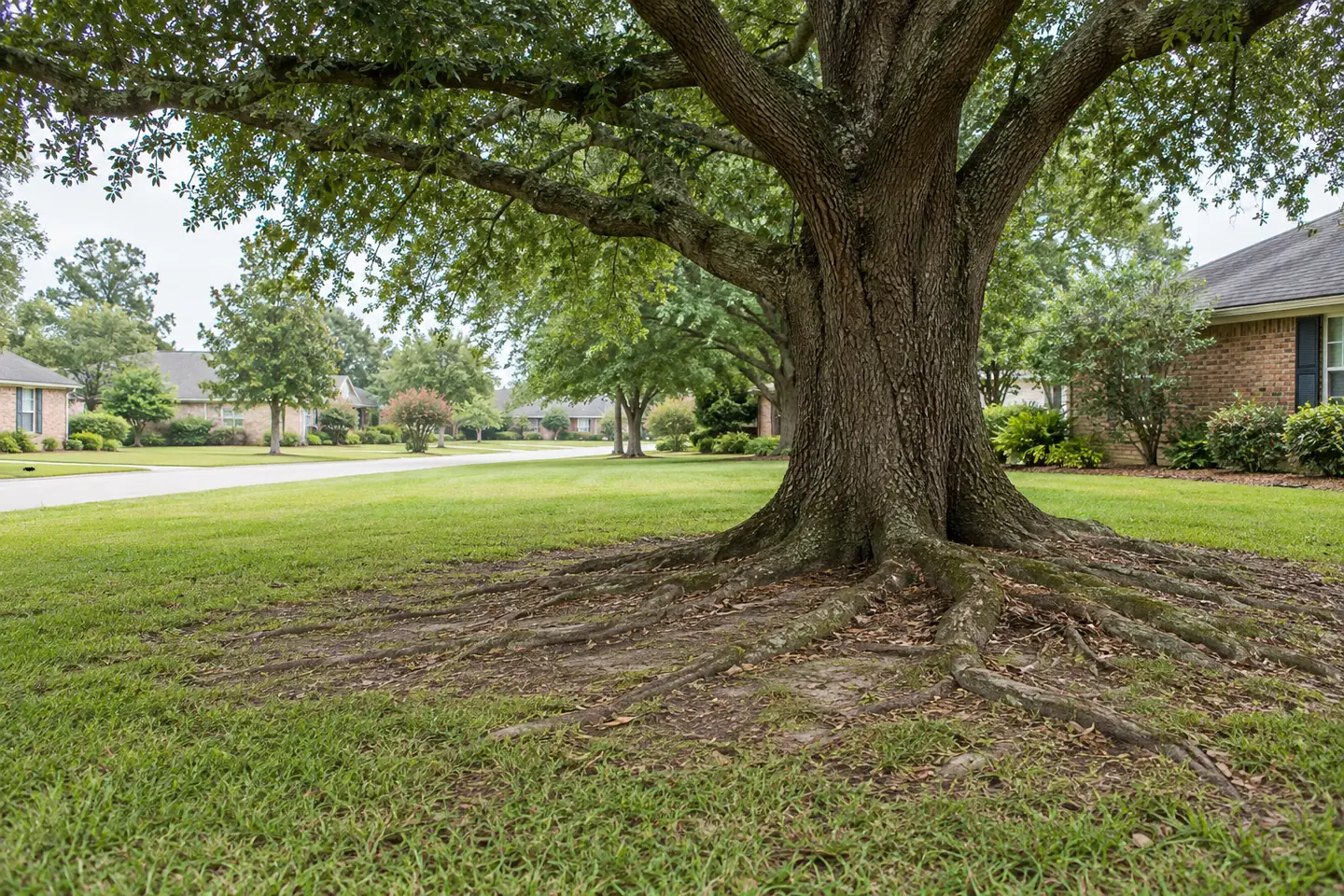
Storms can loosen bark, drop branches and saturate soil around an old root system. Check the area before the next visit and report new cracks, leaning remnants or exposed roots. If the stump is part of a storm-damaged tree that was not fully removed, keep a wide area closed and contact an appropriate licensed tree professional. Happy does not assess whether a remaining trunk is stable. Wet ground also changes turning space, so one excluded circle may need to become a larger temporary boundary until conditions improve.
Plan access around multiple stumps
Several stumps can break a yard into narrow lanes that are difficult to mow consistently. Photograph the pattern from a high safe viewpoint and show the narrowest grass strips. Consider whether some strips should become one connected bed rather than isolated slivers, but make landscape changes only through the property plan. Happy can quote the accessible turf and conservative edges. We will not weave equipment between hidden roots simply because each opening appears wider from one angle. Continuous turning space matters as much as total square footage.
Send useful quote details
Include the number of stumps, visible diameter, approximate height, ground condition and whether roots extend into open grass. Show gates and the route from the street. Mention recent cutting, grinding or storm work. You do not need to estimate root depth or tree species if you are unsure. Happy needs the visible mowing obstacle and surrounding footing. A close photo without scale can make a stump look like a pebble or a large trunk, so include a safe ordinary reference outside the boundary, such as a nearby fence board or walkway.
Keep the feature visible between visits
Grass grows quickly around a low stump. Before every visit, remove toys and leaves, check for new holes and refresh any marker placed outside the root area. Tell Happy if the stump is ground, decorated or surrounded by a new bed. After service, review the margin and report one specific adjustment if needed. The repeatable routine is straightforward: visible wood, firm ground, no loose hazards and enough room to turn. That lets routine lawn work stay routine while tree and soil decisions remain with the appropriate people.
Distinguish a cut stump from a buried remnant
A low cut surface can disappear under grass, while a ground stump can leave woody pieces and shallow roots below loose soil. Neither condition should be treated as ordinary turf until the property owner understands the repair. Mark the full remnant area, not just the visible center, and avoid covering it with leaves or mulch before the quote. Happy does not probe for buried wood or determine whether grinding was complete. If the surface changes underfoot, keep it excluded and consult the responsible tree or landscape professional. A visible conservative boundary is more useful than a guess about what lies beneath a thin green layer.
Check for shoots, fungi and insects without inventing a service
Old roots may produce shoots, fungi may appear after wet weather and insects may use decaying wood. These observations can change how clearly the stump area is seen, but they do not add pest control, tree treatment or diagnosis to Happy's services. Do not spray or apply a product just before mowing unless it is part of a separate, properly directed plan and the area is safe for entry. Photograph unusual growth and seek appropriate professional guidance when needed. Clear loose debris only when safe, keep people away from stinging activity and tell Happy whether the marked zone has widened since the previous visit.
Give the mower a predictable exit
The route around a stump must lead back to open turf without trapping equipment between roots, a fence and the trunk remnant. Move portable items that narrow the bypass and mark any nearby irrigation head or drain. If the only path requires crossing a root flare or soft grinding fill, close the pocket of grass beyond it. Happy can discuss reachable hand-detailing within its normal scope, but a tiny isolated patch does not justify an unsafe approach. Planning the exit at the same time as the entry produces a cleaner, repeatable boundary for every visit.