
Remove the cable before the crew arrives
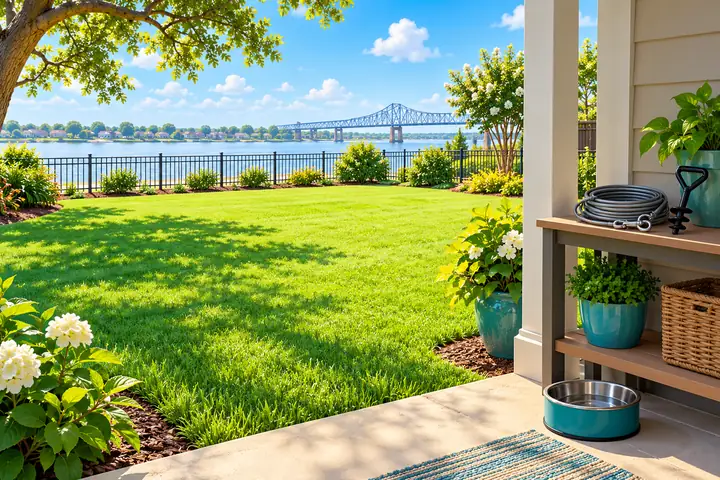
Coil a movable tie-out cable, leash or long line and place it in a dry location off the grass. Do not drape it over a fence where an end can fall back into the route. Thin coated wire can hide beneath blades and create an entanglement or projectile hazard if lawn equipment catches it. The CPSC advises walking a mowing area and removing wire, string, stones and other objects that could be struck. Happy Grass will not search through tall grass for a missing tether or operate equipment while a loose cable remains. If you cannot find the full length, mark the area and postpone that section until the line is accounted for.
Secure the pet away from gates and equipment
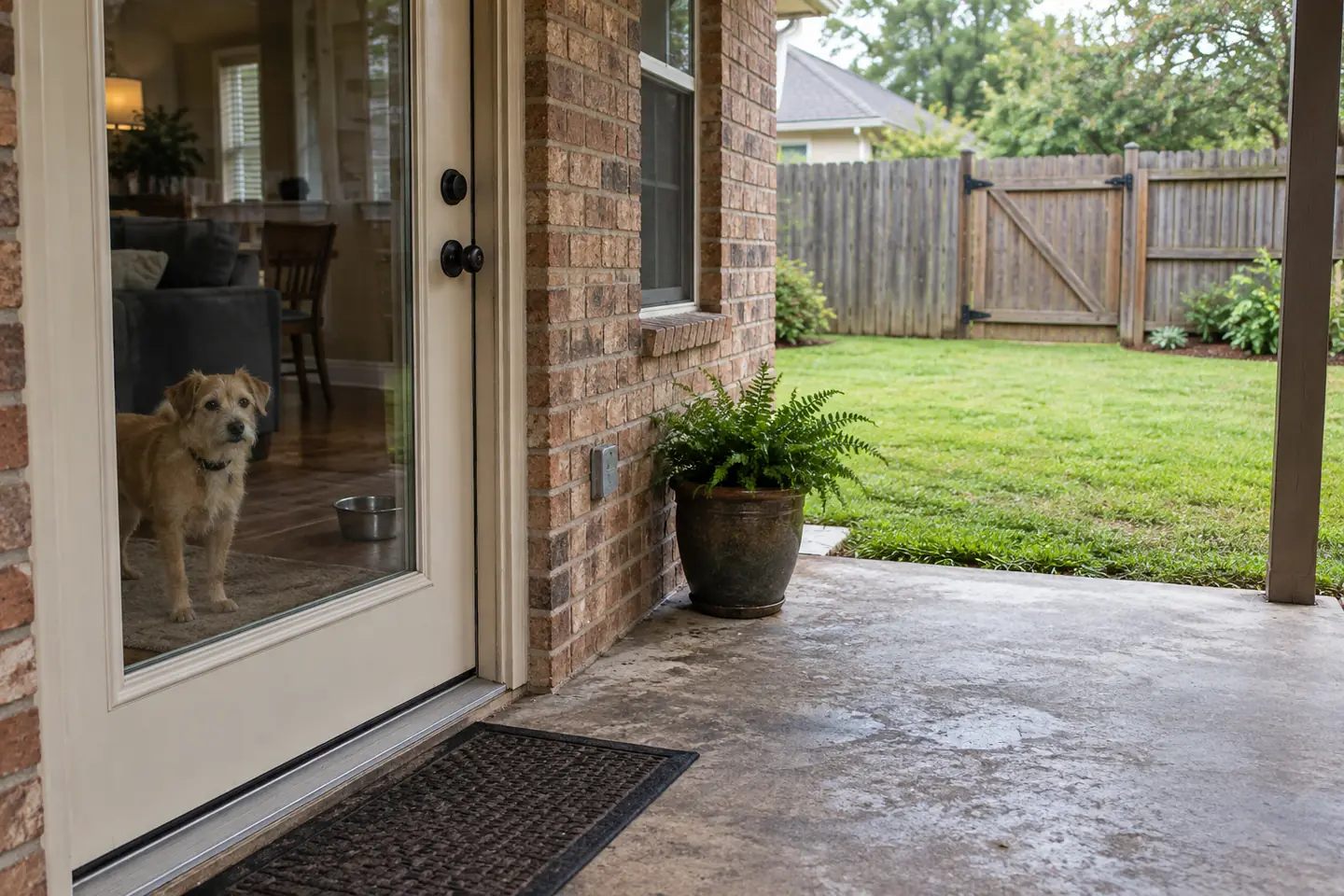
The dog should be indoors or in a secure enclosure that the lawn visit does not need to enter. A tether is not a substitute for separation during mowing because noise, gate movement and strangers can change an animal’s behavior. Tell Happy which gate is available and confirm that no pet will be released into the work area. We do not handle animals, move kennels or supervise pets. If a dog is loose or pushing at the required gate, service may need to wait. A calm access plan protects the pet, the crew and the property without relying on a last-minute handoff.
Identify every ground anchor
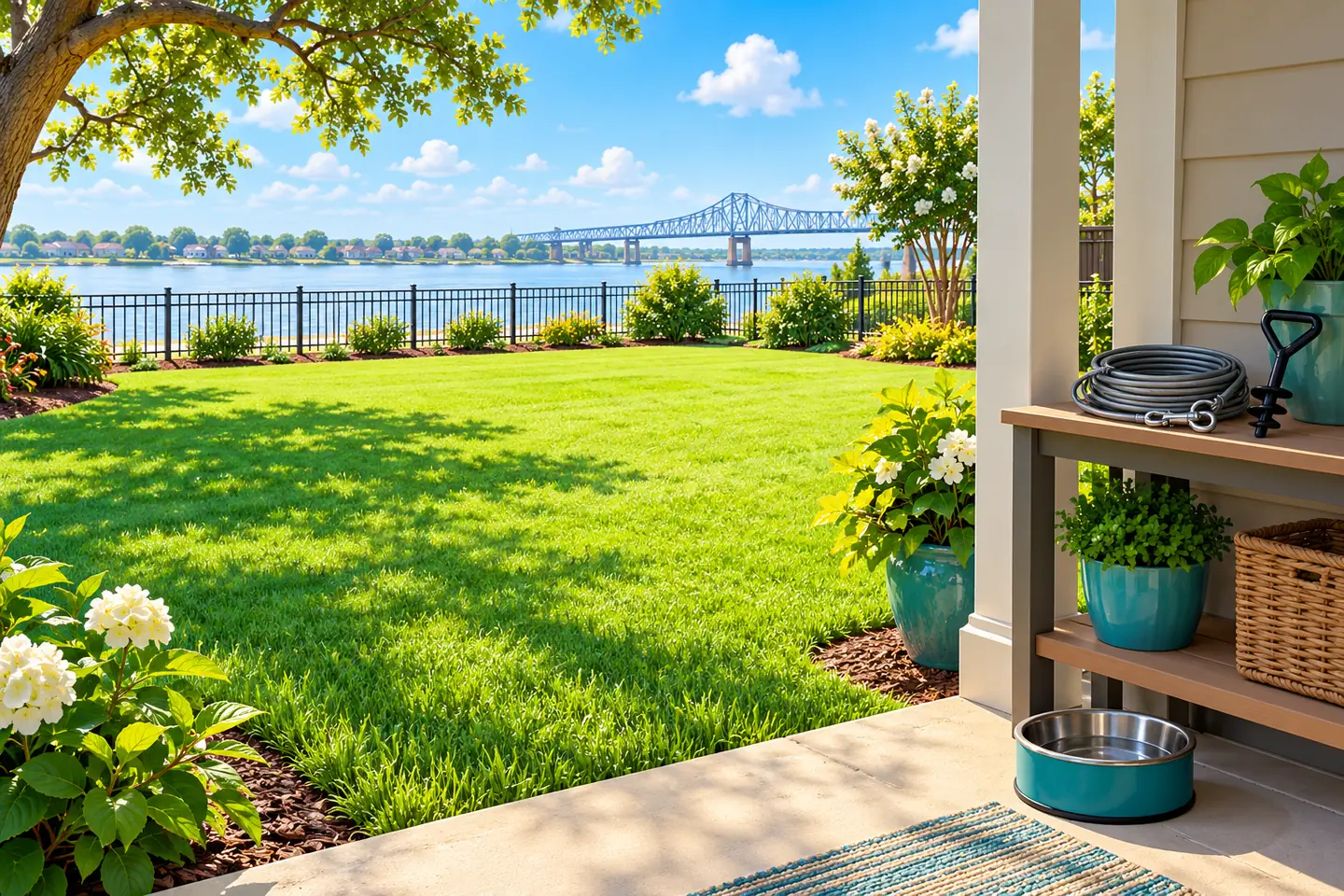
Some anchors screw into soil and can be removed; others are set permanently or sit nearly flush. Photograph each one from above and from the side while the grass is short. Note whether it is rigid, loose, bent or surrounded by a worn circle. Do not ask Happy to unscrew, hammer or test it. A fixed anchor becomes a no-contact point with a small visible boundary. If it is no longer used, the property owner should arrange proper removal and repair before adding the spot back to the mowing route. Covering an anchor with a bowl or plant pot only makes it harder to see.
Check for worn circles and bare soil
A tethered dog often follows the same path, creating a ring of compacted soil, thin grass or shallow holes around the anchor. Show that pattern in the quote instead of treating it as an ordinary patch. The surface may be harder, softer or more uneven than the rest of the yard, especially after rain. Happy does not fill holes, restore pet-damaged turf, seed or sod. We can maintain accessible surrounding grass with a conservative edge. If the worn circle holds water or contains exposed roots and stones, exclude it until the owner decides on a repair plan.
Keep bowls, toys and waste off the lawn
Move water bowls, toys, training cones, feeding mats and lightweight shelters before service. Pick up pet waste throughout the area. These items interrupt the route, and some can hide cable ends or anchors. Do not stack everything at the gate the crew needs. Use a porch shelf, garage or secure hard-surface corner. Happy is not a pet-waste removal service and will not move a heavy doghouse to reach grass. A prepared yard lets the crew see the surface and gives the pet’s belongings a clean place away from clippings and noise.
Explain permanent overhead or fence-mounted systems
Some tie-outs run between posts or along an overhead trolley. Their support cables, drop leads and attachment points can enter the mowing and trimming space even when the main line is above head height. Photograph the entire system and measure access in practical terms: show the lowest hanging lead, the route to the gate and the grass beneath. Remove detachable drop lines before service if the system owner says they are movable. Happy will not disconnect load-bearing hardware or pass equipment beneath an uncertain hanging cable. The lawn scope may need a broader excluded corridor or a different access point.
Treat an invisible pet fence separately
An electronic pet-containment boundary can include buried wire, flags and a transmitter. Happy does not locate, repair or test those systems. Tell us where the owner says the boundary runs and preserve any active training flags. Do not drive new stakes near a buried line. Routine surface mowing may be possible when no hardware is exposed, but edging, digging and repairs require separate decisions by the system owner or installer. If wire becomes visible, keep equipment away and arrange appropriate service. The absence of a physical fence does not mean the lawn edge has no infrastructure.
Update the plan when the pet setup moves
Portable anchors and long lines often shift between shade, porch and open lawn. A recurring mowing route cannot rely on an old photo if the system moves weekly. Store the cable and send an updated anchor location before service. If a temporary kennel, exercise pen or shade canopy now blocks access, explain whether it will be removed. Happy will not dismantle pet equipment. Choose one consistent off-lawn storage spot and, where practical, one stable anchor area with a clear boundary. Consistency reduces surprises and helps keep a friendly rhythm between pet use and lawn care.
Put pet details in the quote without oversharing
A useful note identifies the number of pets, where they will be secured, which gate the crew uses, how many anchors exist and whether any cable system remains fixed. Add broad yard and close anchor photos. Do not send private veterinary details or claim that a pet is friendly as a substitute for separation. Happy needs access facts, not a temperament assessment. Mention worn paths, digging spots and toys that are difficult to move so the scope reflects the real yard. This preparation makes the quote more accurate and sets an easy routine for every visit.
Review the yard before letting the dog back out
After service is complete and equipment has left, check that gates are closed, stored tether gear is intact and the anchor area has not changed. Happy’s visit does not certify the pet system or gate latch. The property owner remains responsible for confirming everything before releasing the animal. If you notice a loose anchor, cut coating or exposed wire, keep it out of use and arrange repair. Then update Happy before the next lawn date. A good recurring plan protects the dog’s space without turning lawn service into pet-equipment maintenance.
Plan for shared yards and visiting pets
In a duplex, rental or shared backyard, more than one person may place a tether or toy in the same grass. Agree on one mowing-day checklist and one person who confirms the yard is clear. A neighbor’s visiting pet needs the same separation as a resident animal, and a temporary cable still needs to be removed. Tell Happy if access crosses a shared gate or if another household controls the latch. We cannot coordinate conflicting pet instructions on arrival. A written routine keeps everyone from assuming someone else picked up the line.
Check shaded and overgrown corners carefully
Tie-out leads are especially hard to see beneath leaves, groundcover or tall grass beside sheds and fences. Walk those corners in daylight before the visit and trace the cable from clip to anchor without pulling through vegetation. If it disappears, do not ask the crew to find it with trimming equipment. Mark the entire corner as excluded until the line is recovered. When recurring pet use keeps the grass hidden, consider an owner-managed hard-surface storage or defined no-mow pad. Happy can keep adjacent accessible turf tidy, but visibility must come first.
Keep replacement parts and packaging contained
New tie-out kits can leave cable ties, metal clips, plastic sleeves and anchor packaging on the porch or grass. Collect every piece before the first use and again after adjustments. A small clip can be as hard to see as the tether itself. Store spare leads in a closed bin instead of a loose pile beside the gate. Happy does not sort pet-equipment parts from yard debris. A quick inventory after installation protects the pet setup and leaves the mowing surface ready.