
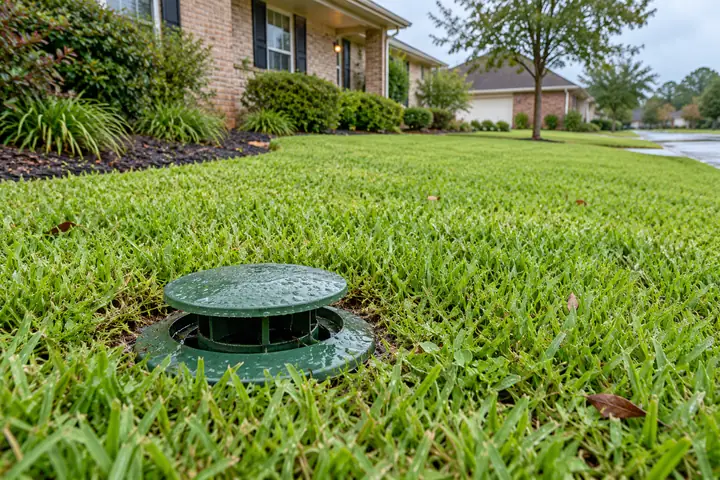
Know what is visible and what is not
The cap in the grass is only the terminal point of a buried drainage line. Water pressure may lift the lid during a storm and allow runoff to spread over the surface. The pipe path, slope and upstream connections remain underground and outside an ordinary lawn visit. Start by identifying the exact emitter location and whether there are others nearby. Look at the visible lid, hinge or center post without prying it open. Happy needs to know where equipment should slow down; the owner or drainage professional remains responsible for whether the system is correctly designed, connected and functioning.
A flush lid still needs a margin
When the emitter is closed and truly flush, it may appear mowable. In practice, soil can settle around one side, turf can build above the rim, and the lid can remain slightly raised after debris collects beneath it. A mower deck or wheel does not have to strike the center to cause damage; catching an edge can twist the cap or scalp the surrounding grass. Create a small visible margin by keeping the rim readable, not by exposing a wide ring of bare soil. The operator should be able to locate the feature from standing height before entering that pass.
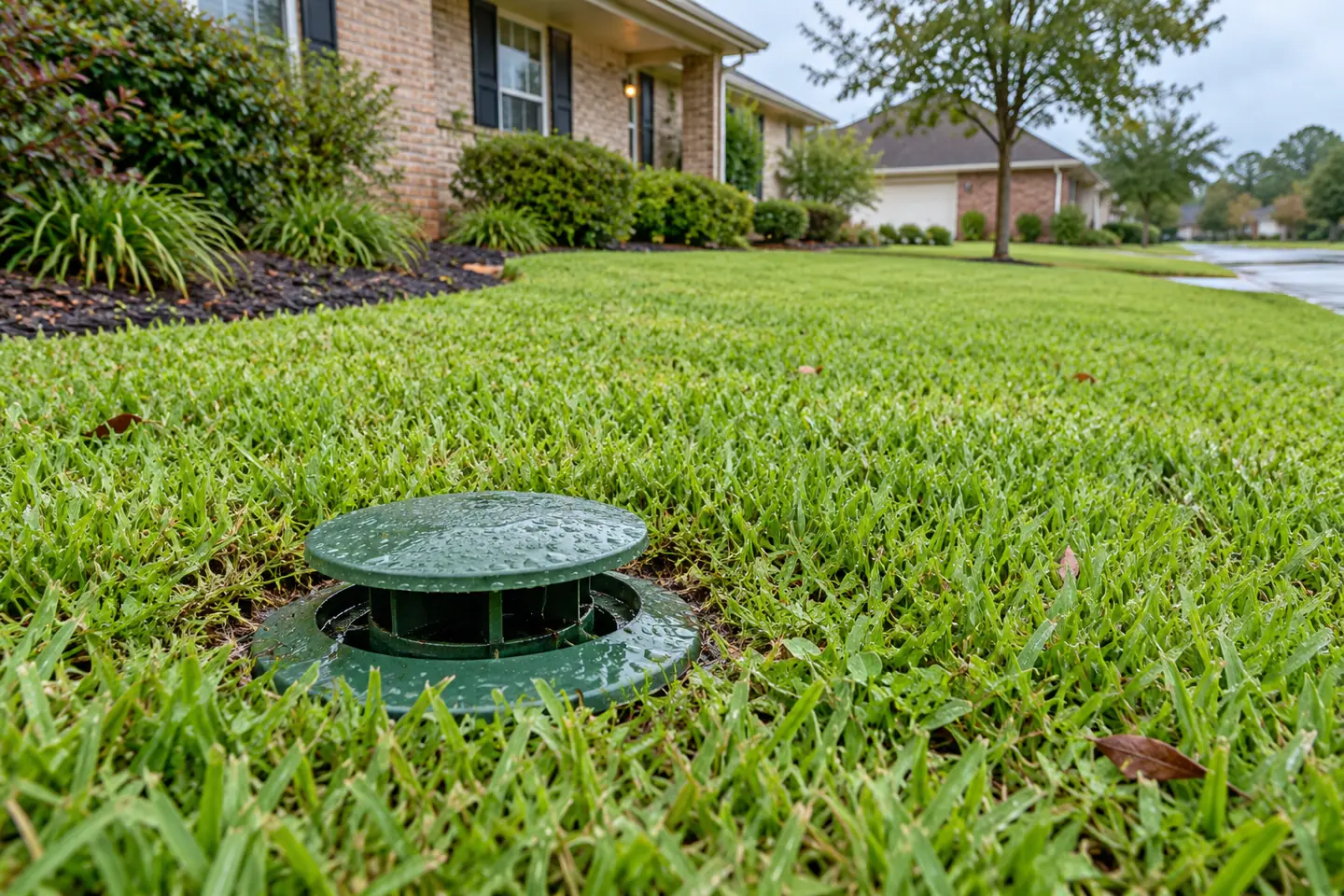
Check it after rain, not only on a dry estimate day
The most useful observation happens when the system has recently discharged. Does the lid close again? Is there a shallow puddle, a soft halo or scattered sediment around the outlet? Does water spread toward a walkway? These questions document surface conditions without diagnosing the buried pipe. Take a photo once it is safe to step outside. If the area remains saturated, mark it for the next visit. Driving across soft soil can leave a depression that makes the emitter even more vulnerable on future cuts.
Keep the cap free to move
Do not pin the lid down with a brick, pile mulch over it or let dense runners stitch across the hinge. The emitter needs its designed range of motion. Lawn preparation means removing loose objects and trimming visibility around the perimeter, not modifying the device. If the lid is cracked, missing or stuck open, flag it before service and arrange the appropriate repair. A permanently open fitting can admit debris or become a wheel-catching hole. Happy can mow around the presented condition but does not replace drainage hardware or certify that the outlet works.
Build the mowing pattern around the weakest surface
The emitter itself may be plastic, but the surrounding soil often determines the route. Approach so the machine can pass beside the feature without a tight pivot directly on its rim. Avoid stopping a wheel on the damp side. If several emitters form a line, treat that corridor as a mapped feature rather than discovering each cap separately. A smooth outer loop followed by controlled trimming may produce a cleaner result than repeated short turns. The pattern should be easy to repeat by another operator who has only the property notes and photos.
Grass height can reveal or conceal the problem
Fast-growing lawn can cover a closed cap between visits. That does not mean the turf should be shaved lower around it. LSU AgCenter emphasizes appropriate mowing height and the one-third rule because removing too much leaf at once stresses the lawn. Keep the grass at the planned height while making the rim visible through careful trimming. A low circular scalp creates a different maintenance problem and may collect mud. Visibility comes from precise boundaries and current notes, not from cutting a permanent bald target into the yard.

Clippings belong away from the opening
EPA stormwater guidance says leaves, grass clippings and trash should not be pushed into storm drains because they can clog systems and pollute waterways. A residential emitter is smaller, but the practical lesson transfers: do not direct a dense stream of clippings at the moving cap. Blow the lawn evenly and leave the top unobstructed. If sediment has washed over the lid, let the owner assess it rather than scraping into the fitting with a tool. Surface cleanup should never become unapproved drainage maintenance.
Mark temporary changes without creating new hazards
A small landscape flag placed a sensible distance from the cap can help during tall growth or immediately after a repair, but flags are temporary and must be visible. Do not leave wire, rebar, stakes or improvised markers where they can become projectiles. The property note should describe the emitter relative to a stable landmark: for example, several feet from the patio corner or in line with a downspout. Avoid publishing precise coordinates. A clear photo and plain description are enough for routine service while respecting privacy.
Use a practical visit-day check
- Confirm every known emitter is closed or clearly flagged.
- Remove toys, hoses and loose covers from the surrounding lane.
- Note damp or soft soil before a machine enters the area.
- Keep the cap’s perimeter visible without digging around the pipe.
- Direct clippings away from the lid and nearby hard surfaces.
- Report a damaged or missing cap instead of improvising a repair.
Problems that belong beyond lawn service
Repeated standing water, erosion around the outlet, a lid that never closes, sewage odor, discharge toward the foundation or a collapsed area are not ordinary trimming details. Pause and contact the appropriate property owner, plumber or drainage professional. A pop-up emitter may connect to roof runoff, yard drainage or another system; Happy should not guess which one from the surface. The lawn-service promise is narrower and more dependable: protect visible hardware, avoid wet footing, keep access clear and communicate what changed.
Make the feature part of the property map
The emitter should appear in the same simple property notes as gates, cleanouts, valve boxes and other low objects. Record its photo, general location, normal closed condition and the circumstances that make the area too soft. Update the note if landscaping or drainage work changes the route. This turns a small hidden risk into an ordinary part of planning. On a dry day the lawn still looks like a lawn; on a wet day the operator knows exactly why one patch may need to wait.
Good coordination prevents a cycle of damage
Once a cap is struck, the surrounding ground can erode or the lid can sit higher, making the next strike more likely. Avoid that cycle by keeping the feature visible and choosing a route before blades begin. The owner gets a neater, more predictable visit, and Happy can focus on mowing, edging, weed-eating and blowing instead of guessing about buried infrastructure. If you are unsure whether the green circle is an emitter, send a wide photo and do not pull on it. Identification can begin with conversation, not force.
Do not confuse an emitter with another green lid
Valve boxes, cleanouts and drainage emitters can share colors and sizes. A pop-up outlet usually has a moving cap, while a valve-box lid is meant to remain closed, but surface appearance is not enough to make repairs or open anything. Use the property’s installation records or ask the responsible contractor when identification matters. For lawn access, treat every unknown low cover as fixed, visible hardware and route around it. That conservative choice protects the object without claiming expertise that belongs underground.
Coordinate outlet areas with bed maintenance
An emitter near a mulch bed can receive migrating bark, landscape fabric or groundcover runners. Keep those materials from covering the cap, but do not reshape the bed to chase a drainage result. The owner can establish a clean border that leaves both turf and outlet readable. Happy’s trimming should stop at that border, and blowing should move loose mulch back toward the bed rather than into the cap. This small division of work makes the surface easier to maintain after both rain and routine service.
Give similar-looking lids different location names
If several small covers appear in the lawn, identify them by location rather than relying on color or shape alone. A note such as the cover beside the rear path is more stable than the green lid when another similar object is nearby. Keep any uncertain identification marked as uncertain until the owner has reliable information.
Use a wider reference photograph that includes the surrounding grass and the route to it. After other property work, check that the note still describes the same visible arrangement before the next visit. If a concern involves drainage operation or a damaged component, keep that separate from the desired mowing finish. The location key should help Happy avoid confusion around the presented feature, not invite the crew to open, test or classify every cover encountered in the lawn.