

Identify every opening along the service route
Walk the foundation and distinguish access doors, flood openings, ventilation grilles, utility penetrations and ordinary skirting panels. Their functions differ even when they share a rectangular shape. Record the general location and a wide photo, but do not open anything. FEMA guidance recognizes that crawlspaces can require access and ventilation or flood openings depending on construction and rules. The owner or qualified building professional is responsible for determining what each opening is and how it must perform.
Keep the access door closed before lawn work
An open crawlspace door creates a dark fall area, invites debris and may expose wiring, plumbing or animals. The owner should close and secure it before the visit unless an authorized worker is actively using it—in which case that side of the yard stays closed to lawn equipment. Happy does not enter a crawlspace, reach through an opening or handle latches that are damaged. If the door will not close, mark a generous buffer and arrange the appropriate repair.

Maintain a visible grass boundary, not a blocked threshold
Grass runners, mulch and soil can creep against the bottom of a low door. Keep a narrow, deliberate margin that shows the frame and leaves room for the door's movement. Do not pile clippings in front of it or create a steep bare trench that channels water toward the foundation. If a stepping pad or gravel approach is part of the access, define its edge so mower wheels remain on the lawn and service workers retain a stable path.
Do not cover or alter foundation vents
Trimming should reveal a vent, not stuff it with clippings or knock out its screen. Never tape, close, remove or replace a vent component during a lawn visit. Flood and ventilation requirements can be technical and property-specific. If the grille is bent, missing, buried or painted shut, photograph the exterior condition and notify the owner. A contractor familiar with the building and local rules should decide what correction is appropriate.
Aim discharge away from openings
A mower or blower can push grass, dust and mulch through louvers. Plan the pass so discharge travels toward open turf rather than the foundation. Use low, controlled blower direction near grilles and stop if the screen is loose. Surface cleanup does not include forcing debris back through a vent or removing material from inside. The best finish leaves the exterior edge readable and the opening undisturbed.
Check the foundation strip after rain
Water can soften soil beside piers, wash mulch across a door or collect near a below-grade opening. Inspect footing before placing wheels close to the house. A saturated perimeter can rut easily and may signal a drainage issue beyond lawn service. FEMA material discusses drainage considerations for some crawlspace configurations, but Happy should not diagnose the building. Record standing water, defer the strip and let the owner engage the appropriate professional.
Protect utility approaches beneath raised homes
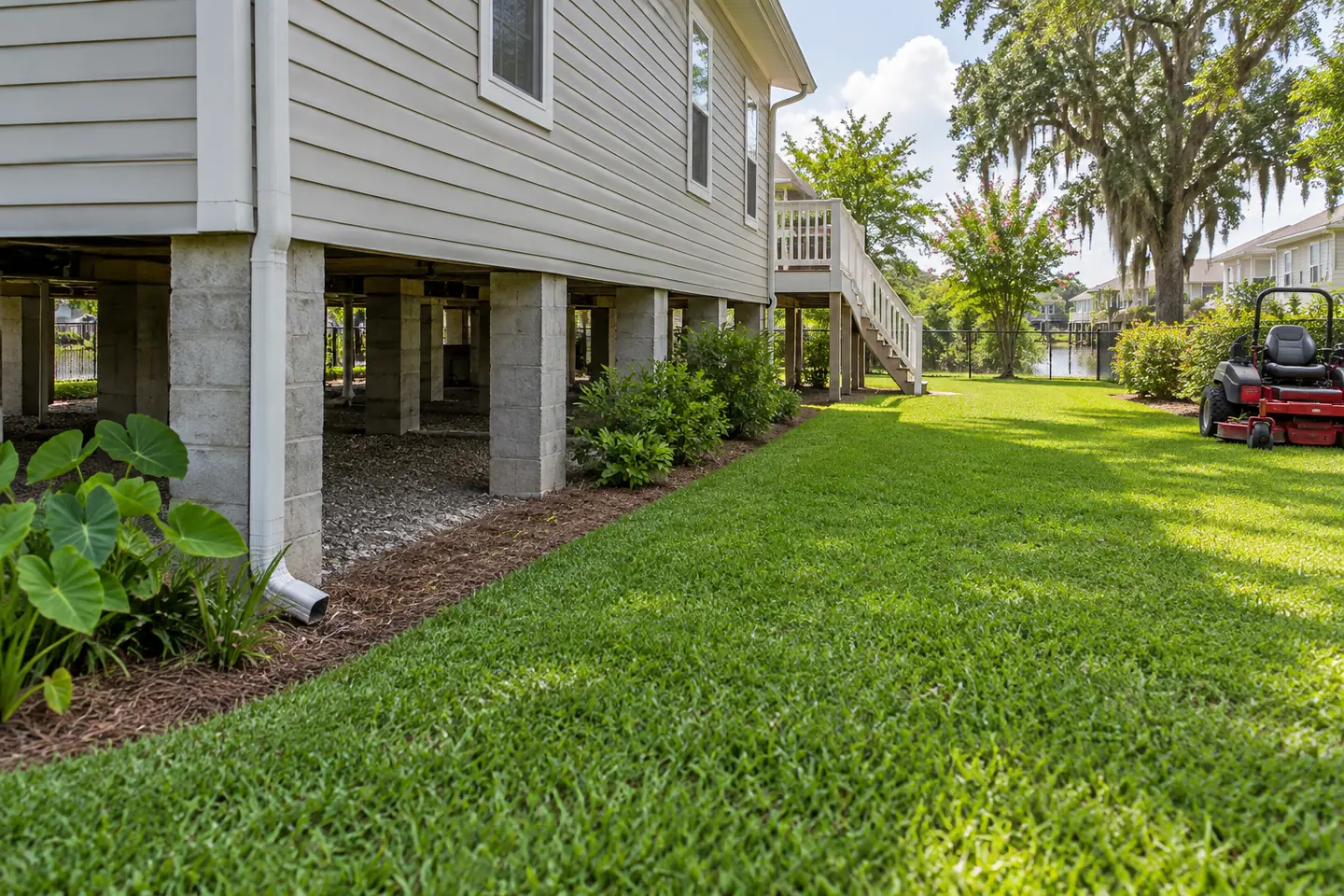
Some access doors lead to plumbing, electrical or HVAC equipment. Technicians may need a clear route from the gate, and temporary cords or hoses may emerge while work is active. Confirm the maintenance schedule before mowing. Do not drive beneath a raised structure or between piers unless that route was specifically reviewed and safely fits the equipment. Happy's normal boundary is the maintained lawn outside the foundation, not the concealed area under the home.
Use a simple perimeter checklist
- Confirm all access doors are closed or the area is formally excluded.
- Identify vents, flood openings and utility penetrations from outside.
- Remove toys, loose panels and ordinary debris from the lawn route.
- Keep grass, mulch and clippings away from door thresholds and grilles.
- Direct discharge and blower air away from foundation openings.
- Report standing water, damage or animal activity without entering.
Animal activity changes the safe response
A loose screen, burrow or movement inside the opening is a reason to stop near that point. Do not reach in, block the exit or start equipment beside an animal. Notify the owner and allow a qualified wildlife, pest or building provider to handle it. Happy does not offer pest control. Once the opening is secured and the surface route is clear, update the note before resuming ordinary trimming.
Coordinate doors with bed edges and skirting
Foundation beds sometimes wrap around access points, while manufactured or raised homes may have removable skirting nearby. Define which panels are permanent and which opening is the actual door. A mower should not rub against skirting, and a trimmer should not strike a fragile lower edge. If a bed expansion covers the approach, the owner should establish a new stable path rather than asking the lawn crew to step through plants or move panels.
Leave flood openings recognizable
In flood-prone construction, some foundation openings serve more than ventilation. Their correct dimensions, height and operation require qualified review. For lawn purposes, the rule is modest: do not obstruct, alter or make performance claims. Keep the exterior clear enough that the owner can inspect it, and document any visible blockage. Avoid calling every grille a flood vent in public copy or service notes unless the property records confirm that function.
Watch for low hardware and sharp edges
Hinges, hasps, anchor straps, vent frames and cut screening can extend into the grass line. Make them visible before equipment passes. Do not hammer a strap flat or bend metal inward. If hardware projects into the route, exclude that corner and ask the owner to arrange repair. Controlled trimming from a safe direction is better than forcing a deck into a narrow space that can damage both the building and machine.
Keep the property note current after building work
Foundation repair, plumbing access, flood mitigation or termite work can change doors, panels and ground level. Compare the new condition with the earlier map and revise the lawn route. Remove obsolete markers only with owner approval. A pre-visit photograph is especially useful after contractors have opened the crawlspace; it confirms whether tools, panels and temporary lights were cleared before Happy arrived.
Distinguish permanent grilles from temporary covers
After cold weather, storms or contractor visits, an owner may place foam, plywood, plastic or hardware cloth over an opening. Happy should not assume the material is approved or remove it to improve appearance. A loose cover can become a projectile, while a secured cover may be part of a property plan that requires professional review. Photograph it, keep discharge away and ask the owner to confirm its status. Lawn work can continue outside a safe buffer when the cover is stable; decisions about ventilation and flood behavior stay with the building professional.
Keep fuel and exhaust away from openings
Do not idle gasoline equipment directly beside a crawlspace vent or open door. Plan staging and refueling on the approved hard surface away from the foundation and ignition sources. Shut equipment down before carrying it through a narrow access lane. Happy does not evaluate indoor air or crawlspace ventilation, but ordinary caution avoids directing exhaust into a building opening. If an access door unexpectedly opens or a worker appears beneath the home, stop nearby machines and reestablish the exclusion zone before continuing.
Watch the ground beside piers and steps
Soil at a foundation corner can be uneven because of roots, splash, animals or prior repairs. A pier, stair footing or utility penetration may also narrow the turn. Walk the route and choose a pass that keeps wheels on firm lawn without rubbing the structure. Do not fill a low spot with clippings or trim blindly behind a pier. Where visibility is poor, use a smaller controlled finishing area or leave the strip documented for the owner rather than reaching into a hidden space.
A clean perimeter supports everyone who uses it
The homeowner needs access, building specialists need openings that remain functional, and Happy needs a predictable grass edge. Those goals align when doors stay closed, vents remain unobstructed and discharge points away from the foundation. Tell Happy about active under-house work, recent flooding or a damaged panel before the visit. The result is a neat lawn boundary without crossing the line into building inspection or repair.
Give openings their own location key
For a house with several low openings, use a short location key to distinguish the access door, fixed vents and any other feature relevant to the lawn route. A wider wall-side photograph can show their relationship without including private interior views. Keep uncertain features labeled as uncertain rather than assuming everything low on the wall serves the same purpose.
After building work changes a cover, door or perimeter arrangement, update that key before the next lawn discussion. Explain the accessible grass strip and any area still awaiting the owner’s check. Do not turn a request for a neat perimeter into permission to open, close, block or inspect building components. A useful location key helps Happy understand the presented route while access-control decisions, building condition and any professional assessment remain with the people responsible for the home.