
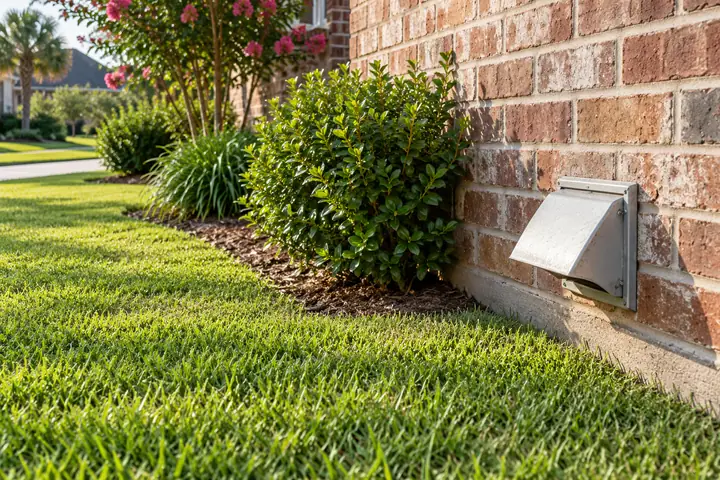
Confirm which outlet serves the dryer
Exterior hoods can serve a dryer, bathroom fan, kitchen exhaust or another system. The owner should identify the outlet from records or a qualified service provider instead of guessing from its shape. Happy only needs to know where to avoid contact and directed debris. Do not open covers or start an appliance during the lawn visit to trace airflow. Mark the general location on a property photo, especially when several similar openings run along one wall near the grass.
Keep the hood clear from the lawn side
Grass runners, leaves and bark can build against a low outlet. Maintain a narrow visible margin without digging a trench or piling soil against the wall. The hood's movement and required clearance depend on its design. The owner should follow the appliance and vent instructions. Happy can trim ordinary grass outside a sensible buffer, but should not bend louvers, remove a guard or alter the outlet to make the edge easier to reach.
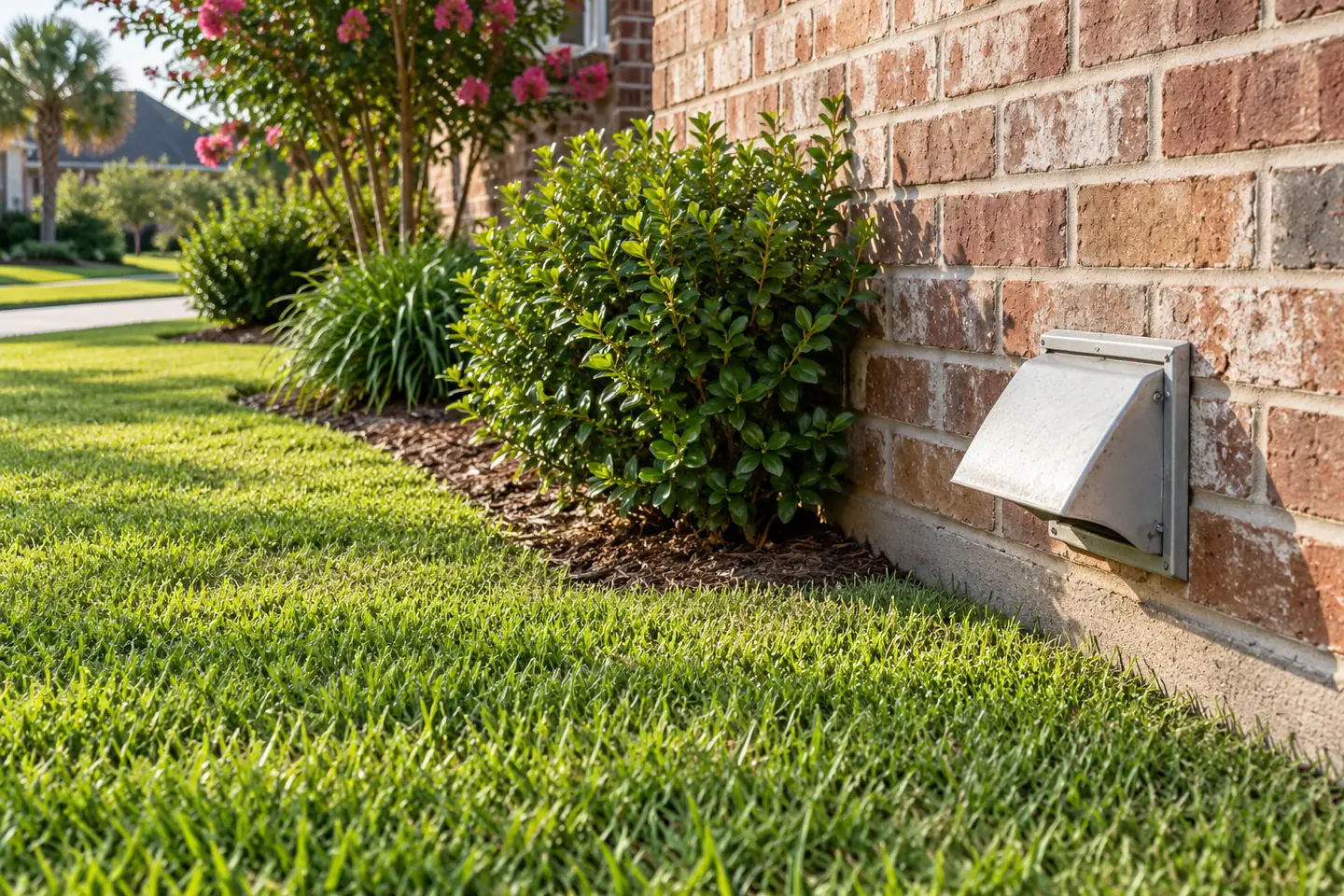
Respect the outlet's moving parts
Some covers open when exhaust flows and close afterward. The U.S. Fire Administration advises ensuring the outdoor vent covering opens when the dryer operates. That operating check belongs to the owner or service professional. Happy should not hold a flap open, tape it closed or insert a tool to see what is inside. If the cover appears stuck, broken or buried, report the exterior condition and keep equipment away until the responsible provider addresses it.
Direct mower discharge away from the wall
A stream of clippings can pack against a hood or enter around its opening. Plan the pass so discharge travels toward open turf where practical. Finish the narrow foundation strip with controlled trimming rather than pressing the deck against brick or siding. The goal is a visible clean perimeter and an undisturbed exhaust outlet. If the grass cannot be reached without contact, discuss a wider permanent margin with the owner instead of repeatedly striking the same fragile component.
Use the blower as a surface tool
Do not aim concentrated air into the hood, grille or duct. Blowing through an opening can move debris where the lawn crew cannot see or retrieve it. Happy's cleanup should remove ordinary material from adjacent ground and released hardscape. It does not include lint removal from inside the system. If lint is visible around the outlet, photograph it and ask the owner to arrange dryer-vent service. A cleaner lawn edge cannot establish that the duct is clear or the appliance works correctly.
Separate lint from ordinary clippings
Lint may collect on shrubs or mulch near the exhaust, while lawn debris may gather at the hood. These materials have different sources and should not be treated as evidence of the same problem. Happy should describe what is visible without diagnosing airflow. The owner or appliance professional can evaluate recurring lint, restricted movement or damaged venting. Do not burn collected material or add chemicals to the outlet area. Follow the relevant professional advice for system cleanup and disposal.
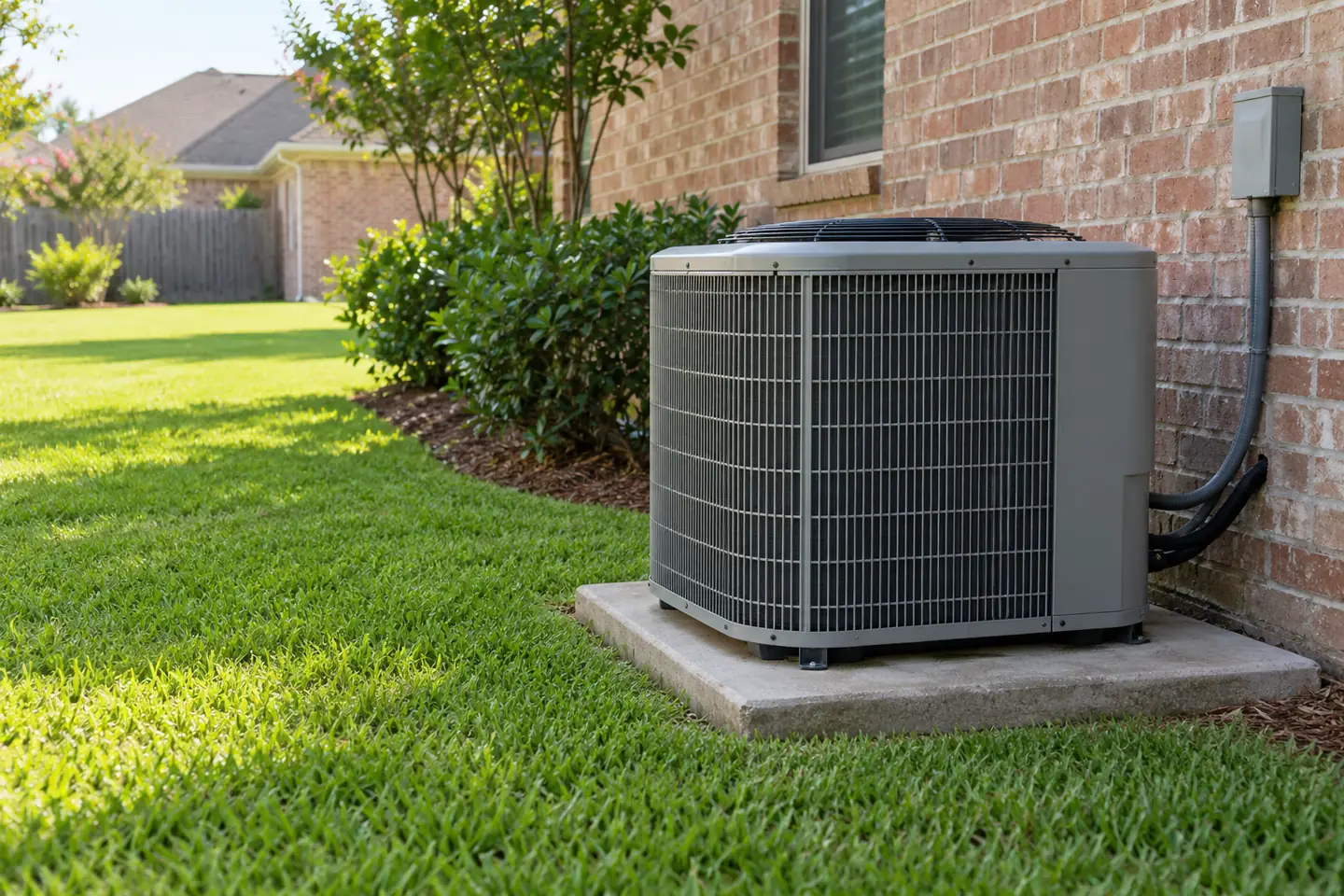
Keep equipment exhaust and fuel staging elsewhere
Avoid idling a mower directly beside a low building opening. Use the approved hard staging area away from doors and vents, and shut equipment down before any refueling or maintenance under its instructions. Happy does not evaluate indoor air or building ventilation, but the lawn route should avoid directing engine exhaust toward an opening. A narrow side yard may require a different turn or equipment choice so the work does not linger beside the outlet.
Use a low-outlet checklist
- Owner identifies the outlet and relevant care instructions.
- Keep the grass boundary and hood location visible.
- Avoid contact with flaps, louvers, guards and duct connections.
- Direct clippings and blower air away from the opening.
- Report visible lint buildup or damage without opening the system.
- Keep fuel, hot equipment and temporary storage away from the outlet.
Watch irrigation and downspout overlap
A sprinkler or roof-drain extension can wet the same foundation strip and leave the lawn soft. Identify those systems separately before mowing. Happy does not reroute drainage or adjust irrigation to dry the outlet area. If water stands near the wall, defer the patch and notify the owner. A dry hood above wet soil is still a poor place for a tight mower turn. The service plan should consider both the building opening and the surface carrying the equipment.
Recheck after exterior work
Painting, siding replacement, landscaping or utility repairs can change a hood's position or leave temporary plastic nearby. Ask the owner whether the appliance provider has accepted any new vent work. Happy should not remove protective material or assume a new cover is operational. Clear tools, fasteners and construction debris from the grass before service resumes. A current wide photo can show the new outlet location and the remaining lawn margin, preventing the crew from following an obsolete note.
Keep shrubs and storage from hiding the point
Growing shrubs, trash carts and stacked garden supplies can block visibility even when grass is short. The owner should maintain the access and clearance recommended for the system. Happy does not prune large shrubs or move heavy storage as an automatic part of mowing. If access is blocked, document the condition and finish only the released lawn. The small opening should remain something the household can observe between visits rather than rediscovering it behind seasonal clutter.
Use a specific repair request
A factual message is more helpful than saying the dryer is unsafe based on one glance. Describe a broken hood, a flap that appeared obstructed or material piled against the exterior. The owner can then ask the appliance or vent professional for a proper evaluation. Happy should not run a cleaning brush through the duct or claim fire prevention certification. USFA recommends professional installation and service; lawn maintenance supports a clear exterior but does not replace that work.
Coordinate a specialist visit with lawn timing
Vent cleaning may bring ladders, hoses, brushes and collected lint into the side yard. The specialist should finish, remove tools and release the route before Happy arrives. Recheck the grass for small hardware and make sure the outlet is closed or configured as the provider intends. If a repair remains open, exclude the area. A simple sequence keeps the lawn crew from working beneath a ladder or blowing debris into a temporarily opened system.
Keep the next visit predictable
Add the identified outlet to the same private map as low faucets, cleanouts and foundation access points. Record the normal visible condition and any current restriction, then update the note after repair. Happy can maintain the grass around a consistent buffer while the owner handles appliance care. The best result is modest and useful: a neat lawn edge, a visible hood and no equipment contact with a building system.
Watch the hood during ordinary household use
The owner can observe the outlet from a safe location when the dryer is normally operating and discuss concerns with the service professional. Happy does not need a live demonstration during mowing. Share only relevant access facts, such as a temporary repair zone or an instruction to avoid the wall while a specialist is present. Keeping appliance checks in the household's service routine prevents the lawn visit from becoming an informal test with no controlled conditions.
Keep decorative additions from changing the opening
A small screen, cover, planter or edging border added for appearance may affect access or movement around the hood. The owner should review any proposed addition with the appliance or vent professional first. Happy should not install a guard to protect the outlet from trimmer line. The better lawn response is a visible no-contact margin and an appropriate equipment route. If the hood cannot be protected within the current space, discuss the layout with the qualified provider rather than improvising hardware.
Recheck after leaf accumulation
Wind can collect leaves beneath a low hood even where regular mowing keeps grass short. The owner should keep the exterior surroundings observable through ordinary safe housekeeping, without reaching into the duct. Happy can remove routine loose lawn debris from released ground while avoiding the opening. If material repeatedly collects inside the cover, ask the service professional to evaluate the arrangement. Do not use stronger blower air to force a solution that the crew cannot inspect afterward.