
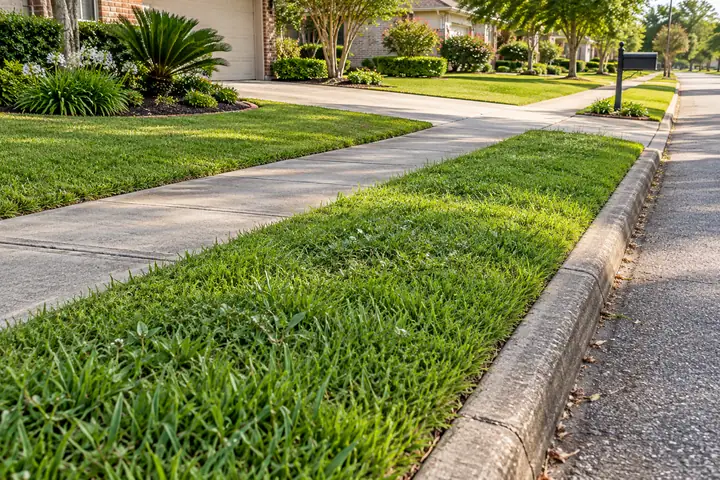
Confirm who controls the strip
Land between a sidewalk and curb may involve a public right-of-way, property-owner maintenance duties or local restrictions. The owner should confirm the applicable responsibility before authorizing work. Happy does not decide ownership or change public infrastructure. Show exactly which frontage is included and where it ends at a neighboring lot. A written scope is especially useful on corner properties where two streets meet. The lawn quote should follow the authorized grass area, while repairs to sidewalks, curbs and utility facilities go through their proper channels.
Measure the usable grass width
The apparent strip can be wider than the ground that safely supports equipment. A crumbling curb, raised sidewalk or soft shoulder reduces usable space. Measure the narrowest points and identify driveway crossings, trees, signposts and mailboxes. Happy can then assess whether the route suits a mower or needs smaller controlled finishing methods. Do not assume a machine fits because it crossed a broad section once. A continuous plan must account for every pinch point without putting wheels into traffic or forcing the deck over a hard edge.
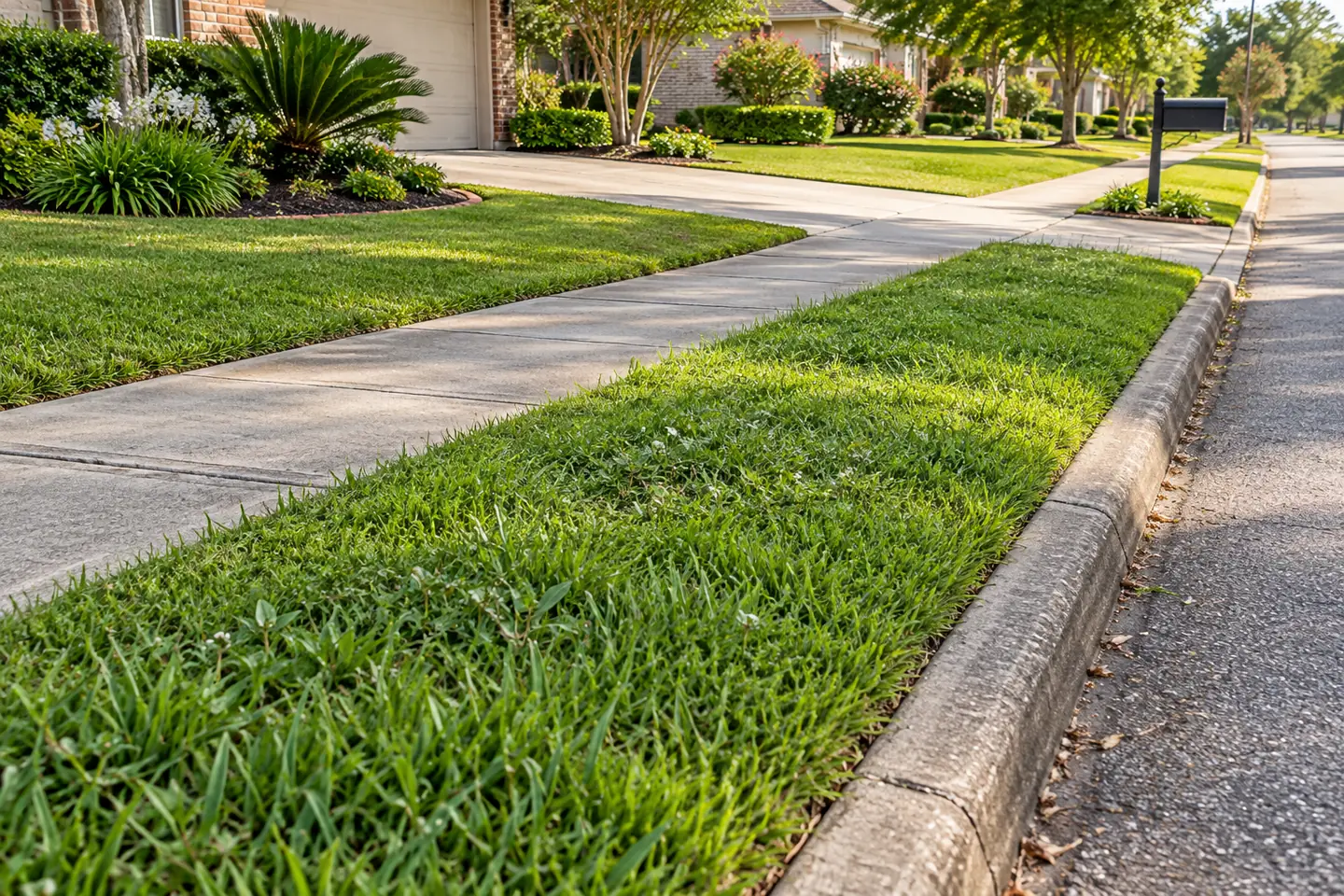
Choose access from the property side
Plan entry from the driveway or sidewalk connection rather than the vehicle lane. Equipment staging should leave pedestrian access available and should not require stepping backward into traffic. The owner should identify parking or work windows that affect access. Happy will not establish an unapproved road closure or direct moving traffic as part of ordinary lawn care. If conditions do not allow a safe route, defer the strip or discuss a different time. The grass does not need to be finished at the cost of an unsafe work position.
Walk for roadside debris before blades start
Curbside grass collects bottles, cans, stones, wire, vehicle parts and discarded packaging. CPSC mower guidance emphasizes clearing objects that can become projectiles. Inspect from the safe side and arrange appropriate pickup for sharp or unknown material. Do not retrieve debris from an active traffic lane during the lawn visit. A tipped recycling cart or recent street work deserves a second look even if the strip was clear the previous week. The released route should contain grass and mapped fixed features, not hidden litter.
Keep discharge away from the street and walkers
Select a pass that directs clippings toward the lawn when practical. Stop equipment when a pedestrian or cyclist enters the nearby work area and resume only after the route clears. Do not blow concentrated clippings into a vehicle lane, driveway or storm inlet. EPA advises keeping yard waste out of drains. A clean finish should leave both sidewalk and curb route usable, with collected material managed appropriately rather than moved to the next low point.
Protect street trees and exposed roots
Tree roots can lift sidewalks and form hard ridges in the strip. Keep mower decks and trimmer line away from bark and visible roots. A low cut will not flatten the surface and can scalp turf over the high points. If a tree or public sidewalk needs repair, the owner should contact the responsible authority or qualified provider. Happy can maintain accessible grass around a visible margin without cutting roots or altering the grade. Mark raised sections so another operator does not discover them through contact.
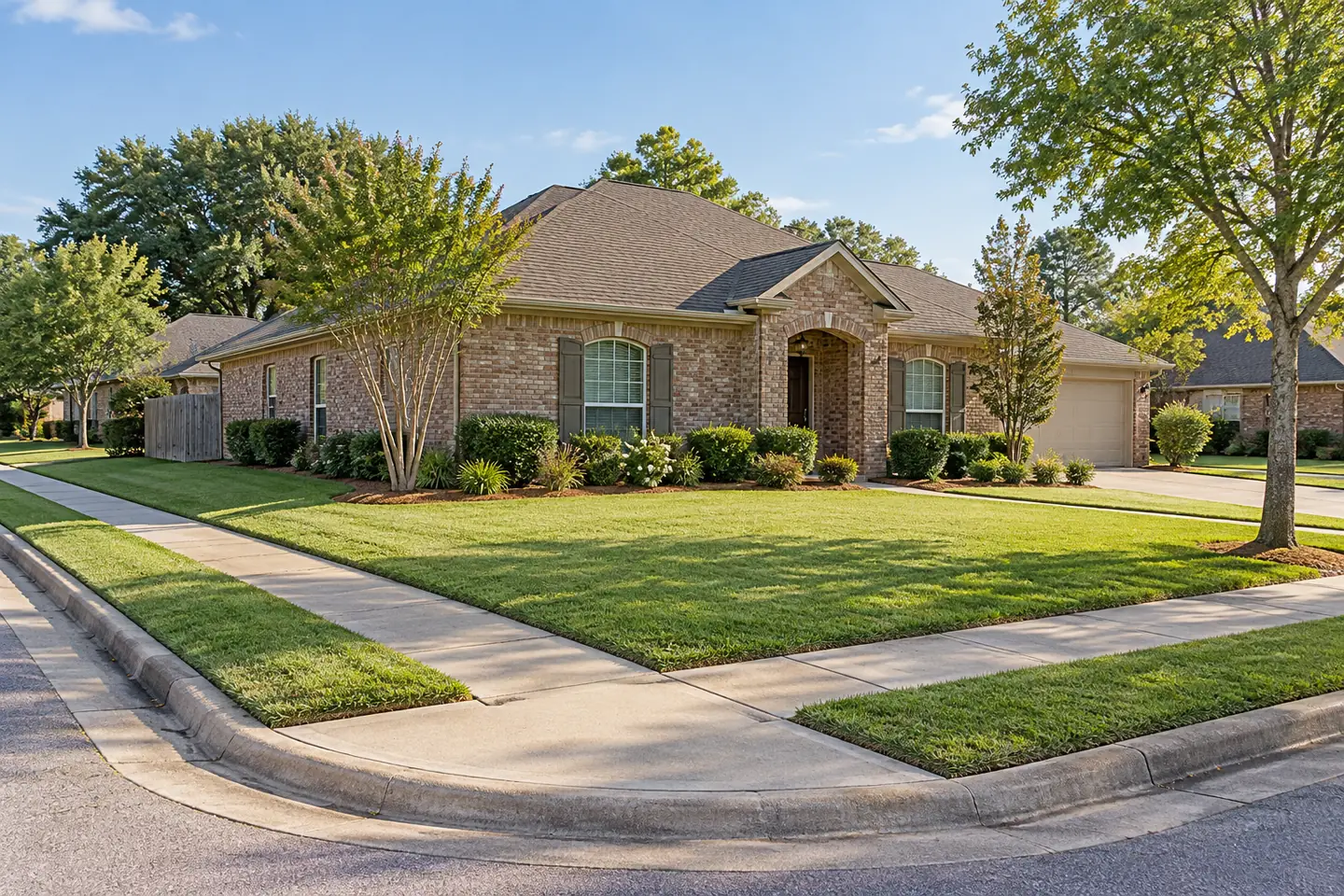
Map every low cover and marker
Water-meter boxes, utility lids, survey markers and small irrigation fittings can sit flush with grass. Show them in a wide photo and keep their edges visible. Do not open covers or remove utility flags to improve appearance. A cracked or missing lid should close the immediate area until the owner or utility addresses it. The narrow strip gives a machine less room to avoid surprises, so a few current photos can prevent more trouble than a long verbal explanation delivered after the equipment arrives.
Use a curb-strip checklist
- Confirm the authorized maintenance frontage and local responsibility.
- Measure pinch points and identify safe entries from the property side.
- Clear ordinary litter and refer sharp or unknown debris for proper handling.
- Mark roots, covers, signs and uneven sidewalk transitions.
- Keep pedestrians and moving traffic separate from active equipment.
- Leave clippings out of streets, gutters and drainage inlets.
Review parked vehicles and collection days
A vehicle at the curb can hide the edge and limit discharge direction. Trash carts can block the same route on collection day. The owner should coordinate a clear window when practical. Happy does not move cars or carts that may still be awaiting collection without an agreement. If part of the strip remains blocked, record the inaccessible section and return to it under the normal scope when access is available. Do not squeeze between a bumper and curb to chase a few blades.
Check soil after prolonged rain
Runoff can make the curb side soft while the main lawn remains firm. Inspect for footprints, puddles and mud near driveway depressions. Avoid repeated passes that create a rut along the street edge. If water is not draining as expected, record the visible condition and contact the appropriate property or public provider. Happy does not reshape the curb line or clear underground drainage. A temporary no-wheel section can preserve the surface while the underlying issue is reviewed.
Maintain two edges with different conditions
The sidewalk side may allow a clear vertical grass finish, while the curb side can have broken concrete, gravel or a drop. Use the method appropriate to each actual edge. Do not force a single continuous trench through unstable sections. The owner's accepted finish should recognize those differences. A strip can look tidy with a controlled grass line and a protected repair margin. Consistent mowing height matters more than making the border appear geometrically perfect where the hardscape is irregular.
Watch driveway crossings and curb ramps
Cars enter and leave across the strip, and pedestrians may use curb ramps at corners. Keep equipment, fuel and tools off those routes. Stop for a vehicle movement instead of assuming the driver sees the mower. A driveway apron may also slope or have a raised seam that changes footing. Inspect each crossing as its own transition and use an agreed route. Happy does not evaluate accessibility compliance, but ordinary work should not add a new obstruction to a ramp or sidewalk.
Coordinate street and utility projects
Paving, line repairs and sidewalk replacement can leave gravel, fresh backfill, stakes and temporary markings beside the grass. Ask the owner for the project's release before mowing the affected frontage. Preserve active marks and barricades. If the work changes the strip width or raises a cover, update the property map before service resumes. A route that was safe last month may no longer fit after construction. The first return should inspect the surface before blades run.
Keep the finish realistic and repeatable
Narrow strips can dry, shade and wear differently from the main lawn. Do not promise identical color or density simply because both areas receive the same visit. Happy can discuss mowing frequency and visible conditions while leaving turf diagnosis and infrastructure repairs with the appropriate providers. A useful record describes the strip's constraints, not an assumed cure. When the owner and crew agree on access, height and cleanup, the frontage can remain neat without constant last-minute decisions at the curb.
Give Happy one clear frontage message
Send a wide photo showing the entire included strip, both ends and the preferred entry. Mention collection days, parked vehicles, known low covers and any recent public work. Identify the portion that remains closed if there is one. This practical note is enough to connect a small-looking grass area with the real work needed to maintain it. The result is a tidy streetside edge that respects the people and infrastructure around it.
Keep route changes visible to the household
If one curb section is deferred for traffic, debris or public work, record it in the visit note with a wide photo. This avoids a household member assuming it was forgotten and attempting a hurried cut from the road. The owner can coordinate the next safe opportunity without changing the entire lawn schedule. When the restriction clears, confirm the surface and access again rather than simply deleting the note. A small consistent record makes a narrow frontage easier to maintain over the year.