
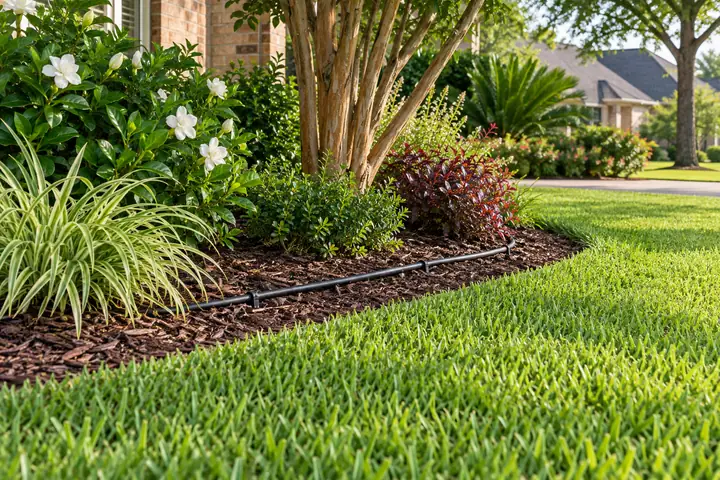
Trace the visible system without pulling
Ask the owner to show the supply connection, main tubing, small branches and the border nearest the lawn. Drip systems can include filters, pressure regulators, emitters, stakes and flush ends. EPA WaterSense describes microirrigation as water applied near plant root zones, but installations vary. Happy does not design, test or repair the system. The map is for surface protection during lawn work. Do not lift a tube to discover where it leads, because it may connect to a fragile fitting or a plant farther inside the bed.
Keep tubing behind the agreed grass edge
The irrigation provider or owner should secure lines in their intended place before the visit. A loose loop on grass is a stop point, even if the tube looks flexible enough for a tire. Happy should not push it beneath mulch with a boot or pin it using an improvised stake. If the current layout crosses the mowing lane, have the responsible provider establish an approved crossing or revise the route. Ordinary mowing should begin from a clear boundary, not a promise to remember an invisible line.
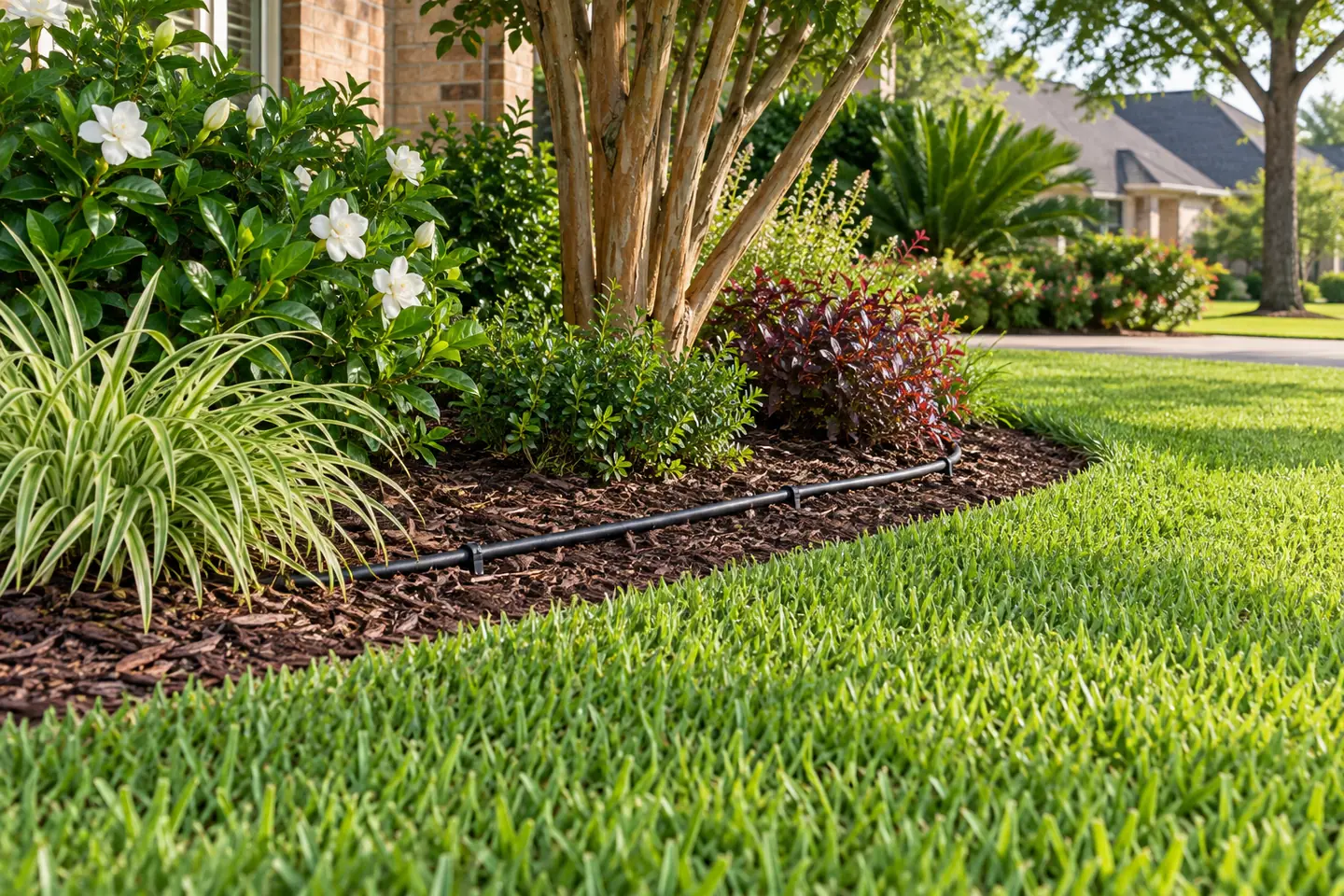
Distinguish tubing from other low lines
Landscape-light cable, pet-fence wire and vine runners may share the same border. Show each separately and avoid assumptions based on color. A small connector can resemble debris, while a drip branch may disappear beneath groundcover. Do not cut or discard an unfamiliar piece. The owner should identify it and confirm whether it is active. Happy can preserve a conservative margin until the system is understood, especially near faucets, valve boxes and recently planted beds.
Inspect stakes and connectors from standing height
Tubing pins, emitter stakes, tees and end caps can stand proud of the mulch. Some have hard or sharp edges that should remain outside the mower route. If a stake loosens, ask the owner or irrigation provider to secure it. Happy does not hammer hardware down or replace a connector during mowing. Keep the entire fitting group visible enough that a crew member can follow the boundary without reaching into plants or testing the edge with trimmer line.
Edging should not become a pipe-locating method
A hard vertical blade can cut shallow tubing or a hidden supply line close to the bed. Identify the route before choosing an edging method. If the owner wants a sharper or deeper border than the installation allows, the irrigation provider should first review clearance. Happy should not dig beside an unknown line or promise a fixed safe depth. The correct lawn finish follows the known surface arrangement and preserves the system's intended placement.
Keep watering times separate from the lawn visit
A drip system may leave a narrow bed-side strip soft even when the broad lawn looks dry. Tell Happy when it runs and whether there are known leaks. The owner controls the schedule; the lawn crew should not turn valves or change timers without a separate authorized scope. If the boundary is muddy, avoid heavy wheels and tight turns. A wet fringe is useful information for an irrigation review, not a reason to cut the surrounding grass lower.
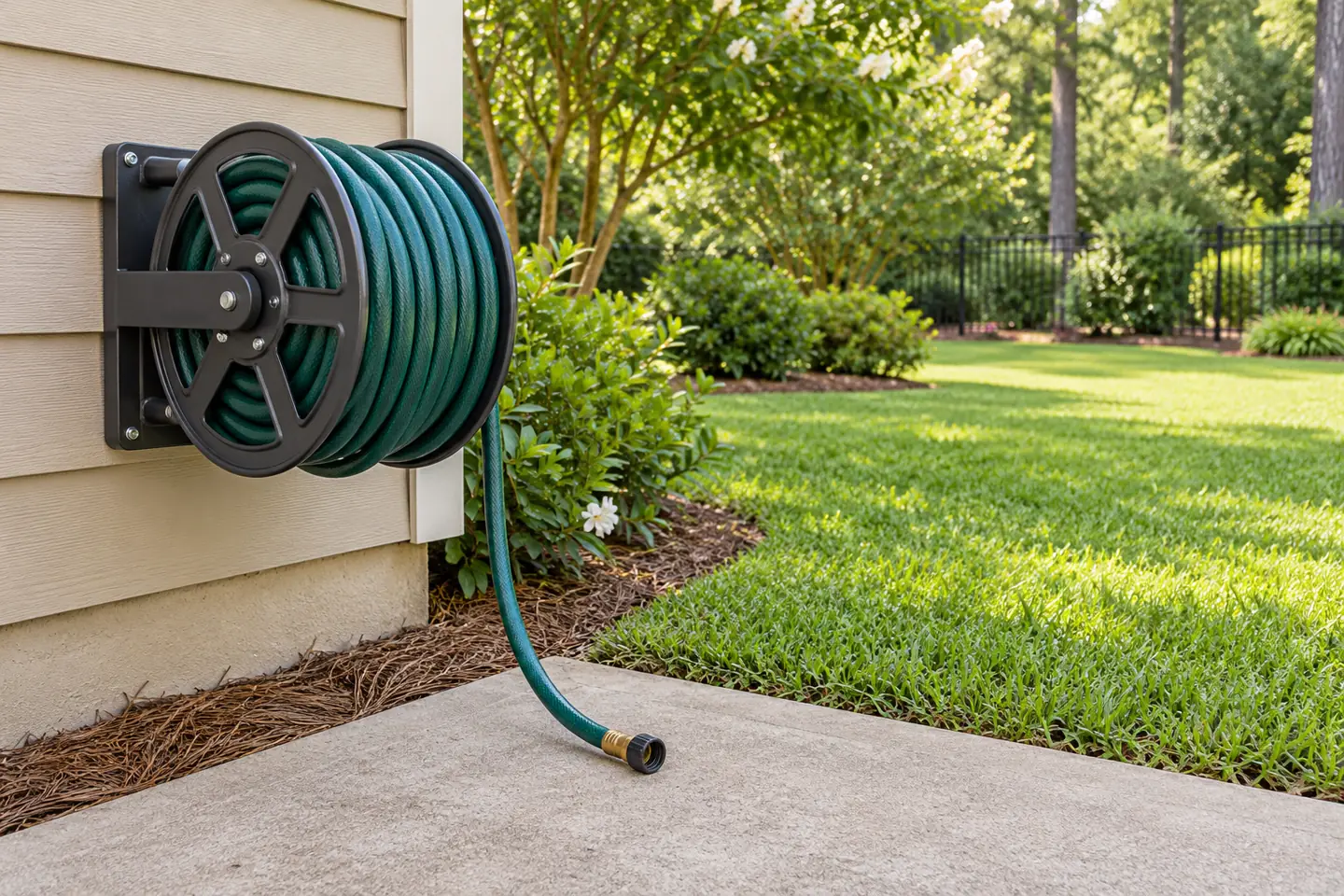
Watch for leaks without diagnosing them
A puddle, small spray, saturated mulch or collapsed patch can indicate a problem, but Happy should describe the visible condition rather than naming a failed part. Keep equipment away and notify the owner. Do not reconnect a separated line or plug an opening with a stick. The irrigation provider can test and repair it. Once repaired, the owner should release the route and confirm the ground is firm before regular mowing returns to the affected edge.
Use a tubing-border checklist
- Identify the visible supply, branches, fittings and flush ends.
- Keep loose loops and hard stakes outside the grass route.
- Distinguish irrigation from wires, ties and plant runners.
- Review clearance before edging or other ground-contact work.
- Coordinate watering so the adjacent lawn can support equipment.
- Report leaks and damage for the responsible provider to address.
Mulch work can change the risk overnight
Fresh bark may cover a line, move a connector toward turf or hide loose pins left by the spreading crew. Inspect the border after bed maintenance and update photos. Do not bury tubing deeper simply to make mowing easier. Its placement and emitter function belong to the irrigation plan. Happy can finish the lawn after the owner confirms the line is secure and visible where needed. A clean bed appearance alone does not establish that the edge is ready for equipment.
Protect newly planted areas
Small drip branches often serve new shrubs or trees near the grass. The plant may also have a support stake, watering bag or temporary marker. Show all of those items before service and define a no-mow margin that includes the whole arrangement. Do not wrap trimmer line around a stem or pull a branch tube to reach grass beneath it. The landscape provider can adjust the layout if ordinary maintenance has no safe clearance. Happy can maintain the surrounding released turf without entering the planting zone.
Keep clippings from hiding the fittings
Direct concentrated discharge away from exposed emitters, valves and tubing groups. Ordinary clippings on the lawn are different from packing a bed edge with a wet mat. Use controlled blowing on the surrounding surface and avoid forcing debris into open ends or filters. Happy does not clean irrigation internals. If the system is open for maintenance, close that zone to lawn work until the provider completes and releases it.
Review hose connections and temporary extensions
A garden hose feeding the drip system may cross a gate or driveway during a temporary setup. The owner should remove or secure it through the appropriate procedure before mowing. Happy will not disconnect an unfamiliar timer or pressure assembly to create access. If temporary watering must continue, identify a separate safe route or adjust the visit. A recurring temporary line should be addressed in the property plan rather than treated as a surprise on every service day.
Recheck after storms, pets and bed changes
Wind, animals and landscape work can shift a line without obvious damage. Walk the grass edge before the visit and look for newly exposed loops. A dog may pull tubing into turf, or runoff may leave a fitting beside a low point. Report the change and let the responsible provider restore the installation. Do not assume a previously mapped line is still safely behind the border. Current visibility matters more than an old photograph that no longer matches the yard.
Make the system easy to describe
A useful note says the black main line stays inside the rear bed, the small branches serve three new shrubs and the gate crossing is excluded until the installer finishes. Avoid publishing precise buried routes or calling the system leak-free without testing. Happy can work from a general surface map and clear owner instructions. When the arrangement changes, replace the note so the next operator follows the current boundary.
A clear border protects water and grass
The irrigation system supports plants while the lawn crew maintains turf outside it. Both tasks work better when tubing stays secured, connectors remain visible and wet patches are reported promptly. Send Happy a wide edge photo before the first visit and mention recent irrigation work. With a stable surface route and separate repair responsibility, the lawn can receive a neat finish without sacrificing the small lines that keep the beds watered.
Include flush ends in the property photo
The terminal end of a line can sit near the lawn even when the main tube stays deep in the bed. It may have a cap, folded section or other fitting specific to the installation. The owner or irrigation provider should identify it and keep it secured in the intended location. Happy should not open it to drain water or tuck it beneath edging. A close photo paired with the wider boundary view helps another operator recognize that the small object is part of the system.
Check the border after irrigation repairs
A provider may leave a temporary open trench, extra tubing or a flagged splice while completing a repair. Ask when that work is fully released and inspect the surface for loose connectors before mowing resumes. Happy should not discard leftover-looking pieces until the owner confirms they are debris. Keeping the repair area distinct for one follow-up visit can prevent the next cut from disturbing a connection that was only recently secured.