
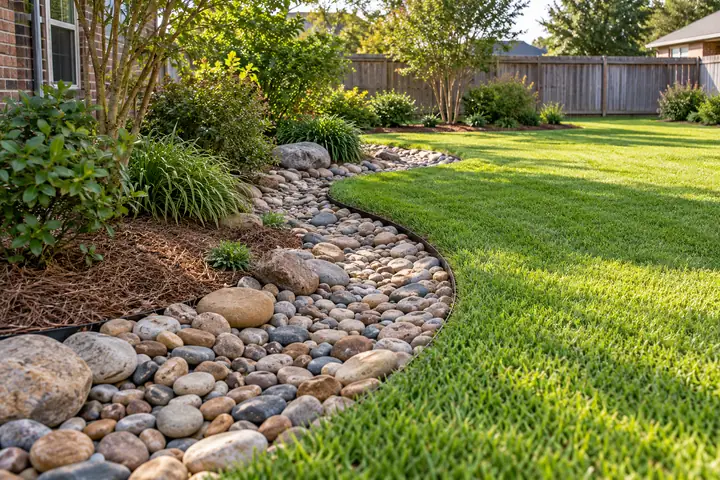
Follow the channel from beginning to end
Dry creek beds may carry runoff during storms or serve mainly as a landscape accent. Walk the full curve and identify where water could enter, where it exits and where lawn equipment is expected to cross. Do not assume the largest stones mark every boundary; small river rock can migrate into grass. Happy needs the visible route, while drainage purpose, excavation and stone placement remain with the owner or landscape professional.
Loose rock is the first service concern
A single pebble hidden in turf can become a projectile. Before mowing, return loose rock to the bed by hand only when it is clearly safe and belongs there. Do not use a trimmer or blower to launch stones across the channel. If many rocks have moved, mark the area and have the bed reset. The lawn edge should be inspected from both sides, especially after heavy rain, pets or children have crossed it.
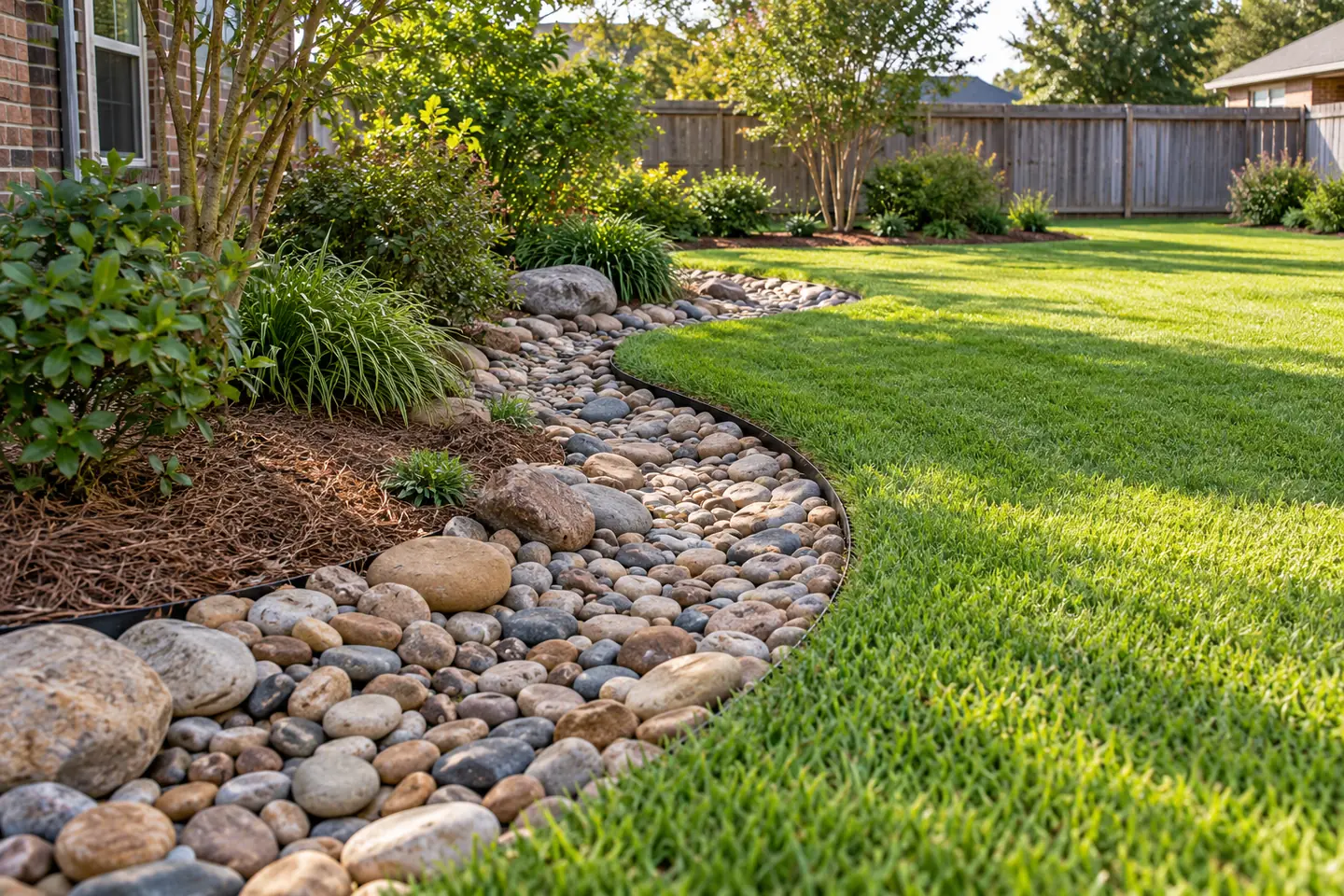
Keep edging material readable
Metal, plastic or stone edging may separate turf from river rock. Grass can hide a raised strip, and settling can expose sharp anchors. Point out the material and stop equipment before contact. Happy can trim to a stable visible edge, but does not reset edging, drive pins or replace landscape fabric. A hidden boundary is more dangerous than a slightly imperfect one, so visibility comes before an artificially seamless look.
Cross only at an intended stable point
Some beds include a flat bridge, stepping stones or a compacted crossing. Verify the crossing is wide, level and rated by the owner for the equipment involved. Decorative stones are not automatically a mower lane. When no safe crossing exists, use another gate or treat each side as a separate route. Driving through loose stone can damage the bed, shift grade and pull rock into the lawn.
Mow parallel where the bank is soft
The grass beside a channel can slope inward or remain wet after runoff. A parallel pass on firm turf reduces the need to pivot at the edge. Do not let a wheel hang over the bank or press stone deeper into soil. If the outer strip is too narrow, careful trimming may be the appropriate finish. A small uncut margin is preferable to a collapsed edge that changes both lawn and drainage.
Keep leaves and clippings out of the low path
Organic debris can collect between stones and obscure the channel. Direct mower discharge away from the bed and use blowing conservatively so rock stays put. Bed cleanup, stone washing and sediment removal are separate tasks. LSU AgCenter advises keeping yard waste out of drains and waterways; the same practical care helps a dry creek remain visible and reduces debris moving downstream during rain.
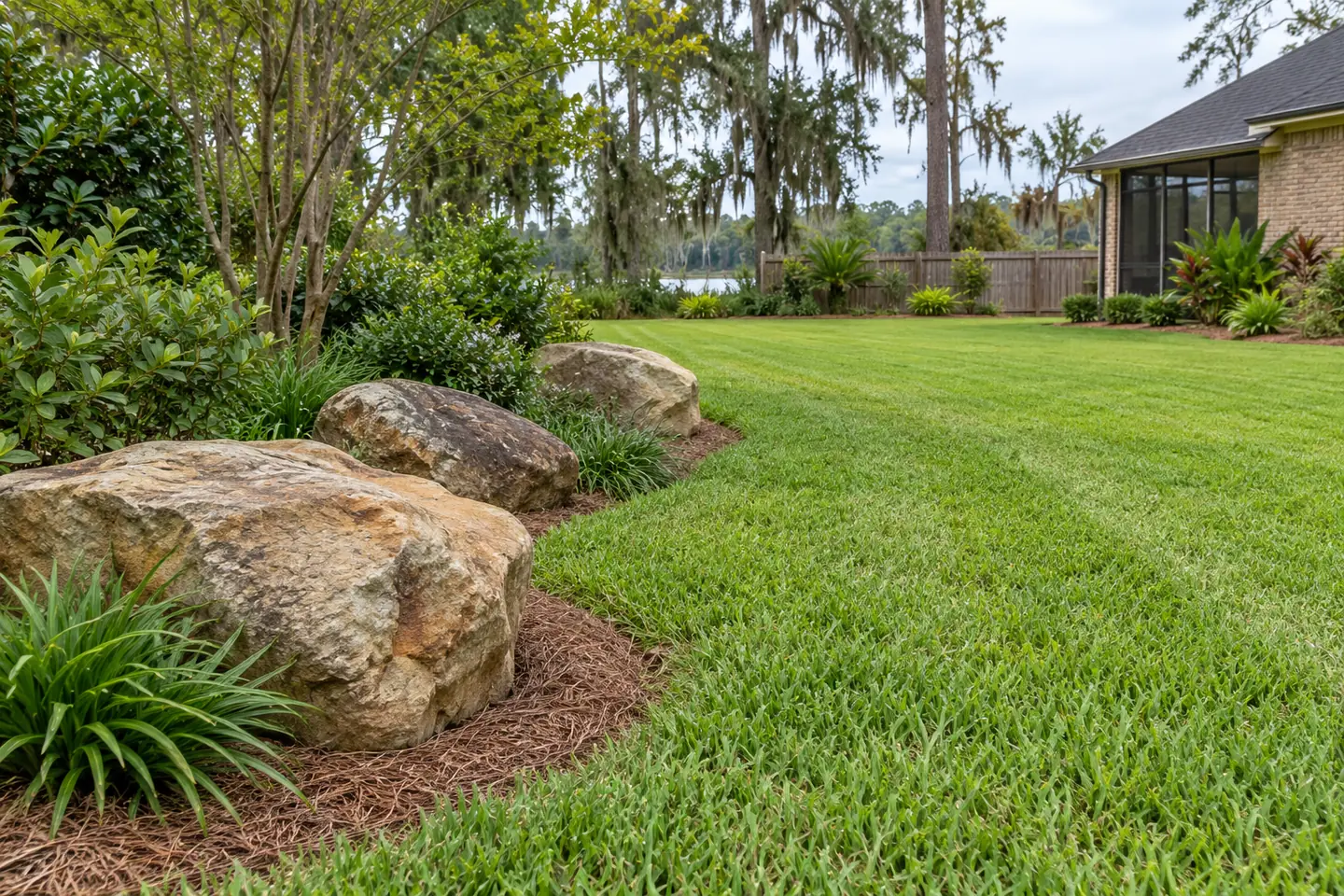
Plants can blur the border
Groundcovers, ornamental grasses and volunteer weeds may grow between stones or lean into turf. Confirm which plants belong before trimming. Happy can maintain the agreed lawn edge but should not guess at landscape-bed pruning. Mark valuable small plants when they are dormant or newly installed. An owner-chosen clean line lets the lawn look intentional without turning every creek-bank plant into a mowing decision.
Rain can rearrange the feature overnight
After a strong storm, look for displaced stone, a cut bank, exposed fabric or sediment on the lawn. Do not push everything back with a mower wheel or blow sediment into the channel. Photograph the change and keep the route wider until the owner restores it. A bed that was stable last week may not be ready for the same equipment path today.
Dry-creek service checklist
- Walk both edges and remove visible loose stones from turf.
- Identify any approved crossing instead of choosing one during service.
- Mark raised edging, anchors, exposed fabric and soft banks.
- Keep mower discharge and concentrated blowing away from the channel.
- Confirm which border plants stay untouched.
- Report storm movement before the next close pass.
Distinguish a creek bed from a French drain
A surface stone channel may or may not contain perforated pipe below it. Happy should not infer buried construction from the visible rock. Do not dig, probe or open inspection points. The lawn plan is the same: protect the surface, avoid loose aggregate and keep known access clear. Questions about capacity, pipe condition or water destination belong with the installer.
Pets and play can move the border
Dogs often run the easiest line along a stone edge, and children may collect or rearrange smooth rock. Check the bed before every visit instead of relying only on an old photo. Move toys and secure pets during service. If the channel doubles as a play feature, the owner should restore a safe edge before equipment arrives. Happy does not judge how the family uses the yard; it needs a debris-free route.
A crisp edge can remain natural
The finished lawn should frame the curve without covering it. Appropriate mowing height, controlled trimming and a few inches of clearly defined boundary usually look better than a scalped trench around the stones. Happy can make the surrounding grass neat while the owner retains responsibility for the rockwork and drainage. One wide photo along the channel and one close view of any crossing provide the best estimate context.
What a storm can change between visits
Dry creek beds are built to look stable, yet a hard rain can move the smallest pieces first. Pea gravel may spill into turf, a larger stone can settle, and mulch from an upstream bed can collect at a crossing. The next mowing visit should begin with a new scan rather than assuming last week's route still applies. A single loose stone in grass is an ejection hazard; a settled border can also expose fabric or create a wheel-catching lip.
Photograph the channel from upstream and downstream after an unusual storm. Those views reveal changes in curve, overflow direction and approach clearance better than one close shot. If the bed has washed out, carries unexpected water or exposes a pipe, pause work nearby and contact the responsible installer or drainage professional. Happy can maintain the agreed turf edge once the route is safe, but does not rebuild the feature or certify its drainage performance.
Keeping a natural edge readable
A natural-looking curve does not require a fuzzy boundary. Use a deliberate grass line that follows the stone without hiding it. Where turf runners creep into the bed, schedule bed weeding or edging separately before the line disappears. Avoid piling fresh stone against grass immediately before service; loose pieces are hardest to see when they sit at blade height under leaf litter.
At a pedestrian crossing, preserve enough flat space to turn without dropping a wheel into rock. Where that is impossible, the safer plan may be two separate mowing zones joined by a walking route with the machine off. The goal is not speed. It is a repeatable pattern that protects the drainage feature, the turf and anyone nearby.
Seasonal growth beside the stone
Warm-season turf can send runners between stones during peak growth, while winter leaves hide the same edge after the grass slows. Adjust the inspection to the season rather than relying on one fixed routine. In summer, look for runners that have crossed the intended line and for fine gravel buried under dense blades. In cooler months, remove enough leaf litter to see the first stone course before equipment approaches.
Avoid treating the channel edge with products as part of a mowing visit. Vegetation control, herbicide decisions and planted-bed maintenance require their own scope and suitability review. Happy's route is to preserve a visible turf boundary, not to change the living or drainage components inside the creek bed.
Compare the installed border with the material now visible
Keep an owner reference for the intended dry-creek border, then show the current grass-side condition separately. If stones or other material appear outside that reference, describe where they are without asking the lawn crew to decide how the feature should be reconstructed. The original arrangement and the present condition answer different questions.
For the mowing request, name the accessible grass and any strip that still needs owner preparation or review. Do not move uncertain material solely to make a quote photograph look clearer. After the responsible person has addressed the border, take a new wide view and retire the temporary exclusion only when it matches the actual arrangement. This gives the next visit a recognizable lawn limit while keeping drainage design and landscape restoration outside the ordinary finishing task.