
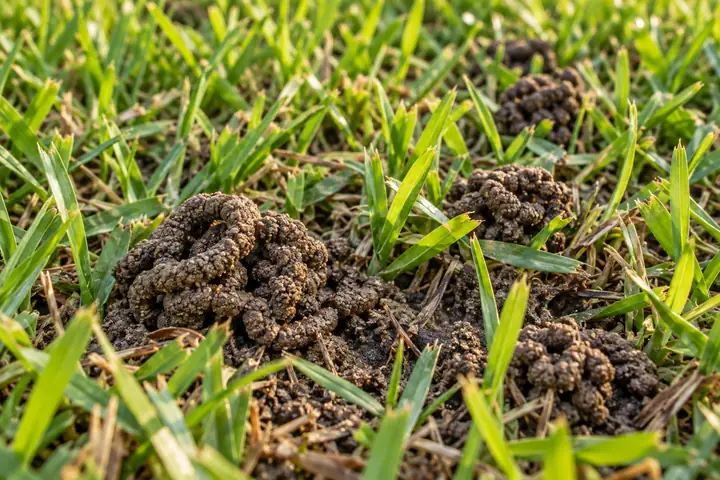
Notice the size and shape first
A few small coils or crumbly piles of soil between grass blades are different from a large mound beside an open burrow. Earthworms can leave castings on the lawn surface as they process soil and organic material. University of California guidance describes their role in turf as primarily beneficial. That background helps put small castings in perspective, but it should not become a diagnosis of every pile of dirt in a Westbank yard.
Start with what you can see from an accessible edge: several tiny granular piles, a broad raised area, or a hole with loose soil around it. If there are obvious insects, an open cavity or a moving surface, leave the location undisturbed for appropriate identification. The mowing question changes when the surface is unstable or its cause is unknown. Happy needs to know whether the lawn has occasional small bumps or an entire section that feels rough underfoot. Those are different conditions even if both are described as a bumpy yard.
Distinguish loose casts from lasting contours
Loose castings sit above the surrounding surface. A settled depression, old wheel rut or buried object changes the ground profile itself. From a standing position, look across the area in side light to see whether the unevenness is made of many small piles or one continuous ridge. Do not dig into the lawn to prove the difference. A photograph with the surrounding turf in frame often communicates the pattern well enough to begin a service discussion.
Think about when you noticed the bumps. Did they become visible after rain, after the grass was cut, or after a contractor crossed the lawn? A recently shortened canopy can reveal soil that was already there. That timing does not establish that mowing created it. Keep the sequence factual: the lawn was photographed on one date, cut on another, and the casts were noticed afterward. If an earlier photo shows the same patch, include it. A reliable timeline is more useful than assigning blame from the latest view.
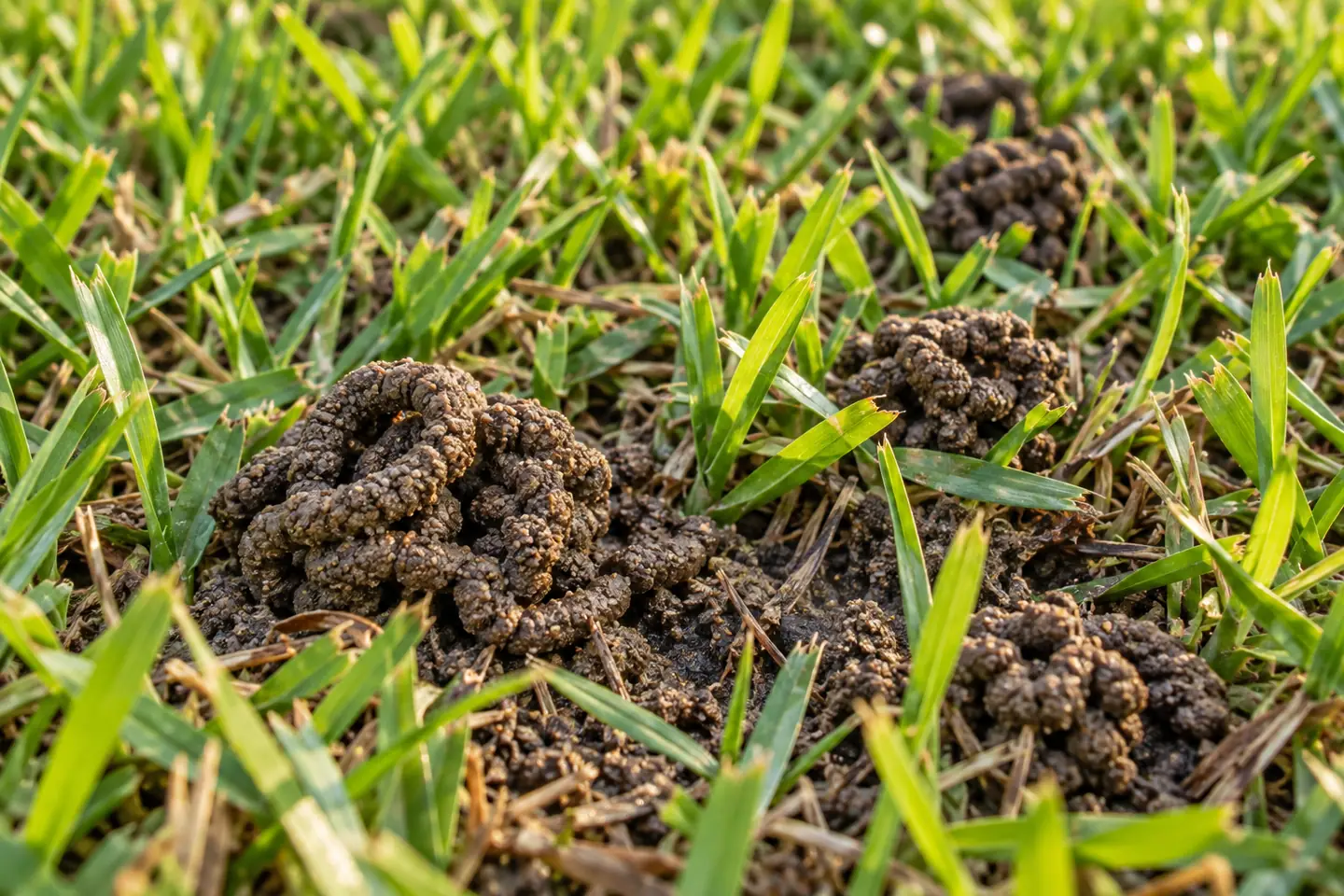
Let surface condition guide the route
Fresh, damp castings can smear when traffic crushes them. USGA guidance discusses that problem in managed turf; a residential yard does not need golf-course methods to recognize the value of avoiding unnecessary smearing. The practical choice is to review the surface before running wheels across it repeatedly. Dry, crumbly piles and sticky wet deposits will not behave the same way beneath a mower.
Describe whether the casts are concentrated near a gate, on a turning corner or across the open lawn. A small patch at the only entrance may influence the whole visit, while an isolated back corner may be left for another day. Happy can consider an adjusted route or a clearly bounded omission after seeing the property. Do not assume that adding more passes will improve the finish. Each pass is another trip over the soil, and the benefit needs to outweigh the extra disturbance. A neat result starts with a route the lawn can actually tolerate.
Keep the mowing height decision separate
Cutting low to hide bumps is unlikely to meet the real goal. A shorter canopy may expose more of the soil surface, making small piles look more obvious. Choose mowing height around the grass and its condition, then decide how the castings affect the visit. If the species or recent cutting height is uncertain, explain that uncertainty rather than requesting a particular low setting to make the yard appear smoother.
For an owner measuring the lawn, take the reading in an ordinary representative section, not from the top of a casting pile. A soil bump can make the apparent height misleading. Describe mixed conditions too: open grass, a shaded edge and a cast-heavy area may look quite different at the same setting. Happy should know which part of the yard matters most to the visit and which area needs caution. The expected result is a suitable cut of the accessible grass; it is not a guarantee that every small soil deposit will disappear beneath a uniform green surface.
Discuss any surface cleanup explicitly
Extension resources discuss raking castings, but that is not an instruction to aggressively rake an entire lawn on the morning of service. Raking, collection or another special cleanup needs an agreed scope, a suitable surface and care around the living grass. Ask what, if anything, can reasonably be addressed during the requested maintenance visit. Avoid turning an ordinary mow into an assumed leveling or renovation job.
Do not roll wet soil simply to press the piles flat. Heavy traffic on wet ground introduces a different concern from the loose material you originally noticed. Likewise, adding a thick layer of soil over the grass is a project decision, not a quick way to prepare for the mower. If the lawn has become persistently uneven, ask for the problem to be reviewed on its own merits. Happy's routine mowing, edging, weed eating and blowing can be discussed without promising earthwork, a soil amendment program or removal of the organisms that produced the casts.
Photograph the finish without changing the evidence
A useful after-visit photograph includes the same patch and the same nearby reference as the earlier picture. Look for soil smears, visible casts and the condition of the standing grass. A close view alone can exaggerate the prominence of a few small piles, while a distant view may hide them completely. Keep both perspectives so the result can be discussed fairly.
Do not brush the casts aside immediately and then describe the photograph as the untouched mowing result. If you performed any cleanup, note what you did and when. The distinction helps everyone understand which action changed the appearance. Also note whether the grass was wet when photographed; dark damp soil often stands out more than dry crumbs. A service conversation works best when it can compare like with like. You do not need measuring instruments or a perfect photograph, just a consistent view and a short honest description of what happened between pictures.
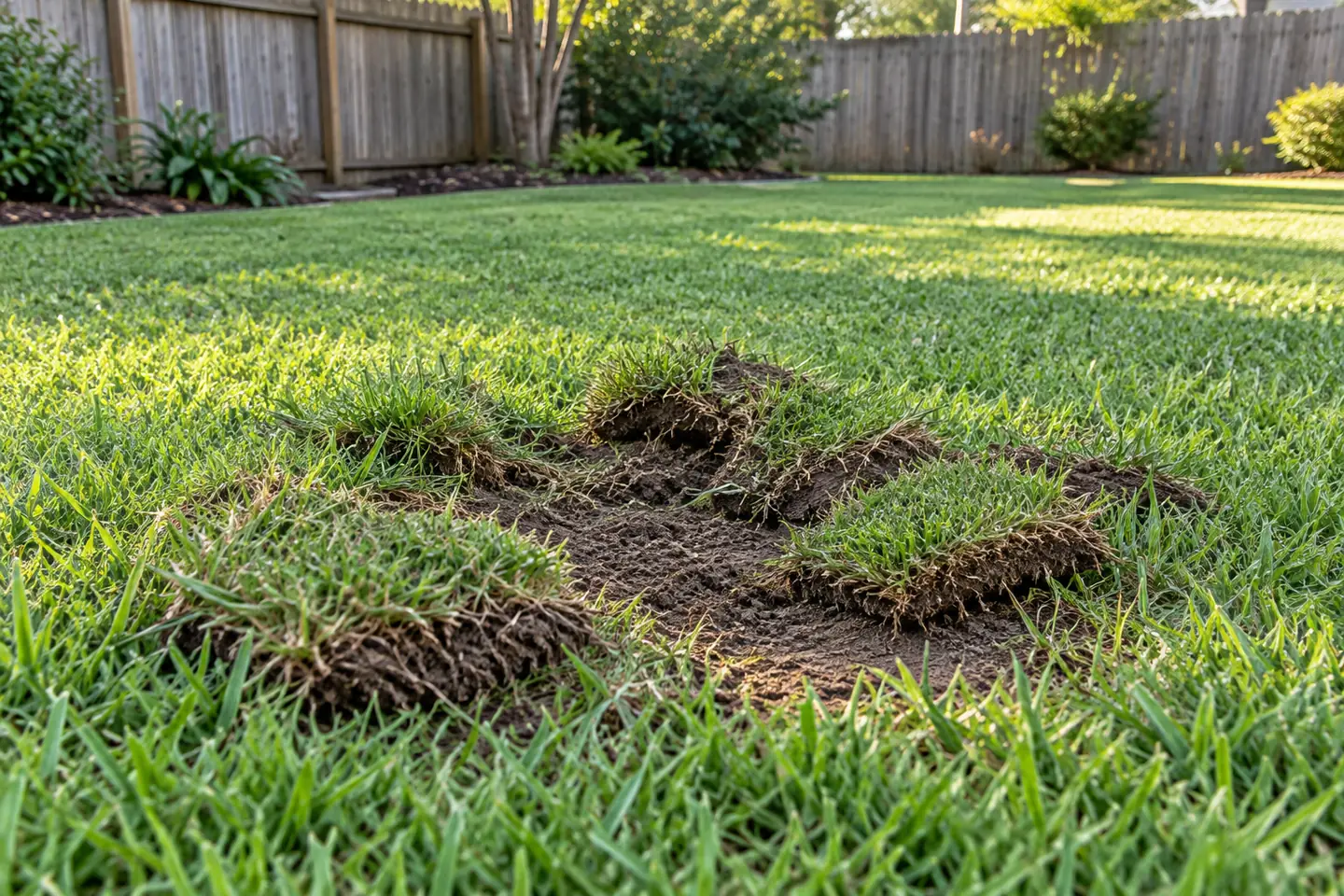
Track repeated wet-area concentration
If castings keep appearing in one place, note the location rather than assuming the whole property's soil behaves the same way. A lawn section near a regularly watered bed may differ from the strip beside a sunny drive. Record known watering changes, recent rain and whether the ground stays soft longer than neighboring grass. These are useful observations for an extension discussion even though they do not, by themselves, identify a drainage fault.
Do not alter an irrigation system solely to make the surface look better for a single visit without considering the needs of the landscape. Watering advice is specific to the property, grass and conditions. The service note can simply say that an area has stayed damp and should be checked before equipment enters. If earthworm activity has been identified, that is also worth noting. The aim is to protect a workable lawn surface while keeping the role of ordinary soil organisms in perspective. An occasional cast is not automatically a problem that requires elimination.
Describe the lawn you want maintained
When requesting a quote, give Happy a picture of the entire maintenance area and identify where castings are concentrated. Explain whether the issue is appearance, rough travel, a damp entry route or uncertainty about the source of the soil. That lets the visit be discussed around your actual concern. A request to make the grass tidy is different from a request to make the ground level, and the agreed scope should make that clear.
For example, an owner might ask for the accessible front and side lawn to be maintained while a rough damp rear strip is reviewed separately. Another may simply want advice on whether small dry casts affect the next regular cut. Both are reasonable starting points. Include any confirmed identification and any recent yard work. Call 504-339-3571 and ask for Happy when you are ready to talk through the property. Clear expectations leave room for a good mowing finish without treating every crumb of exposed soil as a defect in the visit.
Do not let one small pile describe the whole route
A small surface pile can be easy to photograph closely and difficult to locate afterward. Add a view that includes the surrounding grass and a reference point. Explain whether you saw one isolated pile or several visible patches, without extrapolating into parts of the lawn you did not inspect. The number of close-up images should not accidentally imply the number of affected areas.
Keep the ground-access question separate from the appearance of the material. A detailed image of a pile does not establish the condition of the whole route, and a broad route view may not explain the surface detail. Use each image for the question it can actually support. This gives the conversation a clearer factual basis without turning a localized observation into a diagnosis or an assumed lawn-repair request.