
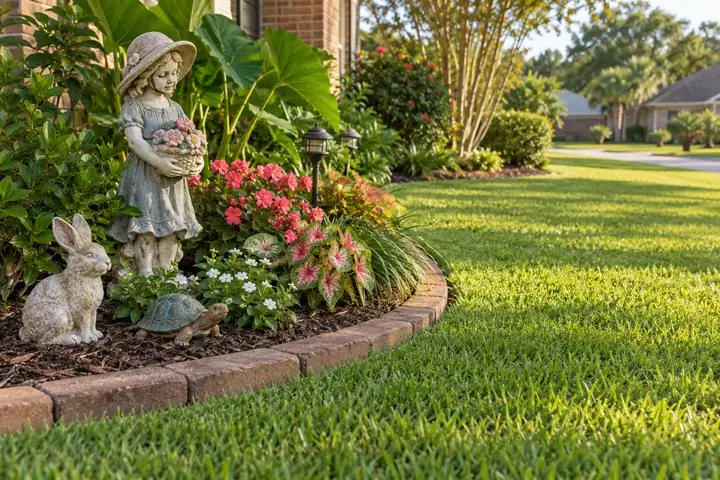
Treat every ornament as a real object
A garden statue is more than a decoration when it sits beside moving lawn equipment. Its visible top may be sturdy while a narrow foot, hidden anchor or hollow body is fragile. Smaller rabbits, turtles, memorial stones, pinwheels and solar accents can disappear into tall grass. Rather than relying on the operator to discover each item, make the arrangement obvious before the first visit. Send a broad photo of the whole bed and close views of pieces that overhang or stand directly in turf. Tell Happy which items are fixed and which ones you normally move. We will plan the ordinary mowing route around visible boundaries; we will not test whether a statue is anchored by nudging it. A few minutes of preparation lets your décor remain expressive while giving the lawn a predictable path.
Group small pieces inside a defined bed
Scattered ornaments create many tiny stopping points. Grouping them in a mulched or planted bed usually produces a clearer result than placing each figurine alone in grass. The border can be brick, metal, stone or simply a maintained soil line, provided it is stable and visible. Keep lightweight pieces far enough inside the bed that trimmer air and grass clippings will not knock them over. Do not balance decorations on loose edging. If an ornament intentionally sits in open turf, give it enough surrounding space to be seen from the approach direction. A consistent layout also makes it easier to notice when a child, pet or storm has moved something. Happy Grass performs lawn care, not display setup, so the homeowner should arrange the pieces before the visit and decide which area belongs to the bed.
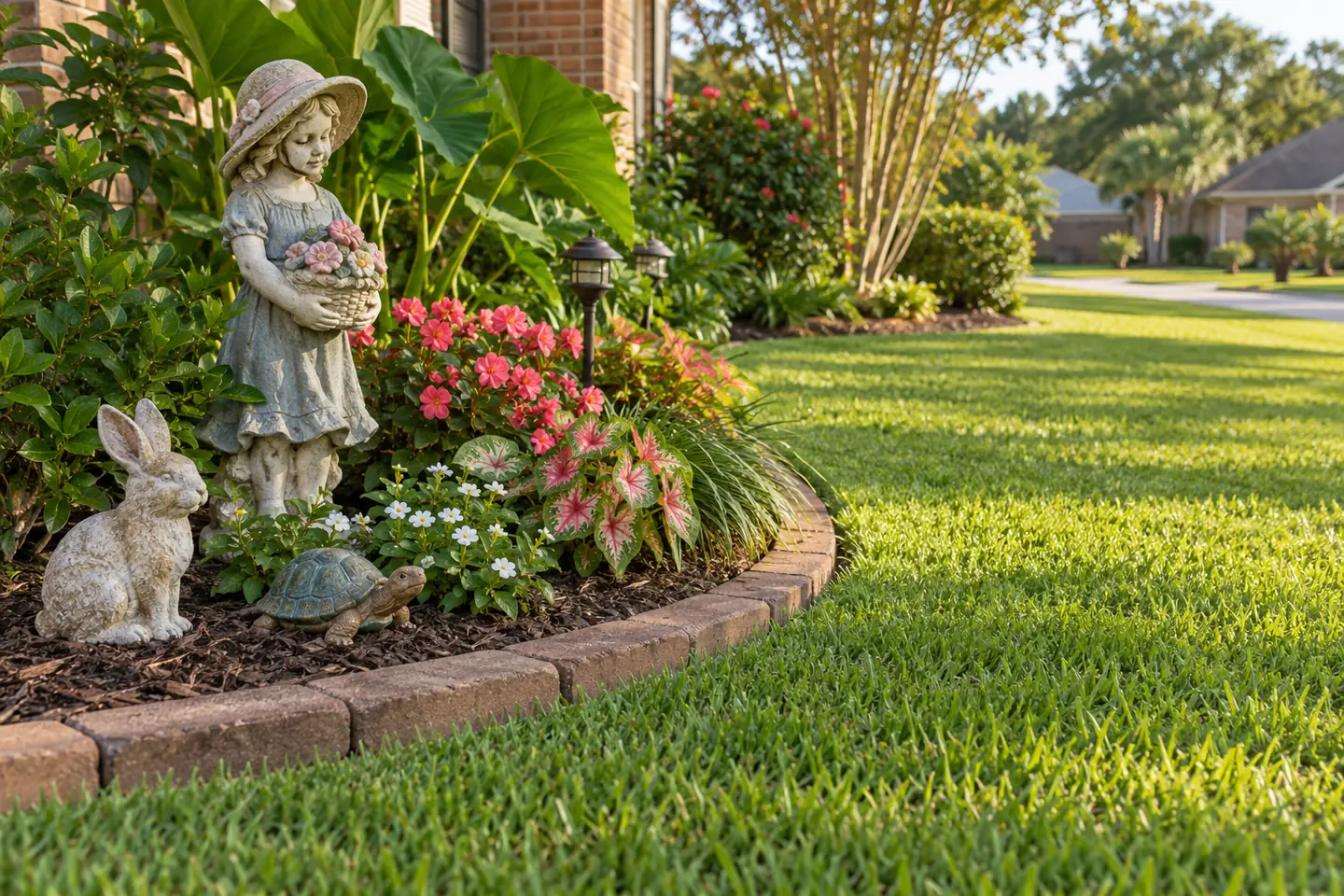
Remove the fragile and temporary items
Bring in thin ceramic pieces, glass globes, seasonal stakes, wire decorations and loose solar caps before mowing day. Even when the mower never touches them, airflow, vibration and flying debris can affect delicate objects. Temporary holiday décor deserves the same treatment. Gather extension cords, batteries, hooks and anchoring pins so nothing remains hidden at grass height. If an item is too heavy to move, make its base visible and mark any low projection. Wind spinners should be secured against unexpected movement, while hanging ornaments should not droop into the route. Happy will not inventory or relocate a collection during service. The safest routine is simple: permanent, stable pieces remain inside the established boundary; temporary or fragile pieces come out of the work area.
Look for shapes that extend beyond the base
The most important measurement is not always the footprint. A statue may have a wing, arm, basket or plaque that projects into the lawn. A shepherd's hook can lean beyond its anchor. A low bench-shaped ornament can be difficult to judge from a mower seat. Walk around the display at grass level and note anything that reaches over the border. Give those pieces more clearance instead of trimming directly beneath them. Also inspect hidden guy wires, rebar, spikes and landscape-light cables. Marking the outermost reach in your quote photos helps Happy choose a route that does not depend on squeezing under or between décor. A clean lawn line can still look intentional when it follows the full shape of the feature rather than the smallest base.
Keep names and memorial pieces readable but private
Some yards include plaques, pet memorials or personalized stones. Happy Grass does not need private wording to plan lawn service. A photo can be framed to show the base and boundary without making names or dates legible. Tell us that the piece is meaningful and should have a generous buffer. Do not rely on a flush plaque being visible through clippings or leaf litter; clear it before service or include it inside a defined bed. We will not move, clean or photograph memorial objects for promotional use. The same respectful approach applies to religious figures and family keepsakes. The lawn plan only needs the physical facts: location, stability, overhang and desired clearance.
Separate lighting and water features
Many ornament displays also include solar lights, low-voltage wires, fountain tubing or a nearby bird bath. Each system has its own service boundary. Keep wires buried or routed according to the product instructions and never stretch a temporary cord across grass for a mowing visit. Identify every small light that is easy to miss. If water overflows into the display, check whether the soil is firm before service. Happy does not troubleshoot electricity, plumbing or fountain pumps. We can work around a clearly prepared area, but a tangled mix of decorations and utilities should be simplified before the crew arrives. One wide access lane is safer and usually looks calmer than several narrow gaps between components.
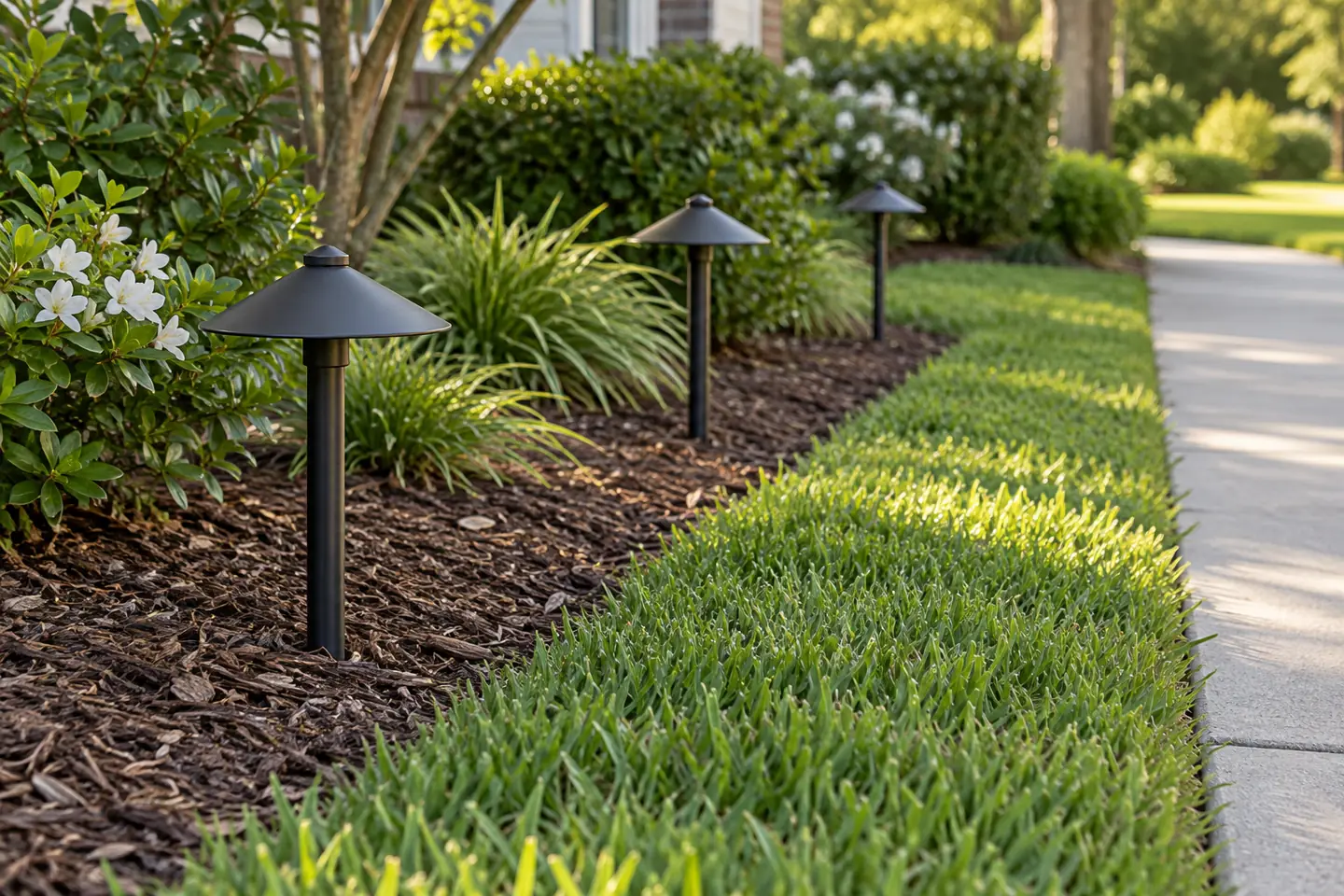
Make storm changes part of the update
West Bank weather can lean statues, scatter lightweight pieces and pull stakes from soft soil. After strong wind or heavy rain, inspect the arrangement even if nothing appears broken from the house. Return ornaments to the intended bed, pick up fragments and check for exposed anchors. A tilted heavy object is not a lawn obstacle to work around casually; secure it or keep the area closed. Send a new photo if the display has changed since the quote. Do not place a broken item behind a shrub where it can be forgotten in the grass. This is especially important when recurring service follows a regular schedule and the crew reasonably expects the route to match prior visits.
Agree on the visible finish
Tell Happy whether you want a crisp bed edge, a modest clearance around an isolated statue or simply mowing up to a stable border. The appropriate finish will depend on material and spacing. Trimmer line can mark soft resin, painted wood and some stone finishes, so “as close as possible” is not always the best request. A narrow natural buffer, mulch band or low groundcover may produce a better long-term appearance. The goal is not to erase every blade beneath a fragile overhang. It is to make the lawn look cared for while keeping the collection intact. After the first visit, share one specific photo if an edge should be adjusted.
Keep the routine easy to repeat
Before each visit, walk the display from the mower's likely approach. Remove temporary décor, return pieces to the bed, collect cords and check that nothing has fallen. Trim or tie back vegetation that hides the outer boundary if that work is part of your own garden care. Keep children and pets away from the work area. If you add a new figure or expand the bed, tell Happy rather than waiting for the crew to notice. A stable layout, visible edge and honest description let ordinary mowing and trimming proceed without turning your yard's personality into a risk. Your ornaments can keep telling their story; the lawn route just needs to be equally clear.
Use a simple inventory for larger displays
If the yard has many pieces, make a short private list by area rather than asking the crew to remember every object. “Three figures inside the front bed and one fixed stone by the side gate” is enough. Compare that list after a storm or family gathering, then restore the arrangement before service. The list does not need prices, names or photographs of personal inscriptions. Its purpose is to catch a rabbit moved into the grass, a missing solar cap or a stake that has fallen flat. For a new quote, mark the broad display zones on one yard photo. Happy can plan around stable zones more reliably than around a changing collection of individual surprises. This is especially useful when another household member rearranges decorations without knowing the mowing schedule.
Make a small display inventory useful to the lawn visit
For a grouped display, name the main installation and note the smaller pieces that extend into the grass. A wider photograph can show the perimeter while a short inventory explains which objects remain fixed and which the owner will prepare. The inventory need not include purchase details or personal history; its purpose is to make the lawn boundary recognizable.
When the display is rearranged, update the current version instead of adding an unexplained new photo to old instructions. Identify the old and new positions if either affects accessible grass. Keep repair or stabilization questions separate from the desired finish around the arrangement. That lets Happy review the presented work area with an understandable set of limits, rather than assuming every ornament in a familiar corner has remained in the same position since the last visit.