
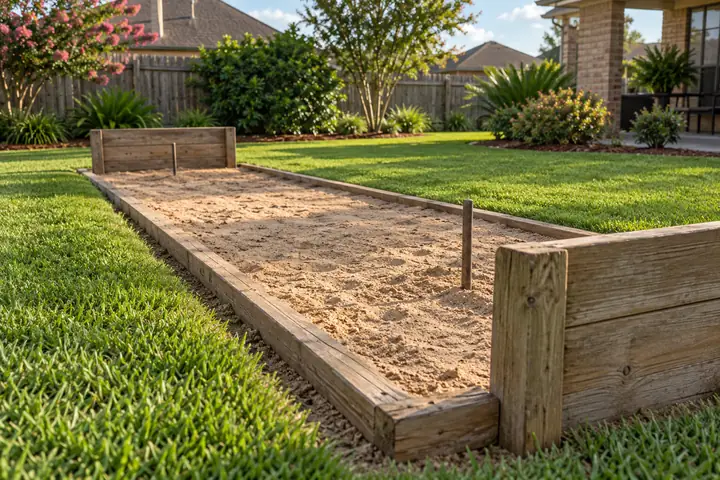
Put the game away before lawn work begins
Loose horseshoes do not belong in a mowing route. Collect every shoe, score marker, stake cap, rake and chair before Happy arrives. Check the grass beyond both ends of the pit because a missed throw may have landed outside the frame. Children can move equipment to another corner, and leaves can hide metal. A quick walk from several directions is more reliable than looking only from the patio. Store the pieces in a bin outside the service area. Happy Grass will not gather or inventory game equipment, and the mower should never be used to discover a forgotten shoe. A cleared play area lets routine lawn work proceed while keeping the set complete for the next game.
Make the pit border easy to see
Horseshoe pits may use timbers, pavers, rubber edging or a simple sand-to-grass line. Whatever the material, expose the full perimeter before mowing. Pull grass and leaves away from low corners, replace displaced sand by hand and remove broken boards or fasteners. A border that sits nearly flush can disappear under clippings, so show it in the quote photos and mark it temporarily if growth has covered it. Happy can follow a stable, visible edge; we do not repair frames, reset stakes or rebuild sand. The most useful boundary is continuous, with no loose end pieces extending into the lawn.
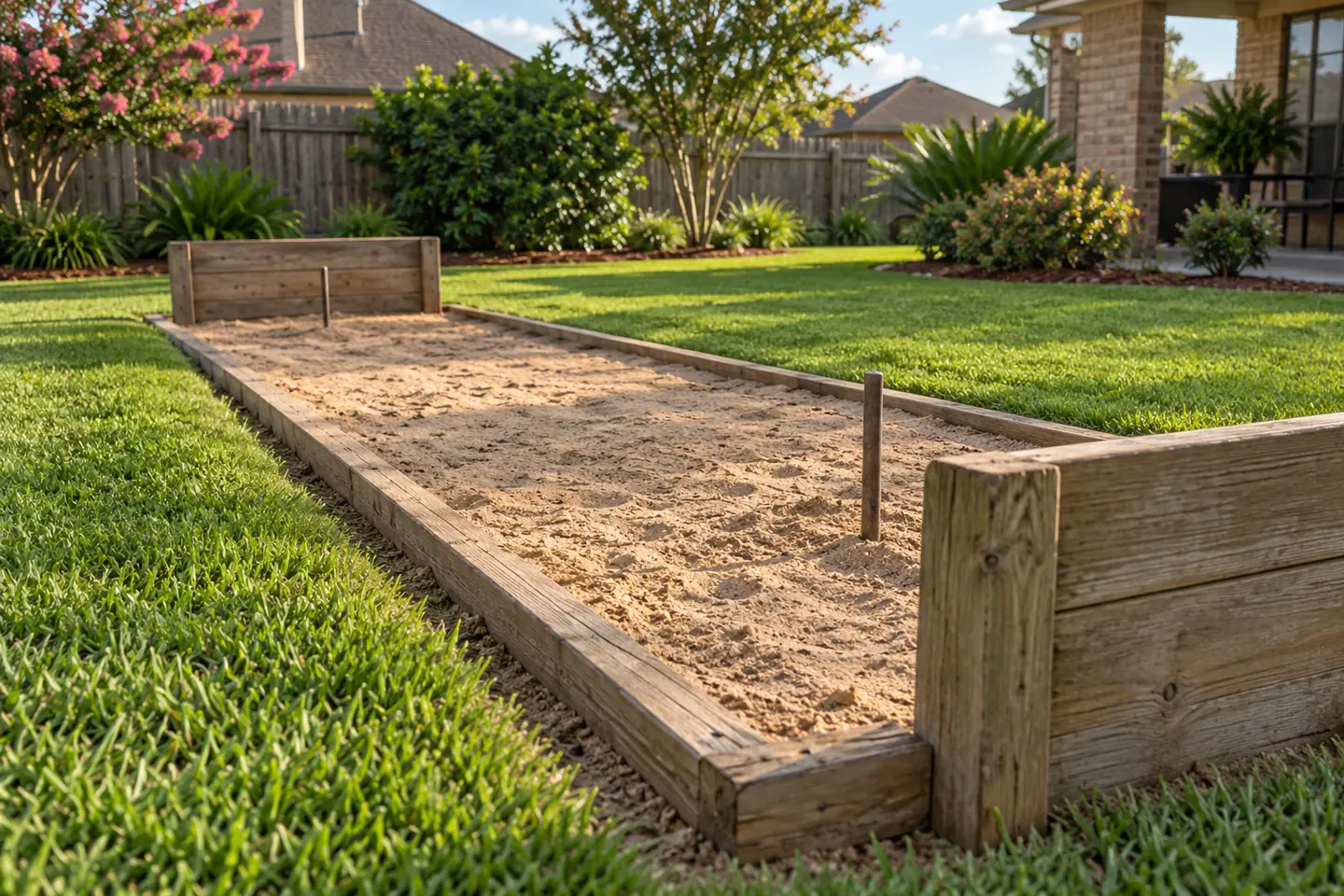
Keep stakes in the game area
The pitching stakes should stay clearly inside the contained pit, not stand alone in open turf. If the layout includes a practice stake outside the frame, remove or brightly mark it before service. Do not cover a metal stake with a bucket and assume the bucket will remain in place. Inspect for bent stakes, sharp edges and exposed mounting hardware. If anything appears unstable, close the area until it is repaired. Happy does not evaluate whether a horseshoe layout meets game rules or construction standards. Our concern is the ordinary lawn route around it, and that route must not rely on an operator spotting a thin metal projection at the last second.
Control sand and gravel migration
Sand kicked into grass can dull the lawn edge and create abrasive material under equipment. Rake the play surface back inside its frame and sweep nearby hard surfaces. If the pit uses gravel drainage or crushed stone, return loose pieces to the intended area. Do not blow sand across the yard immediately before mowing. After a heavy rain, check for washouts at the downhill corner. Happy's routine blowing can remove ordinary clippings from adjacent hard edges, but it is not a substitute for rebuilding the pit or screening contaminated sand. A contained surface protects both the game and the lawn finish.
Plan turns around the ends
The backboards and end frames often create tighter mowing turns than the long sides. Show the space behind each board and note fences, shrubs or stored chairs that limit maneuvering. If the equipment cannot turn without entering sand or rubbing the structure, the area may need a wider no-mow band or a different border. Avoid tiny grass pockets between the backboard and fence. Decide whether those pockets are part of the lawn or an excluded bed. A clear end route reduces repeated turning on one patch of turf and helps prevent ruts after damp weather.
Check the footing after rain
Sand may drain differently from the surrounding soil. One side can be firm while the grass immediately beside the frame stays soft. Walk the perimeter with ordinary shoes. If you leave a deep print or the border shifts, keep the area out of the route and send Happy a current photo. Do not ask the crew to drive onto the pit surface as a shortcut. Drainage design, timber stabilization and soil repair are separate property projects. A delayed edge is better than damaging a wet threshold around a recreational feature.
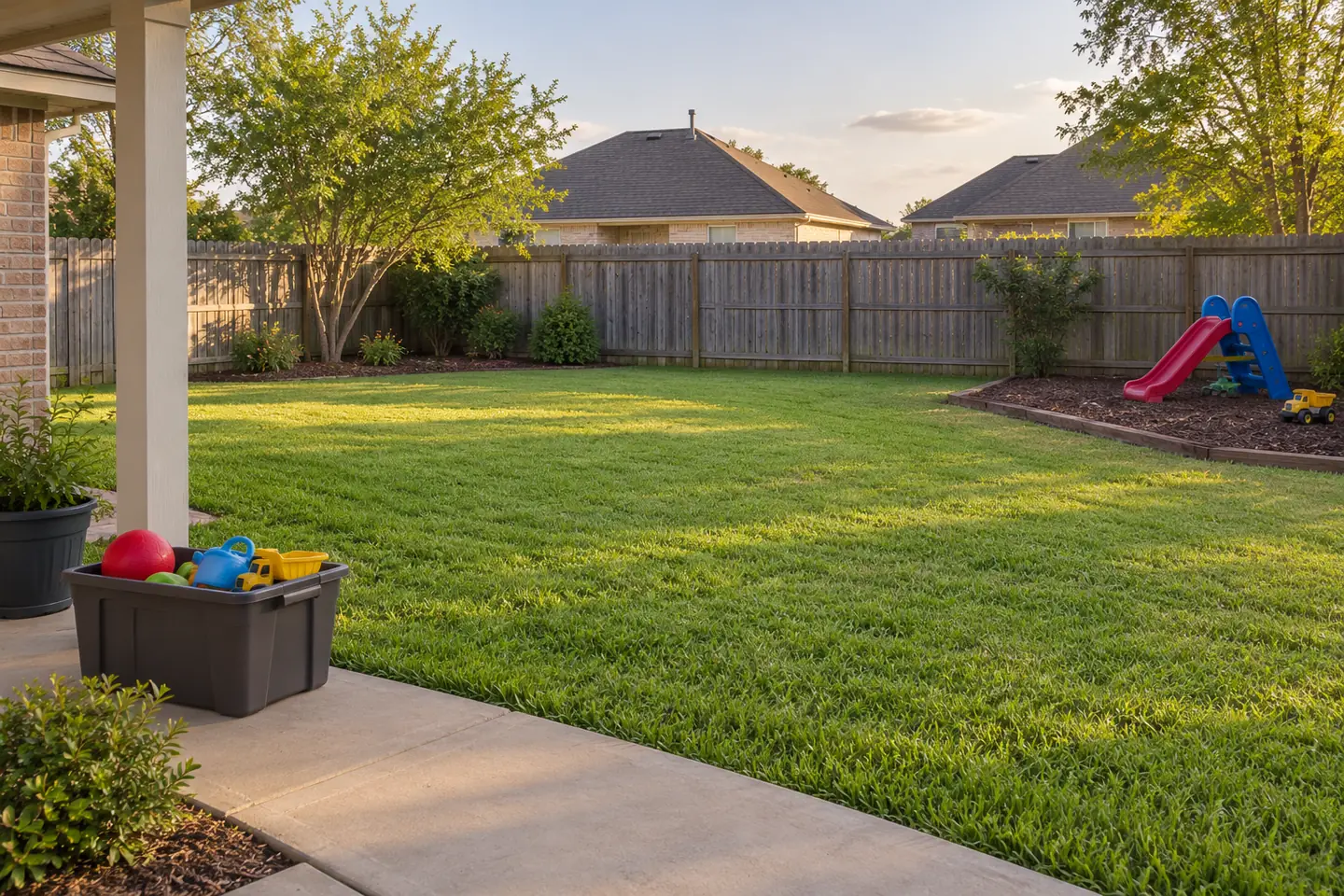
Protect spectators and pets
No one should be using the pit while lawn equipment operates nearby. Bring children and pets indoors or to a secure area, and remove benches, coolers and toys from the grass. If a dog run or play area shares the same corner, identify both boundaries. Check for waste and dispose of it before service. Happy can work around a prepared recreation zone; we do not supervise games, move personal seating or manage animals. A quiet, empty area gives the operator a clear view of the stakes, frame and grass line.
Choose a realistic finish
The lawn beside a horseshoe pit does not have to be shaved tight to look neat. A conservative trimmed margin can protect wood, keep sand in place and avoid scalping an uneven edge. Tell Happy whether the long sides should receive a crisp line and whether the ends need wider clearance. The result depends on border height, material, grade and available turning space. If you want to change the frame or add pavers, complete that work before a recurring mowing pattern is established. After the first visit, use one close photo to explain any boundary adjustment.
Use a repeatable pre-visit checklist
Walk the throw line, both pits and the grass beyond them. Count and store the horseshoes. Remove scoreboards, chairs and rakes. Rake sand inward, pick up loose stone and reveal the border. Check the stakes, fasteners and footing without trying to make repairs during the service window. Unlock the access gate and tell Happy if the layout changed. This routine preserves the game setup while making the lawn route obvious. The pit remains a place for fun, and mowing day remains a time for lawn work rather than an obstacle search.
Mark underground additions before they become invisible
Some game areas include drainage pipe, lighting cable or buried sleeves for removable stakes. Keep plans and installer information with the property records, and contact Louisiana 811 before any new digging as required. Happy does not locate buried features or remove utility flags. During an active project, keep the marked area outside routine service and do not cover paint or flags with sand. Once construction is complete, show the final border and access route in fresh photographs. A clear history helps prevent a future owner or lawn operator from assuming the pit is only a shallow box of sand.
Handle worn grass at the throw lines honestly
Repeated foot traffic often thins grass where players stand and walk between ends. A lower mowing height will not repair that wear. Decide whether the worn area remains part of the ordinary lawn, becomes a firm path or stays as a clearly marked recreation surface. Happy can mow accessible living grass at the agreed height, but we do not install turf, seed, aerate or redesign the game lane. If the ground becomes rutted, keep it out of tight turns. A realistic boundary looks better than forcing equipment over a compacted strip.
Coordinate the pit with nearby irrigation
Sprinkler heads, hose-fed sprinklers and drip lines can hide beside timber frames. Mark every fixture and remove portable hoses before service. Do not place a removable sprinkler over a stake or inside tall grass. If irrigation leaves one end saturated, adjust the schedule through the appropriate system controls and tell Happy about the soft route. We do not repair irrigation or decide its watering program. The lawn and the sand pit may dry at different rates, so check both instead of assuming one surface represents the other.
The final walk should also confirm that the route is quiet, visible and ready before equipment enters the yard.
Account for the playing pieces as well as the pit
Before the lawn visit, the owner should check the area where the last game ended, not only the storage container. Identify the location of portable playing pieces and any other equipment associated with the setup. In the service note, distinguish those owner-prepared items from the fixed pit, border and other installed components.
Describe the grass margin you want reviewed without implying work inside the play surface. If the boundary is difficult to see, include a wider view with a fixed reference and label the uncertain section. After a household change to the setup, replace the old location note rather than assuming the game area still has the same footprint. This gives Happy an understandable lawn edge to consider and prevents a familiar recreation corner from being treated as an empty stretch of turf.