
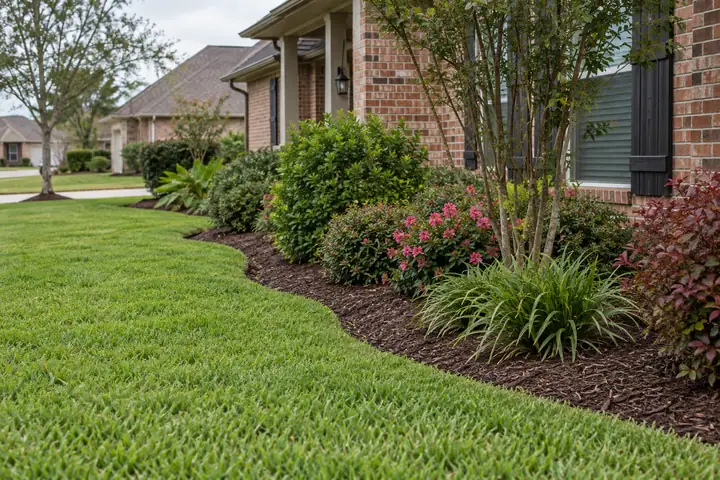
A clean boundary starts with a shared picture
When somebody asks for edging, they may mean the grass beside a concrete sidewalk. They may also mean a curved line around a planting bed or a strip beside loose bricks. Those are different locations with different materials. The best starting point is to show the exact boundary instead of expecting one word to explain every edge in the yard.
Take a wide photo of the lawn and bed together. Point out the section that looks untidy and explain the finish you want. A simple “keep the grass from looking shaggy beside these shrubs” is useful. It gives Happy a practical goal while leaving room to review the appropriate method and what the existing border can support.
Distinguish maintenance from creating a new bed
Keeping an established grass boundary neat is different from cutting a new landscape shape. New bed layout, excavation, edging installation and planting should not be assumed to come with ordinary mowing. If you want a redesign, say so clearly and arrange a separate suitable service rather than hiding that request inside “tidy the edge.”
Show what already exists. A defined concrete curb, installed metal border and unmarked soil line need different consideration. Explain whether the current shape should remain unchanged. A reference photograph of the same property can help preserve the intended curve. Do not use an unrelated landscape image as if it proves your yard has the same materials or conditions.
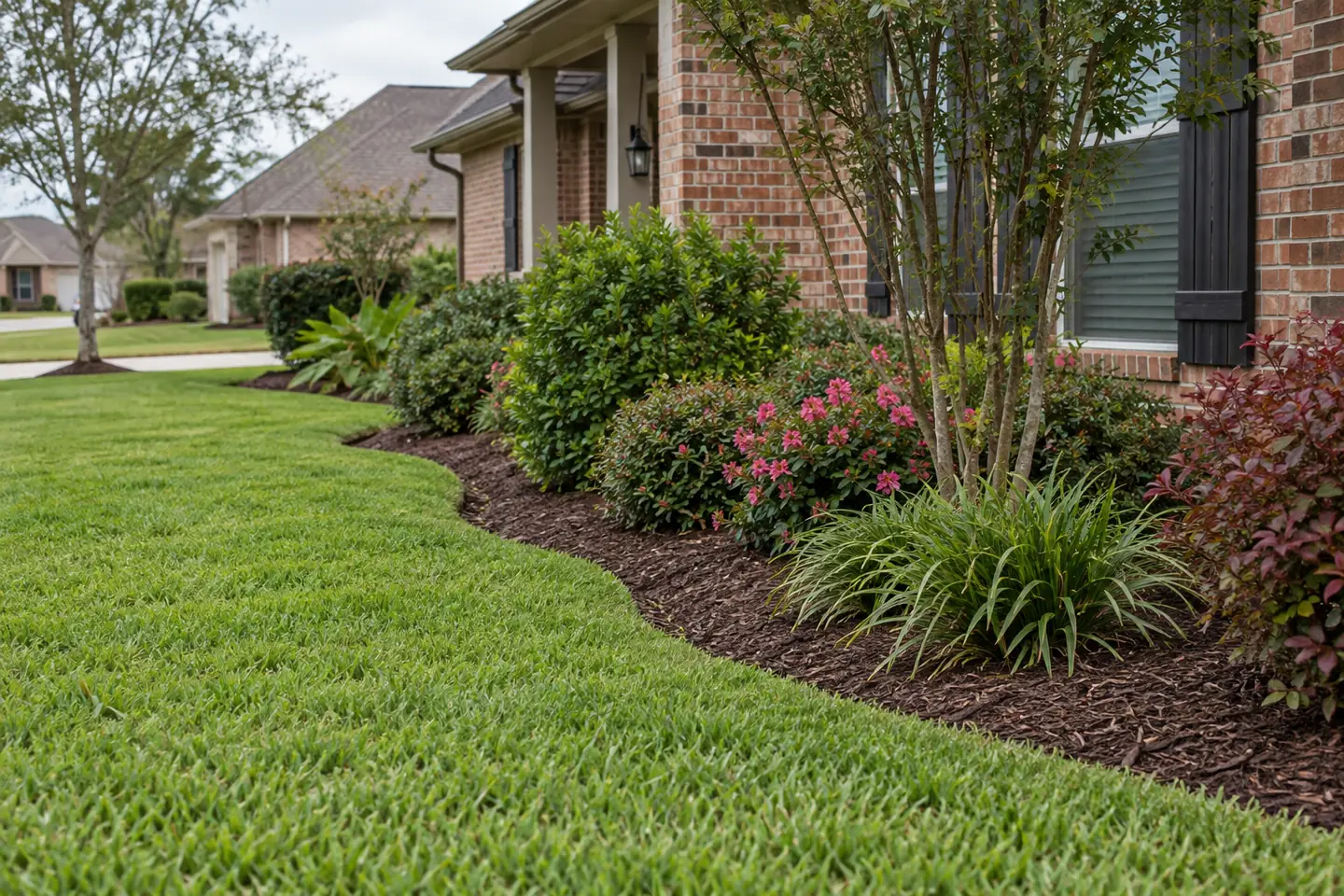
Identify plants close to the lawn
Small flowers, bulbs and newly planted shrubs can blend into surrounding growth. Mark the plants you want preserved through an agreed photo or clear location reference. Do not assume every green stem outside the obvious bed is unwanted. The maintenance discussion should distinguish lawn grass from planting you intend to keep.
If you do not know a plant’s name, describe it rather than guessing. “The little flowering clump beside the gate” can be enough with a wide picture. Removal and treatment decisions need particular care when the growth is uncertain. A routine trim should not become a botanical guessing game or an implied authorization to clear everything along the line.
Show the border material and its condition
Landscape borders can be rigid, flexible, buried, loose or damaged. Some protrude above the grass while others disappear into it. Explain known problems and show them in current photos. Loose bricks, sharp ends and lifted edging can change the work area even if the main lawn remains straightforward.
- Identify the start and end of the requested section.
- Show damaged or loose border pieces.
- Mention irrigation parts and lights beside the edge.
- Point out fragile plants close to the grass.
- Explain which bed areas must remain untouched.
These details help define a realistic finish and any section needing repair before maintenance can proceed near it.
Grass trimming is not hand-weeding a bed
Tall grass at the border differs from weeds growing among flowers or shrubs. Hand-weeding, removing rooted plants and applying weed-control products are separate requests that need a defined scope. Do not assume an ordinary mowing and edging quote includes clearing every bed throughout the property.
If weed control is what you want to discuss, identify the location and the plants nearby. Happy Grass lists weed-control work for discussion, but the actual treatment, suitability and scope need review. This guide does not prescribe products or application rates. Fertilization, aeration, overseeding and pest control are not offered Happy Grass services and should not be bundled into an edge-maintenance expectation.
Keep mulch and loose material out of assumptions
A freshly delivered pile, scattered stone or loose mulch beside the grass can affect maintenance access and material handling. Tell Happy if the bed has recently changed. Cutting the adjacent lawn does not automatically include spreading mulch, resetting stone or repairing a washed-out border. Those are different tasks.
Ask what reasonable cleanup around the agreed grass edge includes. Blowing does not mean every loose landscape material can be moved freely. In some locations, a more limited approach may be appropriate. A tidy outcome should preserve the intended bed, rather than exchange a shaggy grass line for mulch scattered across the patio or plants disturbed by an unexpected cleanup method.
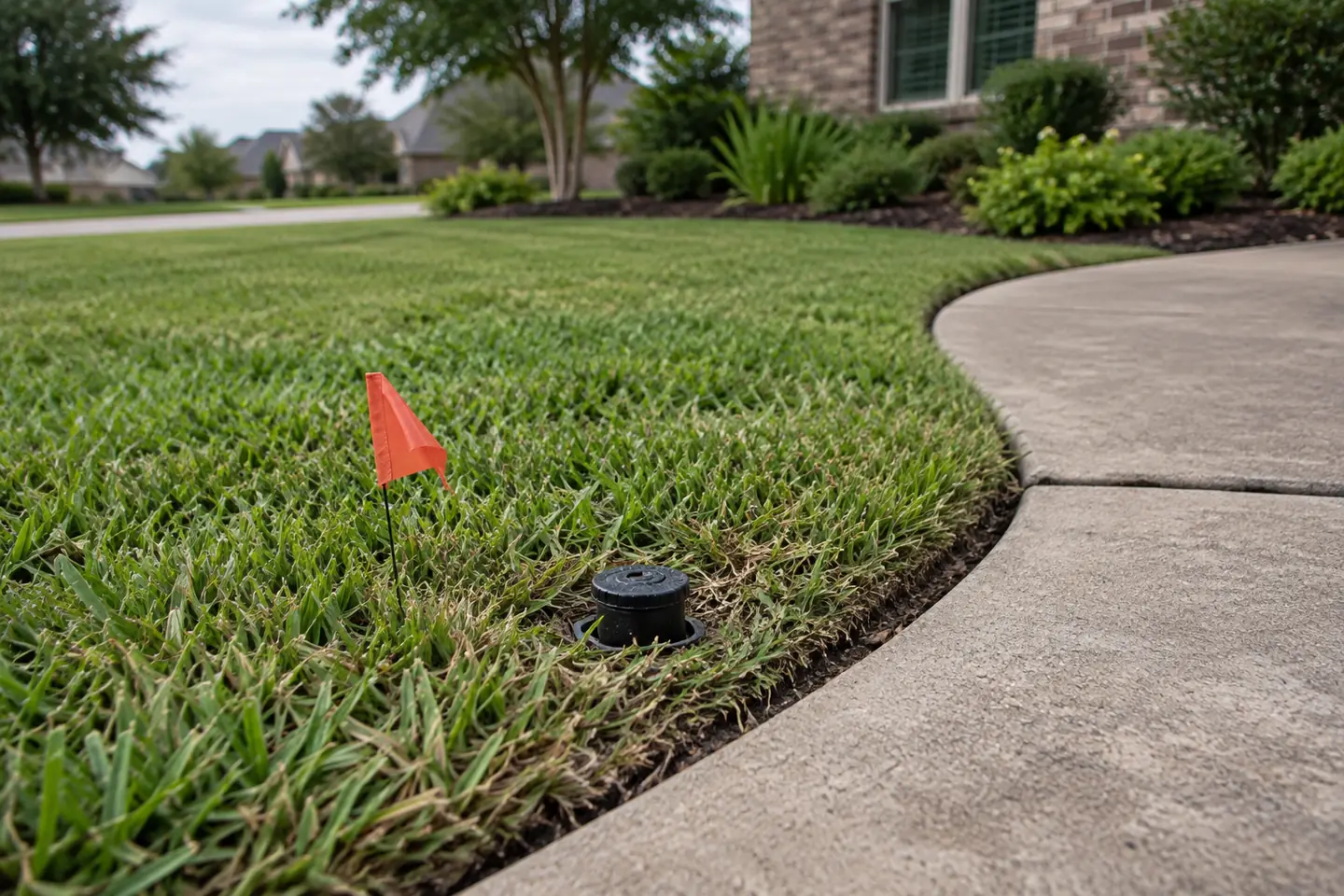
Plan around irrigation and lighting
Low sprinkler heads, drip tubing and landscape lights often sit where the lawn meets a bed. Show their location before the visit, especially if grass or foliage hides them. A close photo plus a wider reference makes the information usable. There is no need to open controls, dig around lines or disturb a fixture for a quote.
Mention known damage, recent repairs and temporary hoses. The maintenance scope should account for these features while irrigation or electrical work remains separate. If a contractor moves a fixture later, update Happy. A small change at the boundary can alter the clearance available for trimming even when the surrounding lawn looks the same.
Wet edges can need a different decision
A bed may hold moisture beside otherwise dry grass. Irrigation, shade and runoff can leave a narrow soft strip that is easy to overlook. Describe visible dampness or standing water from a safe position. Do not assume that the whole boundary can be treated normally just because the center of the lawn is firm.
A limited visit, defined margin or delay may need to be discussed for the affected section. Confirm any change in scope and timing. Maintenance should work with the actual conditions. Cutting closer to the bed does not solve drainage, restore missing soil or explain why water remains there; those concerns can require separate attention.
Use a reference for the finish you want
A picture of the maintained edge on your own property can be helpful. Label when it was taken and explain which part you want to match. The useful comparison is the shape and agreed grass boundary, not an unrealistic promise of identical growth or color throughout the year.
If this is a first visit, describe the outcome in ordinary language. “Keep the established curve and avoid the new plants” gives a good direction. Let the method be reviewed for the actual materials and space. Where a border is damaged or ambiguous, clarify it before asking for a sharp, close finish along the whole line.
Decide what happens to the cut material
Clippings near a bed can affect appearance, and the practical cleanup depends on the amount of growth and the surrounding plants. Ask what is included instead of assuming every clipping will be collected and hauled away. The first visit after a long gap may involve different handling from a routine maintained edge.
Also identify drains, walkways and other places where material should not be deliberately accumulated. A clear request connects the cutting and cleanup work. It helps avoid a situation where the grass edge looks better but another part of the property holds a pile that nobody discussed. Bagging and hauling need their own agreement if requested.
Update the notes after planting changes
A new bed, replaced border or seasonal planting can change a familiar route. Send a current view before the next visit and explain what is new. A temporary plant stake or watering hose is easy to miss if the property is being approached with older information.
After service, report a specific concern with a location and photo. Ask how the section fits the agreed scope. There may be a practical reason for a margin or exclusion, or the instruction may need to be clearer next time. Keeping that conversation focused on the actual edge makes it easier to improve the result without rewriting the entire lawn plan.
Bring the lawn and garden together
The grass does not need to compete with the garden to make the yard feel cared for. A defined boundary, clear plant references and sensible cleanup expectations help the two spaces fit together. Start with what exists and the finish you want, then discuss whether ordinary maintenance is suitable or another project needs to happen first.
Call Happy at 504-339-3571 or use the quote form with the address, city and useful bed-edge photos. Happy Grass serves Harvey and the Westbank, including Marrero, Gretna, Algiers, Belle Chasse and Westwego. A little attention to the line between lawn and planting can make the whole place look happier.
Show the plant you intend to keep beyond the border
A plant can lean over a garden border without changing the boundary you want maintained. In a photograph, identify the intended plant separately from grass crossing the line. Otherwise, a request to “clean up everything hanging over” can describe a much broader result than you mean. A reference image of the preferred border helps only if it also makes those keep decisions clear.
Consider an established plant arching across a narrow turf strip. Explain whether the grass beneath remains part of the requested lawn work and whether the plant should be left entirely alone. Do not assume the same action is suitable on both sides of the border. A useful scope can preserve a recognizable garden shape while being explicit about any grass that is currently difficult to reach.