
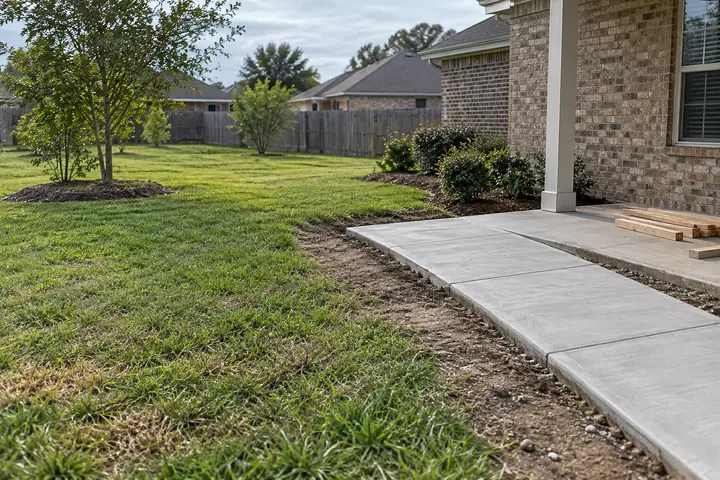
Finished construction and ready grass are different things
The new path may look great while the adjacent lawn still holds loose material, disturbed soil or temporary equipment. A contractor finishing a project does not automatically mean ordinary mowing can resume across the whole area. Start with a current look at the ground and the route equipment would use.
Tell Happy what kind of project occurred and which part of the yard changed. Keep the description factual: a replaced fence, repaired irrigation line or added concrete walk. You do not need to provide a technical construction report. The useful information is the affected area, its current condition and any instructions that still limit access.
Show the actual post-project condition
Take wide photos from safe, accessible ground after the work area has been handed back. Include the boundary between disturbed ground and established grass. Add the access route and any remaining materials. An older pre-project image can explain the previous layout, but it should be labeled as a reference rather than presented as today’s site.
Do not step into an open excavation or unstable section for a closer view. If part of the yard cannot safely be seen, explain that limitation. A maintenance plan should acknowledge unknown areas. It should not assume a hidden section is clear simply because the main contractor has left or the new surface appears complete.
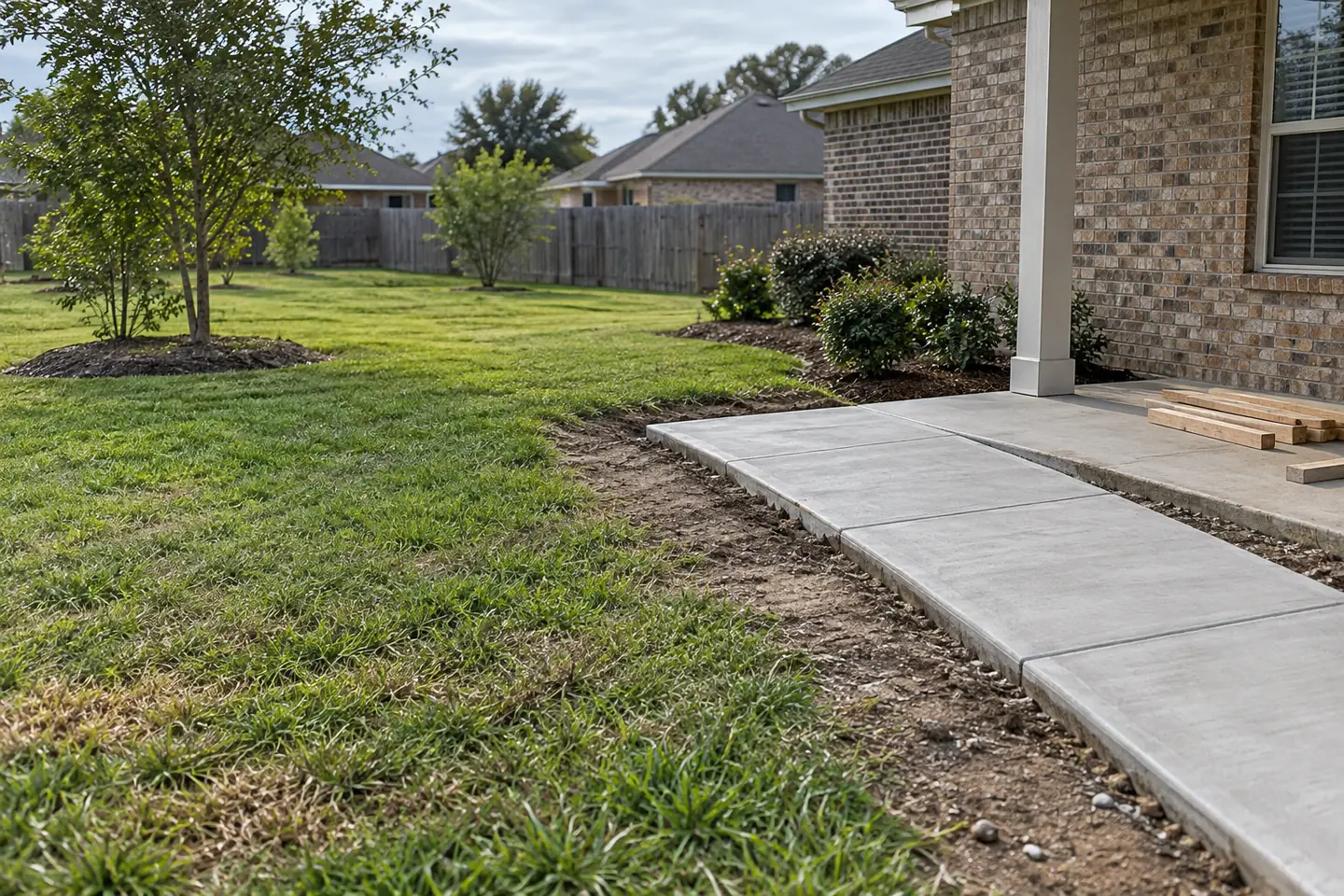
Identify who is clearing the remaining material
Wood scraps, fasteners, rubble and packaging should not be bundled into an ordinary grass-cutting request without discussion. The Consumer Product Safety Commission’s mower guidance includes clearing objects from the work area. Known construction material therefore belongs in the preparation conversation before mowing is considered.
Explain whether the project contractor or another provider is responsible for cleanup and whether that work is actually complete. A future promise is different from a clear lawn today. Happy Grass’s routine maintenance does not automatically include construction-debris collection or hauling. If removal is needed, request a separately defined suitable service rather than expecting equipment to discover what remains.
Keep small hidden objects in mind
A yard can look mostly clear and still contain screws, wire or fragments mixed into the grass. Disclose what you know and how the work area was used. Nobody needs to search an unsafe patch by hand to support a quote, but known debris should not be left out because it seems small.
- Show where materials were stored.
- Identify work routes across the lawn.
- Mention exposed pipes or utility components.
- Point out holes, trenches or uneven repairs.
- Explain any area still waiting for cleanup or inspection.
These details help establish the starting condition. They do not turn a mowing visit into a guarantee that the property is free of construction hazards.
New fixtures need new property notes
A project may add a low light, irrigation head, drain cover or border that was not present during the previous mowing routine. Show the location with a wide reference and a close photo when safe. Do not assume the operator knows a new component exists because service has happened at the property before.
The same applies to a moved fence or changed gate opening. Measure usable clearance if safe and show the turn beyond it. A familiar access route may no longer be practical. Update the maintenance discussion based on the finished layout rather than relying on older notes that describe a space the project has changed.
Disturbed ground deserves a separate look
A repaired trench or formerly heavy-traffic area may differ from the surrounding lawn. Describe soft soil, ruts and uneven patches without diagnosing their cause. Routine mowing does not level the ground, restore compaction or establish that a filled area is ready for equipment. Those questions may need the responsible contractor or another suitable professional.
If another provider is handling the ground restoration, share the actual restrictions and completion status. A limited maintenance area may be possible while the repaired section remains excluded. Define that boundary clearly. Trying to maintain the rest of the lawn does not mean the new repair must be crossed or treated as ordinary established turf.
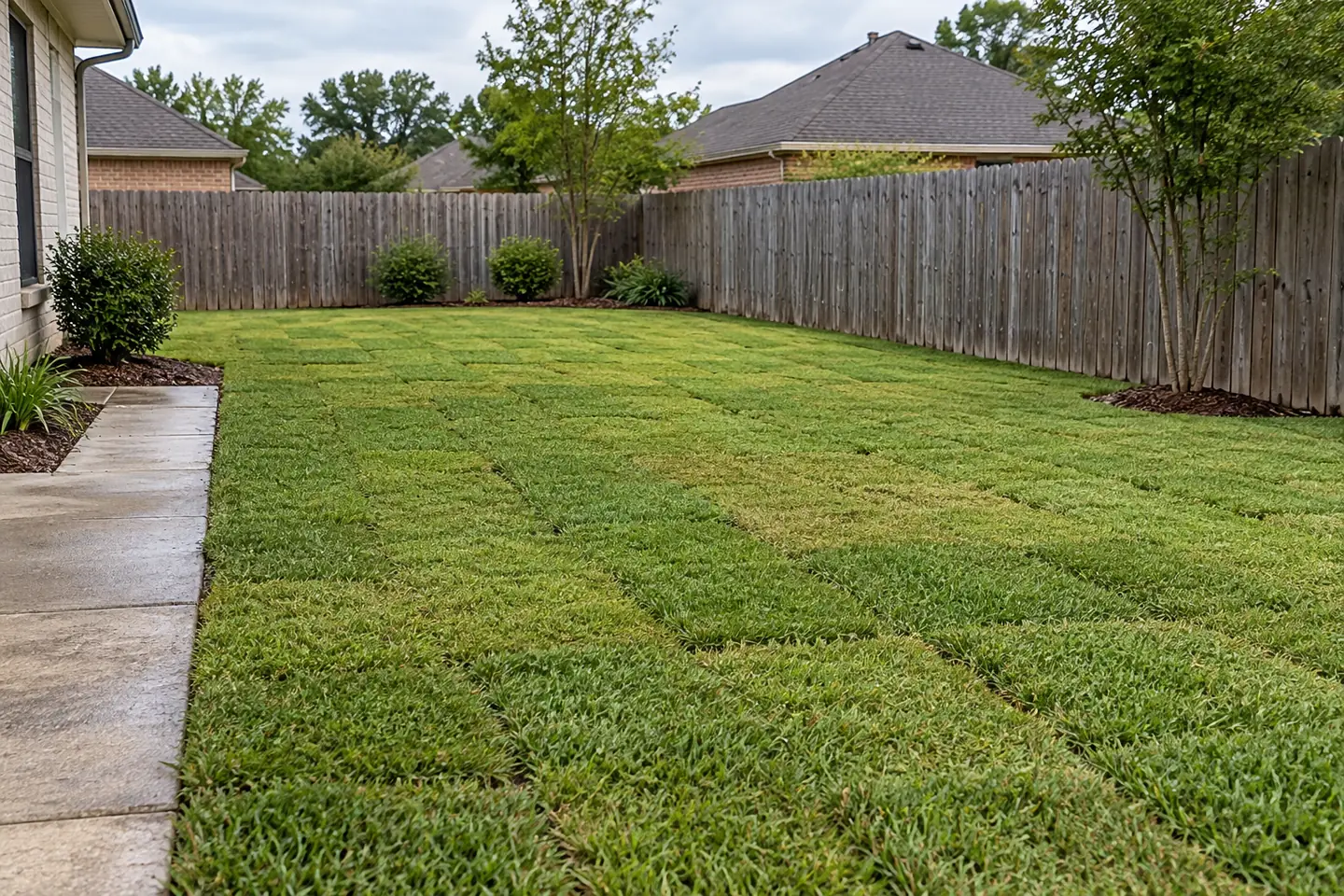
Connect new sod with its care instructions
Some projects end with replacement sod or another new grass area. Identify it separately and provide the installation date and care instructions if known. The first-mow discussion should reflect that plan, actual readiness and access. Do not use the construction completion date as an automatic mowing date for newly installed turf.
If established grass can only be reached across the new section, show that route too. A delay or limited scope may need consideration. Happy Grass does not offer sod installation, and routine mowing should not imply responsibility for establishment or replacement. Keep the installation handoff and maintenance request connected while preserving their separate responsibilities.
Do not treat lower cutting as lawn repair
A rough-looking patch after construction may reflect ground disturbance rather than simply tall grass. Cutting very short does not correct ruts, remove buried debris or restore missing turf. Explain the appearance you want, but allow the actual grass and terrain to guide the maintenance assessment.
An earlier photo of the same lawn can help show what changed. Label it and pair it with a current view. The first ordinary cut after a project may not make the affected area match the untouched lawn immediately. A realistic scope distinguishes maintaining existing growth from repairing the landscape or promising a complete recovery.
Coordinate the timing with other work
If contractors are returning for an inspection or final pickup, tell Happy. Their vehicles, stored materials or access needs can affect the lawn route. Confirm the site is actually available before treating a preferred mowing day as fixed. A planned project finish is useful context, not proof that all restrictions have ended.
Use one person to communicate changes and approve the maintenance scope. That helps avoid a contractor expecting the lawn provider to move something while the customer assumes the contractor has already removed it. A short current update about what remains can make the handoff much smoother than several separate assumptions.
Keep repair and liability questions factual
If you notice a damaged fixture or new mark after any service, document the current condition and exact location without altering the evidence. Contact the person coordinating the relevant work and request a review. A photo can show an observation, but it does not automatically establish a technical cause or responsibility.
For the mowing plan, the important step is to identify existing conditions before the visit and any new concern afterward. Clear references make a fair discussion easier. Avoid asking a lawn quote to settle unrelated construction disputes. The service scope should stay tied to the grass areas and preparation that can actually be agreed.
Restart with a defined work area
Once cleanup, access and ground questions have been addressed, specify the areas to resume. Include mowing and the finishing tasks you want considered, such as sidewalk edging or trimming beside the new fence. Confirm exclusions and any changed preparation responsibilities. A recurring routine may need adjustment if the layout or grass area has changed.
If conditions remain unsuitable in one corner, ask whether the rest can be reviewed separately. Any limited visit, price and future plan need direct agreement. A clearly excluded repair zone is more useful than an expectation that the whole property will be treated identically despite different ground and readiness conditions.
Let’s get the yard back into a useful routine
A good request includes the address, city, project type, current photos and what has changed in access or fixtures. Explain cleanup status, new turf and any area still awaiting another provider. Happy can then review whether the requested lawn maintenance fits the site as it exists now.
Call 504-339-3571 or use the quote form for Harvey, Marrero, Gretna, Algiers, Belle Chasse or Westwego. A new path or repaired fence can help the property feel better, and a clear lawn-care handoff helps the surrounding grass rejoin the picture. Let’s kick some grass once the work area is ready for the next sensible step.
Ask for a handoff point you can recognize
“The project is finished” may refer to the contractor leaving, the last delivery arriving or the household putting the yard back into use. For the lawn request, describe the current condition instead. Identify which grass areas are open, where materials remain and whether temporary markers still have a purpose. A recognizable handoff is easier to review than a completion label with several possible meanings.
For instance, a completed patio can sit beside a lawn strip still used for storing offcuts. Treat those as separate observations. Ask about the grass that can be considered now and leave the occupied strip unresolved until its condition changes. This prevents the maintenance request from depending on cleanup or ground repair that nobody has actually confirmed as complete.