
Start with what changed after the cut
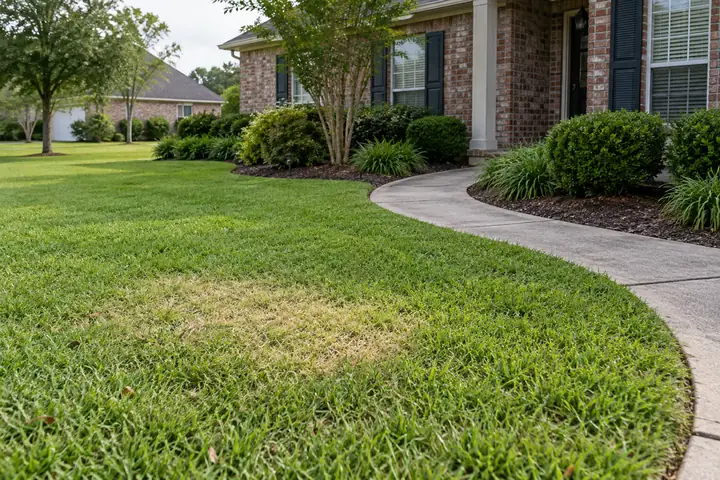
A lawn can look green before mowing and surprisingly pale afterward. Sometimes too much of the leafy surface has been removed. Sometimes the change appears only on a raised patch or tight corner. Start with the observation rather than giving every brown area the same diagnosis.
Write down when you first noticed the change and which part of the yard it affects. A current wide photo can show whether it follows a mowing pass, sits on a hump or extends beyond the recently cut area. That description helps Happy understand the concern without guessing from the phrase “my lawn looks bad.” A practical conversation starts with the actual pattern.
Understand what scalping means
Scalping describes cutting the turf too low, exposing lower growth or leaving a visibly stripped appearance. LSU AgCenter warns that summer scalping can weaken turf and reduce its ability to handle stressful conditions. The useful takeaway is to preserve an appropriate leafy surface rather than chase the shortest possible finish.
That does not mean every lawn needs the same height. Grass type, variety, season and condition matter. Nor does a pale photograph establish that mowing caused every symptom. Keep a possible cutting issue separate from a complete turf diagnosis. If discoloration continues or the cause is unclear, appropriate extension or turf-professional advice can help with the wider question.
Look for a location pattern
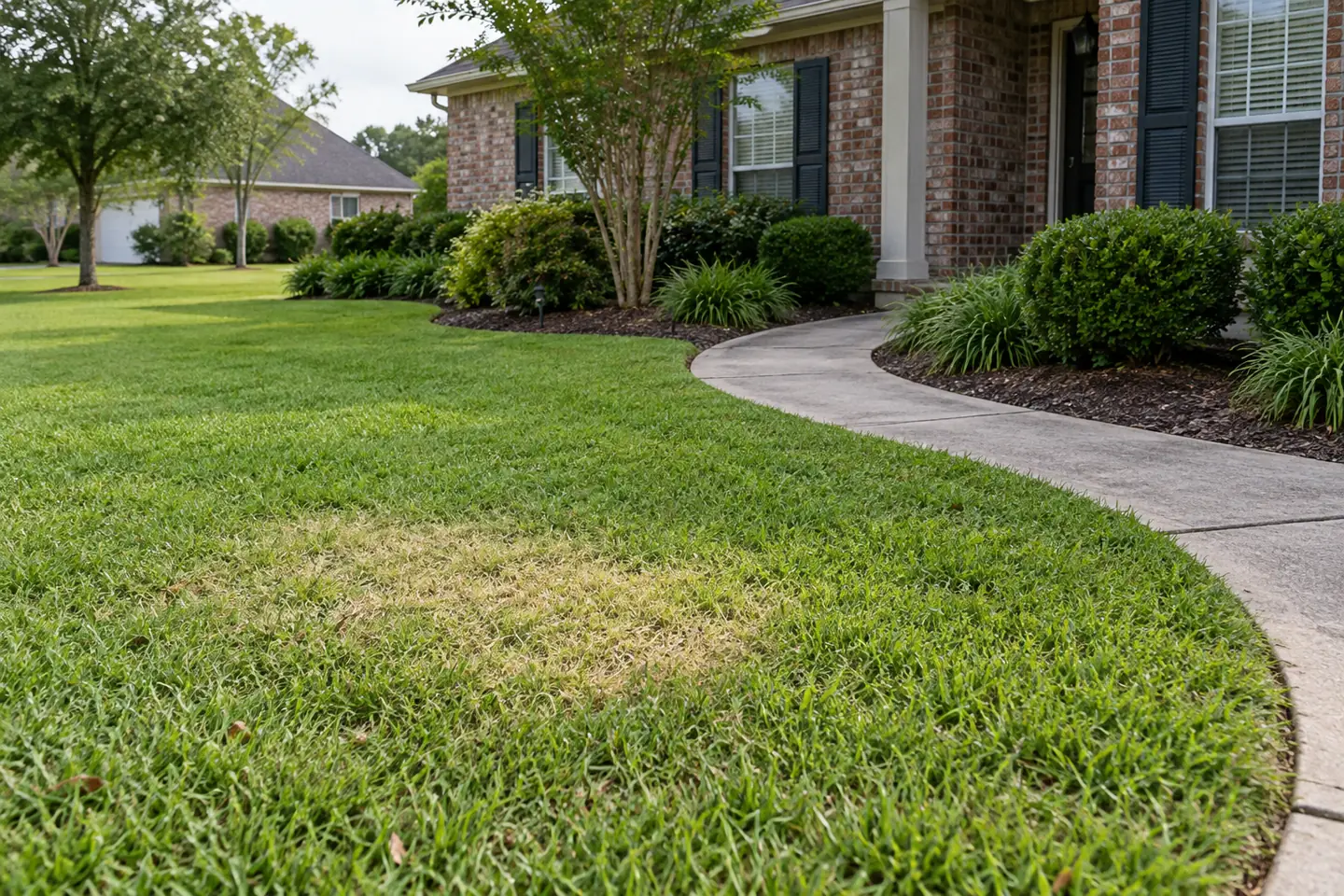
Is the pale area beside the driveway, across a raised center section or scattered throughout the property? A local high spot can create a different cutting result from surrounding level grass. The pattern is therefore useful information when discussing the next visit.
Take a wider picture that includes a fixed reference such as the path or fence corner. Add a closer image of the grass if you can reach it safely. Keep both pictures connected to the same location. An isolated close-up cannot explain the grade, while a distant image may hide the leaf detail. Together, they create a much more useful starting record.
Keep the height decision tied to the grass
A mower’s numbered position is not a reliable statement of the finished leaf height on every machine or surface. The meaningful question is how the actual grass is being maintained. If the species or variety is verified in your records, share that information with Happy.
Regional recommendations can vary with the grass and management conditions, so avoid applying a number copied from another lawn. The grass-type and measuring-height guides can provide context for the conversation. A very short cut should not be treated as a universal improvement or a way to delay the next visit. The intended finish needs to fit the lawn you have.
Review an overdue lawn honestly
A long mowing gap can create pressure to remove too much growth at once. Describe the last known cut and show the present height. If only the front has been maintained, say so. The backyard may need a different starting assessment even though both areas share an address.
Ask what the first visit can reasonably accomplish and how the lawn can return to a useful routine. Do not assume one dramatic cut should erase every sign of the gap. The first-cut guide deals with that starting conversation in more detail. A clear assessment is a better beginning than asking for an unusually low setting before the property has been reviewed.
Separate a cutting issue from uneven terrain
A hump, exposed root or abrupt transition can affect the result. Cutting the whole lawn lower does not flatten that feature. Show known uneven areas and explain whether they existed before the recent visit. If the ground changed after construction or drainage work, include that history.
- Identify the pale patch with a fixed location.
- Show the surrounding grade.
- Mention visible roots and repaired soil.
- Label any older reference photographs.
- Explain whether the same spot changes after each cut.
The maintenance scope may need a defined boundary or different approach. Ground repair and root alteration are separate work, not automatic parts of mowing.
Do not add treatments just to change the color
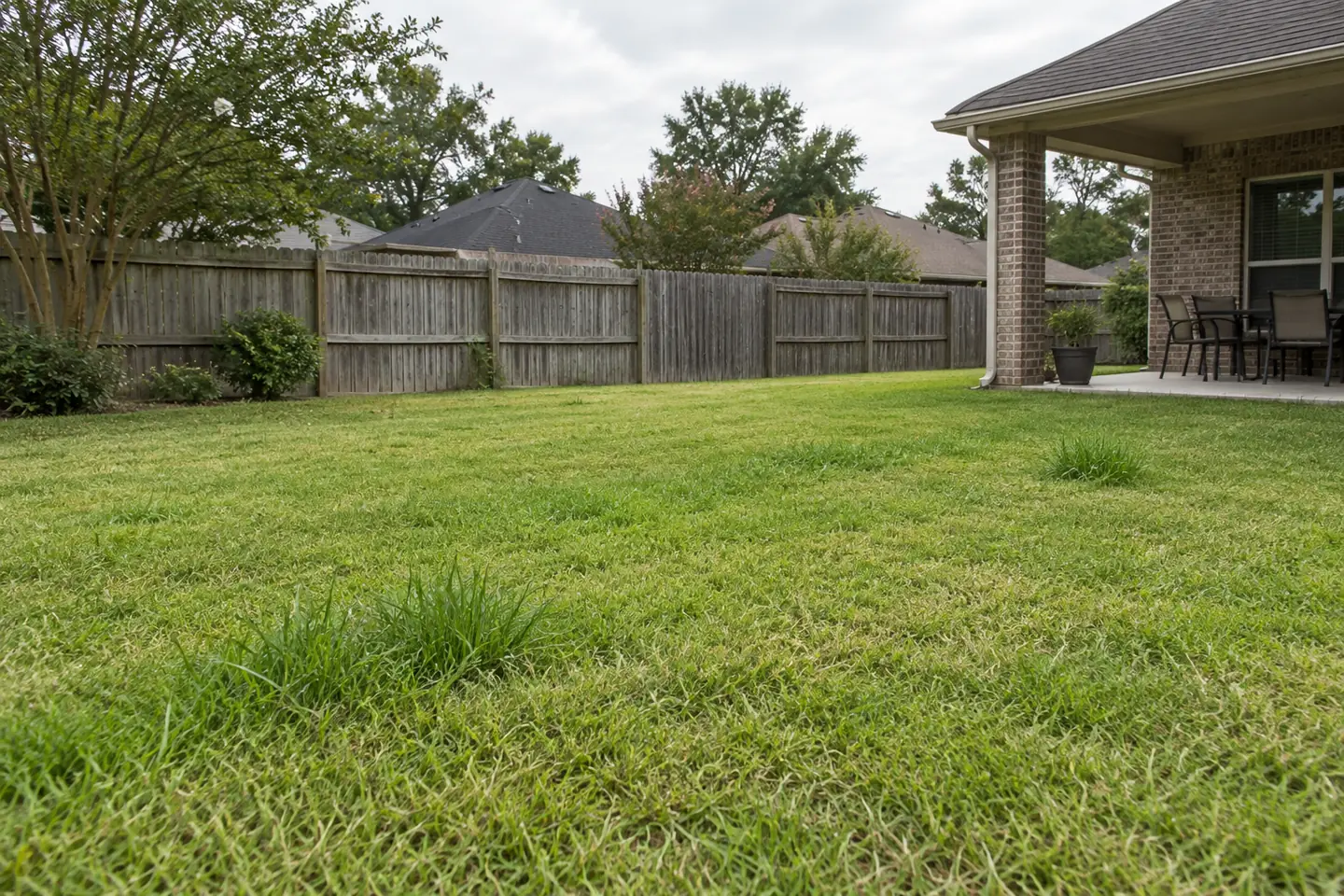
A brown or pale appearance does not by itself establish a need for fertilizer, pesticide or another product. A mowing concern should not become an unreviewed treatment plan. Identify the observation and seek appropriate help if the cause needs investigation.
Happy Grass does not offer fertilization, aeration, overseeding or pest control. Its mowing, edging, weed-eating and blowing discussion should remain connected to the actual service requested. If another provider has treated the lawn, share the relevant instructions privately. That information can affect the maintenance conversation, but it does not turn a grass-cutting quote into a diagnosis or a guarantee of recovery.
Watch the area without repeatedly disturbing it
For your own reference, use the same safe viewpoint when taking follow-up photographs. Record the date and whether the image is before or after mowing. A consistent view makes a change easier to explain than several close-ups taken from different angles.
You do not need to repeatedly pull grass, dig into the patch or run equipment over it to test the condition. Describe what is visible. If the area is worsening, spreading or showing another concerning change, arrange suitable professional review. The purpose of the record is to support a better next decision, not to promise that waiting alone will solve every pale patch.
Ask about the next visit before prescribing it
A useful message might say, “This raised patch near the front walk looks pale after cutting. These are today’s photos and an older maintained view. Can we review the approach there?” That is specific enough to act on without assuming the cause or demanding a particular machine setting.
If an adjustment or exclusion is agreed, keep it with the property notes. Confirm any change in timing and price directly. A maintenance conversation is easier when both sides know the area under review and the finish being considered. It also helps separate one difficult section from the rest of an otherwise satisfactory lawn routine.
Keep the finish and the cleanup connected
A lawn that has been cut very short may also have heavier visible clippings if the starting growth was substantial. Explain whether your concern is the leaf surface, loose cut material or both. Those observations can look similar from a distance but involve different questions.
Ask what reasonable cleanup is included with the proposed maintenance. Bagging, collection and hauling should not be assumed. Nor should another immediate cut be treated as the only answer to a messy appearance. A clear description of the material and the grass beneath it helps Happy review what work is appropriate and what result can realistically be expected.
Review the routine beyond one appointment
Once the immediate concern is understood, consider whether the interval fits actual growth. A yard that regularly becomes much taller between visits may need a different discussion from a lawn growing slowly through a cooler period. The weekly-versus-every-other-week guide can help organize that conversation.
Keep observations tied to the same grass area. Explain how it looks before the next planned visit rather than relying only on the calendar. A useful routine should reduce the pressure for catch-up cuts and make the expected finish understandable. Availability and the final arrangement still need direct confirmation for your property.
Give Happy the useful details
Send the address, city, current wide and close photos, last cut if known and any verified grass information. Point out changes in grade or recent work. You can describe the concern in ordinary words; there is no need to arrive with a diagnosis.
Call 504-339-3571 or use the quote form for Harvey, Marrero, Gretna, Algiers, Belle Chasse or Westwego. A happier lawn plan starts with understanding what happened and choosing a sensible next step. Let’s kick some grass with the right conversation about the cut, rather than simply asking for less grass at any cost.
Describe the short patch without chasing its color
A suddenly pale patch after mowing deserves a clear record before another cut changes it. Photograph the affected area with nearby ordinary grass in frame. Note whether the patch sits on a mound, follows a turning location or appears across a broader section. Those locations suggest different questions to review; the photograph alone does not establish which caused the appearance. Avoid asking for the rest of the lawn to be lowered to match the short patch. Matching color immediately is a different goal from maintaining suitable grass length.
University of California guidance on scalping emphasizes an appropriate mowing height and avoiding excessive leaf removal. It does not promise a fixed recovery date for your property. Keep expectations tied to what is actually observed: the initial short appearance, subsequent growth and any continuing thinning. If the same spot is affected again, bring the dated sequence to the discussion. A repeating contour-related patch deserves a more specific review than a general request to change the mower setting everywhere.
- Keep the first photograph before any corrective work.
- Locate the patch relative to ground shape and travel.
- Record whether a similar mark has appeared there before.
- Seek further advice when the grass continues to deteriorate instead of assuming a routine cut will repair it.