
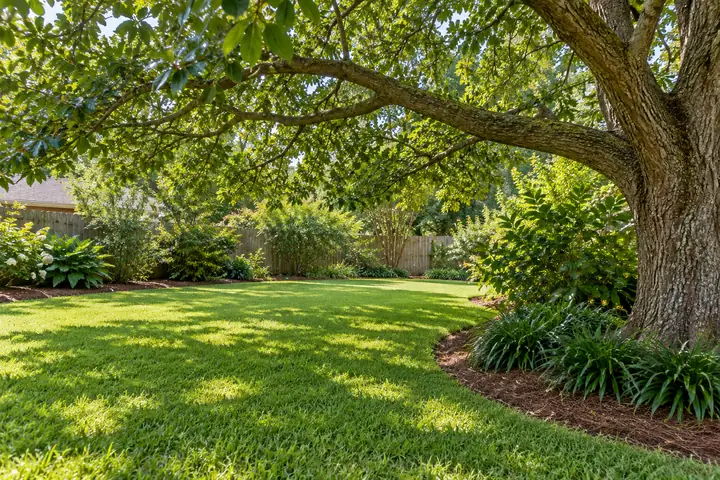
Look up before describing an open lawn route
A lawn passage can look wide enough in a photograph taken straight down and still have a low branch across it. The branch may extend from a tree beside the route rather than the tree you first notice. When discussing access with Happy, include a normal standing view that shows the space above the grass. A mower-width estimate alone cannot describe the whole passage from the gate to the lawn.
The purpose is to explain the existing conditions, not to prescribe tree work. Lawn mowing, edging, weed-eating and blowing do not automatically include lifting, tying or cutting branches. If overhead access is limited, say so before relying on the usual visit arrangement. You can have an attractive shaded yard and still need a revised route or an excluded section. A useful lawn plan acknowledges the tree's present shape instead of expecting the equipment to make the shape irrelevant.
Describe where the branch changes the route
Show the branch in relation to landmarks that are easy to identify: the gate, porch corner, back fence or a turn into the main lawn. Explain whether it crosses the only entrance or just one approach to a smaller patch. A photograph of foliage without those landmarks can make a short obstruction look like a problem across the whole yard, or make the reverse mistake by hiding its position at the only available passage.
Do not provide a guessed clearance as a guarantee. The operator, equipment and route need an actual review. If you know that a branch hangs lower than it did previously, describe the change without trying to force it back into place for a photograph. Stay clear of a limb that appears broken or unstable and arrange appropriate tree attention separately. The lawn update can identify a concern without turning the homeowner into a tree inspector or promising that a different mower will solve it.
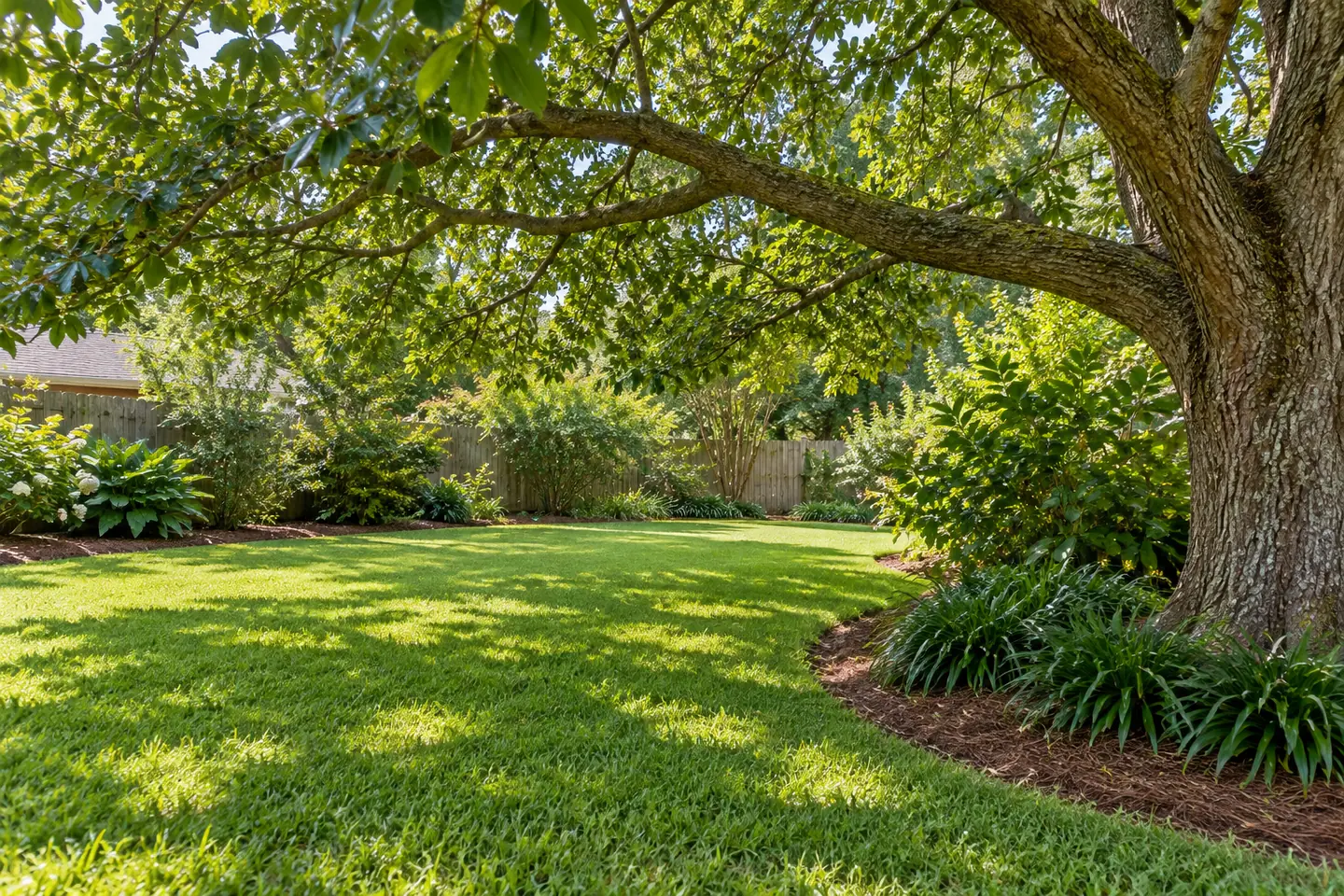
Include hanging objects as well as living branches
The overhead space may contain a bird feeder, wind chime, hanging planter or a rope attached to a tree. These objects can occupy a route that would otherwise be open. Explain which pieces are removable and which will remain. Store portable items in a suitable location before the visit when practical, following their instructions and leaving the tree itself undisturbed. Do not assume an unfamiliar hanger can be taken down as part of mowing.
A thin line can be difficult to see against leaves, so describe it directly rather than relying only on a wide photo. If something is attached to the branch but its purpose is unclear, have the responsible person clarify it. An instruction to avoid the tree does not explain the reach of a long hanging object beyond the trunk. The access conversation works best when it includes the complete occupied space, from the object at head level to any cord or support closer to the grass.
Keep tree care separate from lawn preparation
It can be tempting to ask for one quick cut while the lawn equipment is there. A branch question still needs its own suitable review. This page does not establish which limb should be removed, how much a tree can tolerate or whether a branch is sound. If a tree professional or another responsible contractor handles the work, share the completed result with Happy afterward rather than treating a proposed pruning plan as finished access.
The preparation note should answer practical lawn questions:
- Which grass section is affected by the overhead limitation?
- Is another entrance available without crossing a different obstacle?
- Which hanging belongings will be stored by the homeowner?
- Does the affected area need to remain outside the visit while tree work is pending?
Those answers keep the maintenance request concrete. They also avoid a promise that a branch will be moved before arrival when nobody has actually taken responsibility for arranging the separate work.
Consider visibility at bends and narrow corners
Low foliage can hide the next part of a route as well as limit the space above it. A turn behind a shed or a leafy corner beside a gate deserves a wider view showing what is beyond the bend. Toro's general safety guidance calls attention to blind corners and objects that obstruct visibility. That is relevant background for explaining a yard layout, without certifying any particular route from a remote photograph.
Tell Happy whether people or pets normally use a crossing path near the tree. Keep them clear of the operating area during the visit; a branch or hedge is not a dependable separation between activities. If an alternate entrance moves the working route closer to a play area or door, include that change in the discussion. Reviewing the entire route is more useful than focusing only on the lowest leaf and overlooking what becomes visible immediately after passing it.
Distinguish shade from physical clearance
A shaded lawn is not automatically inaccessible, and an open-looking sunny patch can still sit beneath a projecting limb. Keep the two descriptions separate. Shade concerns relate to the grass and growing conditions; overhead clearance concerns relate to how the work can be approached. A photograph that shows both helps Happy understand why you are asking about the area, rather than assuming all differences beneath the tree are the same problem.
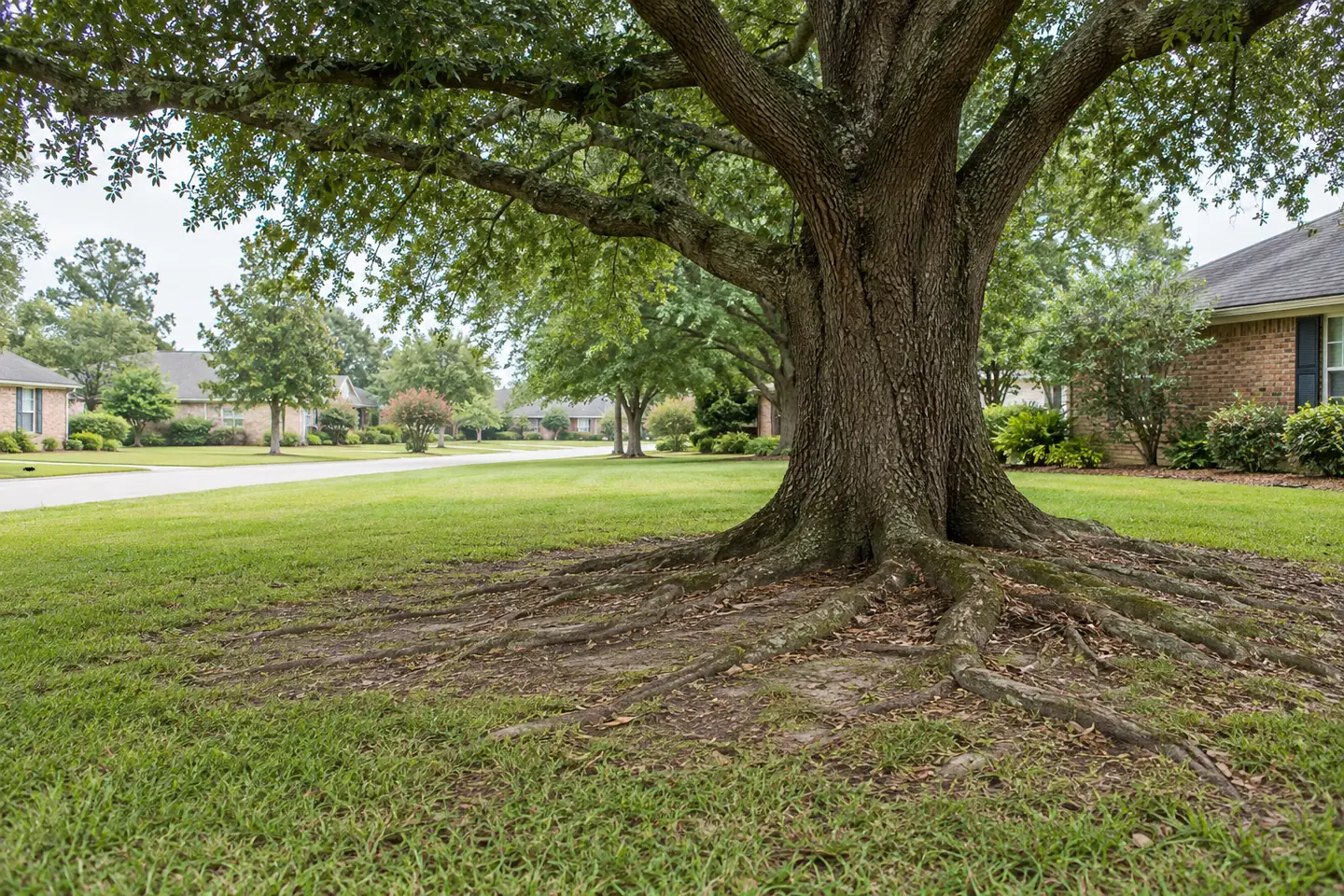
If grass near the trunk has a different texture or height, describe it alongside any exposed roots already present. Do not ask for a lower cut simply to make the tree area look like the open lawn, and do not cover roots or disturb soil to improve equipment access without appropriate advice. The lawn visit should respond to the actual ground and overhead conditions together. Sometimes a defined boundary around one feature makes more sense than expecting one uninterrupted finish through every part of the tree's footprint.
Update access after weather or separate tree work
A familiar branch can change position, and a completed pruning job can leave a different route and material on the ground. Send an update when you notice such a change. Explain whether the area is ready for lawn review or whether debris and contractor equipment remain. An appointment for tree work is not evidence that the work is complete, just as a photograph taken before the work does not describe the final route afterward.
After a separate job, show the ground as well as the open space above it. A newly clear overhead passage may still contain branches, disturbed soil or a temporary access mat. Do not ask lawn equipment to handle woody leftovers as if they were grass. Identify what has been removed, what remains and who is responsible for the remaining preparation. That handoff lets the next lawn conversation begin from the present property condition instead of a chain of assumptions about what another contractor was going to finish.
Give Happy a route that can be understood
For a property in Westwego or another nearby Westbank community, a simple sequence of views can explain the issue: entrance, low branch, turn and lawn beyond. Use ordinary landmarks rather than precise tree measurements you cannot verify. Mention any alternate way in and whether it is actually available, including its gate and ground condition. The alternate route should receive the same honest description as the original one.
Call 504-339-3571 and ask for Happy to discuss the affected grass and the current overhead access. Be clear about hanging objects you will store and any tree concern being handled separately. If one section must wait, agree its boundary and the update needed before it can be reconsidered. A happy lawn routine starts with a usable shared picture of the yard, including the parts above the mower that are easy to overlook when everyone is concentrating on the grass below.
Describe the route in the condition it will be used
Foliage may occupy a different space when leaves are wet or a hanging object has been added since the last photograph. State when your access pictures were taken and whether the present arrangement differs. You do not need to predict how a branch will move or calculate its future clearance. A current observation is enough to explain that yesterday's view is no longer reliable. If the route is affected only at one turn, identify that turn rather than describing the entire backyard as blocked. Accurate limits make it easier to discuss the remaining lawn while a separate access concern is handled.