
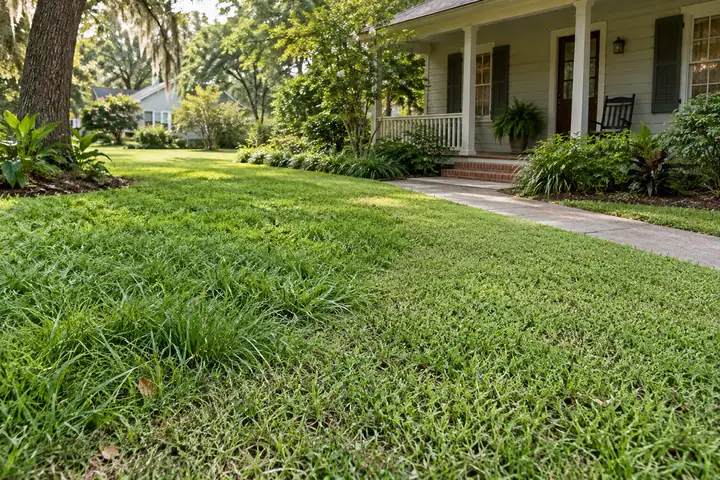
Notice the texture, not just the color
Some lawns contain patches with clearly different leaf widths, density or growth. A fine-textured section may look smooth while broader grass looks more open. Start by describing those visible differences rather than assuming the whole yard is one uniform turf.
Take a wide picture showing where the textures meet. Add closer views of each section if safely accessible. Tell Happy whether the difference has always been there or appeared after a repair. A clear description helps the maintenance conversation account for the actual lawn, instead of treating every different-looking patch as a missed cut or an automatic weed problem.
Confirm names before using them as instructions
Purchase records, installer information or a suitable identification can be more reliable than a guess from leaf color. If the grass names are uncertain, say so. A photo can start a conversation, but not every lawn can be confidently identified from one distant image.
LSU’s mowing guidance distinguishes grass species when discussing appropriate maintenance. That supports identifying the actual turf rather than applying one borrowed instruction everywhere. It does not mean a customer needs to become a grass specialist before asking for help. Useful photos and an honest “not confirmed” are a better starting point than a confident but unsupported label.
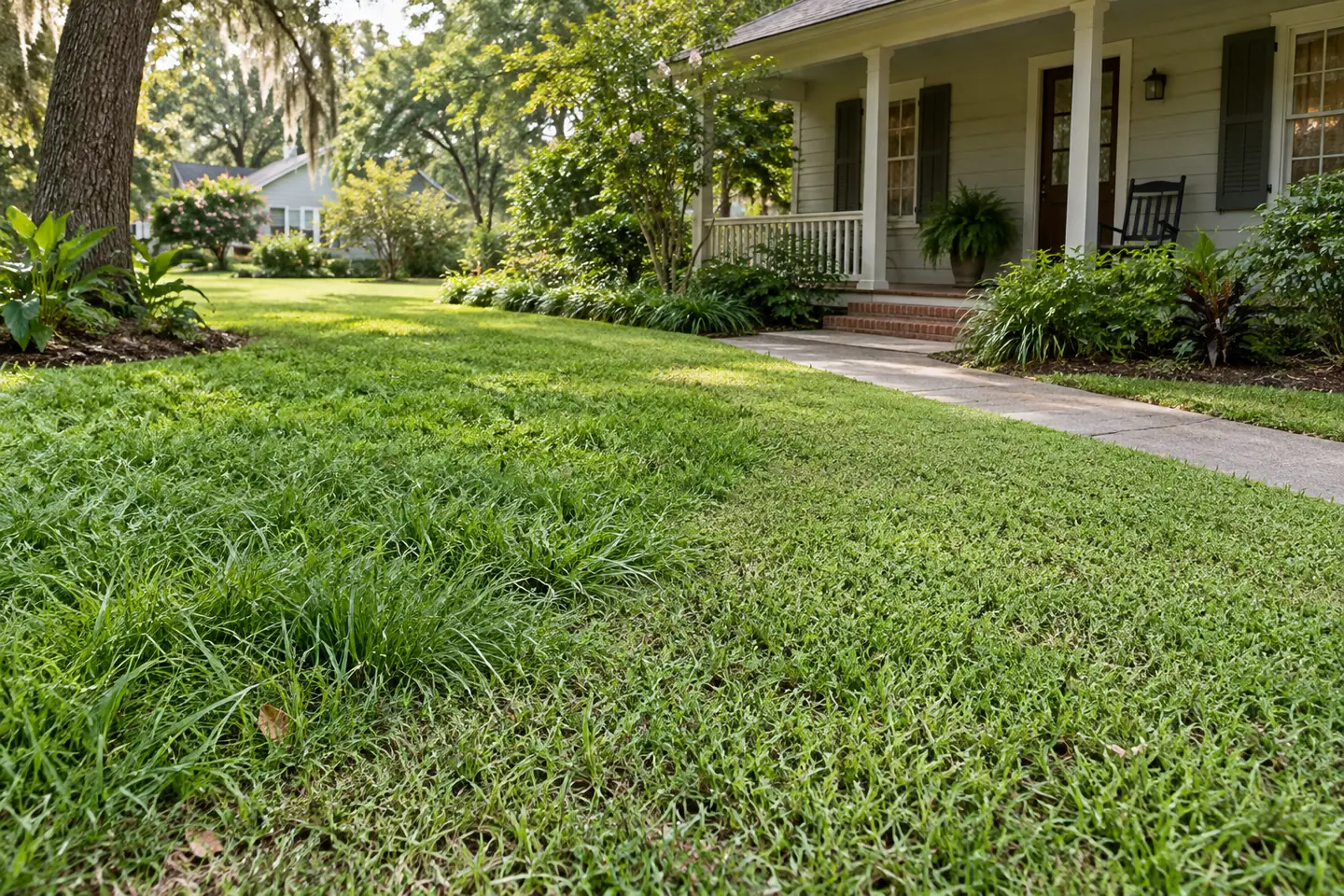
Separate an intended patch from an unknown plant
A repaired section may contain a different verified turf, while another clump may be an unwanted or unidentified plant. Those are different situations. Explain what you know about installation or past repairs and what still needs identification. Do not assume ordinary mowing authorizes removal of every area that looks different.
If identification or treatment is the main question, seek appropriate extension or turf-professional advice. Happy Grass can review a weed-control request for the actual site, but this guide does not prescribe products or rates. A maintenance scope should be based on the work requested, with uncertainty acknowledged rather than hidden behind a plant name.
Show the transitions within the yard
A map is optional; ordinary fixed references can do the job. Describe “the broad grass beside the porch” and “the finer strip toward the driveway,” then pair those notes with wide views. The transition itself can be useful context for how the finish appears.
If front and backyard differ, show both rather than letting the most attractive angle represent everything. A side strip can also have a separate history or growing condition. The point is to connect each maintenance question with its location. That makes the quote more useful and helps avoid treating a small unusual patch as though it describes the entire property.
One calendar does not prove one growth rate
Different sections may appear ready for attention at different times. Note which area changes first between visits and whether the leaf height or only the texture is different. A consistent dated view can help explain that pattern without requiring measurements across the whole lawn.
Discuss the intended routine against those observations. Weekly and every-other-week service are options to review, not proof that all grass sections will look identical between cuts. Availability and any specific arrangement require direct confirmation. The goal is a workable property plan, with differences understood, rather than a promise that every patch grows at the same speed.
Keep height decisions tied to verified turf
An appropriate cut should consider the actual grass, variety and site conditions. Copying a height from another patch may be unsuitable when the turf differs. Regional recommendations can also vary with management conditions, so do not treat a single number found online as a universal setting.
The existing grass-type guides provide background for a verified identification. If the names remain uncertain, keep that question open in the service discussion. A low cut should not be used simply to make textures match from the street. Mowing changes height; it does not convert one grass into another or remove every difference in its natural appearance.
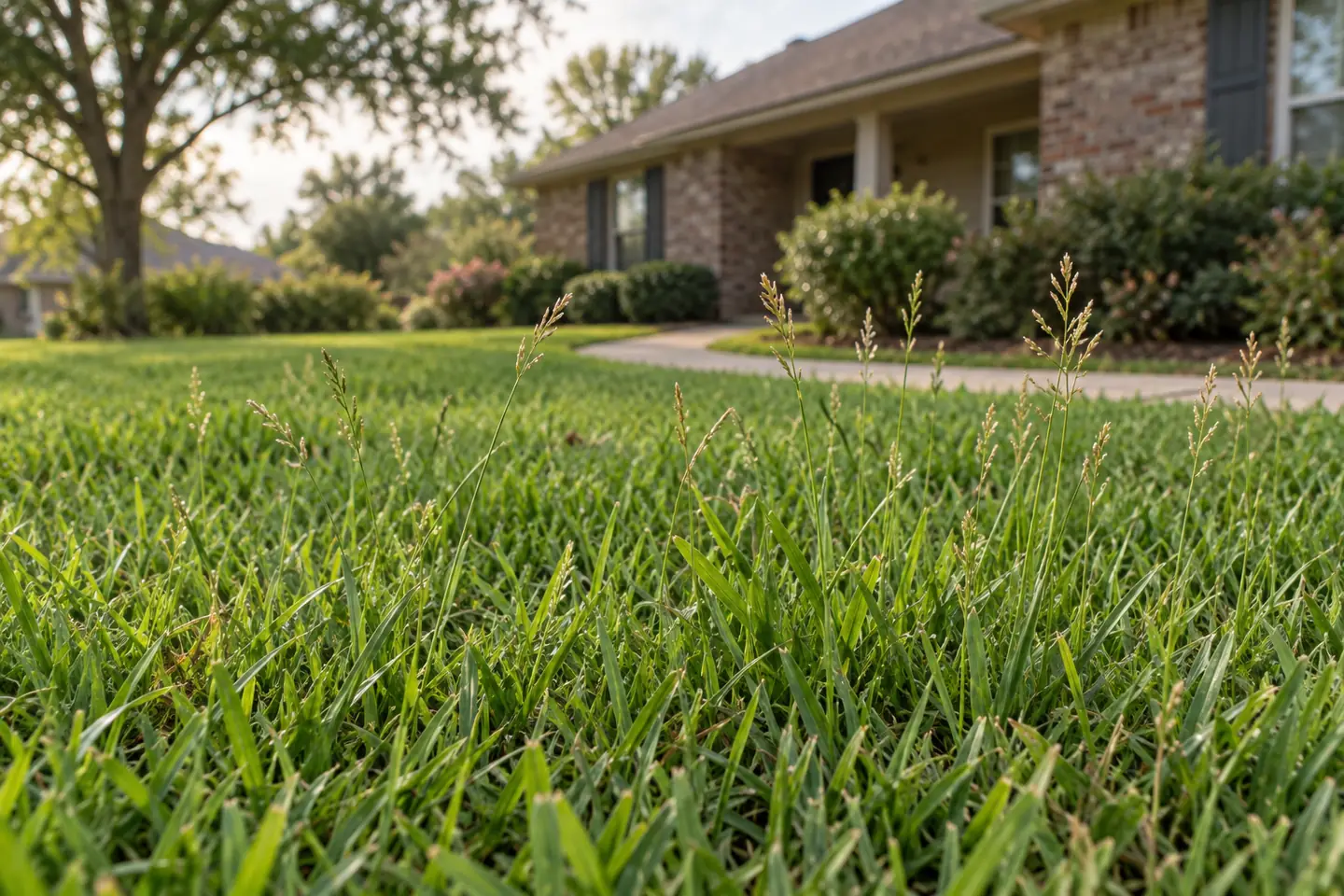
Explain new sod and repaired ground separately
A replacement patch may still follow an installer’s establishment plan. Identify when it was installed, what turf was supplied if known and any current traffic or mowing restrictions. A green appearance does not prove that the section is ready for the same routine as an older lawn.
Show the route into the yard too. A small repaired area may control access to a larger established section. A limited visit or delay may need consideration if that route is restricted. Happy Grass does not offer sod installation or overseeding, and ordinary mowing should not imply responsibility for establishing or replacing the new patch.
Consider shade and moisture without diagnosing
A shaded corner can look different from the sunny lawn even where the grass identity is the same. Likewise, irrigation and ground conditions may vary across the property. Describe those features as observations rather than deciding from texture alone that a new species has appeared.
- Identify sunny and shaded sections.
- Mention persistent dampness or dry-looking areas.
- Show roots, borders and low fixtures.
- State the history of known repairs.
- Separate verified names from uncertain guesses.
These details help the maintenance plan reflect the site. They do not turn a quote into a complete turf diagnosis or a treatment recommendation for every visible difference.
Do not make removal an unspoken part of tidying
A request to make the yard look uniform can mean several different things. It might concern mowing height, edging or an actual desire to replace a turf section. Clarify which result you want. Removing established growth or changing the landscape is not automatically included with ordinary grass maintenance.
If replacement or redesign is the goal, arrange an appropriate separate service. Happy Grass offers mowing, edging, weed-eating and blowing within an agreed scope. Fertilization, aeration, overseeding and pest control are not offered services. A clear request keeps a simple maintenance discussion from becoming an unquoted restoration project.
Review the cut by location and purpose
After service, compare the result with the agreed scope. A naturally different texture may remain visible even when height is appropriate. If you see a longer strip, pale high spot or ragged tips, describe that specific feature instead of assuming the texture difference itself proves the work was incomplete.
A current photo and fixed location reference can support a useful review. The uneven-cut and ragged-tip guides address those separate concerns. Keep any agreed adjustment with the property notes. Specific feedback is easier to act on than a broad demand for complete visual uniformity that the actual grass may not provide.
Keep a simple property record
Save verified grass information, repair dates and useful location photos. If another provider identifies a section or changes the planting, update the notes. There is no need for an elaborate file for each blade. A short reliable reference can prevent the same uncertainty from restarting at every quote or visit.
If someone else manages access, share the agreed boundaries with that person. New instructions should come through the authorized contact so a helper at the gate does not inadvertently change the work. A clear handoff connects the maintenance plan to the actual lawn and the parts that need different consideration.
Bring Happy the real lawn picture
Send the address, city, wide transition photos and closer views of the different textures. Include verified names and repair history where available, with uncertain details labeled plainly. Explain the result you want from mowing and finishing work, and keep any identification or restoration question distinct.
Call 504-339-3571 or use the quote form for Harvey, Marrero, Gretna, Algiers, Belle Chasse or Westwego. A yard does not have to be perfectly uniform to have a sensible, tidy maintenance plan. Let’s work with what is growing and make the next conversation a little happier.
Use separate references when reporting differences
If one texture looks taller or rougher after a visit, identify that section in a current photo and compare it with its own earlier view. Comparing a coarse patch with a naturally finer patch can confuse a maintenance concern with an ordinary difference in leaf structure.
The same-location reference is useful even when the species names are still uncertain. It describes a visible change without pretending to identify the plants. If a professional later confirms the turf, add that information to the record so future discussions can use the actual name rather than restarting with the same guess.
Compare each patch with itself first
Two adjoining patches can look different even when a photograph makes their heights difficult to compare. Give each patch a consistent label and record its appearance from the same direction over time. This helps keep “the rough patch” from changing meaning whenever you move around the lawn. Include the transition in one broader picture so the labels remain connected to the property.
When discussing the finish, explain whether the concern is a newly noticed change within one patch or a long-standing difference between patches. Those are different observations and deserve different descriptions. Avoid asking for an identical appearance as though the grass identity and growing conditions were already settled. A clearer request focuses on the visible change you want reviewed and the maintenance arrangement being considered for each area.