
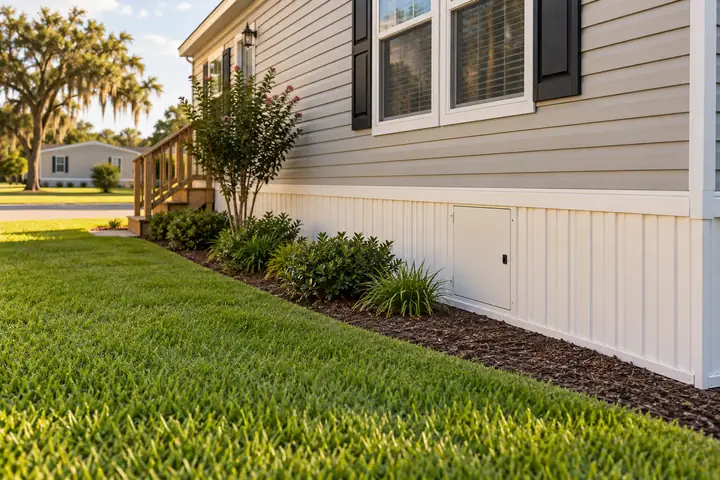
Know what the lawn crew should and should not touch
The panels around a manufactured home may be vinyl, metal, masonry or another approved enclosure. They can include ventilation openings, removable access sections and utility penetrations. HUD homeowner resources explain that perimeter enclosures need proper installation and adequate ventilation, and that the manufacturer’s manual and local requirements matter. Happy Grass does not install, remove, open, inspect or repair skirting. Our job begins with the turf outside the enclosure. Before a visit, walk the full perimeter and identify loose panels, sharp corners, missing fasteners, broken vents or sections bowed into the grass. Keep equipment away from any damaged area until the enclosure is repaired by the right person. If you are unsure which panel is an access door, resolve that before service rather than asking a lawn worker to test panels. A small defect can become larger when wind or line-trimmer contact reaches it, so the best time to define a buffer is before the grass hides the bottom edge.
Build a repeatable turf line instead of chasing a zero-gap cut
Grass grows aggressively along warm South Louisiana edges. The cleanest long-term result comes from a consistent boundary that can be maintained without striking the skirting. That may be a narrow mulch strip, a properly installed hard edge or simply a modest hand-trimmed clearance where the soil is stable. Avoid piling soil or mulch against vents or panels. Do not bury the bottom edge to make mowing easier unless the enclosure design and installer specifically allow it. A line trimmer can remove reachable grass, but repeated contact may scuff vinyl, dent thin metal or throw debris into openings. Tell Happy Grass about fragile or newly repaired sections and agree on the acceptable finish. The goal is a neat grass line, not a cut so close that every visit risks damage. If an edge cannot be maintained without contacting the home, the property may need a different landscape boundary designed by the owner or an appropriate installer.
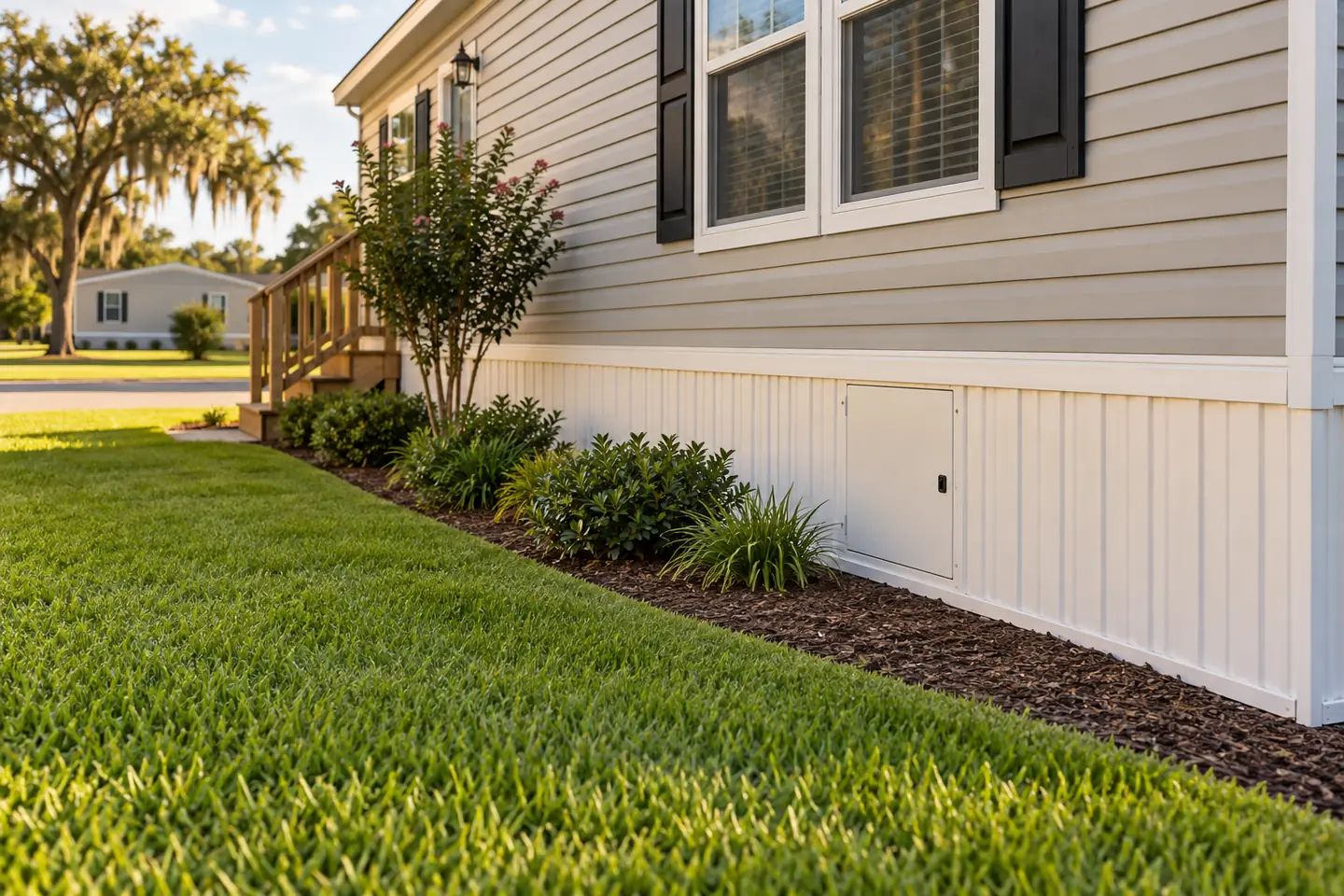
Keep ventilation openings and access panels visible
Skirting vents serve a building purpose, and access panels provide entry for authorized maintenance. Neither should disappear behind tall grass, stored pots or clippings. Clear the lawn-side approach before service and point out panels that must remain unobstructed. Happy Grass can trim nearby reachable vegetation, but we do not enter the enclosed area or judge airflow. If a vent cover is loose, broken or low enough to be struck by normal trimming, mark a no-contact zone until it is repaired. After mowing, inspect the edge periodically to make sure loose clippings have not collected against openings. Do not ask the crew to remove a panel so a mower can pass or to replace one after another contractor’s work. If plumbing, electrical or pest-control access is planned, coordinate those trades separately and restore the lawn route only after their tools and materials are removed.
Map every utility connection before choosing the route
Manufactured homes often have visible electrical equipment, water connections, drain lines, air-conditioning lines and communications cables near the perimeter. Some customer-owned lines may not be part of a public utility locate. Lawn service must not disturb them. Keep flexible hoses, cords and temporary pipes out of the grass. Where a conduit or pipe crosses the expected route, create a visible buffer and tell the crew. If digging or installing a new landscape edge is planned, contact Louisiana 811 and the appropriate private-line professional before breaking ground; routine mowing is not a utility locate. Meters and disconnects need their own access, so avoid parking equipment or piling clippings in front of them. A neat lawn finish is secondary to leaving every connection intact and reachable. If a line appears damaged or a utility area is unsafe, keep people away and contact the responsible provider or qualified trade.
Give the mower a real path around porches and additions
Porches, steps, awnings and site-built additions can narrow the strip between the home and a fence. Measure the route at its tightest point rather than at the gate. Remove chairs, grills, bicycles, pet bowls and garden decorations before the visit. A mower that enters a lane also needs room to turn or exit; a dead-end strip behind a porch may require a different tool or may be excluded. Keep deck lattice and skirting visually distinct so the crew can follow the correct boundary. If a ramp or porch project is underway, wait until construction is complete and the ground is free of screws, offcuts and soft fill. Happy Grass can discuss a smaller reachable section, but we will not squeeze equipment between an unstable panel and a fixed post. A photograph down the side yard shows clearances better than a close-up of the grass.
Handle soft ground and washout before routine service
Water can collect where roof runoff, air-conditioning discharge or low grading meets the skirting edge. Soft soil lets mower tires sink and may push mud or clippings against the enclosure. Walk the perimeter after rain, especially on the shaded side. Mark saturated areas and correct the drainage source with the appropriate professional rather than repeatedly driving over them. Do not use loose boards, scrap panels or blocks as an improvised mower bridge. They can shift, hide hazards and damage the skirting. If erosion has created a hollow below an edge, keep equipment away until the ground and enclosure are evaluated. Lawn service can resume when the route is firm enough to support normal equipment without rutting. A temporary skipped strip is preferable to a damaged panel or compacted wet lawn.
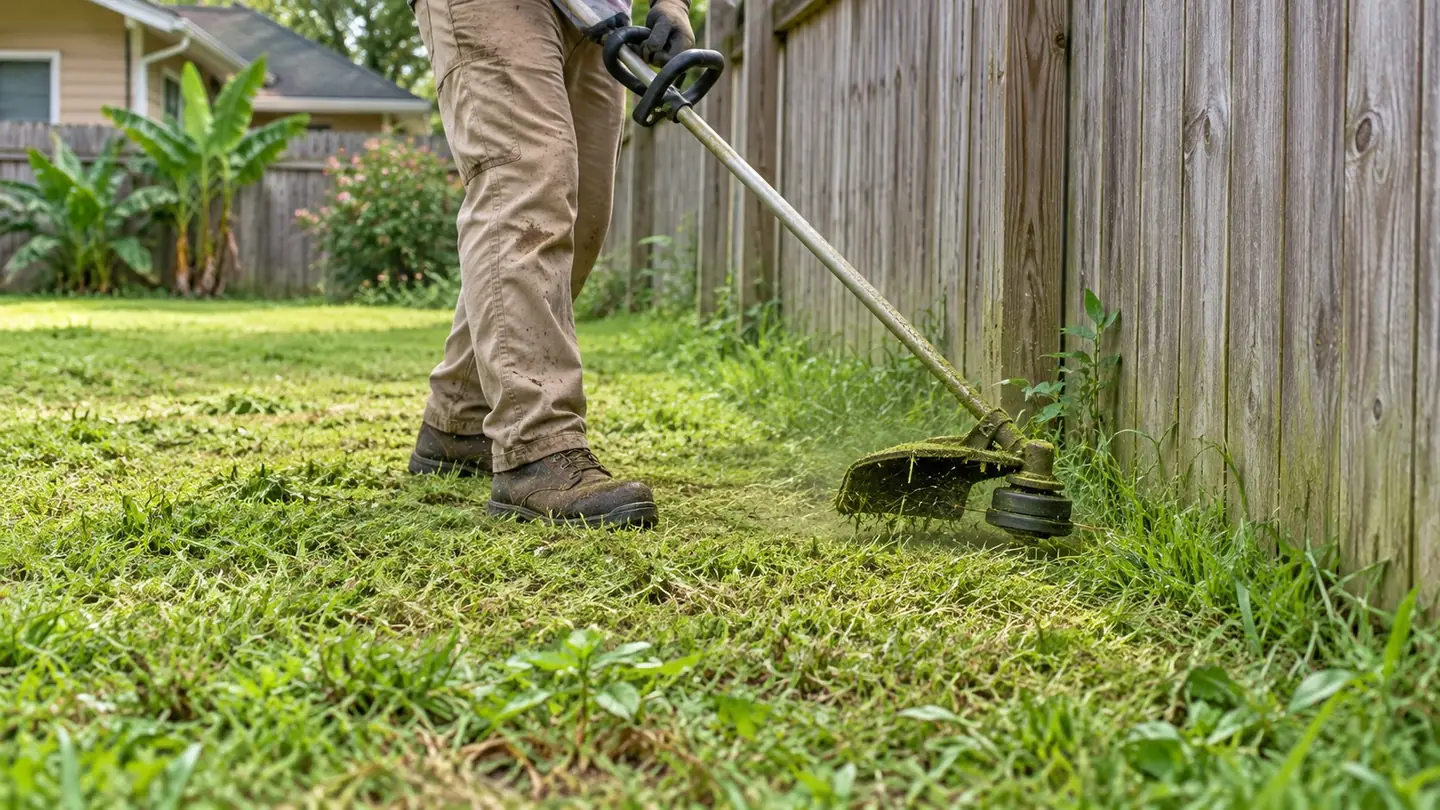
Protect the edge from thrown objects
Loose gravel, screws, wire, bottle caps and small toys near skirting can become projectiles. They can also chip or puncture a panel. Pick up debris before the grass is cut and keep decorative rock contained behind a stable border. LSU AgCenter guidance notes that string trimmers require care near sensitive areas and loose material. If a rock bed meets the lawn, show the crew where the intended separation lies. Avoid placing brittle ornaments or glass directly on the trim line. Pet tie-outs should be removed, not merely laid flat, because a cable can disappear into turf. If storm work or home repairs occurred since the last visit, make an extra pass for fasteners. The few minutes spent clearing the perimeter improve both safety and finish quality.
Coordinate repairs and service in the right order
Schedule skirting repair before detailed lawn finishing when panels are loose or missing. A repair crew may need to remove soil, set tracks, add fasteners or open access sections, which can disturb a freshly edged line. Once repairs are complete, remove all scraps and confirm that panels, vents and doors are secure. Then send Happy Grass a current photo and any changed boundary instructions. We can maintain grass beside the completed enclosure; we cannot certify the repair or determine whether it meets HUD, manufacturer, community or parish requirements. Where a repair creates a new low corner or exposed fastener, use a wider no-contact zone until the installer addresses it. This sequence avoids repeated work and keeps the lawn crew from operating beside an unfinished enclosure.
Use a simple pre-visit checklist
On mowing day, unlock the correct gate, move vehicles from the access route, secure pets and remove hoses or cords. Walk around the home once at grass level. Check that skirting panels are secure, vents and access doors are visible, utilities are unobstructed, and the ground is firm. Mark any section to skip with a clear message; do not rely on a tiny object that could be mistaken for debris. If you want a particular edge left taller to protect a panel, say so. For properties in Harvey, Marrero, Gretna, Algiers, Belle Chasse or Westwego, mention narrow side yards and drainage trouble when asking for a quote. Clear expectations help Happy Grass deliver a friendly, consistent visit without pretending that lawn service includes enclosure maintenance.