
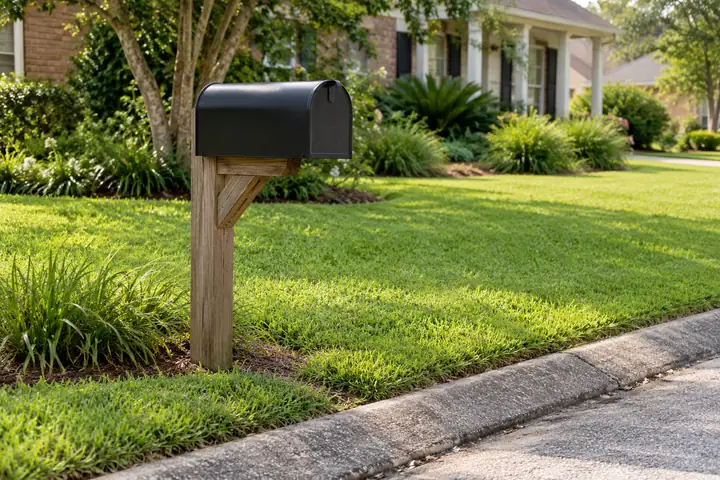
Give the mailbox a place in the lawn conversation
A mailbox can look like a tiny detail from the front door and become a surprisingly complicated corner when you get closer. Grass wraps around the post, a flower collar hides the base, and the street sits right behind it. Tell Happy about that corner when discussing your front lawn. A wide view of the approach and a closer look at the ground are more helpful than a photograph of the mailbox door alone.
The question is how the lawn should meet the existing installation. Routine mowing does not include straightening a leaning post, rebuilding a decorative surround or changing postal equipment. You can want a tidy patch of grass while leaving those separate concerns untouched. Naming both parts gives everyone a useful starting point. Your mailbox does not need a makeover to deserve a little lawn attention; it needs an understood boundary and an approach that can actually be reviewed.
Look at the ground on every side of the post
Walk around the mailbox from your property where you can do so safely. The front may show clean grass while the rear holds loose stones, landscape fabric, a cable tie or an old support stake. A ground-level photograph can reveal a concrete collar or an exposed fastener that disappears in a distant view. Do not pull on unfamiliar material to make the picture tidier. Describe what you can see and leave uncertain items alone.
Separate the materials in your note. Grass against a plain wooden post is different from grass pushing through a ring of small decorative pebbles. Flowers around the base create another boundary again. If the area includes several materials, point to the grass you want maintained rather than saying to clean up everything underneath. That description prevents a small lawn request from turning into assumptions about plants, hardware or loose material. It also makes a later change much easier to explain.
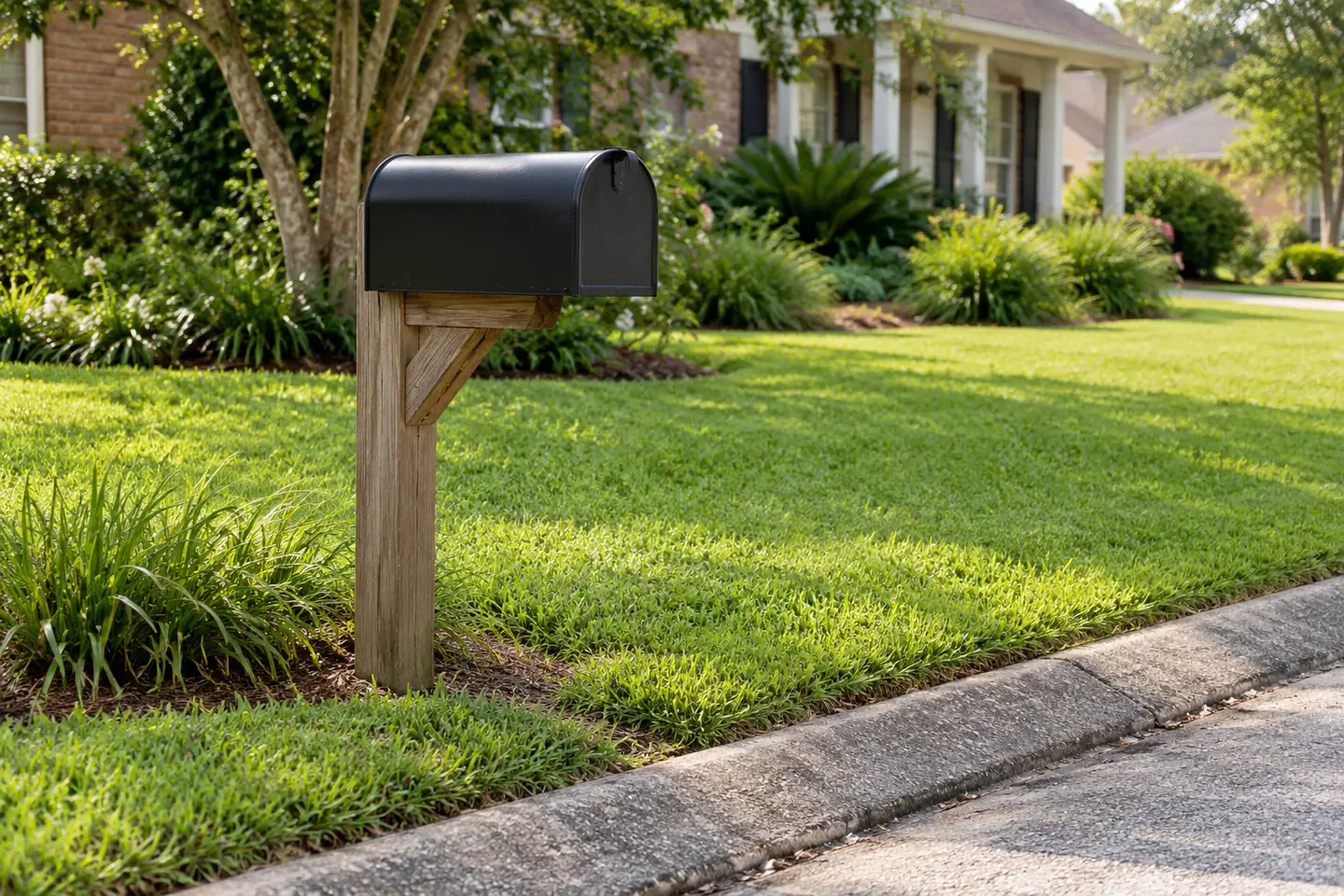
Treat the street approach as part of the review
A roadside mailbox sits at the meeting point of yard use, mail delivery and passing traffic. An attractive photograph cannot establish that equipment can work there under every condition. Tell Happy whether the area is beside a curb, driveway opening, ditch or narrow roadside strip. Mention a blind bend or a delivery vehicle that regularly stops in that spot, without promising a particular safe working method from a distance.
USPS guidance asks customers to keep a clear path to the mailbox. That is useful background for maintaining the surrounding area, but lawn care is not a postal inspection. Ask your local post office about mailbox placement or delivery requirements if those are in question. For the grass itself, agree which roadside portion belongs in the requested visit and which nearby property is outside the scope. A front strip shared visually with a neighbor should still have a clear ownership boundary before work is arranged.
Choose an appearance without demanding contact
The desired finish might be a modest, even grass border around the post, rather than a bare circle of soil or an aggressively shaved base. Describe that appearance in ordinary language. A wooden support, painted metal sleeve and decorative plastic cover do not all present the same surface. A tidy result should not depend on treating the post as a guide that cutting equipment must touch.
Use these details when comparing the existing corner with the finish you want:
- Identify whether the grass reaches the post directly or stops at a planted collar.
- Point out any part of the support that is already scuffed, loose or leaning.
- Say whether you want the existing shape retained rather than enlarged.
- Distinguish taller grass behind the post from flowers or groundcover you intend to keep.
If a small area cannot be approached as expected, a discussed exception is better than a guessed adjustment. Get that question answered before judging the whole visit by one tight corner.
Keep decorations and delivery items out of the guessing game
Seasonal ribbons, small flags, newspaper holders and removable ornaments can make the mailbox corner cheerful. They can also add strings, stakes and pieces at grass height. The homeowner should account for those items before a scheduled visit, following the item's instructions and leaving postal hardware in place. Do not assume the lawn visit includes dismantling a display or handling mail. Put any removable decorations in their agreed storage location rather than shifting them to another patch that also needs mowing.
Packages and delivery containers are another reason to provide a current update. If a box has been set on the grass near the post, move it yourself when practical or tell Happy the area remains blocked. Nobody should have to decide whether a delivery is disposable lawn debris. A short note that the front mailbox area is clear, while a fixed flower border remains, is enough to explain the change without a long inventory of everything at the curb.
Notice changes after rain or roadside work
The soil beside a mailbox may change after utility work, a delivery rut or water moving along the road. Freshly disturbed ground is relevant even when the grass looks similar from the house. Show a new depression, exposed base or soft patch in a current photograph. Explain when you first noticed it and whether it differs from the previous visit. Do not cover a hole with clippings or decorations to restore the usual appearance before anyone reviews it.
These observations are a handoff for the lawn conversation, not a diagnosis of a road, drainage system or underground service. If a separate contractor is repairing the installation or nearby ground, tell Happy when that work is complete and what changed. The next mowing request should use the present condition. An old picture of the mailbox standing straight cannot describe a newly disturbed base, just as a dry-day photograph cannot prove today's narrow verge is ready for equipment.
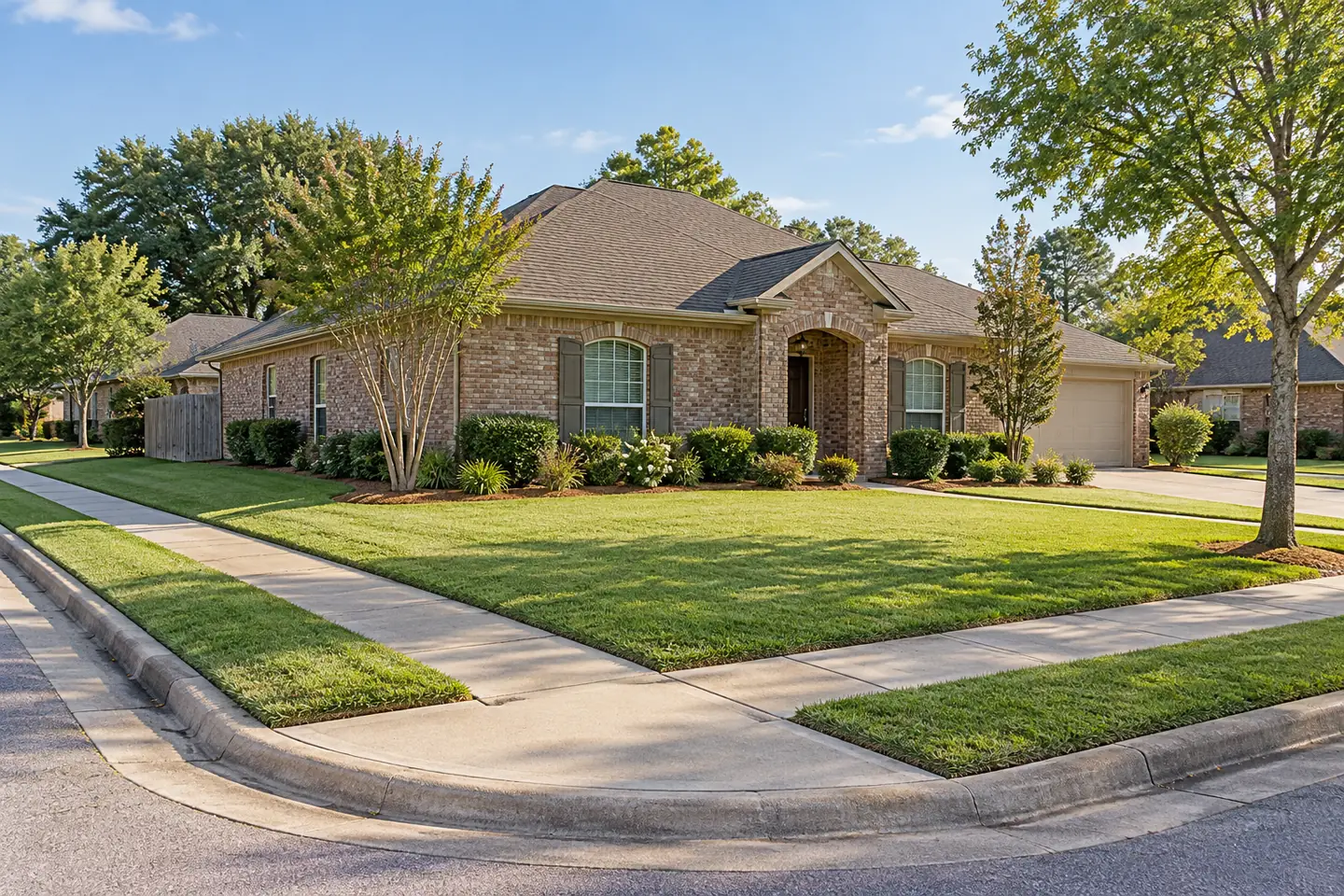
Review the finished corner from useful viewpoints
After a visit, look at the mailbox patch from the sidewalk or another ordinary viewing position on your property. Then look more closely where practical. A distant front view can hide a taller strip behind the post; a tight photograph can make a tiny difference look much larger than it is. Combining the views helps explain whether the issue concerns grass height, the shape of the border or a separate feature that was intentionally left alone.
Keep feedback specific. Say that grass behind the wooden support looks taller than the adjacent lawn, or that a decorative collar was meant to remain undisturbed. Avoid asking someone to get closer without describing the result you want. If an existing damaged or unstable part becomes more noticeable once the grass is shorter, separate that observation from a claim about how it happened. Clear before-and-after notes help a conversation; they do not establish a cause on their own.
Tell Happy how this corner fits your front yard
When requesting lawn care in Harvey or the surrounding Westbank, include the mailbox with the other front-yard details. One practical note might explain that the grass strip continues around the post, the planted ring should stay as it is, and the roadside approach needs an on-site review. That gives the corner a role in the overall scope without turning it into a separate remodeling project.
If the mailbox is on a different frontage from your main lawn, explain how to identify the correct area without sending sensitive mail or personal delivery information. A current yard view is usually more useful than a picture containing an address label. Call 504-339-3571 and ask for Happy to discuss the grass you want included. The aim is a front lawn that looks cared for, with the everyday details understood well enough that nobody has to guess at the last few inches around the post.
Use a precise note for an unusual support
Some mailbox installations have a second newspaper tube, a wide decorative sleeve or a support partly hidden behind flowers. If yours does, explain the lower footprint rather than only naming the mailbox style. For example, distinguish the grass behind the sleeve from the planted strip in front of it. Mention whether an accessory projects sideways over the patch you want maintained. That is a more useful instruction than asking for the post area to be perfect, because it identifies which surface and which vegetation the request concerns. Keep a copy of that note when the arrangement is expected to remain the same.