
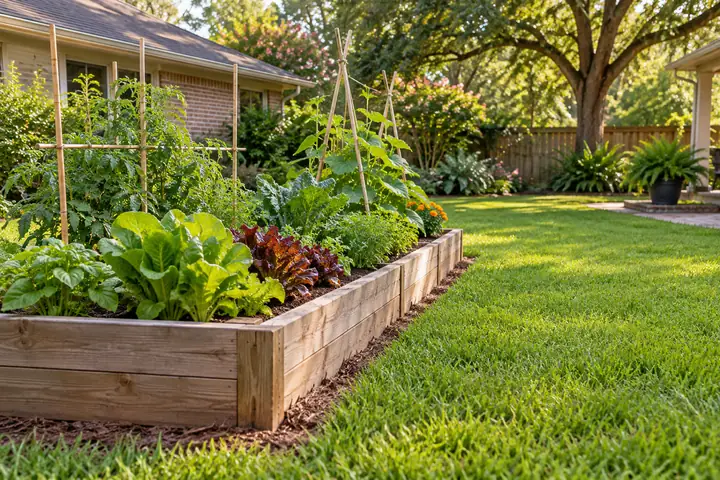
A vegetable bed changes more than lawn size
A raised bed removes a rectangle from the mowing area, but its influence rarely stops at the boards. Leaves lean over the sides, a watering hose connects it to the house, and your harvesting route crosses the grass. Show Happy the whole arrangement when discussing lawn care. A picture of tomatoes alone tells very little about the strip that equipment would need to use beside them.
The lawn conversation should cover the grass around the bed and the access needed to maintain it. Planting vegetables, harvesting crops, rebuilding the bed and caring for the growing mix remain separate tasks. You can explain what is precious to you without asking anyone to identify every plant. If a small seedling is hard to see from above, point it out in a closer photograph. A clearly described garden lets the lawn plan respect the work you have already put into it.
Trace the growing space beyond the frame
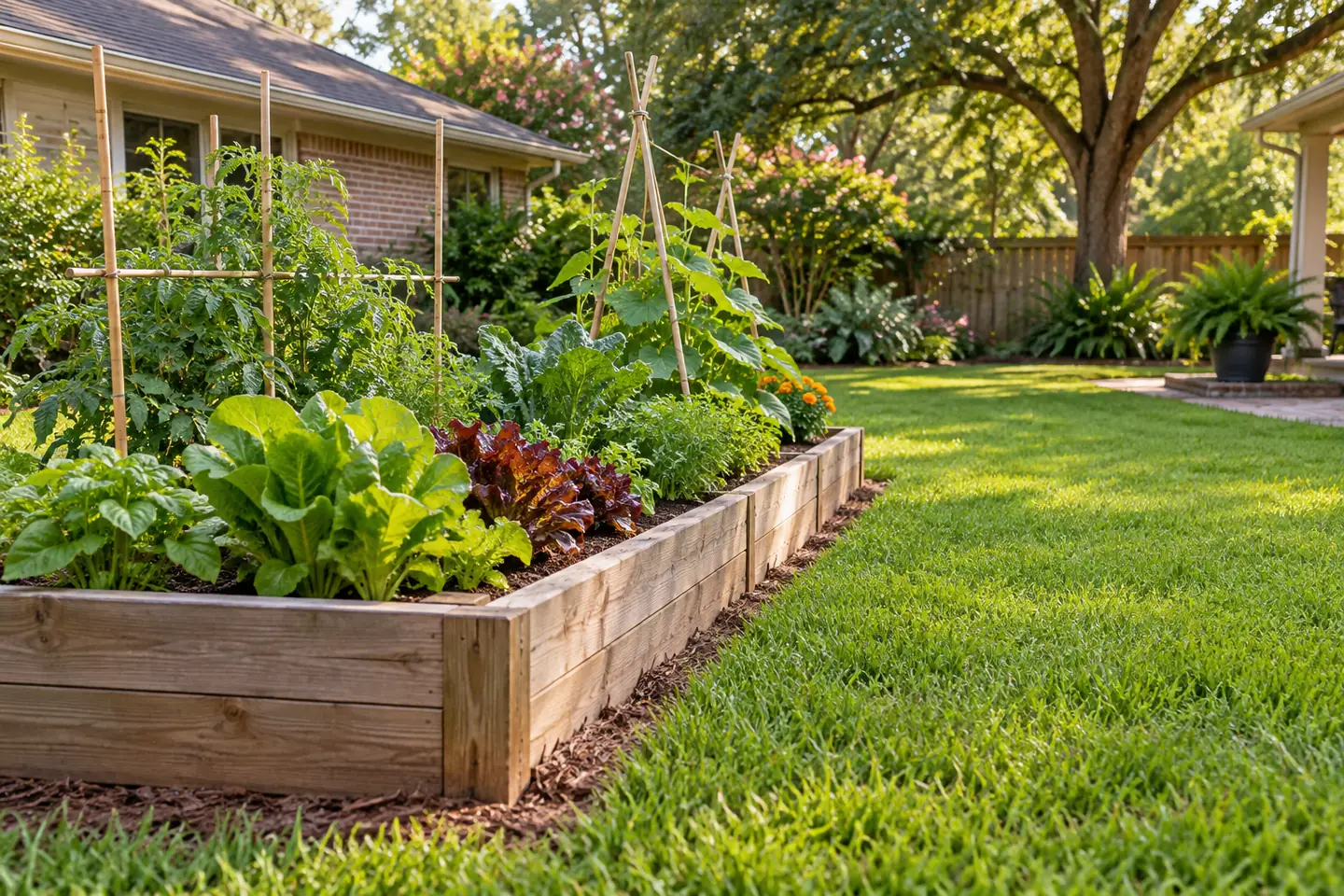
The timber, block or metal frame is an obvious landmark, yet plants can occupy space outside it. Trailing stems, spreading herbs and a squash vine may extend over a grass border that was clear at the previous visit. Describe the current growing space rather than relying on the original bed dimensions. A vine on the lawn should not have to be mistaken for unwanted vegetation before someone learns that it belongs to your garden.
Take a wider picture from the side that shows the outer leaves and any support beyond the frame. Say which plants should remain untouched and whether you will manage their position before mowing day. Avoid tying or rearranging a plant simply to fit an old equipment route if you are unsure how to do so. The important lawn update is that the available space has changed. That may require a revised boundary or a separately agreed exception alongside the bed.
Account for the watering connections
A raised vegetable bed may have a drip line that is almost invisible from the gate. A hose can run through grass, under a board or around a corner before reaching the bed. Show the complete route and identify valves, connectors and loose loops outside the planting area. Explain which pieces are fixed and which you plan to store before the visit. A detached nozzle is still an object in the grass even when most of the hose is put away.
Do not assume someone should disconnect a watering system to make mowing easier. The owner or responsible gardener should handle changes according to the system's instructions. Tell Happy if the lawn strip will remain wet after a watering session, and report the condition you actually see. Watering the vegetables and preparing the adjacent grass are connected activities, but the lawn visit does not establish whether the irrigation design, watering schedule or crop care is correct.
Make room for people as well as equipment
The gap beside a bed may be the only place you can stand to harvest. Another gap may connect the gate to the rear lawn. Distinguish those uses when showing the layout. A strip that works for a person carrying a basket does not automatically establish access for lawn equipment, particularly when the bed has projecting corners or a support frame above it.
Before asking for a quote, identify the practical spaces:
- Show the route from the entrance to each lawn section beside the beds.
- Note a narrow gap between two frames instead of counting it as open lawn.
- Identify where you place baskets, tools and watering containers during gardening.
- Explain whether a trellis or cover extends into the route above the grass.
Keep those observations tied to the actual setup. There is no single gap measurement on this page that certifies every machine, slope or garden layout as suitable.
Agree the grass finish at the bed wall
A neat border does not have to mean contact with the frame or bare soil along every side. Explain whether the grass should remain up to the existing bed boundary and whether delicate material projects near ground level. New boards, exposed liner and irrigation tubing all deserve a mention. The desired appearance needs to be discussed alongside the physical details that could limit the approach.
Ask about the distinction between mowing the open strip and trimming a close corner. An area under a spreading plant may not have the same access as the straight side. If a section is intentionally left outside the visit, describe its endpoints using visible landmarks. That is easier to follow than an instruction to stay a little farther away everywhere. Garden boundaries can change with the season, so a sensible exception this month does not have to become a permanent assumption about every future visit.
Keep clippings and crop handling in their own lanes
Discuss where fresh lawn debris should go before work around vegetables begins. If you want a particularly careful finish along a bed, say which side and which plants are involved. A request to keep loose cut grass out of a growing area is different from asking for lawn clippings to be collected as garden mulch. Neither should be silently added to the scope because a vegetable bed is nearby.
LSU AgCenter treats site selection and drainage as important parts of vegetable-bed planning. That background helps explain why a bed and its surrounding ground need a thought-out layout; it does not turn a mowing visit into crop advice. Ask appropriate gardening sources about food-growing questions. Happy's lawn discussion can stay focused on the grass boundary, working space and agreed finish. Nobody needs to pick produce, move a harvest basket or apply something to the plants to make that scope understandable.
Update the plan when the garden changes
A new bed, temporary cover or recently delivered stack of soil bags can interrupt the familiar lawn route. Send an update before the next visit rather than relying on an older photograph from planting day. The changed footprint may include material outside the frame: bag corners, stakes, support strings or a pile awaiting use. Store portable supplies fully out of the agreed lawn area when practical, and identify anything that must remain.
After a gardening project, distinguish finished ground from a section still being worked. Grass beside freshly disturbed soil may need a new review even though the main lawn is unchanged. If another person tends the vegetables, have that person confirm the garden boundary and watering connections with you. One clear handoff is more reliable than separate instructions from different household members, especially when a plant that looks temporary is actually intended to stay through the growing season.
Bring a simple garden map to the conversation
You do not need a professional drawing to explain two beds and the lawn between them. A few current views, labeled in your message as front bed, back bed and gate route, can do the job. Include the point where a hose enters the area and a view from the opposite end of any tight passage. Keep personal household information out of photographs when it is unrelated to the lawn request.
For a yard in Marrero or elsewhere on the Westbank, tell Happy how the garden fits the rest of the visit. Maybe the main lawn remains straightforward while the harvest side needs special attention in the scope. Call 504-339-3571 and ask for Happy to review those details. With the plants, watering lines and walking space accounted for, the yard can keep doing both jobs: growing something you enjoy and giving you grass you are happy to look at.
Explain temporary covers without opening them
Mesh crop covers, shade fabric and low protective hoops can make an otherwise familiar bed much wider at grass level. Show the outside of the cover and any ties or weights that extend beyond the frame. You do not need to open it or identify what is growing beneath it for the lawn discussion. Tell Happy whether the cover will remain through the visit and who manages it. If the covering is changed between photographs and mowing day, send a quick update describing the new footprint. The important handoff is the occupied space, especially where a loose edge reaches into a narrow lawn passage.
Follow the exterior grass strip around the bed
For a raised bed, one photograph of the front wall may leave the side and rear grass strips unexplained. Name the exterior sections that belong in the request and identify the route between them. If a trellis or crop leans over one side, show that relationship as a keep feature rather than assuming the frame alone defines the working space.
Make the lawn request about the reachable grass around the bed. Harvesting, moving supports and handling plants are separate responsibilities, even when those tasks would make the strip easier to reach. State any household preparation that is still pending. This lets the agreed boundary reflect the current garden arrangement without quietly turning a grass-maintenance request into work inside the growing area.