
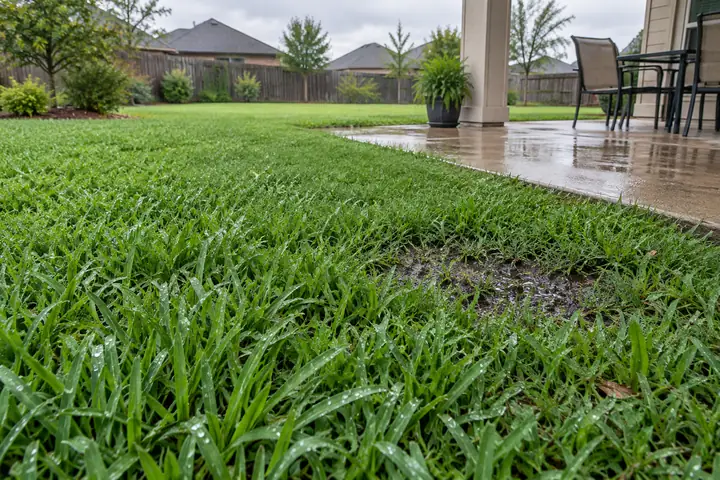
Damp blades and soft ground tell different stories
The sun comes out, the patio dries and the lawn looks ready from the kitchen window. That does not always mean the soil is ready for mowing. A shady corner or the passage beside the house can remain soft while the front grass looks perfectly ordinary. Morning dew can create the opposite picture: damp leaves over relatively firm ground.
Start by describing what you see rather than deciding the whole yard is ready. Tell Happy where moisture remains and whether it affects the only route to the backyard. Those details help more than a simple message saying the rain has stopped. The work decision still needs to fit the actual property and equipment.
Take useful photos from firm ground
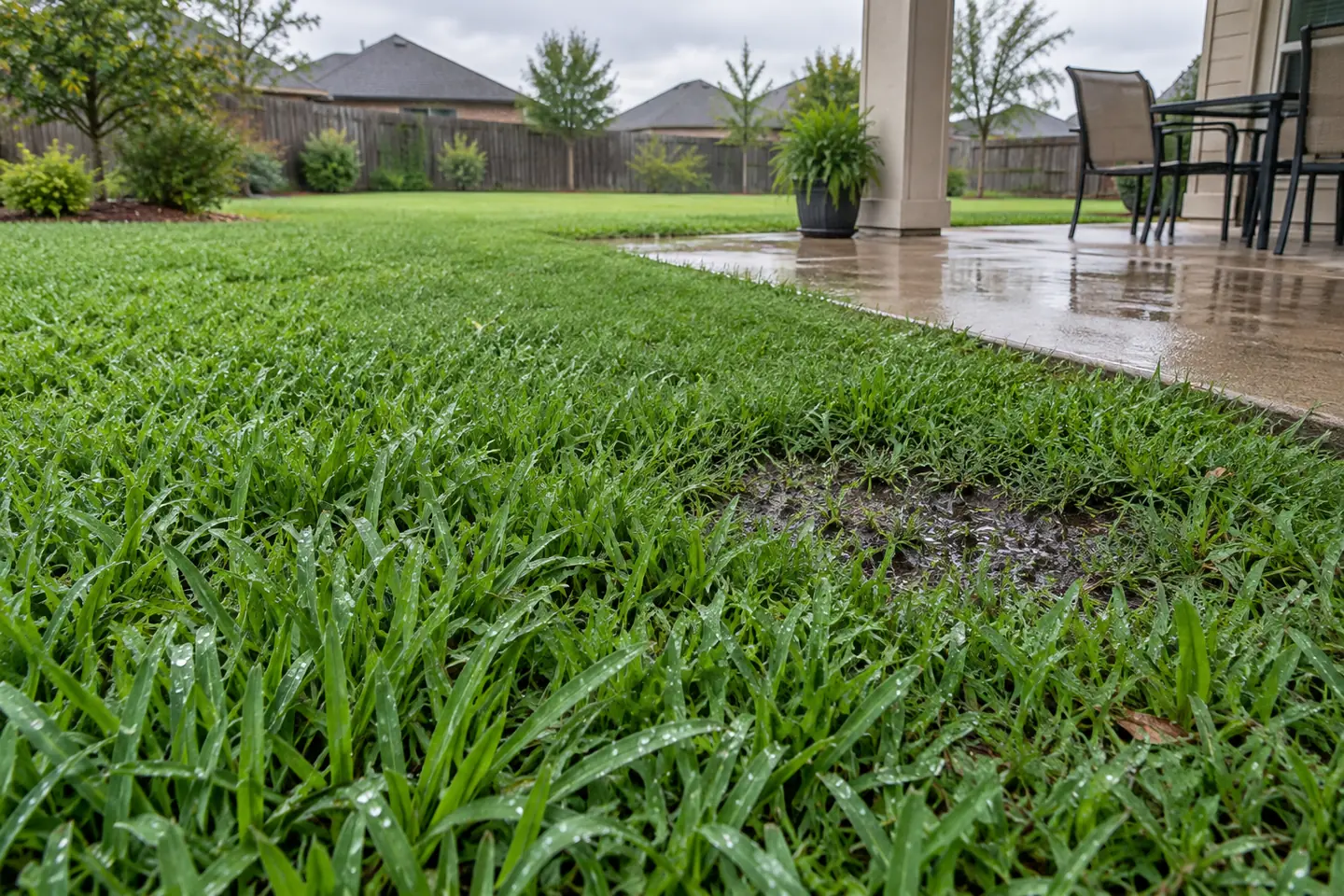
A wide picture from the sidewalk or patio can show the wet section and its surroundings. Include a fixed feature such as the fence corner or driveway so the location makes sense. If possible, add a closer view without stepping into the area. Explain whether the image was taken today or before another shower.
You do not need to test a puddle with your feet, a vehicle or a mower. Keep away from unknown water, hidden openings and anything that looks unstable. If the issue involves contamination, exposed utilities or another unusual hazard, arrange the appropriate help before ordinary maintenance. A lawn photo is useful information, not a reason to enter an unsafe area.
Why forcing the visit can create more work
Wet grass can clump instead of leaving the clean, even finish you expect. Soft ground can hold wheel impressions, and repeated turns can disturb a vulnerable patch. A fast cut may therefore leave a problem that lasts longer than the delay it was meant to avoid. Cutting lower does not remove moisture from the ground.
There is also the question of footing. The Consumer Product Safety Commission advises against cutting wet grass with walk-behind power mowers. The actual operator manual and site assessment remain essential. As a customer, the practical contribution is an honest description of the conditions and a willingness to discuss timing instead of pressing for a cut through unsuitable ground.
Look at the route into the yard
The main grass may be firm enough while the gate passage stays muddy. That narrow route still matters because it controls how the work area is reached. Include it in your update. Mention steps, slick paving, low ground and any place already marked by foot or vehicle traffic. A dry destination does not automatically provide dry access.
- Show the gate and the space just inside it.
- Identify standing water visible from a safe position.
- Mention the shaded strip that dries last.
- Tell Happy if sprinklers ran after the rain.
- Point out any area that must remain untouched.
A simple overview prevents the wettest part of the property from becoming a surprise halfway through the visit.
A partial cut needs an actual agreement
A dry front lawn and a wet backyard may call for a discussion about a limited visit. Ask whether that is practical, what the charge covers and how any unfinished portion would be handled. Do not assume a separate return trip, revised price or immediate replacement slot is automatically included. Confirm those details directly.
Try a message such as, “The front looks firmer, but water is still beside the shed. Can you review whether any part makes sense today?” That gives Happy useful context without pretending to assess equipment suitability yourself. Depending on the property, the answer may involve waiting, changing the scope or maintaining only a clearly defined accessible section.
Connect the irrigation information
If an automatic system ran overnight, mention it. A sprinkler cycle can change a lawn that was drying after rain. Also point out broken heads, unexpected bubbling or a patch that stays wet while the surrounding grass dries. Those are observations worth sharing, even if a separate irrigation professional needs to investigate their cause.
Avoid changing an established care plan solely to fit a mowing visit, particularly around new sod. Explain the situation to the people responsible for the grass and irrigation. Routine mowing is not an irrigation inspection, leak repair or drainage installation. Keeping those responsibilities clear makes it easier to plan maintenance around the property without promising a solution to a different problem.
Recheck the growth after the delay
Once the ground improves, the grass may have grown beyond its usual appearance. The next cut should consider the grass type and current height. Trying to remove all that extra growth in one unusually short pass is not a sensible default. Discuss the starting condition and the finish that can reasonably be expected.
If you know the last mowing date, include it. If you do not, say so and provide a current wide photo. An older picture of the same yard can help explain the change, provided it is clearly labeled. Honest reference information is better than an exact date guessed from memory or a promise that one visit will erase every sign of the gap.
Keep maintenance separate from drainage work
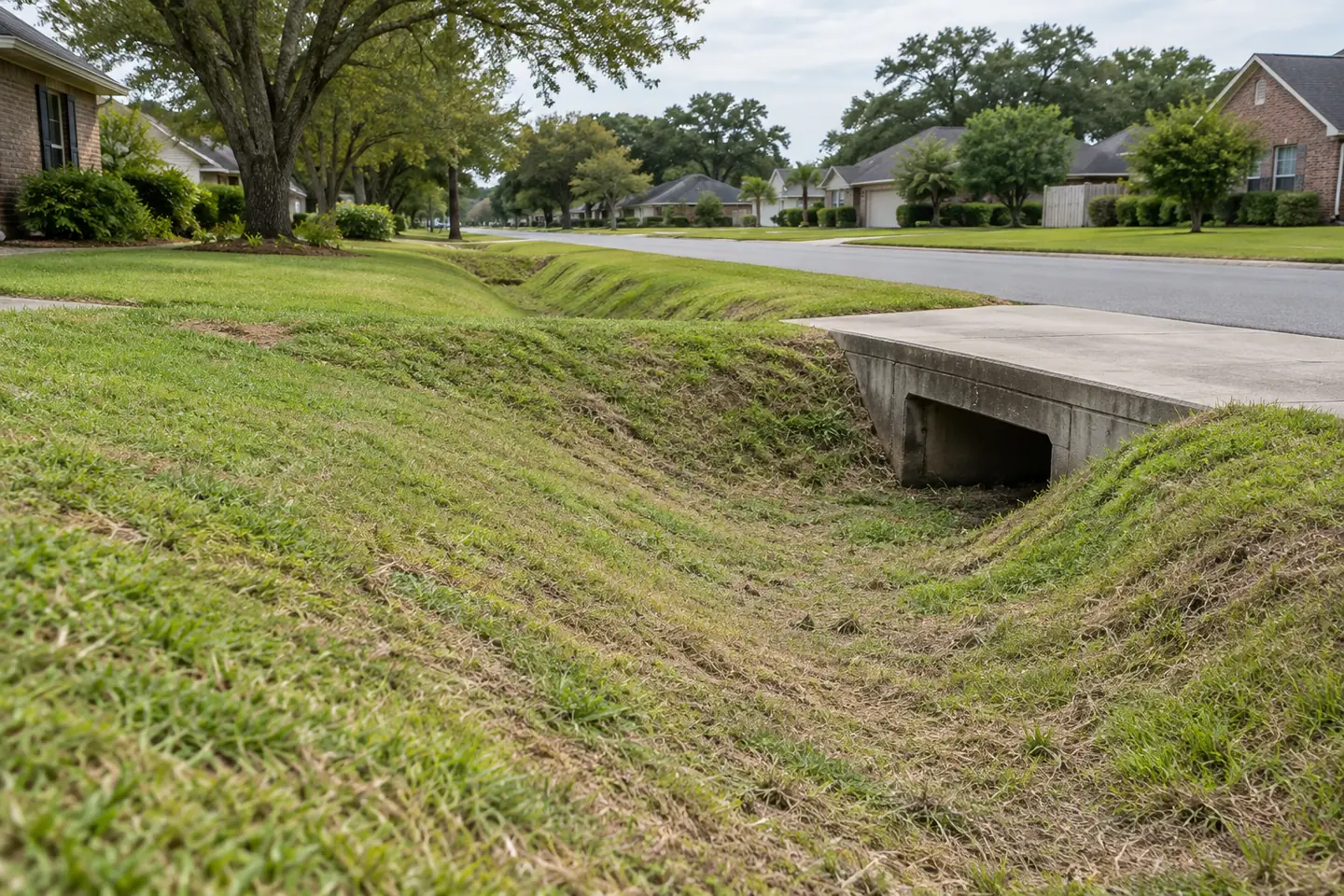
A low spot, a blocked opening and a leaking pipe can produce similar-looking wet patches. A photograph does not establish the cause. Happy Grass can discuss the accessible lawn and the agreed maintenance boundary, but a mowing quote should not turn into a confident drainage diagnosis or an assumed repair service.
Describe the goal precisely. “Maintain the accessible lawn while I arrange a drainage review” is a clearer request than “fix the wet spot while cutting.” If another contractor is working there, identify the section to avoid. Confirm any changes before the visit so ordinary mowing, edging, weed-eating and blowing can be considered within a realistic scope.
Make updates easy to act on
Include your name, city, service address and when the pictures were taken. Tell Happy what changed since the last conversation. A photo from yesterday can be misleading after an overnight downpour, so a short current update matters. Keep the access arrangement and pet plan clear if timing is being reconsidered.
When someone else occupies the property, make sure the authorized contact understands that conditions may affect the visit. Avoid promising a tenant or visitor an exact replacement appointment until it has been confirmed. The weather update helps the discussion; it does not itself reserve a new slot. One clear contact and a current description make the whole process less frustrating.
A sensible next step is still progress
Sometimes the most useful lawn-care action is a good picture and a quick conversation. Ask Happy about the wet areas, the accessible sections and the next workable plan. Once the lawn returns to a regular pattern, you can also review whether weekly or every-other-week mowing fits its actual growth.
Happy Grass serves Harvey, Marrero, Gretna, Algiers, Belle Chasse and Westwego. Call 504-339-3571 or use the quote form with a few current views of the property. Mention the last cut if known, recent irrigation and the places that stay soft. A little lawn love begins with understanding the ground beneath the grass and choosing the right moment to get back to it.
Keep a record of the recurring spot
If the same section is repeatedly wet, save a few dated photos from the same safe viewpoint. Note whether rain or irrigation occurred and how the surrounding grass looked. This is observation, not a diagnosis, but it can support a separate conversation with an appropriate drainage or irrigation provider.
For mowing, the record helps identify a consistent work boundary. A persistent problem should not be rediscovered on every visit. Explain whether another review is arranged and which part remains excluded meanwhile. If the condition is corrected, send a current update before assuming the old limitation has disappeared. That handoff connects the maintenance plan with actual changes on the property.
Keep the information simple enough to use. A date, a fixed photo reference and a short description are often enough. The aim is a clearer next decision about the lawn, rather than a complicated weather diary that nobody can interpret.
Give the surface observation and route observation separate dates
After rain, the front grass may look different from the passage needed to reach the back. Record those observations separately. A photograph of drier-looking blades near the street does not show the condition of a shaded entrance behind the house. Describe which area you viewed, when you viewed it and whether the access concern remains unresolved.
You do not need to step into a questionable area to make the update more convincing. Use the view available from an ordinary firm approach and explain the limit of what it shows. If the next decision depends on the rear route, say that directly instead of presenting the front photograph as evidence for the entire property. A useful update makes the remaining question smaller; it does not turn a partial view into a claim that every section is ready.