
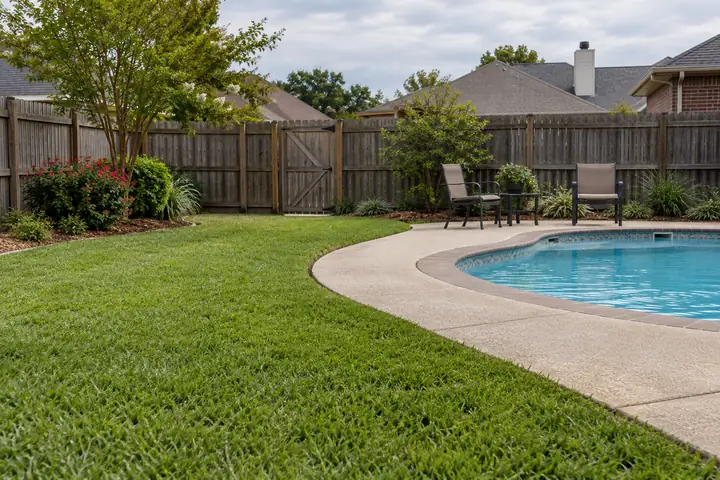
The pool changes the backyard context
A lawn beside a pool can be a lovely part of the yard, but it is not the same as an open grass rectangle. The deck, water edge, fencing and access route create boundaries that should be understood before maintenance. Start by showing the lawn and pool area together rather than sending a close photograph of the grass alone.
Explain the portion you want considered. Is it outside a separate pool enclosure, beside a concrete deck or reached through the same gate? Those details help Happy review the work area. A routine grass-cutting request should not imply pool maintenance, equipment handling or unrestricted access to every part of the enclosure.
Set the gate arrangement before the visit
A pool gate may have a latch or closing mechanism that differs from an ordinary backyard entrance. Tell the authorized contact about that arrangement privately. Do not disable a safety feature or prop a gate open merely to make mowing access easier. The access plan must work with the property’s safety requirements.
Confirm who will manage access and how the area will be secured during and after the visit. If someone else occupies the property, make sure the arrangement is understood by that person too. A lawn service agreement should not become an assumption that another adult is supervising a pool or monitoring children while work takes place.
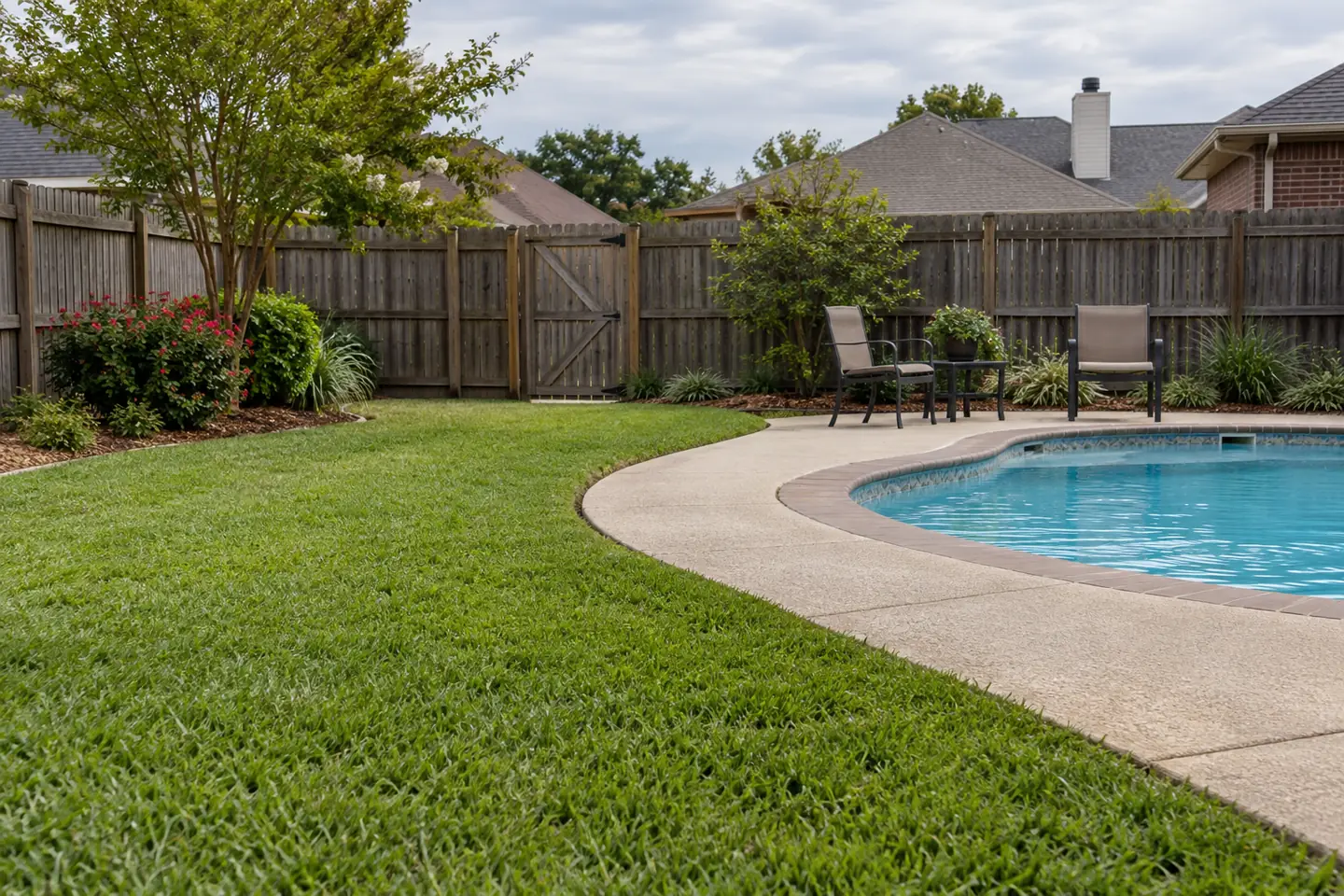
Keep swimmers and activities separate from work
Tell Happy if the yard is used for lessons, guests or another scheduled activity. A preferred time can be discussed, but it is not an appointment until confirmed. People and pets need to remain outside the equipment work area under the agreed arrangements. A maintenance visit is not a suitable moment to combine swimming and grass cutting in the same active space.
If the pool area cannot be cleared or access changes, update the service contact. It is better to discuss a different timing or scope than to expect work around moving visitors. The useful goal is a clear work area with one understood access plan, not a rushed cut squeezed between people using the deck.
Show the hard edge and the grass together
The material between lawn and water matters. A broad concrete deck, a narrow paver border and grass immediately beside a fence create different clearances. Include corners, steps and any point where the route narrows. Photos should make the relationship visible from a safe position without standing at an exposed water edge.
Mention loose paving, damaged edging and slippery areas you know about. Mowing does not repair those conditions. If a section needs a separate contractor’s attention, identify where maintenance should stop. A clearly defined excluded area can allow a useful discussion about the remaining lawn without pretending the whole backyard has the same conditions.
Identify small fixtures before trimming
Poolside spaces may contain low lights, irrigation heads, drain covers and hoses. Some are hidden by grass or chairs. Point out the known locations with a wide photo and a closer reference when safe. Do not open equipment panels or move attached components to support a lawn quote.
- Show the route from the gate to the grass.
- Identify low fixtures near the lawn edge.
- Mention hoses and temporary items that will remain.
- Explain any damaged or unstable surface.
- Mark the portion that must stay outside the work scope.
These details are practical property information. They do not turn routine mowing into a pool-system or electrical inspection.
Agree on small-item preparation
Toys, floats, towels and chairs can spread from the deck into the grass. Explain which items will be cleared before the visit. Moving personal belongings, heavy furniture or attached equipment is not automatically included with lawn maintenance. Agree on those responsibilities rather than assuming every object will be shifted to wherever it happens to fit.
Keep chemicals and pool equipment handled by the responsible person or provider. A grass-cutting visit should not involve moving containers or adjusting unfamiliar systems. If the lawn cannot be cleared safely, say so. The quote or timing may need another review, and a defined limitation is more useful than a surprise pile in the work route.
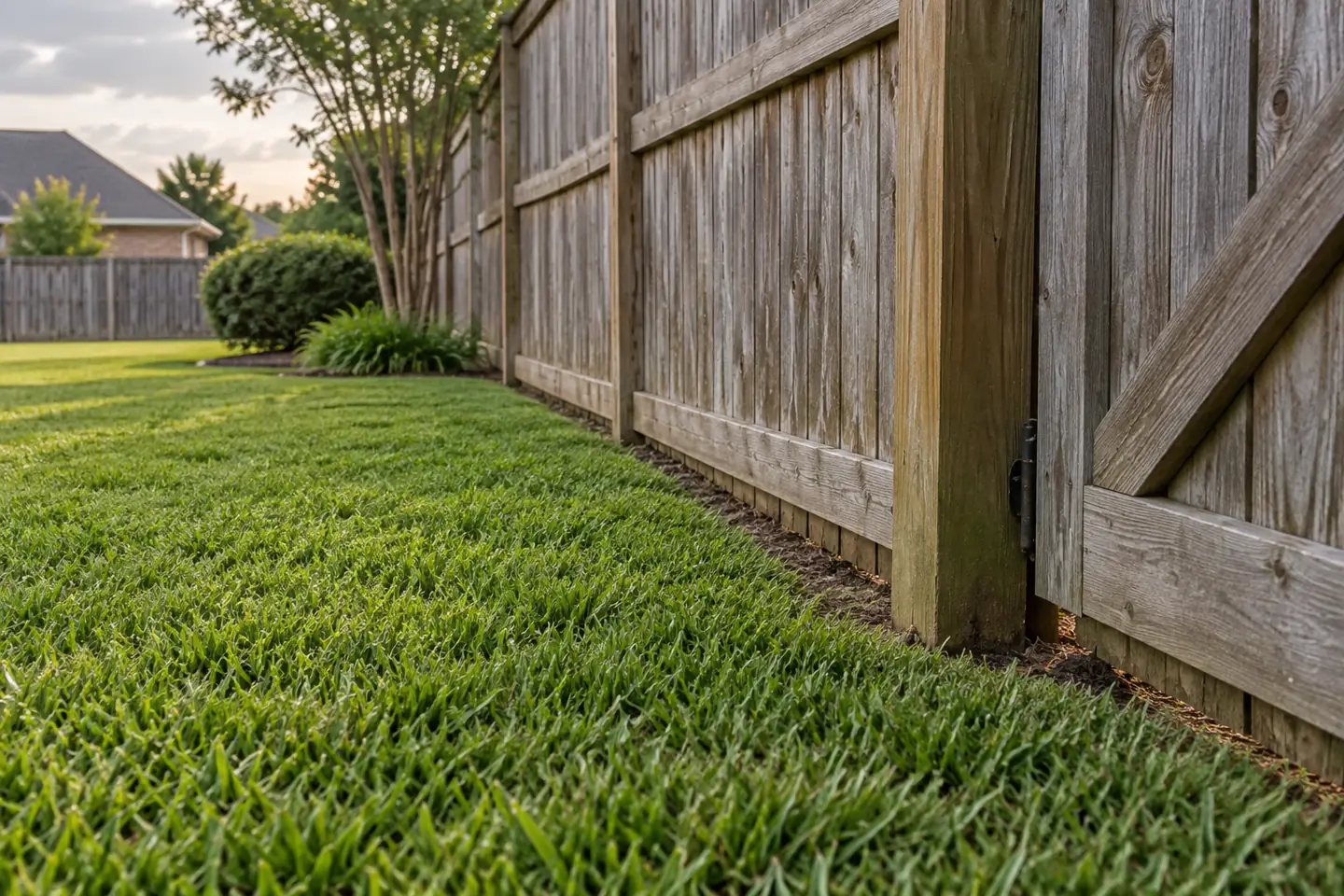
Discuss clipping direction and cleanup
The maintenance plan should account for nearby water and deck space. Ask how the agreed grass area and reasonable cleanup will be handled. Do not assume that blowing means material can be sent anywhere, or that routine lawn service includes cleaning a pool afterward. Clipping handling should be part of the discussion before the cut.
Heavy or wet growth can complicate the finish and may require a different assessment. Mention if the grass has been missed for a while. Bagging, collection and hauling are not automatic inclusions. A clear scope should say what happens to the material and what separate pool cleaning, if any, remains the responsibility of another provider.
Respect equipment and service boundaries
Pool pumps, filters, controls and covers are not ordinary lawn obstacles to move as needed. Identify where they are and what access must remain clear. Maintenance should work around them only within a suitable agreed plan. Pool service, chemical handling and repair are outside ordinary mowing, edging, weed-eating and blowing.
If another contractor is attending the property, coordinate the timing through the person authorized to arrange both visits. Do not assume two different services can safely occupy the same tight route. A hose laid for pool work or an open equipment panel can change the grass-maintenance plan even when the lawn itself looks unchanged.
Watch the ground conditions near the deck
Water can reach the grass from rain, irrigation or ordinary pool use. Describe persistent dampness or soft ground without diagnosing its cause. A wet strip near a hard edge may affect footing and the route into the work area. The fact that concrete looks dry does not prove the adjacent soil is firm.
Take any current photos from safe ground and tell Happy when they were taken. If conditions differ from the quote conversation, update the contact before the visit. A delay or limited scope may need agreement. Routine mowing should not be expected to proceed automatically through a changed or unsuitable area.
Keep the finish realistic for the space
A narrow lawn strip with several fixtures may not allow the same approach as the open front yard. Discuss the appearance you want while allowing the method and clearance to be reviewed. A small agreed margin around a vulnerable feature can be more practical than demanding every blade be reached regardless of the surroundings.
If something appears missed afterward, send a current photo and a fixed location reference. Ask whether that area was included or excluded in the plan. A location-based discussion is easier to resolve than a general complaint that the whole backyard looks unfinished, particularly when the lawn shares boundaries with delicate or restricted equipment areas.
Make updates when the layout changes
A new fence panel, moved chair arrangement or added storage box can alter a familiar route. Send a brief update before the next service discussion. Temporary features matter too: a party setup or maintenance hose can occupy the only clear passage. A preferred future layout is not the same as the route available on the day.
Keep one contact responsible for confirming changes. That person can make sure occupants, pool providers and lawn maintenance are working from the same information. Clear coordination does not require a complicated system. A short message identifying the changed space and any revised access can prevent several people from making conflicting assumptions.
Ask Happy about the grass beside your pool
Start with a wide backyard view, the gate and the actual grass you want maintained. Include fixtures, preparation responsibilities and the result you want. Happy can review whether the requested mowing and finishing work fits the property and what limitations need to be agreed before a visit.
Call 504-339-3571 or use the quote form for a Harvey or Westbank property. Happy Grass serves Marrero, Gretna, Algiers, Belle Chasse and Westwego as well. A little lawn love can make the backyard feel more welcoming, and a clear scope helps keep the grass work connected to the rest of the space.
Review the strip as it will be used that day
A poolside photograph taken with an empty deck may not represent the arrangement when the lawn needs attention. If loungers, a temporary shade or pool activities will occupy the adjoining space, include that information while discussing the strip. The question is not only where the grass ends; it is also whether the expected route and household use fit the proposed visit.
Keep the desired lawn finish separate from promises about the pool itself. Showing the grass-to-deck transition can help explain clipping concerns without implying pool servicing, water treatment or access to equipment controls. When the arrangement changes, update the particular strip and approach involved. That is more informative than sending another wide pool photograph that leaves the actual lawn boundary out of view.