
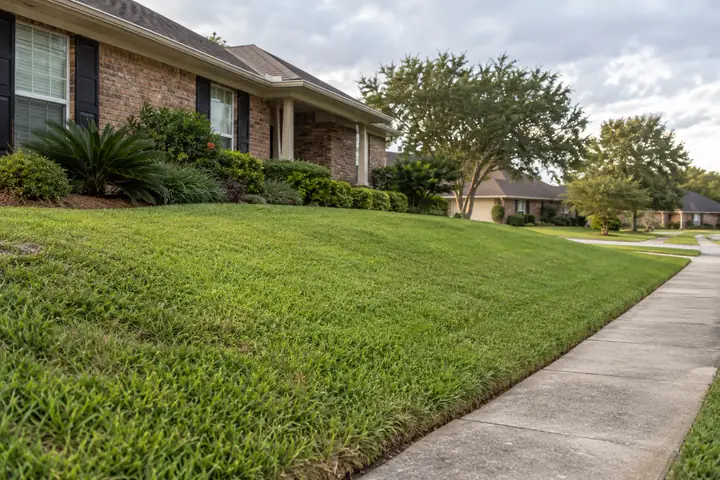
A slope is more than an extra grass patch
From the road, a sloping yard may look like a straightforward extension of the front lawn. Up close, the grade changes footing, turns and the route to the grass. It can also hide a sudden drop at the bottom. A useful maintenance plan starts by treating that section as its own part of the property.
Describe where the slope begins and ends. Is it beside the driveway, behind a fence or above a drainage area? Explain which portion you want considered and what you know about its condition. A quote based only on square footage or a flat-looking front photograph cannot settle the method for a bank around the side of the house.
Photograph the shape from a safe position
A straight-on picture can flatten the appearance of a grade. If you can do so safely, take a wide side view that includes the upper ground, lower ground and nearby features. Keep your feet on secure, level ground. Do not climb onto a bank or stand near an exposed edge to improve the picture.
Add a second view showing the access route. Include walls, drainage openings, fence posts and paved edges. Photos help begin the conversation, but they cannot establish an exact slope measurement or prove that a particular machine is suitable. Avoid presenting a guessed angle as a fact. An on-site assessment may still be necessary before any work is agreed.
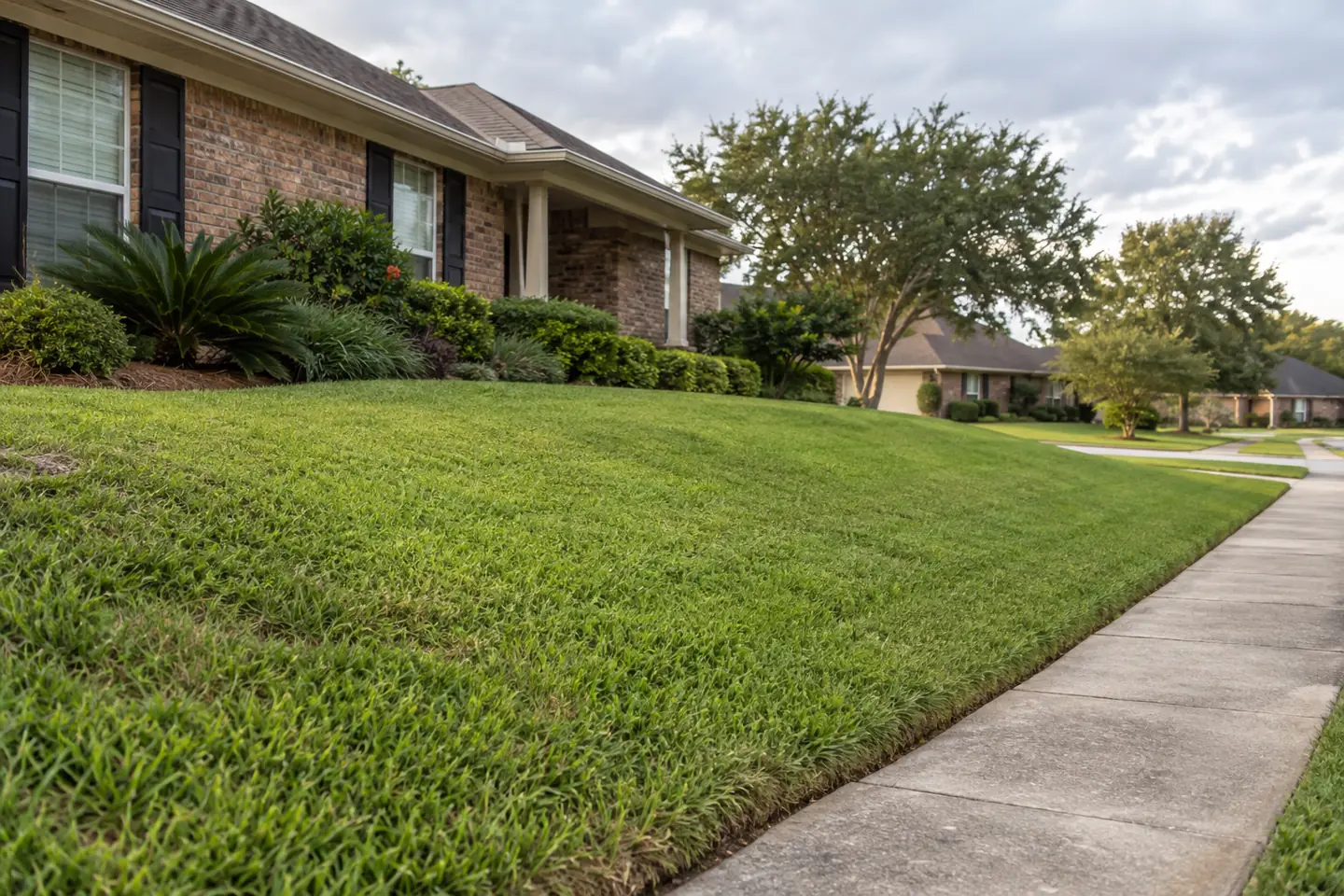
The actual machine has its own limits
Different mower types have different operating instructions. Riding and walk-behind equipment should not be treated as interchangeable, and a general internet rule cannot approve every slope. OSHA identifies wet surfaces, slopes, drop-offs and ditches among rollover concerns for riding mowers. The relevant operator manual and a proper terrain assessment matter.
For a customer, the useful step is to describe the property honestly and allow the work method to be reviewed. Do not insist on a route because someone used it previously. Familiarity does not remove changes in moisture, ground stability or obstacles. A suitable plan may involve a different approach, a defined exclusion or a decision that the section is outside routine maintenance.
Show what happens below the grade
The lower boundary can change the whole situation. A rise ending at open level ground differs from one above a ditch, retaining wall or water feature. Soft soil, loose material and hidden holes can make a familiar section less predictable. Mention those features even when they are not the part of the lawn that looks untidy.
- Identify walls, channels and sudden drops.
- Show where a turn would be needed.
- Describe narrow routes and fixed obstructions.
- Mention soil movement or erosion you have noticed.
- Clarify the portion of land you can authorize for work.
A complete picture helps distinguish the ordinary lawn from the complicated edge beside it.
Rain can change an established routine
A section that was manageable during a dry spell may need a different decision after rain. Wet leaves, soft soil and runoff can affect footing and traction. A glance from the porch is not enough to settle the question. Tell Happy about shaded dampness and places where water travels down the bank.
You do not need to test the slope yourself. Describe visible conditions from a safe location and provide a current photo if possible. A limited visit or delay may need to be discussed. Confirm any revised scope and timing directly. An earlier agreement for the property should not be interpreted as a commitment to work through substantially different conditions.
Trimming is not an automatic answer
A string trimmer may reach grass that a mower cannot, but reach alone does not establish a safe work area. The operator still needs secure footing, appropriate clearance and a plan for nearby objects and people. Some banks remain unsuitable even when hand-held equipment is being considered.
Ask which portion can be reviewed within the quote. Be clear if the request is for grass cutting along a bank rather than mowing the main open lawn. The difference can affect time, equipment and the scope of the visit. “Please get everything down there” is too vague for a section with changing grade and uncertain access.
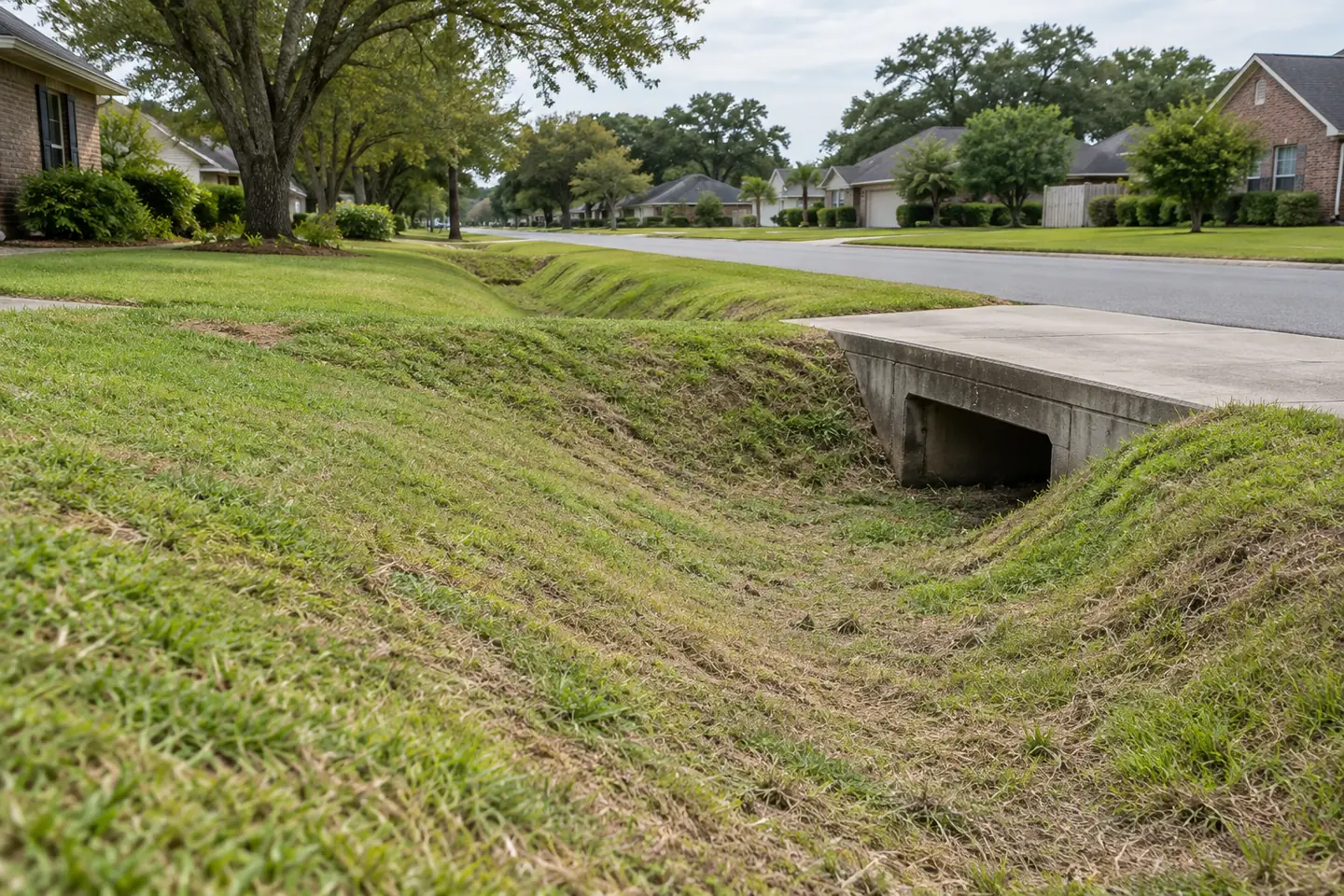
Separate the lawn from structural problems
Grass cutting does not rebuild an eroded bank, stabilize a wall or fix recurring runoff. If the soil has shifted or a retaining structure looks damaged, arrange the appropriate professional review. Ordinary lawn maintenance should not hide a condition that needs attention from another kind of provider.
You can still discuss accessible grass nearby. Identify the part being evaluated separately and define where maintenance must stop. A clear boundary supports a realistic plan for the rest of the yard. Do not assume grading, drainage construction, wall repair or groundcover installation comes with mowing, edging, weed-eating or blowing. Those requests need their own defined scope and suitable provider.
Set an appearance goal that fits the terrain
Changes in grade can affect how the cut looks. Scalping or uneven appearance may be influenced by the ground itself, and a very short cut is not a sensible universal correction. Discuss the grass type, current condition and result you want without demanding a particular risky path or machine.
A reference photo of this same property can help. Point out whether the concern is tall growth, a shaggy upper edge or repeated marks in a turning area. “The grass beside the driveway looks missed” is a useful location-based observation. Asking a difficult bank to look like a perfectly level sports surface leaves the real maintenance question unanswered.
Access deserves the same attention
The slope may be reached through a gate, along steps or beside a storage area. Show that route too. If safe, provide the clear gate measurement and explain any tight turn immediately beyond it. A usable opening and enough turning space are separate things. Fixed obstructions should be visible in the photos.
Keep people and pets away from the work area according to the agreed arrangements. If something changes before the visit, update the contact handling the service. A parked vehicle, new storage box or locked gate can remove a route that previously worked. Clear access information is part of the mowing plan, even when the slope itself is the main concern.
Let’s work out the practical next step
A good conversation ends with a defined section and a shared understanding of what can be considered. Sometimes the main lawn can be maintained while a difficult bank remains excluded. Another section may require a separate assessment or a different professional. Knowing that at the beginning makes the quote more useful.
Send Happy the city, address and safe wide and side views. Mention moisture, lower edges, known holes and the route into the yard. Call 504-339-3571 or use the quote form to ask about your Harvey or Westbank property. Let’s kick some grass with a plan that fits the ground, the grass and the actual work area.
Use a simple reference for the work boundary
An annotated photo can identify the section you want considered without asking anyone to stand on the bank. Label a fixed feature, such as the driveway corner or fence end, and describe the requested boundary in a sentence. Keep that reference with the quote so everyone is discussing the same patch.
If another household member coordinates access, share the agreed boundary with them. A helpful person at the gate should not unintentionally expand the job into an excluded bank. When the grade, planting or access changes, update the reference rather than relying on an old picture. Clear information does not make a difficult slope suitable, but it makes the decision easier to understand.
The same reference is useful afterward. If one section still looks tall, you can ask about that exact location and the agreed plan. Specific feedback is more productive than a general request to change everything about an otherwise useful lawn routine.
Show the connection between the slope and the turn
A slope photograph is more useful when it includes the approach and the place where equipment would have to turn. Take it from an existing safe position rather than climbing onto the grade for a better angle. Name any part that is hidden from that view, especially an edge, drop or obstruction beyond the crest.
Leave the equipment decision with the person assessing the route and the relevant operating instructions. Your role is to describe the layout accurately, including changes since a previous visit. If a proposed route would cross another property or a surface you have not authorized, say so before it becomes an assumed shortcut. A slope review should end with an understandable included area or an honest exclusion, not an improvised instruction to reach every blade at any cost.