
Begin with a useful identification
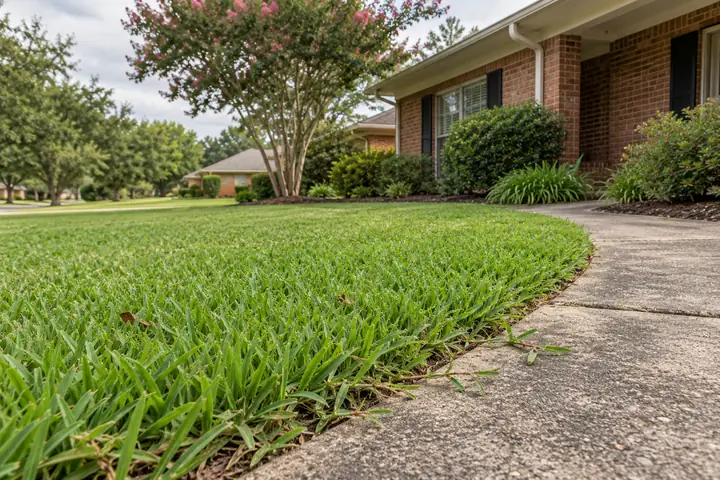
St. Augustinegrass is familiar in Louisiana lawns, but familiar does not mean every broad-bladed patch is the same grass. LSU AgCenter describes its coarse texture, broad rounded leaf tips and opposite leaves along sturdy above-ground runners. The species can be confused with other lawn grasses. A close photo can help start an identification conversation, while a confirmed variety name from your sod records is better than a guess based on color.
If you are uncertain, put “grass type not confirmed” in your request. You can still explain the work you want: the front lawn, fenced backyard, driveway edges and a tidy finish. Happy can review the maintenance question while you seek identification help from your local extension office when needed. A useful lawn plan starts with the information you actually have, including the bits you have not pinned down yet.
Keep the height discussion separate from the calendar
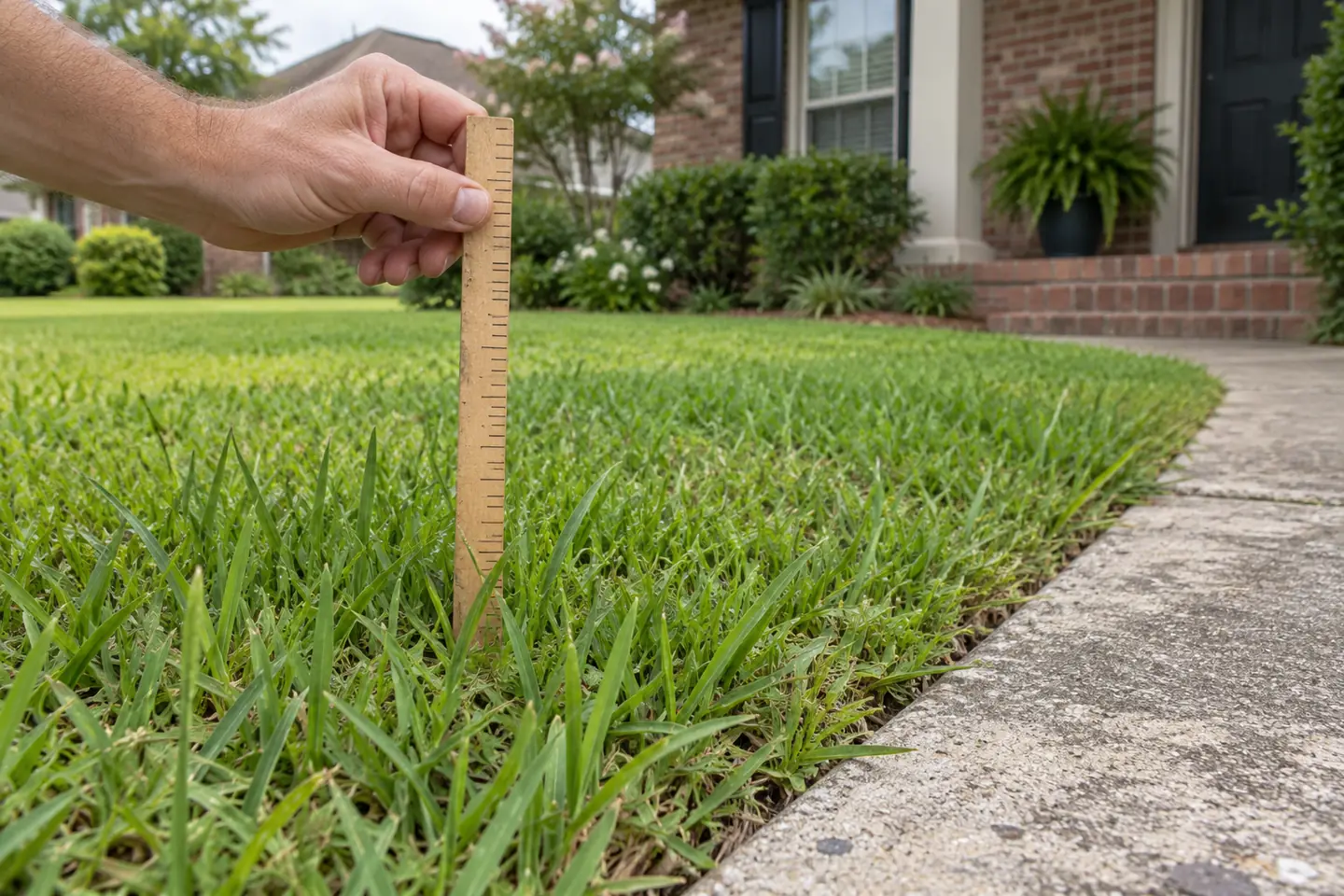
LSU’s Louisiana Home Lawn Series lists routine St. Augustinegrass mowing at 2.5 to 3 inches during active growth. Treat that as regional background for an identified lawn, with the actual variety and condition still part of the decision. It is not an instruction to select a number on an unfamiliar mower. A deck position labeled three does not necessarily establish a three-inch finished lawn.
Tell Happy what has been happening between cuts. Is the grass comfortably manageable until the next visit, or does it look overdue halfway through the interval? Include when the last cut happened and whether the current photos are before or after mowing. Those observations connect the height discussion to your property. Choosing weekly or every-other-week service is easier when you can describe the result you want between visits, rather than just naming a day on the calendar.
Compare the same grass area over time
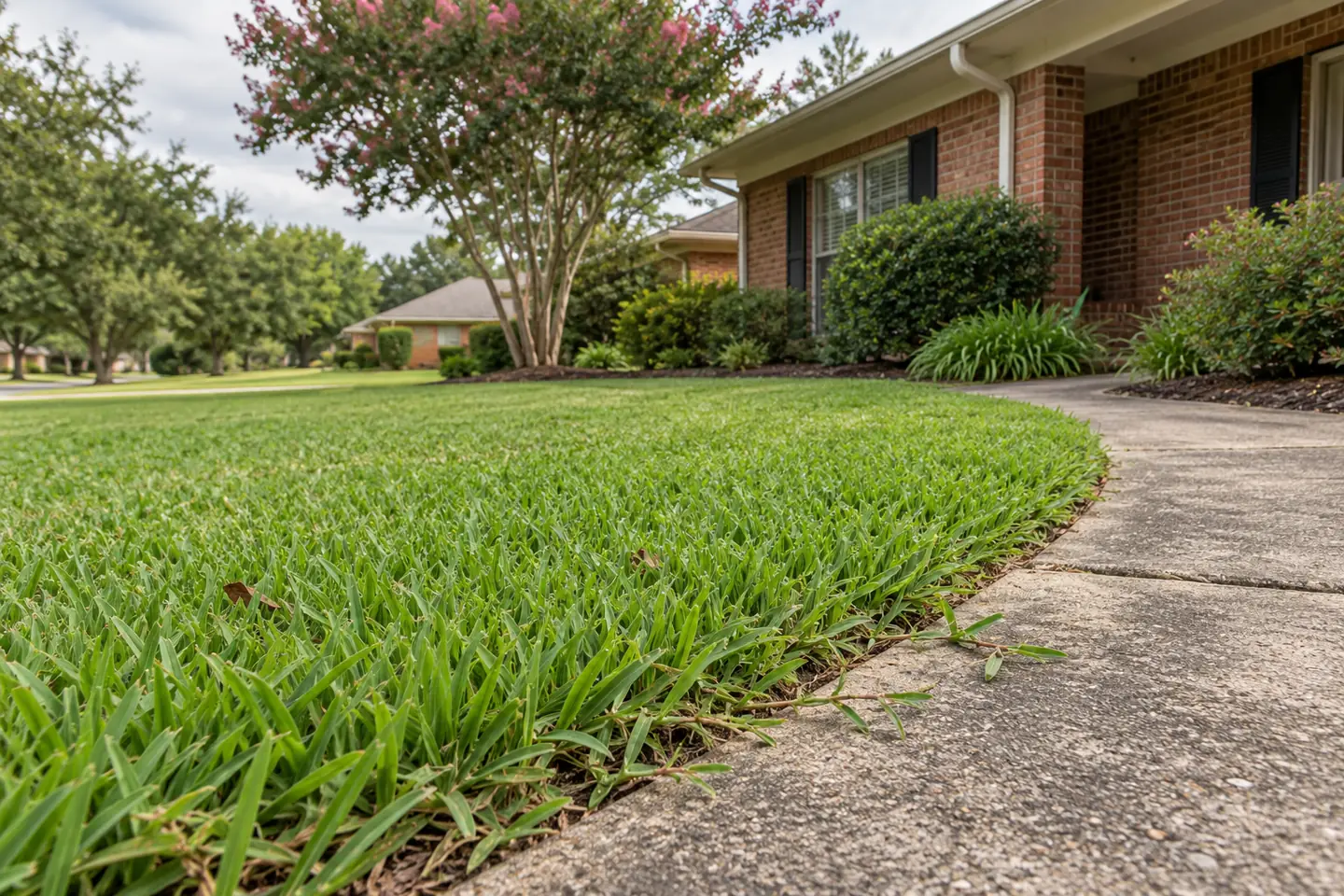
A photograph from the front porch and another taken close to the curb can make the same lawn look very different. For your own records, choose one repeatable view that includes a fixed feature such as the path or mailbox area. Photograph the lawn from that spot before a planned visit, then use the same angle when you want to discuss how the routine is working. Keep the dates with the pictures.
You do not need daily measurements across the whole yard. One clear comparison is often more useful than a camera roll of unrelated close-ups. If the backyard seems to behave differently, give it a separate record instead of letting the front view stand for everything. Describe each area in ordinary words: “the sunny strip by the driveway” or “the back section beside the patio.” That makes the next conversation easy to follow.
Make room for sunny and shaded sections
LSU notes that St. Augustinegrass performs best in full sun while tolerating moderate shade. That does not make every dark corner a dependable lawn area. Show the transition between open grass and shaded grass, especially where a tree canopy or the house changes the light. Explain which part you are asking to maintain, and keep a thin or bare area visible in the photos rather than framing it out.
For the mowing request, identify roots, planted borders and spaces you want left untouched. A tree margin may need a clear boundary even when the rest of the lawn is straightforward. Ask about the practical cutting and trimming scope without turning it into a promise to grow grass in every spot. If your main question is why a patch is failing, that is a separate investigation from keeping the existing accessible grass maintained.
Decide what a finished visit should include
The broad lawn is only part of what you see when you pull into the driveway. An agreed visit may also include edging along suitable concrete, weed-eating accessible margins and blowing loose cuttings from named hard surfaces. List those tasks when you request the quote. “St. Augustine mowing” identifies the grass question; it does not automatically define the whole property’s finishing work.
- Name the front and back grass areas.
- Point out the driveway or path edges you want reviewed.
- Show fence corners and planted borders separately.
- Identify the patio or walkway included in blowing.
If an edge has disappeared under heavy growth, photograph it as it is. Re-establishing a buried boundary may differ from maintaining a visible line. You do not have to decide how long that will take; you just need to show the condition so the scope can be discussed clearly.
Handle a missed-cut stretch as its own request
Suppose the lawn was on a comfortable routine, then access problems caused several missed visits. The next conversation should describe today’s growth, not just repeat the old arrangement. Send new wide photos and say which grass areas have been cut in the meantime. A partly maintained front and untouched backyard are two different current conditions, even if they belong to one address.
Ask Happy what the first visit back can reasonably cover and what follow-up arrangement makes sense. Keep clipping handling in that conversation. If you want collection or bagging, ask explicitly and wait for confirmation rather than assuming it is included in cutting. The goal is to get back to a practical routine with a clear first step. A drastic low cut should not be treated as a shortcut around reviewing an overdue lawn.
Protect the parts that are not lawn work
Fresh sod, a newly planted border or a homeowner’s experimental patch should be identified before the visit. Tell Happy when the area was installed and who supplied its establishment instructions. Those details are useful context, while ordinary recurring mowing should not silently become a new-lawn establishment service. If there is uncertainty about readiness for mowing, settle it before including that area in the working plan.
Happy Grass does not offer fertilization, aeration, overseeding or pest control. Keep those needs separate from a request for mowing, edging, weed-eating and blowing. If someone else has recently treated or worked on the lawn, share the relevant timing and instructions privately. A maintenance quote is easier to understand when everybody knows which work Happy is being asked to do and which questions belong with another provider or an extension specialist.
Give access the same attention as the grass
A beautiful open lawn behind a narrow gate still needs a workable route. Show the gate opening, the passage beside the house and any sharp turn before the backyard. Mention a step, loose surface or fixed obstacle. If you can safely measure the narrowest usable opening, include it with the photo. Happy can then review the route without having to infer it from a picture of the grass alone.
Arrange pets, locks and household coordination before the visit is expected. The important detail is who can provide the agreed access and how the work area will be available. If that arrangement changes, send an update promptly. You are not making the request complicated by mentioning a gate or a dog; you are explaining the real property so the grass-cutting plan can work from the first visit onward.
Build a short, specific request for Happy
Try a message like this: “Our lawn is identified as St. Augustine. Please review front and backyard mowing, driveway edging, fence-line weed-eating and blowing the front walk. The back section has more shade. These pictures are current, and the gate route is shown separately. We would like to discuss the interval after you review the growth.” Add your actual address privately and your preferred contact method.
That note gives the grass type, property layout and requested finish without inventing an exact height, a price or an available route slot. Happy can ask about anything still missing. For a lawn in Harvey, Marrero, Gretna, Algiers, Belle Chasse or Westwego, send the useful details and let’s take a little grass off your mind. A happier routine starts with a lawn plan you can both understand.
Keep species information attached to the right area
If you have a reliable identification or an installer’s record for one part of the lawn, say which part it describes. A document about the front sod does not necessarily identify every grass growing behind the garage. Keep unknown areas labeled as unknown and show them separately when they are relevant to the mowing request.
This makes height discussions more useful without asking Happy to diagnose the whole property from one photograph. Record the source of the information and any later change, such as replacement sod in a small section. When you compare the finish over time, return to the identified area rather than silently switching to a patch with a different texture. The aim is a practical maintenance conversation grounded in what you actually know about the lawn, with uncertainty left visible where it belongs.