
Understand what low maintenance means for your request
LSU AgCenter describes centipedegrass as a slower-growing warm-season lawn grass with relatively low maintenance requirements. Its leaves alternate along above-ground runners, and it can be confused with other grasses. Those are useful clues, not a complete identification from a distant yard picture. If you have a sod invoice, planting record or confirmed species name, keep it with the property notes rather than relying on a nickname passed along by a previous owner.
For a lawn quote, say whether the grass type is confirmed. Then describe the actual grass areas and what you want done. “Low maintenance” does not mean nobody needs to look at the edges, the gate or the grass before the next visit. It describes a general characteristic of the turf, while the service request still needs a specific scope. Happy can work with a plain explanation of your yard and ask for missing details.
Start with the right height conversation
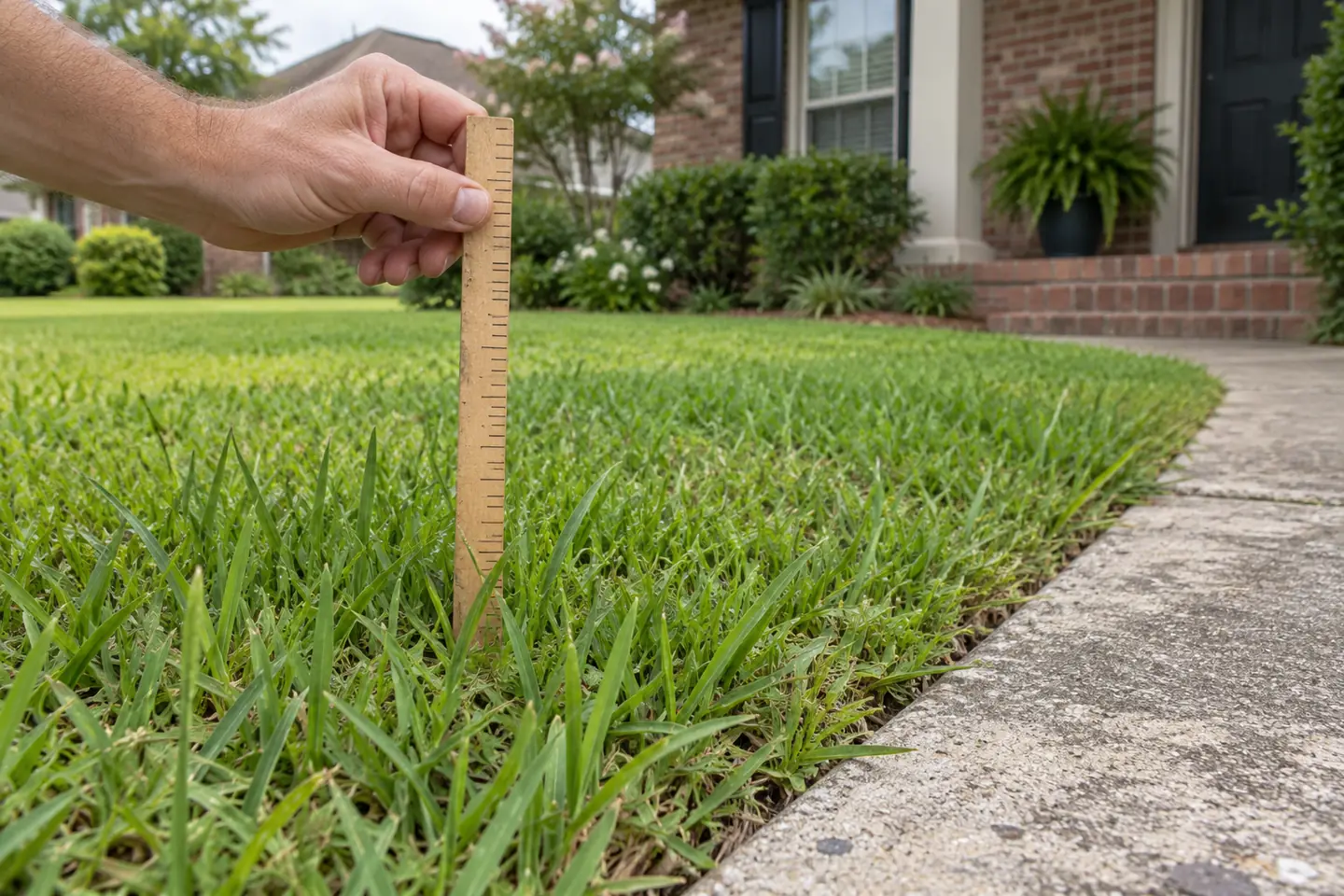
LSU’s Louisiana centipedegrass profile lists routine mowing at 1 to 2 inches during the growing season. That regional reference belongs alongside the current lawn’s condition and a confirmed identification. It is not a reason to copy the deck setting used on another property. If a previous provider maintained the lawn successfully, describe that history and share any useful records rather than asking for an unexplained setting number.
Ask what finished height is being considered and how the current growth affects the next visit. A request for a tidy appearance should not be reduced to “as short as possible.” You can prefer a neat lawn while still reviewing the appropriate cutting plan. If you are changing providers, give Happy the opportunity to see the current result and understand your priorities before assuming the old method or interval should be repeated exactly.
Track the look of the lawn between visits
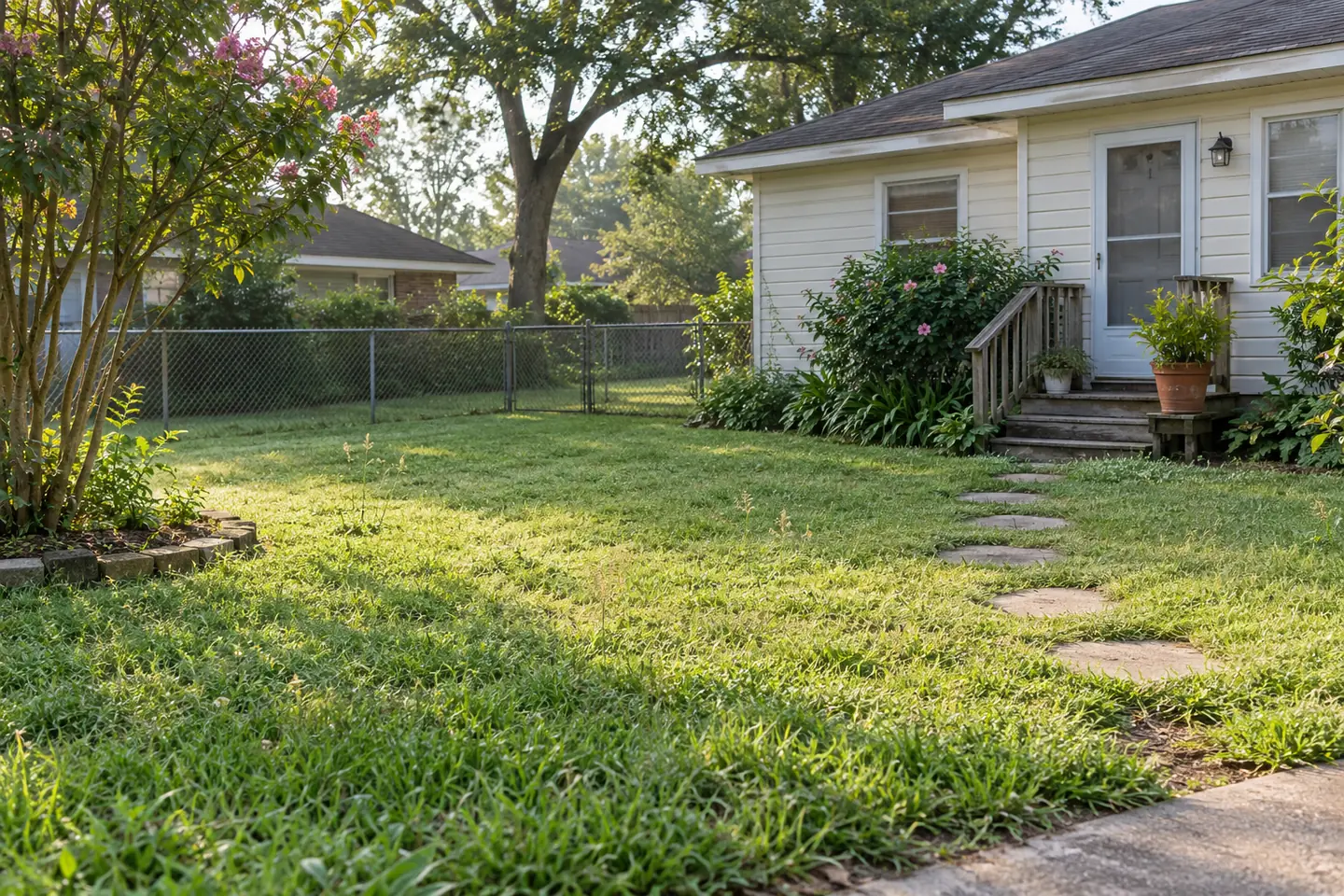
Choose one or two questions you can answer easily. Is the grass manageable before the next cut? Are there particular areas that look overdue first? Does the open lawn look acceptable while the fence line becomes distracting? Those observations separate a mowing-interval question from a trimming or finishing question. Write down what bothers you and where it happens, instead of describing the whole property as untidy.
Keep a dated wide photo of the same area when you want to compare results. An image taken immediately after mowing cannot show how the lawn looks near the end of the interval. If you are reviewing recurring service, photos at different points in the routine can provide that context. You do not need to turn yard care into a daily recordkeeping job. A small set of clear comparisons gives the conversation a practical starting point.
Keep leaf growth and tall stems in context
A few stems rising above a lawn can change its appearance without describing every part of the grass underneath. Photograph both the wider lawn and the detail that is bothering you. State what you notice rather than guessing the cause or identifying every stem from an online photo. Happy can review the visible maintenance request while a separate plant identification question can go to a suitable local source when necessary.
This is especially useful when you are deciding whether the lawn needs the same work everywhere. The front may need a visual touch-up while the backyard raises an access question. Ask about the actual included areas and confirm any change to the normal scope. A small-looking detail can still matter to your satisfaction, but it should be named clearly so the request does not become an undefined promise to make every plant the same height.
Give compact areas a clear boundary
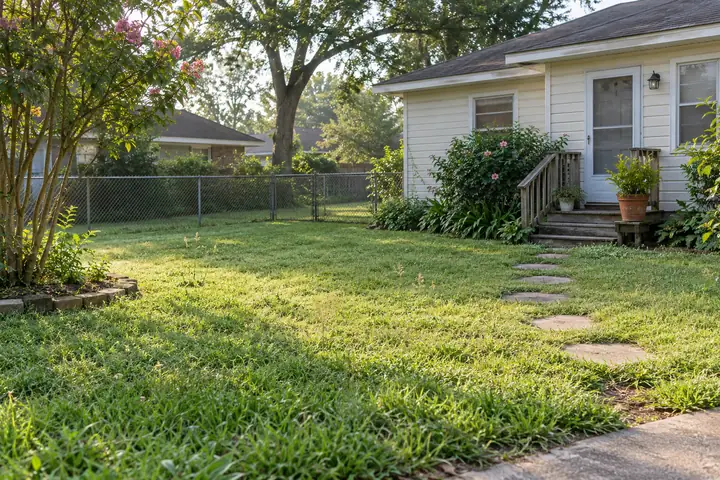
Centipedegrass may be only part of a property’s green space. Label the lawn sections you want cut and show planted groundcover, garden beds and adjoining property separately. A wide picture from a driveway or patio can make those relationships clearer than a close view of blades. If you are unsure where a boundary lies, mention that uncertainty before work is planned.
- Identify each grass section by a simple location name.
- Show the path, curb or fence that defines its edge.
- Point out planted areas that remain outside the job.
- Explain whether a side strip belongs in the recurring request.
This is useful even on a small yard. A compact front lawn with several borders can involve more finishing decisions than one open rectangle. Happy needs the layout and tasks, rather than a label such as small lawn, to review the request properly.
Discuss worn areas without guessing a treatment
LSU notes that heavy traffic can contribute to centipedegrass stress. If you notice a worn route, show where people, pets or equipment regularly pass and describe when you first noticed the change. A photograph and a short history are useful observations. They do not establish a complete diagnosis or tell you which product, soil amendment or renovation the lawn needs.
Keep the mowing scope separate from a recovery promise. You can ask Happy to maintain accessible grass while also seeking advice about an area that is struggling. If another provider is doing work there, mark the boundary and share the relevant scheduling instructions. Happy Grass does not offer fertilization, aeration, overseeding or pest control. A clear division of responsibilities keeps a straightforward maintenance visit from becoming a bundle of services nobody has actually agreed to provide.
Review the first visit separately when needed
If you have just moved in, the existing lawn routine may be unknown. Tell Happy that rather than filling in a history you do not have. Show the current grass and access, explain which areas the property includes and ask what the first visit needs to address. Stored objects or a gate that has not been used recently are worth showing as part of that review.
After a gap in mowing, ask about the first cut and clipping handling before assuming a recurring price or timetable. A new routine can be discussed after the initial condition is understood. This lets you compare like with like: first-visit work against first-visit work, ongoing maintenance against ongoing maintenance. It also makes it easier to ask about an optional task such as bagging, which should be confirmed rather than silently included in the word mowing.
Connect cutting with the finish you want
What would make the yard look happier to you after the visit? Perhaps it is the concrete line beside the driveway, the corners around the back fence or the loose cuttings on the front path. Name those details. Mowing the open grass, edging suitable hard boundaries, weed-eating accessible margins and blowing agreed surfaces are related tasks with different purposes.
Use current photos to show the existing condition, especially where a boundary is hidden under growth. Ask what is included and what needs separate review. A lawn does not have to look like a golf course to feel cared for, and your quote should describe the result you are actually seeking. Clear areas and clear tasks give Happy a better basis for discussing the job than a broad request to make the property perfect.
Build a routine you can explain in one note
Before recurring visits begin, summarize the included grass, finishing tasks, access and preferred contact method. Mention when the lawn has been watered or when a household change affects the gate. Arrange pets and ordinary movable items before the agreed visit. If you want to change the scope later, ask about the change directly rather than assuming it will be picked up from a new object or an informal note left outside.
For example: “Confirmed centipedegrass in front and back. Please review mowing, the front driveway edge and fence-line trimming. The side planting strip is excluded. The backyard is through the wooden gate shown in the photos.” That is a useful place to start. Send the address privately, ask Happy about availability and let’s put a simpler lawn plan in place for your Westbank home.
Keep an uncertain grass name out of the instruction
Suppose you were told the lawn is centipedegrass when you moved in, but you have never confirmed that identification. Include that history as background, with the uncertainty attached. Then describe the leaf layer, separate patches and recent cutting history using observations you can support. An uncertain name should not silently become a precise instruction for every part of the yard.
This distinction is especially useful when a repaired patch looks different from the surrounding lawn. Show the transition rather than assuming one grass label covers both sides. If you have original care information from a confirmed installation, keep that information with the relevant area instead of applying it across the property.
The next conversation can then address what is known and what needs checking. You can discuss the visible finish and the proposed routine without pretending that a photograph has settled every turf question. Keep any identification question open until an appropriate source can answer it, and avoid changing the whole lawn plan merely to match a name that may have been remembered incorrectly.