
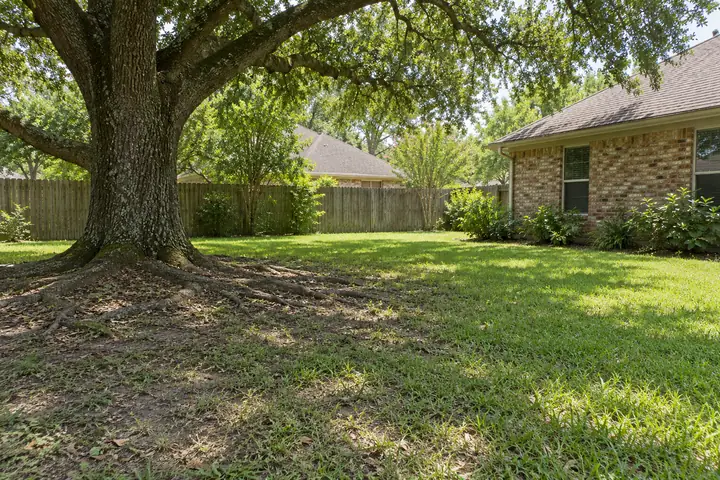
Start by describing the pattern of shade
A photo taken at one moment does not show a whole day of light. Tell Happy whether the area is shaded most of the day, receives morning light or sits beside a building that casts an afternoon shadow. Use the observations you know rather than inventing an exact number of sunlight hours. A wide view can show the source of shade and how the grass connects to the more open lawn.
LSU AgCenter explains that too little light limits warm-season turf growth and that some heavily shaded locations are better suited to a different landscape use. That helps frame a realistic conversation. A mowing service can review the accessible grass and its maintenance boundaries; it cannot promise that every dark corner will become dense lawn. Keep the existing condition visible in your request so the plan begins with the property as it actually is.
Separate a cutting question from a growing question
Perhaps you want the grass under the tree cut neatly, or perhaps you want to know why it is thin. Those are related observations but different requests. Describe both if both matter, while keeping the answers distinct. Routine mowing concerns the agreed maintenance work. Determining why a patch is declining may need information and expertise beyond the cut, particularly when several conditions are changing at once.
You can make the distinction in a simple sentence: “Please review mowing the grass that is there; I am also seeking separate advice about the thin shaded section.” That avoids asking a lawn provider to guarantee a growth outcome through maintenance alone. If another specialist or landscape provider is reviewing the site, keep their recommendations and timing organized so excluded areas and planned changes can be communicated clearly before a visit.
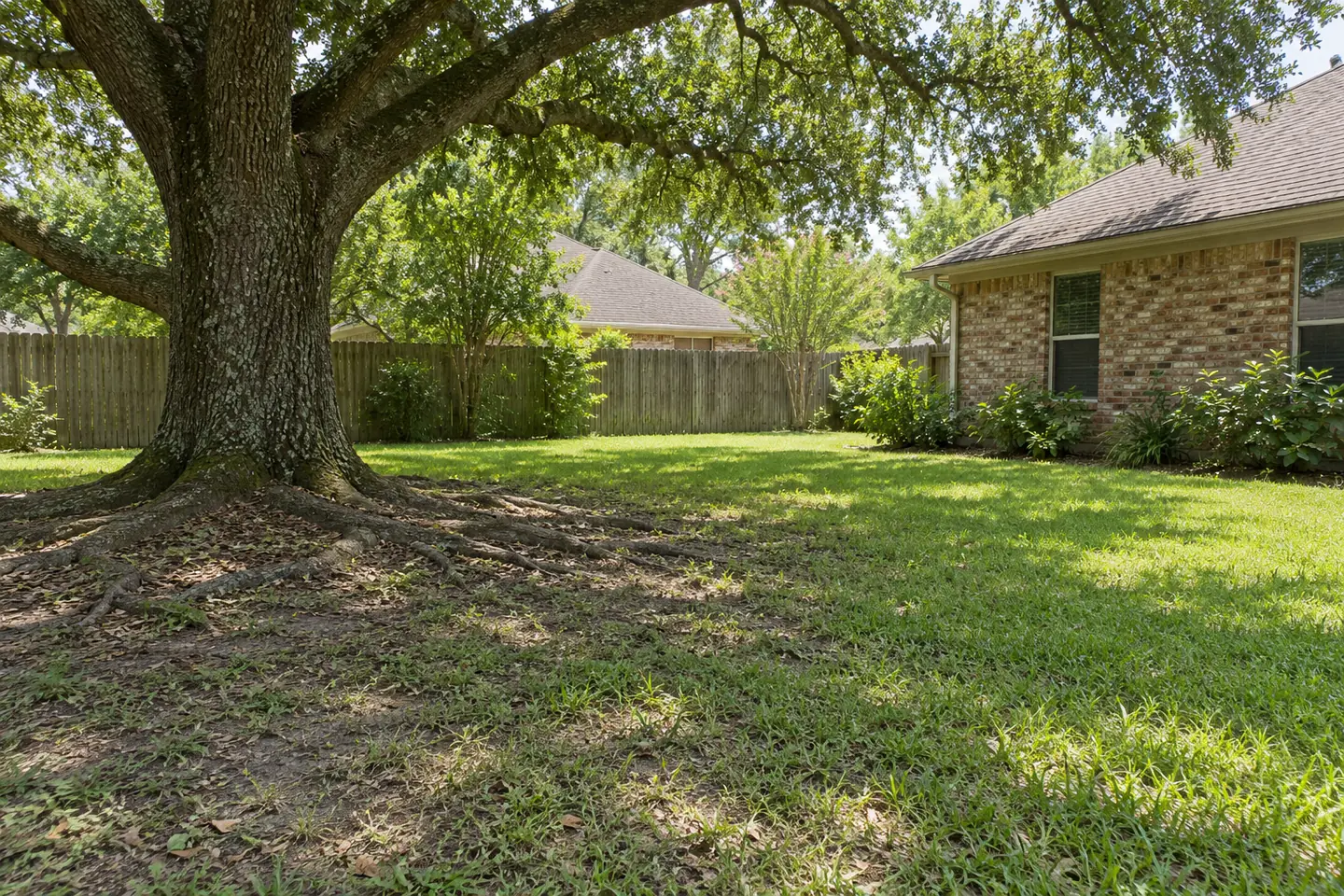
Look at grass type without treating tolerance as a guarantee
LSU identifies differences in shade tolerance among warm-season grasses, with St. Augustinegrass generally more tolerant than bermudagrass. The site and cultivar still matter. A description such as shade-tolerant does not mean grass needs no light or will work equally well beneath every tree. If you know the species, share it; if you do not, leave the identification open rather than choosing a name from the color in a photo.
Show the shaded and sunny areas together before adding close views. This helps explain whether the concern is limited to one margin or affects most of the lawn. Ask about the existing mowing scope while keeping any grass replacement or landscape conversion separate. Happy Grass does not offer overseeding, fertilization, aeration or pest control. A guide about shaded turf should help you organize questions without implying those additional services are part of the visit.
Show roots and changes in level clearly
Exposed roots, raised ground near a trunk and uneven transitions can change where mowing is practical. Photograph them from a safe, stable position and show their relationship to the grass you want maintained. You do not need to dig around a root, cover it or move equipment over it to demonstrate the problem. A plain description of what is visible gives the review somewhere useful to begin.
Identify a protected tree margin and discuss the boundary around it. Mowing and weed-eating should not be treated as permission to alter roots or work on the tree. If you are considering changes to the tree or its surrounding grade, take that question to an appropriately qualified professional. For the lawn request, keep the scope concrete: the accessible grass area, the clear exclusions and the finish around the agreed edge.
Observe moisture and access separately from the canopy
A shaded route may look different from the open front lawn after rain. Describe what you have observed, including standing water or a side passage that stays soft. Avoid assuming every damp spot is caused by shade or every shaded area needs the same watering change. Those are conditions to assess, while the immediate maintenance question is whether the route and working surface are suitable for the planned visit.
LSU notes that turf and trees can compete for available moisture, and its shade guidance cautions against mower use on saturated ground. Use current photos and a clear description instead of testing questionable ground with equipment. Happy can review the timing and access with you. If a household irrigation schedule also affects the area, mention it so that a lawn visit is not being planned around incomplete information about the conditions at the property.
Give thin grass a different visual expectation
University of California IPM describes shaded turf as potentially thin, upright and sparse. That background can help explain why taking an already thin area very low is not a sensible universal answer to a tall-looking leaf. The actual cutting plan needs the grass type and condition, rather than a demand to make a shaded patch resemble the sunny lawn beside it after one visit.
Describe the finish you are hoping for in terms that can be reviewed. You may want loose cuttings cleared from the adjacent path, a defined lawn margin or a protected bare section left untouched. Those are practical details. A promise of uniform density beneath the entire canopy is a different kind of outcome. Clear expectations let the maintenance visit address the agreed tasks while leaving the growing question open for the appropriate review.
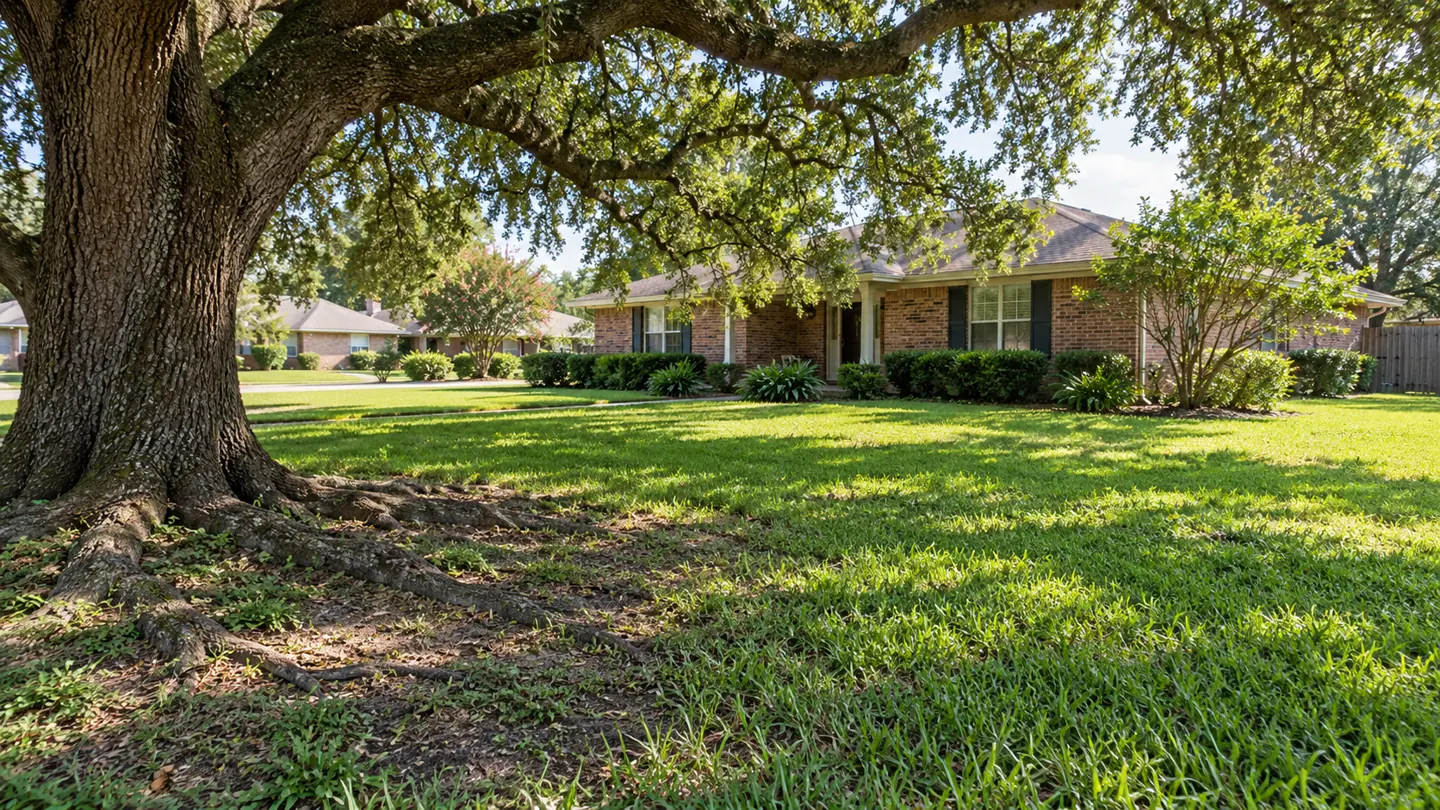
Keep tree work and lawn work in separate conversations
Improving light can involve decisions about a tree, a structure or the whole landscape. Do not assume that a general lawn article is a tree-pruning plan or that a mowing quote includes canopy work. If an arborist or another appropriate professional recommends a change, coordinate that work independently. Update the lawn provider after the site or access has actually changed, rather than planning maintenance around a hoped-for future condition.
The same applies to creating a planted bed or another landscape feature where grass is no longer the right fit. That change needs its own agreed scope. You can still maintain the remaining accessible lawn with clear boundaries. Tell Happy where the new edge is, whether the area is excluded and how it affects the working route. A small update keeps an old grass-cutting description from being applied to a different layout.
Put the shaded section into the property photos
Use a small photo set that tells the whole story. Begin with a wide view of the shaded grass and the source of shade, then show the connection to the open lawn. Add a root or margin detail only when it explains a specific boundary. Include the access route if the area is reached through a gate or narrow passage. Note when the photos were taken so the light in them has some context.
- Name the shaded section in ordinary words.
- Identify grass type when it is reliably known.
- Show exposed roots and planted exclusions.
- Describe current moisture and entry conditions.
These details help Happy review the maintenance request without inferring a full-day light pattern or hidden ground conditions from one attractive picture. You are making the property easier to understand, not being asked to diagnose it yourself.
Ask for the next useful step
A clear request might say: “The back grass is shaded by the oak for much of the day. Please review mowing the accessible lawn and trimming the agreed margin, while leaving the exposed root area untouched. The path beside it should be included in blowing. These photos show the whole section and the gate route. I am seeking separate advice about the thin patch.” Add the real address privately.
Happy can discuss scope, access and available timing from that starting point. The plan can be practical even when the lawn is not uniform everywhere. For a yard in Algiers, Harvey, Marrero, Gretna, Belle Chasse or Westwego, explain the part that needs attention and the part that needs protection. A happier shaded yard starts with realistic expectations and a maintenance request that respects the space you have.
Do not compare two different moments of shade
A photograph taken in morning shade and another taken in afternoon sun may show the same corner under very different conditions. Keep the time of each view with the image. If your purpose is to compare the lawn's appearance over several visits, use a similar viewpoint and time when practical. If your purpose is to explain moving shade, keep the different times deliberately and label that purpose.
Those two photo sets answer different questions. A repeat view helps you notice changes in the same patch, while a time sequence explains which parts of the yard were shaded when you looked. Neither set alone establishes the cause of thin growth or tells you which service will change it.
For a useful handoff, point to one recognizable shaded zone and state what you want to discuss there. Perhaps the question is whether the grass area belongs in the regular cutting scope, or whether roots interrupt the approach. Separate that practical question from expectations about making the canopy denser. A clear observation can support a maintenance conversation while leaving the growing question honestly unresolved.