
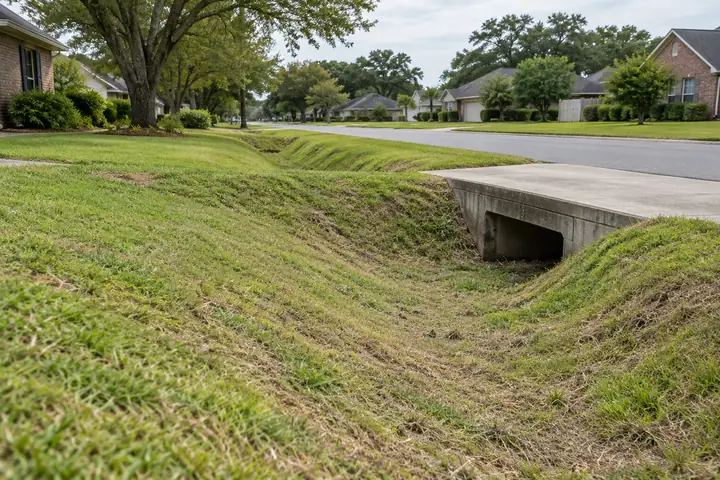
The strip out front needs a clear description
A grassy roadside ditch may sit beside an ordinary flat lawn, but the work conditions can be very different. Changing grades, traffic, water and loose material all belong in the discussion. Asking for the front yard to be cut does not automatically explain what should happen on every side of the channel.
Point out the exact portion you mean. Include the upper verge, the sloping bank and any bottom section you want reviewed. Explain whether the concern is long grass, an untidy boundary or water backing up. Those concerns should not be bundled into one vague instruction. Vegetation maintenance is different from clearing sediment, repairing a pipe or changing the drainage route.
Confirm the area you can authorize
A ditch near your home may involve a public right-of-way, shared infrastructure or land outside the boundary you control. Its proximity to your front door does not settle responsibility. If that is unclear, check the relevant property information and ask the appropriate local authority before arranging work there.
Describe what you know and what still needs confirmation. “The grass beside my driveway is the part I want reviewed” provides a useful starting point. A lawn quote is not a survey, legal boundary decision or permission to alter public infrastructure. Resolve an uncertain work boundary first so the maintenance discussion rests on an area you are actually able to authorize.
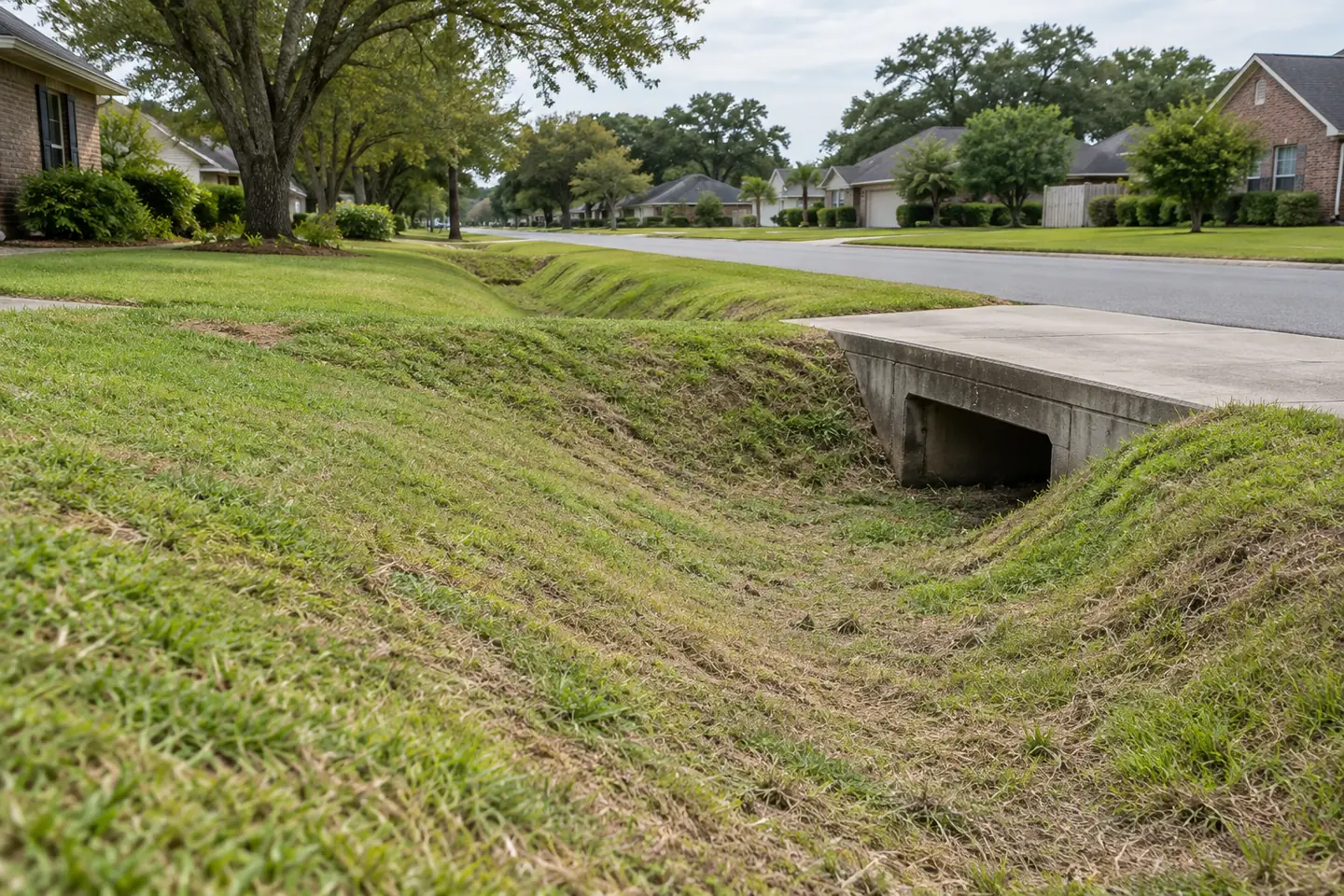
Take photos that include the surroundings
A close photograph of grass leaves out the road, the grade and the available access. From a safe place away from traffic, take a wide view including the driveway entrance and ditch shape. If a culvert opening is visible without approaching unstable ground, include it. A view along the channel can provide additional context.
Tell Happy if vehicles regularly park beside the area or the shoulder offers little room. Do not step into the roadway for a better angle. If you cannot safely obtain a useful photo, explain that limitation. The property may need another kind of review before a scope is agreed, or the ditch portion may need to remain excluded.
Mention hazards you already know about
Tall growth can hide wire, glass, rocks and abrupt changes in ground level. Water can conceal an opening or undermine an edge. Nobody needs to search an unsafe section merely to support a quote request, but known hazards should be disclosed. Information from a previous visit can still matter when the object is hidden today.
- Identify known pipe ends and drainage openings.
- Mention loose rock, litter or wire seen from safe ground.
- Point out standing water and soft banks.
- Describe any damaged cover or unstable edge.
- Explain where previous maintenance has stopped.
“I cannot see the bottom” is an honest and helpful note. It is much better than assuming there is nothing under the grass.
Banks and culverts change equipment decisions
A ditch is not just a flat lawn folded into a smaller space. Its sides may require a different method, and some sections may not be suitable for routine lawn service. OSHA identifies unprotected ditches and culverts among terrain features that can present rollover concerns for riding mowers. Actual equipment instructions and conditions govern the work.
Ask which part can reasonably be considered rather than specifying a route down the bank. Hand-held equipment also needs secure footing, clearance and a suitable work area. A tool being able to reach the grass does not prove the location is safe. The review may lead to a different approach, an exclusion or another provider.
Water-flow problems need separate attention
Cutting surrounding grass does not establish that a drainage system works. A blocked culvert, damaged pipe or accumulated sediment may require the responsible authority or an appropriate contractor. A mowing visit should not become an improvised excavation or an attempt to reshape the channel without the right authorization and expertise.
If water backing up is the real concern, make that clear. Describe what you observed and when, keeping away from unknown water and openings. Arrange the appropriate drainage review separately. You can still ask whether accessible grass outside that problem area can be maintained, but the scope should identify where ordinary lawn work ends.
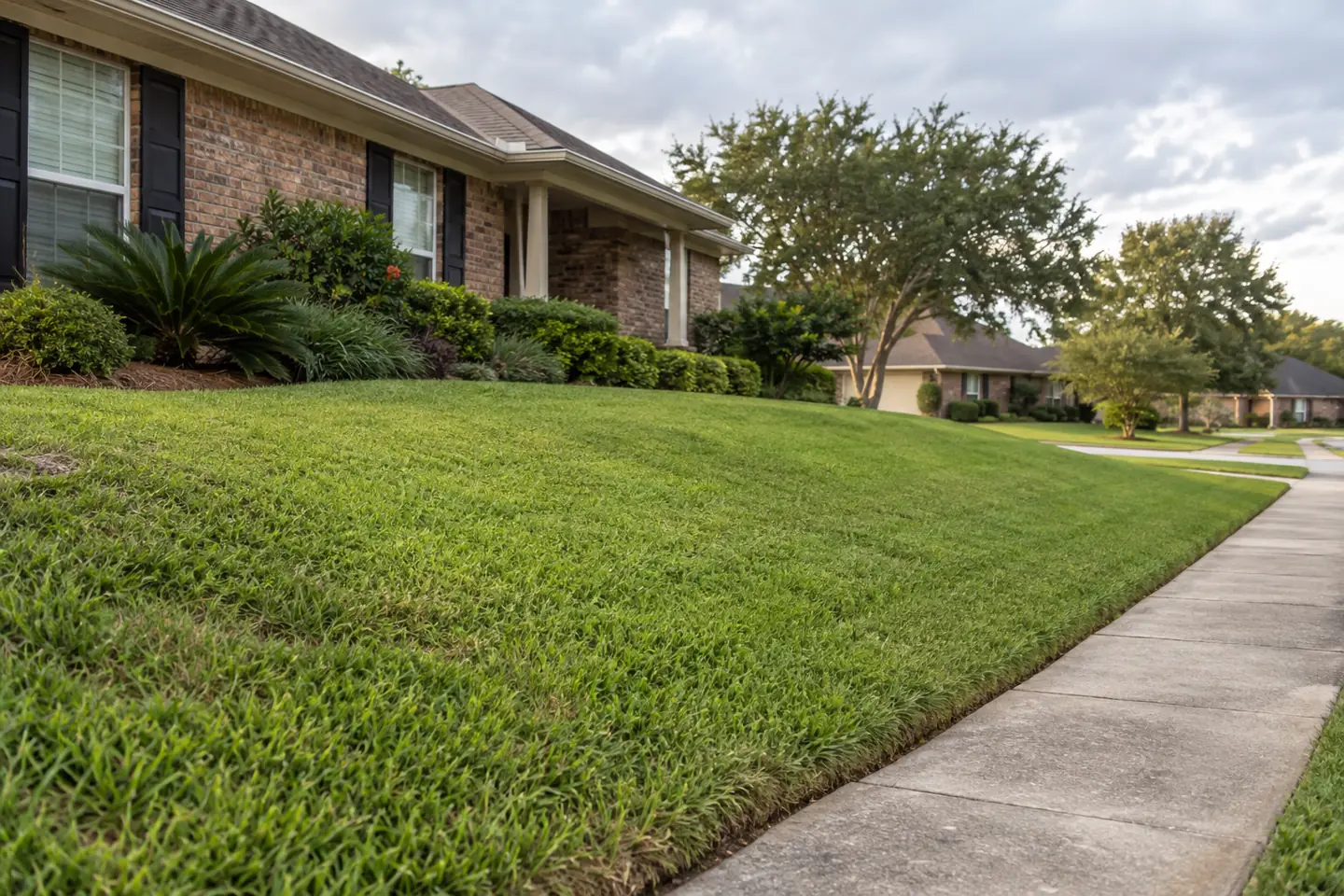
Discuss the destination of cut material
The finish includes more than reducing the grass height. Clippings should not be deliberately deposited in a way that obstructs a drain opening or creates an avoidable problem on the road. Ask what appropriate cleanup is included for the section and method being considered. Keeping cutting and cleanup together makes the request easier to understand.
Very long, wet or litter-filled growth can change the practical handling plan. Do not assume that bagging, hauling or debris removal is included because blowing appears in a lawn service description. Confirm those items specifically. An agreed plan is more useful than a neat-looking verge beside an opening full of material nobody discussed.
Use current weather information
A roadside bank may stay damp after the main lawn dries. Water can also move debris or expose a feature that was hidden in an earlier photo. Let Happy know if the conditions have changed since the quote conversation. A dry-week picture can be useful history, but it does not document the channel after a storm.
Provide a current view from firm ground when safe. Explain whether the rest of the lawn remains accessible and whether you are asking for a limited visit. Any revised timing and scope need confirmation. An ordinary front-yard agreement should not be interpreted as a requirement to work a wet bank under substantially different conditions.
Agree on a visible work boundary
Fixed features can help define the stretch: a driveway edge, a fence corner or a known mailbox location. Use a written description or a marked-up photo rather than placing objects near traffic or unstable ground. The goal is clarity, not another hazard beside the road. Keep unverified property lines clearly separate from convenient visual references.
Confirm whether the quote covers only the upper verge or another specifically reviewed area. Also ask how a discovery of hidden debris or unsuitable conditions will be handled. A sensible agreement allows the work to stop and be discussed when the site differs from the description. Identify excluded sections plainly so the finished result can be judged against the actual scope.
Bring Happy the whole roadside picture
A tidy edge can make the property feel cared for, but the plan needs to fit the site. Send the address, city and safe wide photos. Explain the area you can authorize, known water concerns and whether your request is ordinary grass maintenance or a separate infrastructure problem. That helps direct the conversation to a useful next step.
Happy Grass serves Harvey and neighboring Westbank communities with mowing, edging, weed-eating and blowing within an agreed scope. Suitability and availability require individual review. Call 504-339-3571 or use the quote form to ask about your property. Start with the yard, the roadside context and a straightforward explanation of the section you want considered.
Keep a deadline separate from the scope
If you want the front edge reviewed before visitors arrive, explain the preferred date when you first contact Happy. Availability and suitability still need confirmation. A short deadline does not remove traffic, ground or authorization questions, and it should not expand the work into an excluded area.
Keep any responsible authority or separate drainage contractor informed through the person managing that work. If their visit changes the ditch, provide a new photo afterward. An earlier grass quote may no longer describe the area once sediment, soil or pipe work has occurred. A current handoff connects vegetation maintenance to the real site.
Save the agreed boundary with the property notes. That makes future conversations easier if a different family member handles access or if a new question arises about the verge. The goal is a tidy, appropriately maintained section with clear responsibilities, rather than several people remembering different versions of the original request.
Use the crossing as a reference, not an assumption
Where a driveway crosses a roadside ditch, the crossing can help orient photographs of the grass on either side. Name the crossing, then describe the visible strip, bank and channel as separate parts of the picture. Avoid describing the whole scene as one flat front lawn. The different surfaces may require different decisions, and a picture centered only on the driveway can hide those differences.
If you are unsure which portion you may authorize, keep the proposed work boundary provisional. A visible transition, culvert or pavement edge helps locate the question but does not answer it. Clarify permission and the requested extent before discussing a finish for that section. This leaves a useful record of exactly what was understood, without turning a convenient visual landmark into an unsupported statement about the roadside area.