
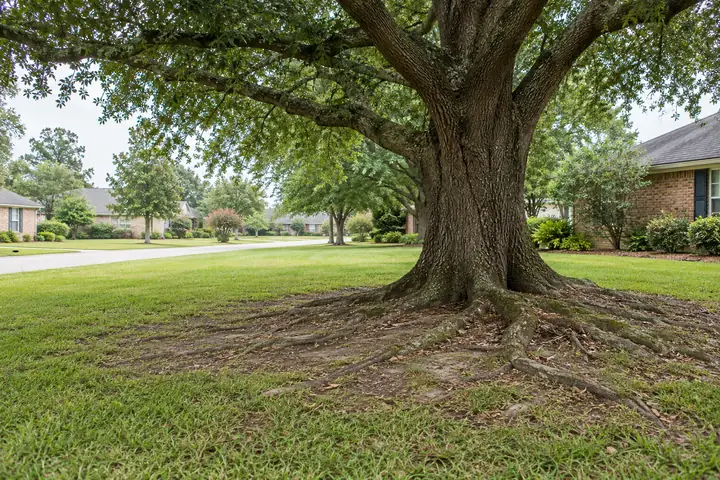
The lawn under the tree is a different space
A mature tree can be one of the nicest parts of a Westbank yard. It can also leave a patch where the ground is uneven, roots show above the soil and grass grows differently from the sunny lawn. Treating that area exactly like the open front strip can make the maintenance plan harder than it needs to be.
When you ask about mowing, show the tree base and the surrounding route. Explain whether the concern is tall grass between roots, an uneven finish or damage you have noticed previously. A wide picture helps connect the visible roots with the rest of the yard. It also makes clear which section needs its own discussion before work.
Exposed roots are fixed features
A surface root should not be treated like a loose stick that can simply be moved out of the way. Nor should a grass-cutting request imply permission to cut, grind or bury it. Work affecting roots can have consequences for the tree and the surrounding ground. Those decisions belong with an appropriate tree professional when needed.
For routine lawn maintenance, the practical question is where equipment can operate without forcing a path over or against the exposed feature. Describe the roots you know about and show their extent where visible. If dense grass hides part of the area, say that plainly. Guessing that the rest is flat does not help the quote.
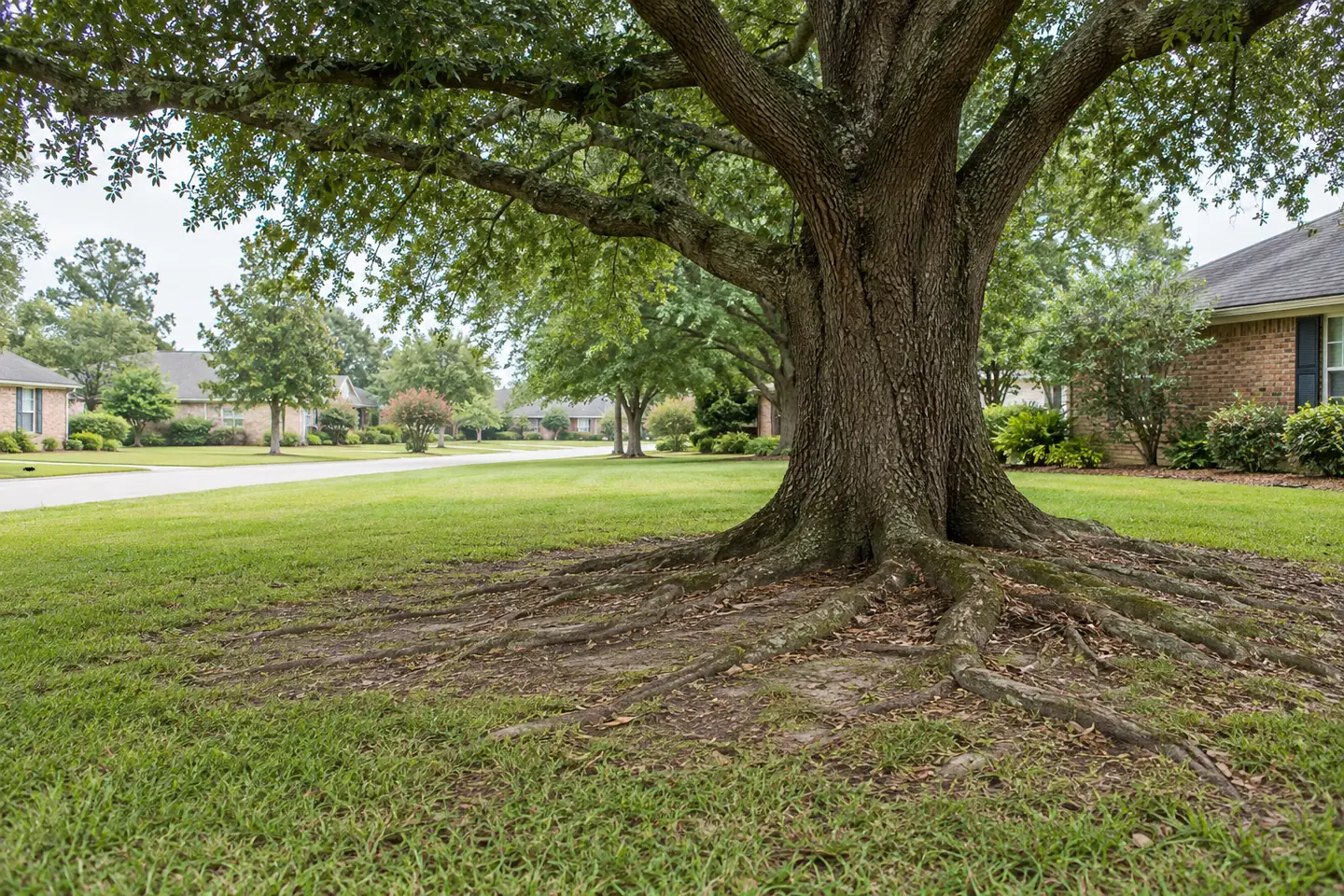
Take photos that show the whole root area
A close-up can show texture but leave out how far a root extends or where a mower would turn. Take a wider view from safe ground that includes the trunk, visible roots and nearby paving or beds. Add a second angle if one side is hidden behind the tree. Avoid stepping onto unstable or slippery surfaces for the photograph.
Use a fixed reference when describing a particular concern: “the root beside the patio corner” is clearer than “the big one.” If there are existing scars or disturbed soil, include them honestly. A current record supports a practical conversation about the starting condition without making a photograph into a diagnosis of tree health.
Do not use a lower cut to erase uneven ground
Lowering a mower setting does not level a root. It can bring equipment closer to the obstruction and leave the grass looking more stressed or uneven. A short appearance goal should never replace a review of the terrain. The maintenance method needs to account for both the grass and what is beneath it.
Ask about the finish that can reasonably be achieved around that tree. Some areas may need a wider margin or exclusion. Trimming may be considered where appropriate, but it also requires care around bark and roots. A tool reaching into a gap does not make contact with the tree an acceptable part of routine maintenance.
Separate tree concerns from lawn concerns
Thin grass under a canopy can involve shade and other site conditions, but a mowing visit cannot diagnose every cause. A damaged root, leaning tree or structural concern needs the appropriate professional assessment. Describe the observation without turning it into a conclusion. “The soil has opened beside this root” is useful information.
- Identify visible roots and known uneven patches.
- Mention recent excavation or construction near the tree.
- Show any fixed path or wall close to the base.
- Describe standing water without entering it.
- State which area must remain untouched pending another review.
Clear limits help ordinary grass work proceed only where it is appropriate.
Protect bark while discussing trimming
The base of a trunk is not another hard boundary to brush against. Explain if the tree has existing damage, guards or a defined bed around it. A maintenance plan should avoid treating bark as a convenient stop for a trimmer. The intended clearance needs to be understood before the work starts.
If grass grows directly against the trunk, ask what practical margin can be maintained. Do not assume removing all vegetation right to the bark is the best answer. Changes to planting, mulch areas or root treatment should be discussed separately with the right provider. Happy Grass’s routine mowing scope should remain clear rather than expanding silently into tree-care work.
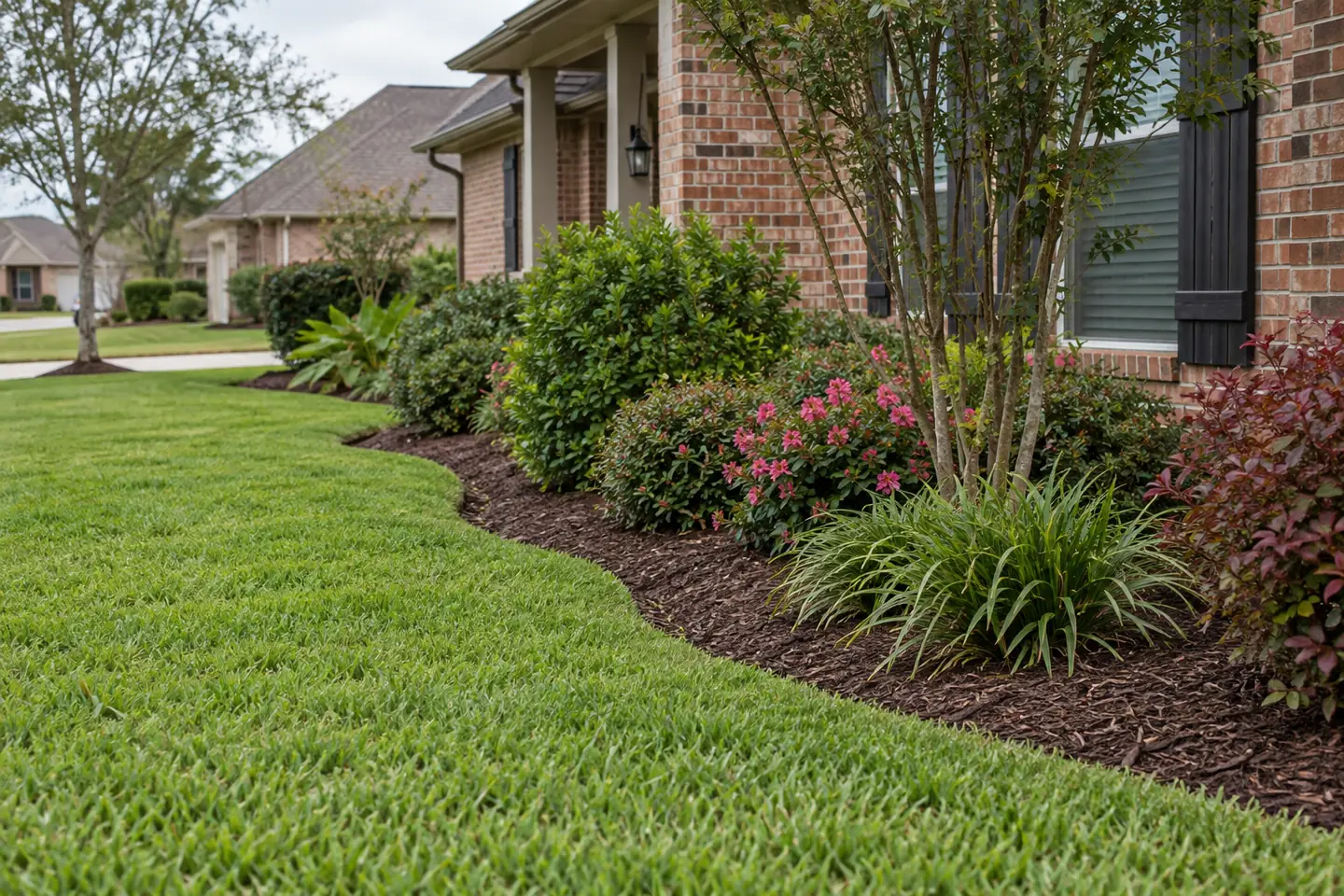
A defined non-mowing area can be useful
Some properties already have a bed or open margin around the tree. Show the existing edge and explain whether it is meant to remain as it is. The goal for the quote may simply be maintaining the surrounding grass without entering that area. A visible boundary is easier to follow than a vague request to “be careful around the oak.”
If you want to create or alter a tree bed, treat that as another project. Do not pile soil over roots or change the grade just to make mowing easier without suitable advice. The maintenance discussion can identify the difficulty, but it should not prescribe a structural landscape change as an automatic part of a grass-cutting visit.
Consider the route and turning space
Even when the grass around the tree is accessible, the route through the yard may cross an exposed root or narrow gap. Show where equipment would enter and turn. A branch, garden feature or fence can reduce available space. Those surrounding details can determine whether a particular method is practical.
Mention low limbs that affect access, but do not assume branch pruning is included. If another provider will alter the tree before service, update Happy afterward with a current view. Conditions should be reviewed as they actually exist. A promised future change does not establish that a route is usable today.
Wetness can make an uneven patch less predictable
Roots, bare soil and shaded ground can stay damp when the rest of the lawn looks dry. Let Happy know about persistent moisture or a place that becomes slippery after rain. You do not need to walk across it to test the condition. A photo from firm ground and a straightforward description are enough to begin the conversation.
A delay or limited visit may be appropriate depending on the actual site. Confirm any revised scope and timing. Do not assume an ordinary mowing agreement requires work around a tree under different ground conditions. Protecting the property includes recognizing when the usual approach needs another look.
Keep expectations tied to the property
The grass under a mature tree may not match the sunny section in color, thickness or appearance. A maintenance quote should explain what is being cut and how the boundary is handled; it should not promise to restore every thin area or diagnose the tree. Fertilization, aeration, overseeding and pest control are not Happy Grass services.
Use reference photos of the same lawn when explaining your goal. A current picture and an earlier maintained view can show the difference you care about. Label them clearly. The purpose is to establish a realistic finish for this yard, rather than comparing an uneven root area with an unrelated perfect lawn photograph.
Review changes without disturbing the roots
If a root becomes more visible or a new obstacle appears, send an update before the next visit. Describe what changed and where. Avoid cutting, filling or grinding anything to make it disappear from the maintenance route. A separate review may be needed, particularly after construction or ground movement.
After service, identify any concern by location and a current photo. Ask whether the area was excluded or handled differently because of the roots. This keeps the discussion focused on the agreed work instead of assuming every visible grass blade should have been reached by the same machine.
Ask Happy about the grass around your tree
A clear request includes the tree base, the visible root area, access and the main lawn. Explain what you want maintained and what must remain undisturbed. The property can then be considered with a realistic boundary and a suitable work method, or a recommendation to arrange a separate tree assessment first.
Call 504-339-3571 or use the quote form with the address, city and a few useful photos. Happy Grass serves Harvey, Marrero, Gretna, Algiers, Belle Chasse and Westwego. A little lawn love includes recognizing the established features that make your yard yours. Let’s keep the grass conversation clear and give the tree the room it needs.
Explain the connection between the root and the route
A close photograph of an exposed root may show its surface clearly while leaving the access question unanswered. Add a view that connects the root to the gate, tree trunk or path involved in the request. Explain whether the feature lies inside the grass area, across the approach or near the place where equipment would otherwise turn. Location often changes the practical question more than another close-up does.
For example, a root beside an excluded tree circle is different from a root extending into the only passage to the rear lawn. Describe the arrangement without proposing cutting, burying or reshaping the root to make the picture simpler. A maintenance discussion can address the reachable grass and a sensible stopping boundary while leaving tree and ground changes to separate consideration.
When reviewing the proposed arrangement, check that the route and the finishing boundary still make sense together. An agreed area can be clearly drawn yet difficult to reach. Keep both questions visible so that the lawn request does not depend on an unspoken alteration to the tree's surroundings.