
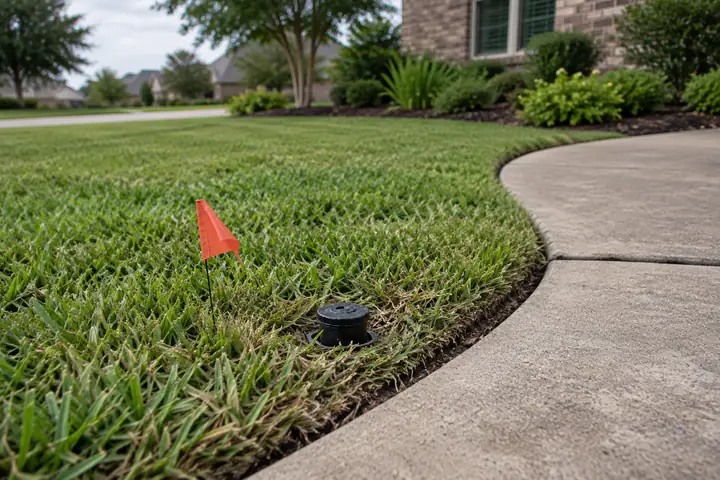
Small irrigation parts can change a big lawn
From the sidewalk, a lawn may look like one uninterrupted green area. Inside it can be sprinkler heads, valve covers, temporary hoses and fixtures sitting just below the grass tips. Those details matter when mowing, edging and trimming are being discussed. The person requesting service often knows things that are not obvious in a wide photograph.
Before the first visit, explain whether the property has an irrigation system and identify known vulnerable parts. You do not need to know every technical term. “The small black head beside the driveway curve” can be a useful description when paired with a picture. A clear location is more important than guessing the brand or model.
Start with what you already know
Describe the system layout only as far as you can verify it. If you know heads sit along the sidewalk and another is near the gate, say so. If an old system is present but you do not know where every component is, explain that uncertainty. Do not label a fixture as inactive merely because you have not seen it run.
There is no need to open electrical controls, dig for pipes or disturb covers to support a mowing quote. Those activities can require a different skill set. The maintenance conversation needs visible references, known problems and an understanding of what must be avoided. It should not depend on a customer conducting an improvised irrigation inspection.
Pair a close photo with a wider view
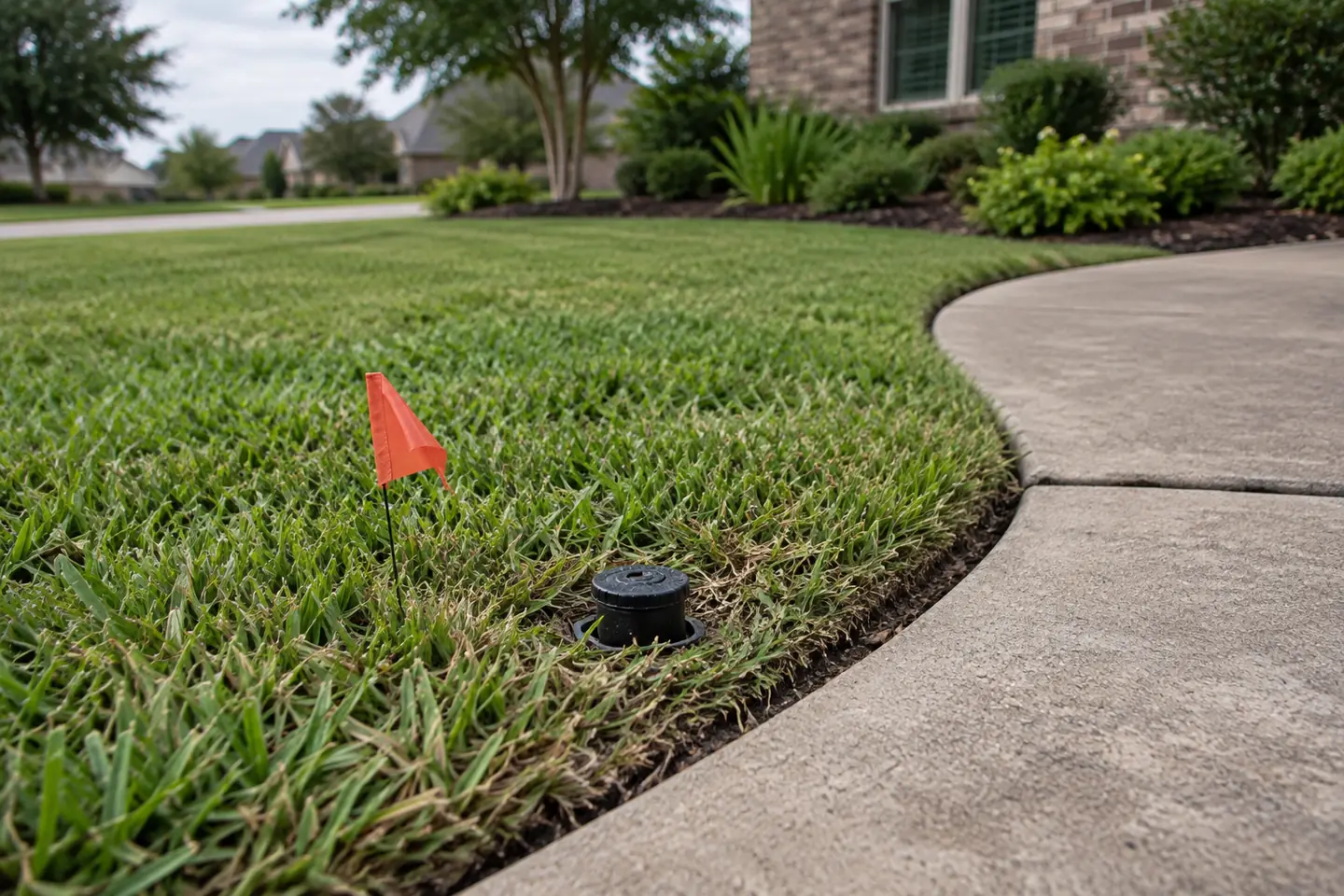
A close image can show a raised head or damaged cap, but a wider photograph explains where it is. Include a fixed reference such as the patio corner, driveway curve or fence post. If several similar heads are present, number them in a private note or annotated photo so the locations remain understandable.
Take pictures from safe, accessible ground. Avoid stepping into a wet patch or touching unfamiliar components. If you cannot see a fixture clearly, state that limitation. A marked image is more useful than assuming the equipment operator will identify every low object hidden beneath long grass during the first pass.
Make temporary markers part of the agreement
A visible marker may help identify a known fixture, but its type and placement should be agreed before the visit. Do not add rigid or sharp objects into the work path without discussion. A marker is another object to account for, and a scattered collection with no explanation can create confusion instead of preventing it.
- Identify the fixture the marker represents.
- Show the marker in a wide reference photo.
- Explain whether it is temporary or should remain.
- Keep any sensitive system information private.
- Update Happy if a marker moves or disappears.
The useful result is a shared reference for the actual location, not a false guarantee that a flagged area is free of other hidden components.
Broken heads need separate attention
If a sprinkler head is leaning, missing a cap or remaining raised, mention it before routine maintenance. EPA WaterSense notes that heads failing to rise fully or tilting can send water to the wrong places, and recommends appropriate irrigation help when needed. The mowing discussion should record the issue rather than treat the fixture as normal turf.
Happy Grass’s routine lawn service does not include assumed irrigation repair. Arrange the proper provider for a damaged system and explain whether a section needs to remain excluded meanwhile. If repair work changes the ground or leaves temporary materials, update the maintenance notes afterward. A repaired head and a repaired lawn surface are separate conditions worth describing.
Share watering information that affects the visit
An overnight watering cycle can leave the grass wet or the soil soft when a mowing visit is being considered. Tell Happy about recent irrigation and any area that stays unusually damp. Surface water between cycles can also deserve attention from an irrigation professional. It should not be confidently diagnosed from a lawn photograph alone.
Do not make a major watering change simply to force a mowing appointment, especially where an installer or turf professional has supplied an establishment plan. Keep the relevant care instructions connected with the maintenance discussion. The aim is a workable arrangement for the actual ground conditions, rather than an unreviewed system adjustment made for convenience.
Know the difference between a fixture and a work boundary
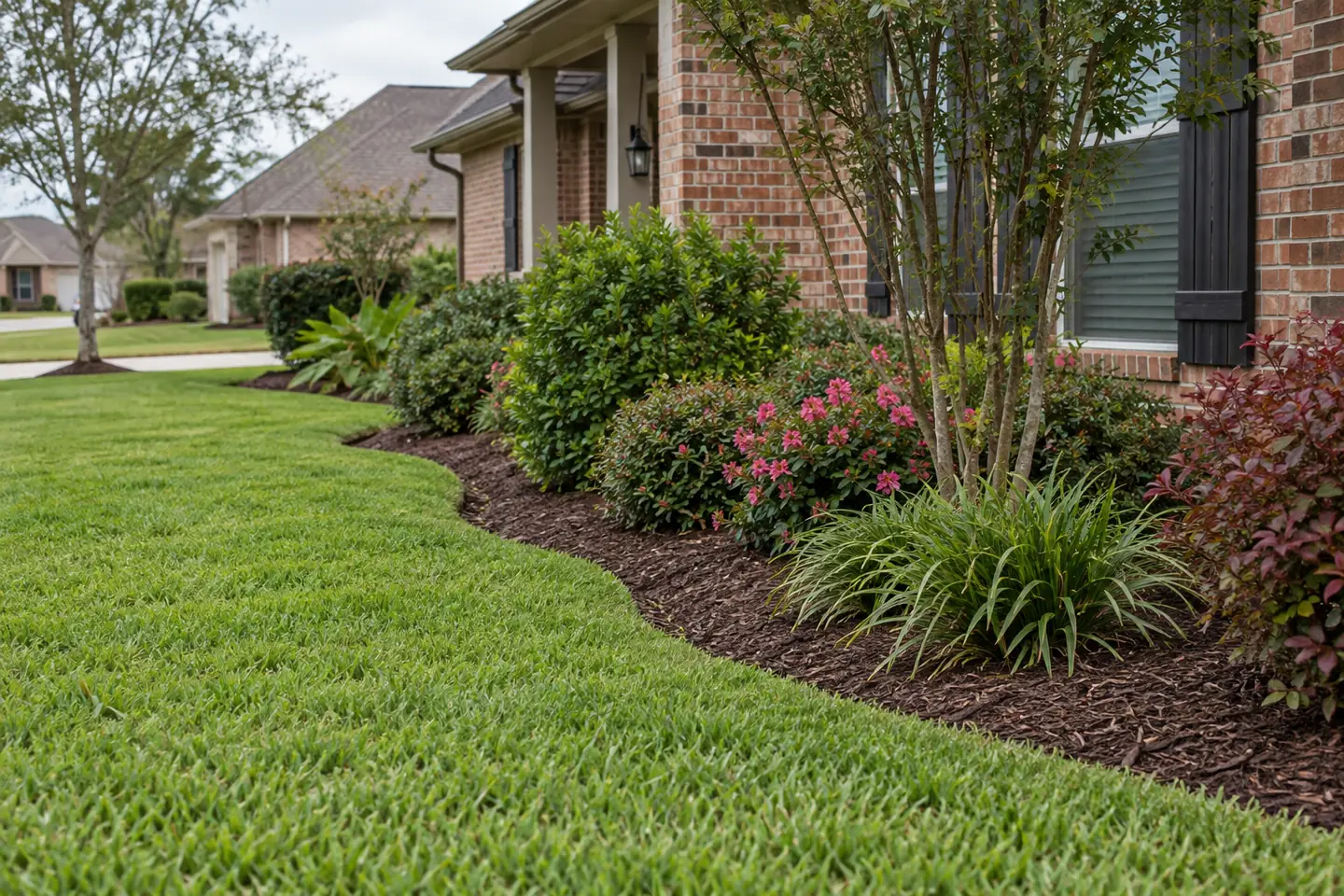
A head near the lawn edge does not automatically define where the grass ends or who maintains the neighboring strip. Show the actual requested boundary using paths, beds and the property information you can verify. If the system crosses shared areas, clarify which sections you are authorized to arrange.
For a duplex or shared yard, identify one person who can approve the maintenance scope and communicate changes. Different occupants may know different parts of the system. Collecting those known details before the visit helps prevent contradictory instructions. Ordinary mowing should not become a guessing exercise about shared irrigation responsibilities.
Protect nearby edges without assuming a method
Some heads sit close to concrete, fence posts or garden borders. These combinations can limit clearance for a tool and may require a different finish from an open lawn. Explain the desired result, but let the work method be reviewed for the actual location. A demand to cut flush against every fixture is not a complete maintenance plan.
An agreed margin or excluded patch may be appropriate around damaged or inaccessible parts. Confirm that plainly. If you later move or repair a fixture, provide a current view so the plan can be reconsidered. A change in equipment position can alter what is practical, but the scope should not change by silent assumption.
Keep repair work and mowing schedules connected
When another provider is repairing irrigation, tell Happy where and when the work affects access. Trenches, disturbed soil, new sod and loose material can change a route that was previously straightforward. Confirm the condition after repairs instead of relying only on the planned completion date.
A section may need to remain out of the ordinary routine while it settles or follows an establishment plan. The mowing decision should reflect those specific instructions and the actual site. Do not assume a grass-cutting visit includes leveling repaired areas, replacing turf or removing construction debris. Describe those requests separately if you need them considered.
Use photos to report a concern promptly
If you notice a problem after service, document the location and current condition without moving or altering the part. Contact the person coordinating the visit and ask for a review. A before reference can help explain the difference, but avoid treating a photo as proof of a technical cause that has not been assessed.
Be specific about what happened and what remains uncertain. “This head is now raised beside the front path” is a useful observation. Clear records support a fair conversation and any appropriate next step. They also help update future maintenance notes so the same location receives the attention it needs.
A simple property note can do a lot
Try this starting message: “There are heads along the front sidewalk and one low valve cover beside the side gate. The rear corner stays damp after watering. Photos attached.” Add the city and address so the information is tied to the right property. Include any known damaged components and the access arrangement.
Keep the note current when the system changes. A new head, moved border or repaired section can make an old reference misleading. You do not need to rewrite a technical manual for every visit. A few accurate updates about the features affecting mowing are enough to make the next conversation more useful.
Ask Happy about the lawn around your system
Happy Grass can discuss mowing, edging, weed-eating and blowing with a clearly defined property scope. Irrigation inspection and repair remain separate unless a specific suitable service is expressly agreed. Start with what is visible, what you know and the finish you want around the fixtures.
Call 504-339-3571 or use the quote form for a property in Harvey, Marrero, Gretna, Algiers, Belle Chasse or Westwego. Send useful wide and close photos, recent watering context and any section to avoid. A little planning around the hidden details helps the whole lawn-care conversation flow more smoothly.
Separate remembered locations from visible locations
If you remember a sprinkler near a corner but cannot currently see it, label that information as remembered rather than confirmed. Show the corner and explain what you know about the location. Do not mark an exact point merely to make the photograph look complete. An honest approximate description preserves the uncertainty that still needs attention.
For visible parts, connect the detail view to the broader grass strip so that the same fixture can be recognized from both directions. Keep changes to the irrigation system with the system's responsible person; a lawn request should not quietly authorize operating, dismantling or repairing it. The useful result is a property note that distinguishes confirmed visible features from items whose position or condition remains uncertain before work is discussed.