
Begin with who is arranging the service
A rental yard can involve an owner paying the bill, an occupant controlling the gate and a manager handling instructions. Before discussing mowing, identify the person authorized to confirm the work. That does not decide anyone’s lease responsibility; it simply establishes who can arrange this specific maintenance request.
If responsibility is unclear, review the relevant agreement with the appropriate people before service is booked. A lawn quote is not legal advice or an interpretation of a tenancy dispute. Happy needs a clear customer contact and a property scope that person can authorize. Resolving that first makes the practical grass discussion much easier for everyone involved.
Describe the property’s actual layout
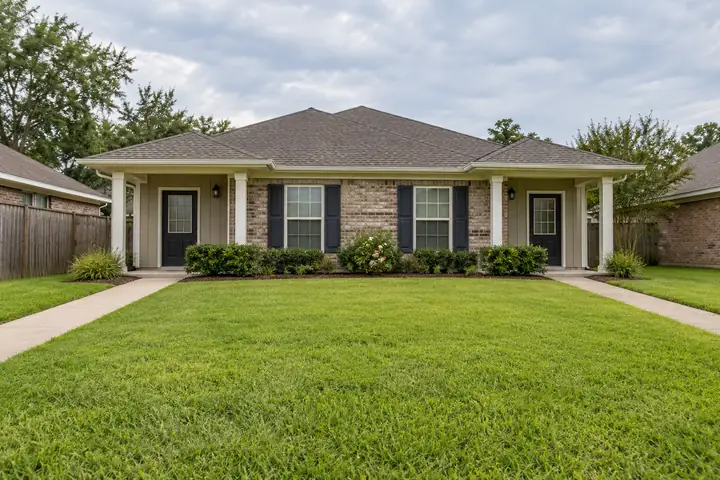
A single-family rental, duplex and shared courtyard can have very different maintenance boundaries. Show the grass areas you want considered. Include side strips, separate entrances and any fence dividing the yard. Do not assume the visible front lawn represents everything included with the property or the service request.
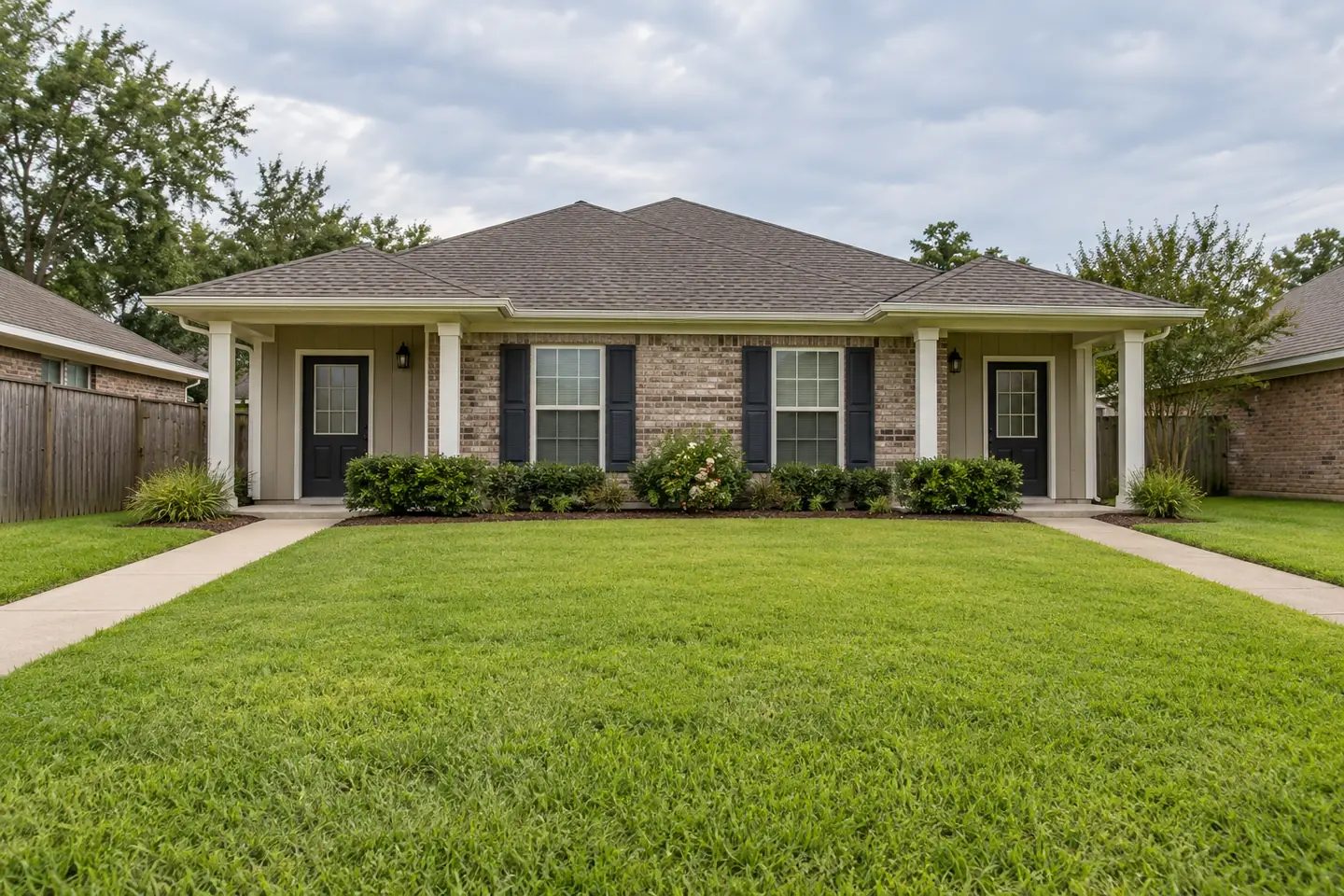
Use fixed reference points and verified boundaries. “The grass between the two entry walks” is a clear description of an area, but it does not establish ownership of an adjoining strip. If access or property limits are uncertain, clarify them before asking for work beyond the confirmed section. A useful scope should be understandable to both the payer and the person living there.
Current photos beat old advertising pictures
A rental listing may show a tidy yard from several years ago. That can help explain the intended appearance, but it says little about today’s height, obstacles or wet areas. Provide current safe wide photos and label any older references. Include the route into the backyard rather than photographing only the most attractive front angle.
If the occupant is supplying pictures, explain what is needed without asking them to enter an unsafe area. A closer view of a fixture should be paired with a wider location reference. Honest visibility limits are useful. An inaccessible backyard should not be treated as inspected merely because the front lawn looks ordinary.
Make access workable for the occupant
A gate arrangement needs to be understood by the person who uses it. Confirm how access will be provided and who will communicate a change. Share necessary details privately; do not put security codes into public photos. Avoid assuming the occupant is available to open a gate simply because the property is occupied.
- Identify the entrance intended for lawn work.
- Explain locks, latches and narrow turns.
- Confirm which areas remain private or excluded.
- Arrange pets and personal items before the visit.
- Provide one contact for access questions.
A request for exterior grass service should not imply permission to enter the dwelling or handle unrelated household access.
Agree on preparation responsibilities
Toys, hoses, furniture and pet belongings can affect the work area. Explain what the occupant or manager will clear and what must remain. Moving heavy items or stored materials is not automatically included with mowing. The service conversation should not rely on the operator negotiating a new household arrangement at the gate.
Keep the instructions practical and specific. “Please clear the small toys from the grass before the agreed visit” is easier to follow than “get everything ready.” If preparation cannot be completed, update the service contact. Scope or timing may need another review, especially when the only access route is blocked or the work area cannot be kept clear.
Distinguish the first visit from ongoing maintenance
A yard between occupants may have a longer mowing gap than an established routine. Tall grass, thick clippings and concealed objects can change the initial assessment. Do not assume an ongoing weekly or every-other-week price describes that first visit. Explain the last known cut and current growth honestly.
Discuss the starting work, exclusions and the ongoing scope separately where needed. A first cut should not be expected to restore every bare area or solve every turf issue. Happy Grass offers mowing, edging, weed-eating and blowing, with weed-control work discussed for the actual site. Fertilization, aeration, overseeding and pest control are not included services.
Keep turnover work outside hidden assumptions
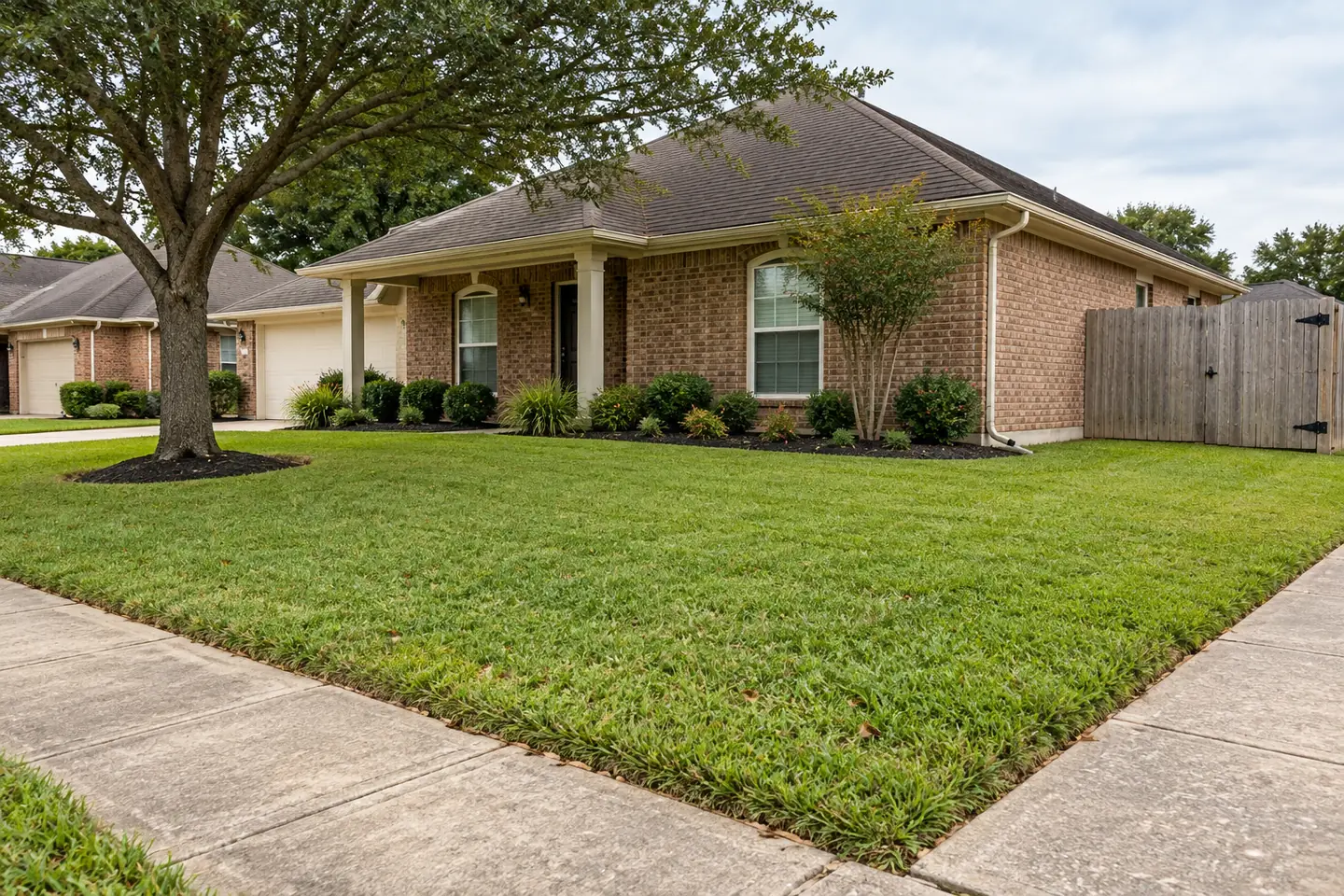
A change of occupant can involve discarded belongings, building repairs and exterior cleanup. Those tasks are not automatically part of grass cutting. Identify anything left in the yard and state whether another provider is handling it. A mower visit should not become an unquoted removal job because the property is between tenancies.
If construction or cleaning crews are attending, coordinate the route and timing through the authorized contact. A promised completion date does not prove materials have been cleared. Send a current update once the yard is actually ready. Disturbed soil, new fixtures and exposed utilities may require another review before ordinary maintenance can proceed.
Set shared-yard boundaries clearly
At a duplex, one household may use a section that another household assumes is communal. Show the requested work area and identify any agreed exclusions. Make sure people affected by access understand the plan. Routine mowing should not depend on resolving conflicting instructions from two doorways during the visit.
If separate customers want separate sections maintained, the arrangement needs clear confirmation rather than assumption. Keep payment, authorization and work boundaries understandable. A map or annotated photo can help, but it should not be presented as a legal survey. The goal is a practical description of the grass included in this specific agreement.
Decide who receives updates
One person should collect service questions and approve changes, even if another person handles daily access. Explain that contact path at the start. Do not assume a photo sent to the occupant reaches the owner or that a manager’s timing request has been communicated to everyone using the yard.
If progress photos or a particular service record are important, ask whether that arrangement can be agreed. Ordinary mowing is not a complete property-management reporting package. Keeping a simple record of the agreed scope, known obstacles and access changes is useful, but it should reflect an actual commitment rather than an expectation nobody discussed.
Handle weather through the same contact
Rain can affect a rental property just as it affects an owner-occupied home. A front lawn may dry while the side access remains soft. Ask the person on site to describe current conditions from safe ground, including irrigation that recently ran. Old photos cannot settle a new wet-ground situation.
A delayed or limited visit may need discussion. Confirm revised timing rather than promising the occupant an immediate replacement slot. The authorized contact should pass along the actual update, not a guessed appointment. A consistent communication path makes weather changes less likely to turn into several conflicting messages about the same yard.
Review the finish against the agreed scope
After service, identify concerns with a current photo and a specific location. A margin around a fragile fixture may have been intentional, while an unmentioned side strip may never have been included. Ask about the boundary before assuming the entire property should receive the same treatment everywhere.
Update the instructions if the layout or occupancy changes. A new pet enclosure, moved storage area or replacement gate can alter access. When the property changes hands or the service responsibility shifts, confirm who can authorize future work. A clear handoff prevents the old arrangement from continuing on assumptions that no longer fit the household.
Start with the yard and the people using it
A useful rental-property request includes the address, city, current photos, last known cut and the person authorized to approve service. Add access, preparation responsibilities and any shared sections. Happy can then review whether the property and requested scope are a fit, with timing and availability confirmed directly.
Call 504-339-3571 or use the quote form for Harvey, Marrero, Gretna, Algiers, Belle Chasse or Westwego. Let’s kick some grass with one clear agreement and fewer surprises for the owner, occupant and manager. A tidy yard is a happier result when everybody understands how the visit is meant to work.
Use one current outdoor handoff
Create a short outdoor handoff for the property rather than scattering access and scope notes across old tenancy messages. Name the lawn areas, the contact who can approve the work and the person responsible for preparing the gate and pet arrangement. Keep private tenant information out of photographs and share only what the lawn discussion needs.
When a tenant changes, review the handoff against the actual yard instead of simply replacing the contact name. Furniture, pets, locks and parking can change even when the lawn itself has not. Date the revision and retire the outdated instructions. If the owner and occupant give conflicting information, leave the question unresolved until they clarify it. A current handoff should make the next conversation easier, not make old assumptions look authoritative.