
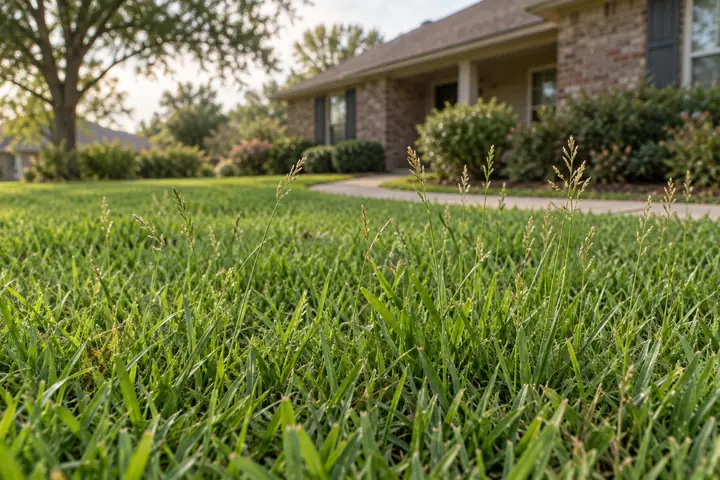
Start with the stems you can actually see
A lawn can have a fairly even leaf surface with taller stems standing above it. From the porch, that may look like several missed cuts. Up close, the feature may be a seedhead rather than ordinary leaf growth. The useful first step is to show the plant and the surrounding lawn together.
Explain when the stems appeared and whether they return in the same locations. A close photo can help begin an identification conversation, but avoid assuming every seed-bearing plant belongs to the intended turf. A few useful views give Happy a clearer starting point than a general instruction to cut the entire lawn much shorter.
Turfgrass can produce seedheads
LSU AgCenter’s bermudagrass identification material includes its seedhead as a recognizable feature. UC IPM also describes the finger-like arrangement of bermudagrass spikes. Those references establish that seedheads can belong to turfgrass, rather than automatically proving that a new weed has taken over.
The shape is only one part of identification. Leaves, growth habit and the context of the patch matter too. Do not identify every fine-stemmed plant as bermudagrass from a distant image. If the lawn type is uncertain, seek appropriate extension help and say that the identification is still open. Maintenance decisions are easier when a guess is not presented as a confirmed fact.
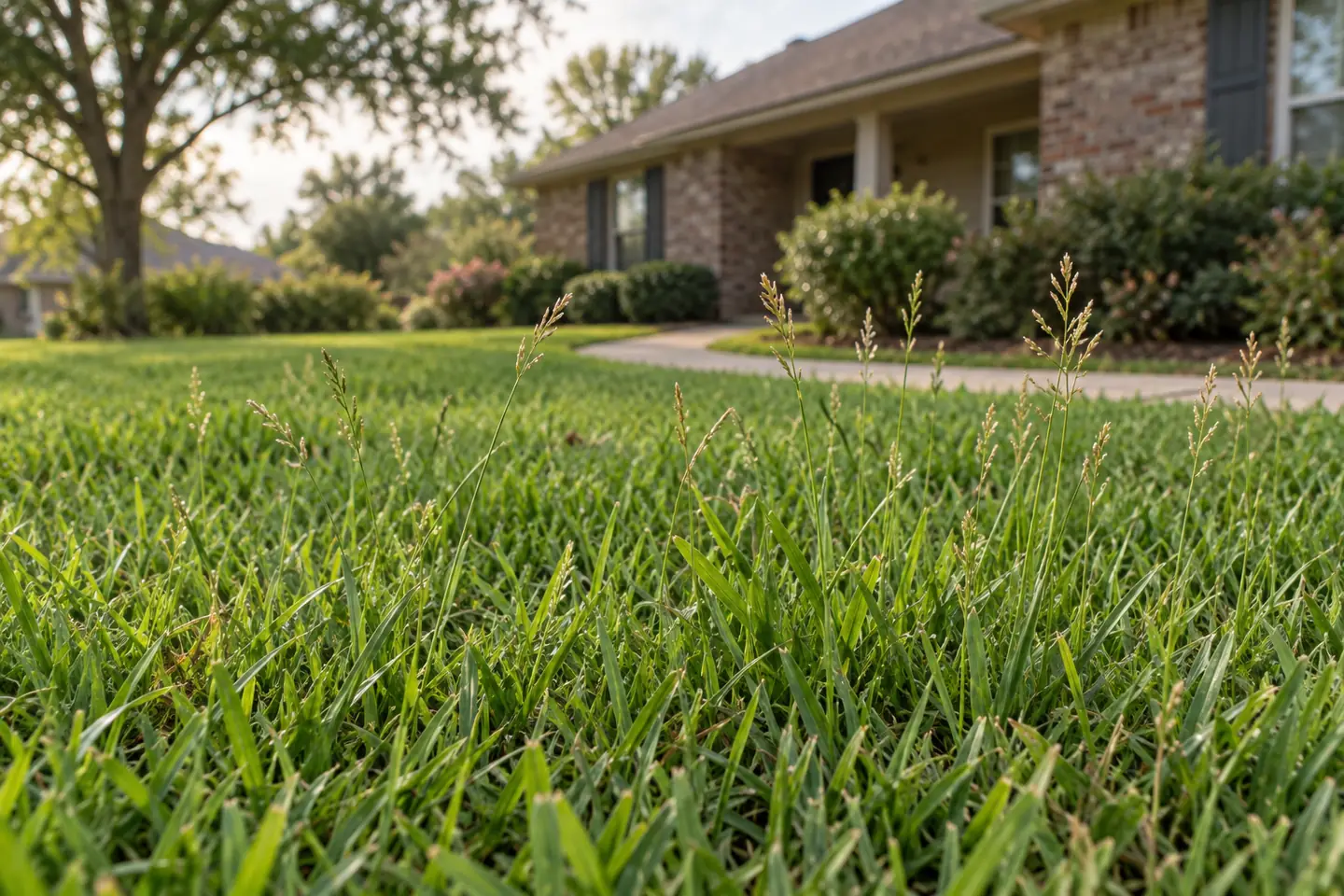
Show more than the top of the plant
Take one wide view locating the patch within the yard. Add a closer image of the seedhead and leaves where accessible. If you have verified sod or grass records, include that information privately in the service discussion. An unlabeled close-up alone may be difficult to connect with the actual work area.
Avoid pulling or cutting unfamiliar plants merely to obtain a photo. If a specialist requests a sample, follow the sampling instructions supplied for that purpose. Your initial lawn-care request can begin with ordinary photographs. The aim is useful information, not an improvised plant investigation that disturbs the yard or removes a feature before it can be reviewed.
Separate leaf height from stem height
A few tall stems do not establish that all the leaf growth is equally tall. Explain whether you are seeing a low canopy with protruding heads or a generally overdue lawn. Those are different starting conditions, even if both make the yard look shaggy from the same window.
The next mowing discussion should consider the actual turf and current growth. A very low cut is not a universal response to visible stems. Use the measuring-height guide for the leaf-height conversation and keep the seedhead observation alongside it. That distinction helps describe the result you want without asking the whole lawn to be treated as though every blade has reached the tallest stem.
Keep uncertain plants out of an automatic treatment plan
If some clumps differ from the surrounding turf, identify them before requesting removal or treatment. Ordinary mowing does not establish which plants are wanted, which are weeds or what product would be appropriate. A maintenance quote should not turn a seedhead photograph into a confident treatment recommendation.
Happy Grass discusses weed-control requests for the actual site, but scope and suitability require review. This page does not prescribe herbicides or application rates. Fertilization, aeration, overseeding and pest control are not offered Happy Grass services. Keeping the identification question separate prevents a simple appearance concern from acquiring a treatment promise nobody has agreed.
Describe how quickly the appearance returns
If the stems become noticeable between visits, note roughly when that happens and take a dated reference picture. A consistent view can show whether the leaf canopy remains manageable while the stems change the appearance. It is more useful than repeatedly describing the whole lawn as overgrown.
Discuss the finish you want and ask how the current maintenance interval relates to it. Weekly and every-other-week options need to be considered against actual growth, property conditions and availability. An interval does not guarantee the yard will look unchanged between visits. The conversation should describe what can reasonably be maintained rather than promise permanent absence of every visible stem.
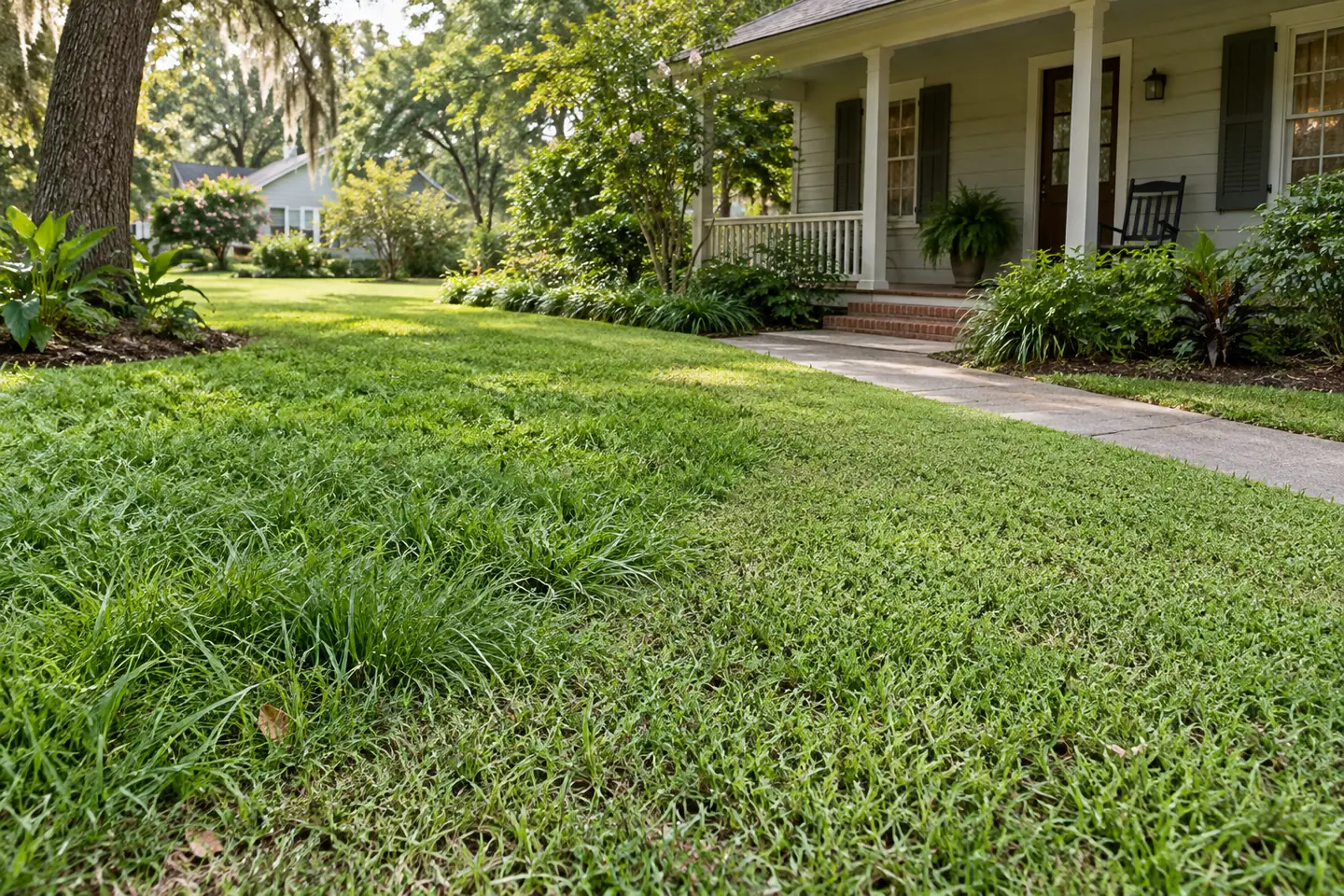
Include the parts of the yard that differ
The sunny front, shaded side strip and backyard may not contain the same growth. Photograph each relevant area separately. Explain whether one section was recently repaired or maintained by someone else. An unusual patch should not silently stand for all the grass at the address.
- Name the area with the visible stems.
- Pair a close plant view with a wide reference.
- State the last cut if known.
- Mention verified grass records.
- Describe any different-looking clumps separately.
These simple details help connect the plant question with the property layout. They also make it easier to define the work boundary while identification remains unresolved.
Avoid a seed-growing promise
Visible seedheads do not mean the property should be left unattended in the hope of producing a particular new lawn. Seed establishment depends on the actual grass and an appropriate separate plan. A mowing discussion should not imply that every turf variety will reproduce the same desired result from seed.
If repairing or replacing turf is your main goal, explain that as another request and consult a suitable provider. Happy Grass does not offer overseeding. The practical maintenance question is how to handle the existing accessible growth within the agreed scope, while any establishment or restoration decision receives its own proper attention.
Keep clipping handling in the conversation
If the starting growth is heavy, explain what you want addressed after the cut. Loose material on a path, clumps in the lawn and a request to collect everything are different cleanup expectations. Do not assume bagging and hauling are included with mowing or blowing.
Ask what reasonable finish is included for the actual condition. Avoid directing material into drainage openings or neighboring property. A clear handling plan connects the cutting with the appearance you want afterward. It also helps distinguish an ordinary recurring visit from a first assessment of a yard that has grown beyond its usual maintenance pattern.
Use a clear message rather than a diagnosis
Try this: “These stems are rising above the front lawn between cuts. The leaves underneath look lower. I am not certain what grass this patch is. Here are wide and close photos.” Add your city, address and the last known cut.
That note gives Happy something specific to review without requiring a technical vocabulary. Keep any identification result with the property information. If the result changes how the section should be handled, confirm the revised scope and timing directly. A useful answer should be tied to the actual patch, not to the first plant name guessed from a single image.
Review the result in the same area
After an agreed visit, use the same viewpoint if you want to discuss the appearance. Note when the picture was taken. New growth after several days is different from a section that appeared unchanged immediately afterward. Timing helps make that distinction understandable.
If the concern persists or the plant remains uncertain, seek appropriate identification help rather than repeatedly lowering the lawn. A good maintenance routine can work alongside a separate plant review. The objective is a manageable, tidy yard with clear expectations, not a series of increasingly short cuts aimed at a question the mowing process has not answered.
Ask Happy about the shaggy stems
Send current wide and close photos, the address, city and verified grass information if available. Explain whether the concern is the stems alone or the height of the whole lawn. The service discussion can then focus on the actual growth and the result you want.
Call 504-339-3571 or use the quote form for Harvey, Marrero, Gretna, Algiers, Belle Chasse or Westwego. Little details can make a lawn feel less tidy than it is. A clear look at what is growing is a useful first step toward a happier mowing plan.
Use two observations in the same photograph set
Photograph the general lawn appearance and the stems that prompted your question as two related views. Give both the same date and area label. The wide image explains what looks untidy from the walkway, while the closer view helps show what you are actually describing. Neither image should be treated as a reliable plant identification on its own.
In your note, distinguish the appearance goal from any identification question. You may want to review ordinary mowing while still being unsure what a particular stem belongs to. Explain how long after the last completed cut you noticed it, when that date is known. If the appearance returns, compare the same location before changing the description. A repeatable record is more useful than calling every tall stem a weed and letting that label determine the proposed work.